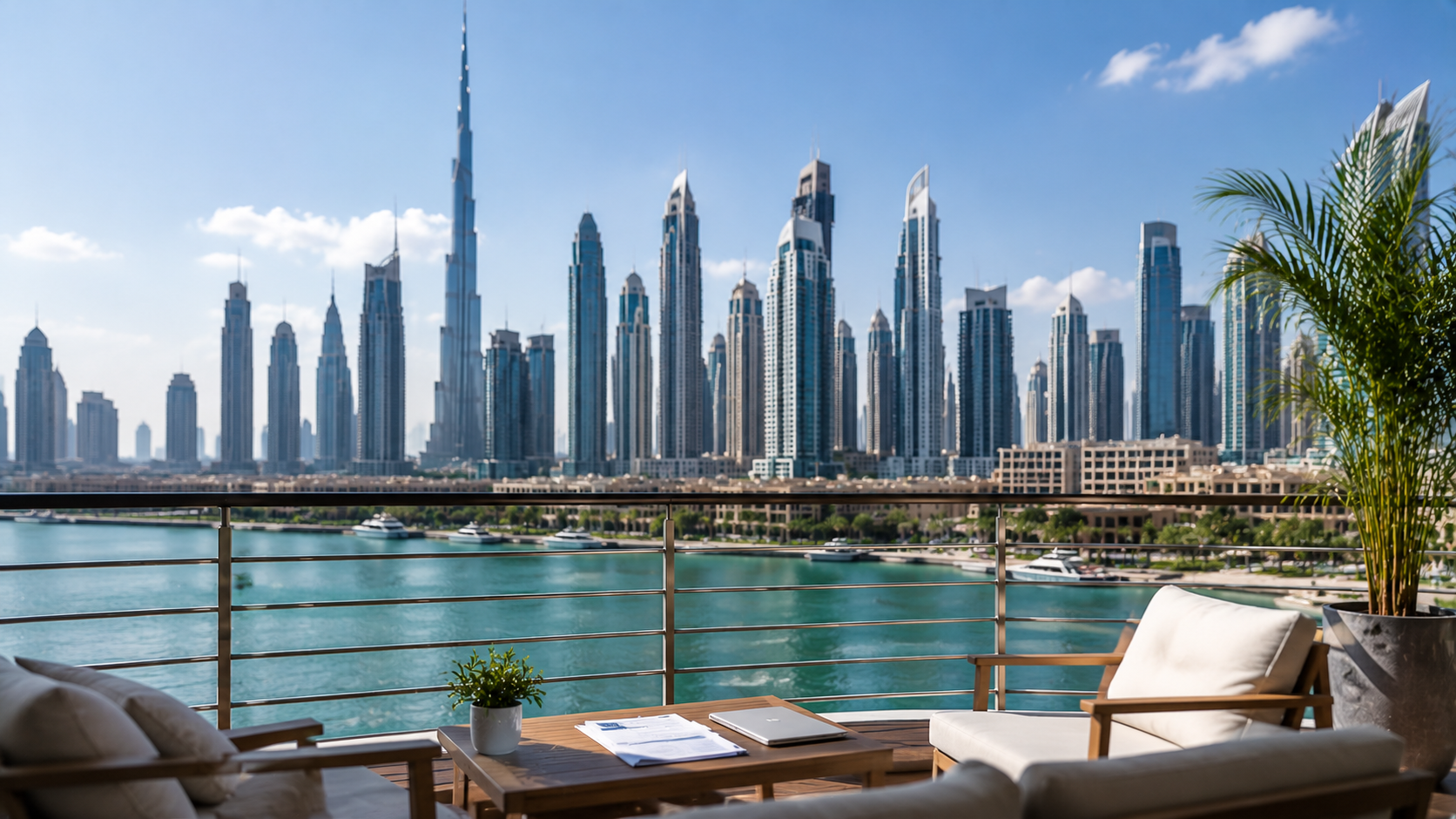

Over the past decade, the UAE — and Dubai in particular — has evolved from a regional property market into a global investment hub. Today, expats from Europe, Asia, CIS countries, and beyond consistently allocate capital into UAE real estate, often prioritizing it over traditional markets.
This trend is not driven by hype. It is based on a combination of financial efficiency, regulatory clarity, and real demand, which together create a uniquely balanced investment environment.
Below is a detailed, practical analysis of why expats continue to invest in UAE property — and why this trend remains structurally strong in 2026.
Tax Efficiency: Where Net Yield Outperforms
One of the most decisive advantages of the UAE is its tax-neutral environment.
In practical terms:
- no tax on rental income
- no annual property tax
- no capital gains tax on resale
Why this matters
In many developed markets, investors face:
- 20–40% tax on rental income
- capital gains taxation on exit
- additional local or municipal charges
This significantly reduces net returns.
In the UAE, investors retain almost the full rental income, which fundamentally changes investment performance.
Most inexperienced investors compare markets based on gross yield.
In reality, net yield defines performance — and this is where the UAE consistently outperforms.
Strong Rental Yields Backed by Real Demand
Dubai continues to offer above-average rental yields, typically:
- 6–8% in established areas
- higher in emerging or high-demand segments
Why yields are structurally supported
- high share of expatriate residents
- continuous population inflow
- flexible labor market attracting global talent
Unlike speculative markets, Dubai’s rental demand is driven by actual occupancy, not just investor activity.
Yields are not automatic.
They depend on:
- service charges
- vacancy periods
- quality of tenant demand
- property management
Headline yields often differ from real returns — and this is where professional asset selection matters.
Freehold Ownership and Legal Transparency
The UAE allows foreign investors to purchase property in designated freehold zones, providing:
- full ownership rights
- ability to lease, sell, or transfer
- clear inheritance structure
Why this matters for expats
In many countries:
- ownership structures are complex
- foreign buyers face restrictions
- legal processes lack transparency
In Dubai:
- ownership is clearly defined
- transactions are registered with the Dubai Land Department (DLD)
- legal frameworks are standardized
This significantly reduces uncertainty and increases investor confidence.
Flexible Payment Plans and Capital Efficiency
A defining feature of the UAE market is the availability of developer-backed payment plans.
Typical structures include:
- 10–20% initial payment
- construction-linked installments
- post-handover plans (up to 3–5 years)
These structures allow:
- lower upfront capital
- better cash flow management
- ability to diversify across multiple assets
In most global markets, leverage depends on banks.
In the UAE, developers effectively provide built-in financing, increasing flexibility and accessibility.
Population Growth as a Demand Driver
The UAE continues to show consistent population growth, driven by:
- economic expansion
- business-friendly policies
- long-term residency programs (e.g., Golden Visa)
Why this is critical
Population growth supports:
- rental demand
- absorption of new supply
- long-term price stability
Dubai’s growth is not purely cyclical — it is supported by structural relocation demand, including professionals, entrepreneurs, and investors.