
Off-plan properties
Most foreigners who get a Turkish tax number never pay income tax with it. They use it to open a bank account, sign a phone contract, connect electricity and register a property.
That is the part people misunderstand. The name suggests an obligation. In practice the number works as an identity key for the Turkish system, and nearly every administrative step asks for it before anything else.
This guide explains what the number is and how it differs from the other identification numbers you may be given. It also sets out what the number unlocks, in what order, and where the process usually goes wrong. Procedures change, so confirm current requirements with the tax office before relying on them.
The Turkish tax identification number is a ten-digit number issued by the Revenue Administration. Obtaining it creates a record in the tax system. It does not create a tax liability.
Tax is owed on income, not on holding the number. A buyer who owns an apartment and lives in it, or leaves it empty, pays the annual property tax to the municipality and nothing more. The number simply lets the system recognise who they are.
The obligation changes only when income appears. Three situations change this: letting the property out, selling it at a gain within the relevant period, and working in Turkey. In each of them the same number starts to carry tax consequences.
A detailed set of questions and answers on the basics is available in the overview of the tax identification number. What follows focuses on how the number is actually used.
Depending on your status, you may meet three different identification numbers. Which one you use depends on where you are in the process.
| Number | Who has it | What it is used for |
|---|---|---|
| Tax identification number | Any foreigner who requests one | Buying, banking and contracts before residence |
| Foreigner identification number | Foreigners with a residence permit | Replaces the tax number in daily use once issued |
| Citizen identification number | Turkish citizens | Serves as the tax number for citizens |
The second row is the one that causes confusion. Once a residence permit is issued, the foreigner identification number starting with 99 becomes the main identifier, and the earlier tax record is linked to it. Documents issued before the permit may carry the old number, and the two need to match in the system.
For anyone who later obtains citizenship, the citizen number takes over in the same way. The routes to that status are set out in the guide to options for obtaining Turkish citizenship.
The number is needed early because most other steps depend on it. This is the usual order:
A missing number stops the whole chain at the first step. That is why it makes sense to obtain it before choosing a property, not after. It costs nothing and takes very little time.
How the insurance fits into the sequence is explained in the guide to property insurance in Turkey.
The number is free, and obtaining it is one of the simplest procedures in the Turkish system.
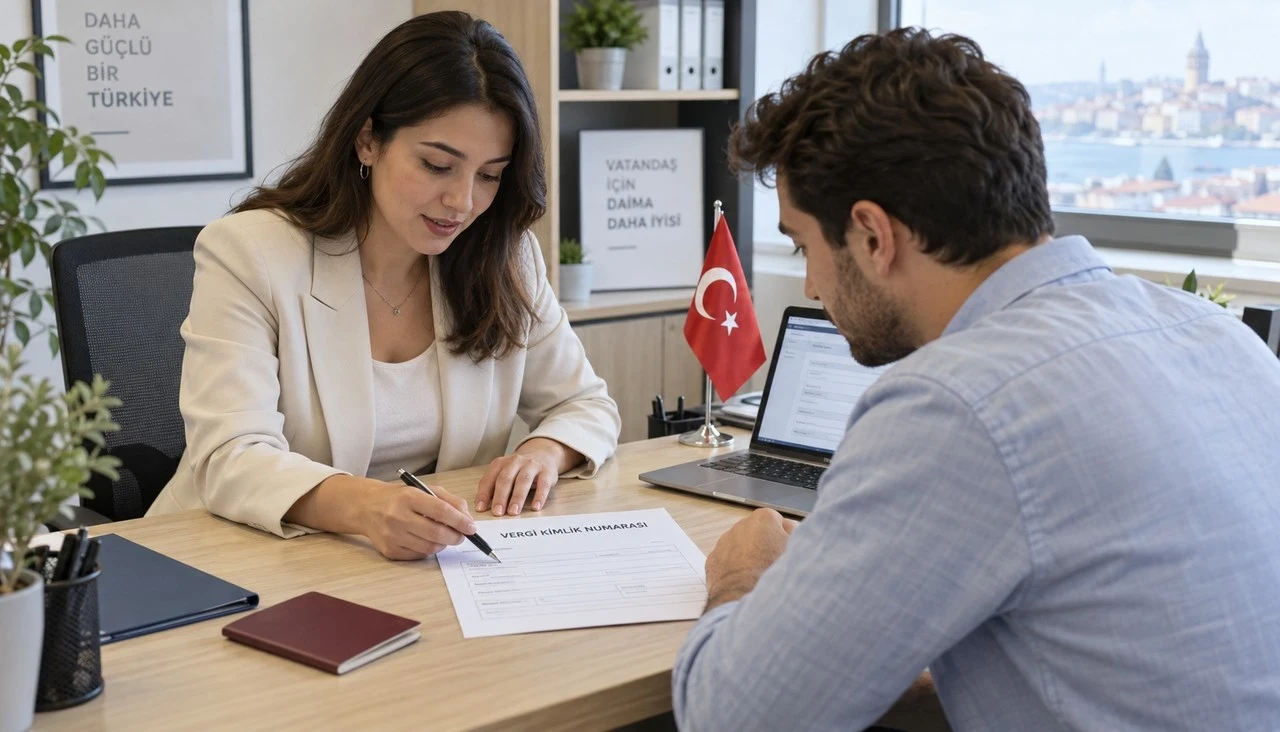
The usual route is a visit to any tax office with a passport. Offices commonly ask for a copy of the passport, sometimes translated, and an address. The number is often issued the same day.
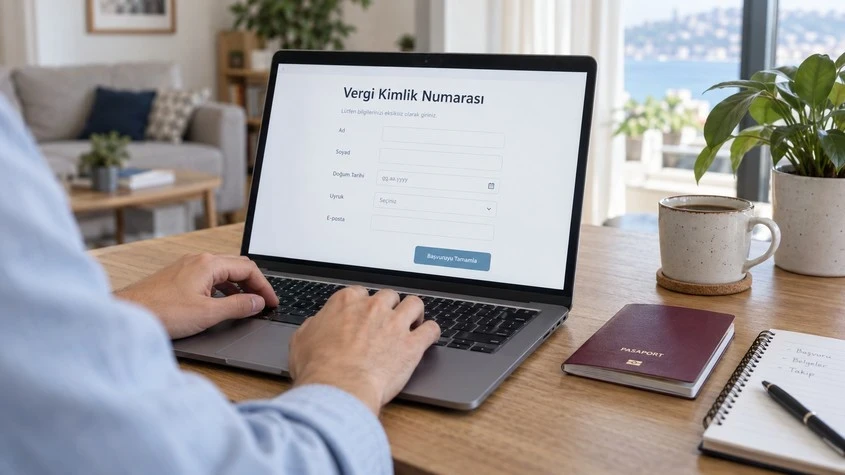
There are alternatives for those who cannot visit in person. A representative can apply on your behalf with the right authorisation, and online options exist for some cases. Requirements differ between offices, so it is worth confirming the documents with the office you plan to use.
Keep the document that shows the number. Several later steps ask to see it, and replacing it is easier if you have a copy.
The system makes more sense once you see what the number replaces.
Turkish citizens carry a national identity number that links their records across banks, utilities, the land registry and the tax office. Foreigners without residence have no such number, so the tax record fills that role.
That is why a bank or a phone operator asks for a tax number from someone who will never pay income tax. They are not checking your tax position. They need a single identifier that the state recognises.
Seen this way, the number is less a tax formality and more the foreigner’s entry ticket to everyday administration. Once you have it, most counters treat you the same way they treat a resident.
The number plays a different role depending on why you are dealing with the Turkish system.
Buying from abroad
The number is the first document to obtain, before the bank account and before any reservation. A representative can usually apply for it under a power of attorney, which removes the need to travel for this step alone.
Buyers who get it early can move quickly when the right property appears. Buyers who leave it until after choosing a unit find the purchase waiting on paperwork.
Moving to Turkey
New residents use the tax number until the residence permit is issued. After that, the foreigner identification number becomes the main reference.
Update your records once the permit arrives. Banks, the phone operator and utility providers may still hold the old number. Aligning them avoids blocked transactions later.
Letting the property
This is where the number becomes a tax matter. Rental income is declared annually, and the declaration is made under your identification number.
Landlords also have obligations toward tenants that go beyond tax. What each side owes the other is set out in the guide to tenant and landlord rights in Turkey.
Selling
The sale is registered under the same number used at purchase. Whether a gain is taxable depends on how long the property was held, and the number links the purchase and the sale in the system.
The number itself is neutral. Tax consequences appear with specific events.
| Event | What changes |
|---|---|
| Owning a property | Annual property tax to the municipality |
| Letting it out | Annual declaration of rental income |
| Selling within the holding period | A gain may be taxable |
| Working in Turkey | Income tax through the employer |
| Running a business | A full set of business tax obligations |
Owning alone creates only the property tax. It is paid in two instalments a year, and the amount depends on the registered value of the property. The structure is explained in the guide to property taxes for foreign citizens.
The one-off and annual costs of ownership, including the taxes, are brought together in the overview of registration and ongoing expenses.
Five sequences account for most of the problems, and none of them are difficult to avoid:
The third point deserves attention before anything is signed. Check that your name appears the same way on the passport, the tax record and every contract. It is far easier to fix at the start.
What is a Turkish tax identification number?
A ten-digit number issued by the Revenue Administration that identifies you in the Turkish tax system. Foreigners need it for banking, contracts and property transactions.
Does having the number mean I pay tax in Turkey?
No. Tax is owed on income or specific events, not on holding the number. An owner who does not let the property pays only the annual property tax.
How much does it cost?
Nothing. It is issued free of charge, and often on the same day at a tax office.
Can I get it without travelling to Turkey?
Usually yes, through a representative with the right authorisation. Requirements differ between offices, so confirm the documents in advance.
What happens to it after I get a residence permit?
The foreigner identification number starting with 99 becomes the main identifier, and the tax record is linked to it. Update the number held by your bank and utility providers.
Do I need it to buy property?
Yes. The land registry requires it on the transfer, and the bank account used for payment depends on it.
Is the tax number the same as a residence permit?
No. The tax number identifies you in the tax system. A residence permit is a separate status granted by the migration authority, with its own identification number.
Do I need it to let my property?
Yes. Rental income is declared annually under your identification number.
Obtaining a tax number takes an hour and costs nothing. Discovering you need it after choosing a property can cost a week, and occasionally the unit itself. Buyers who start with the paperwork move at the speed of the market rather than the speed of the tax office. DDA Real Estate is a real estate agency in Turkey. We work across Antalya, Alanya, Istanbul, Izmir, Bodrum and Mersin and help clients put the documents in order before the search begins.
Look at our offers in Turkey and leave a request: tell us where you are and what you are planning. We will set out which documents to obtain first and in what order, so the purchase does not wait on paperwork.