
Off-plan properties
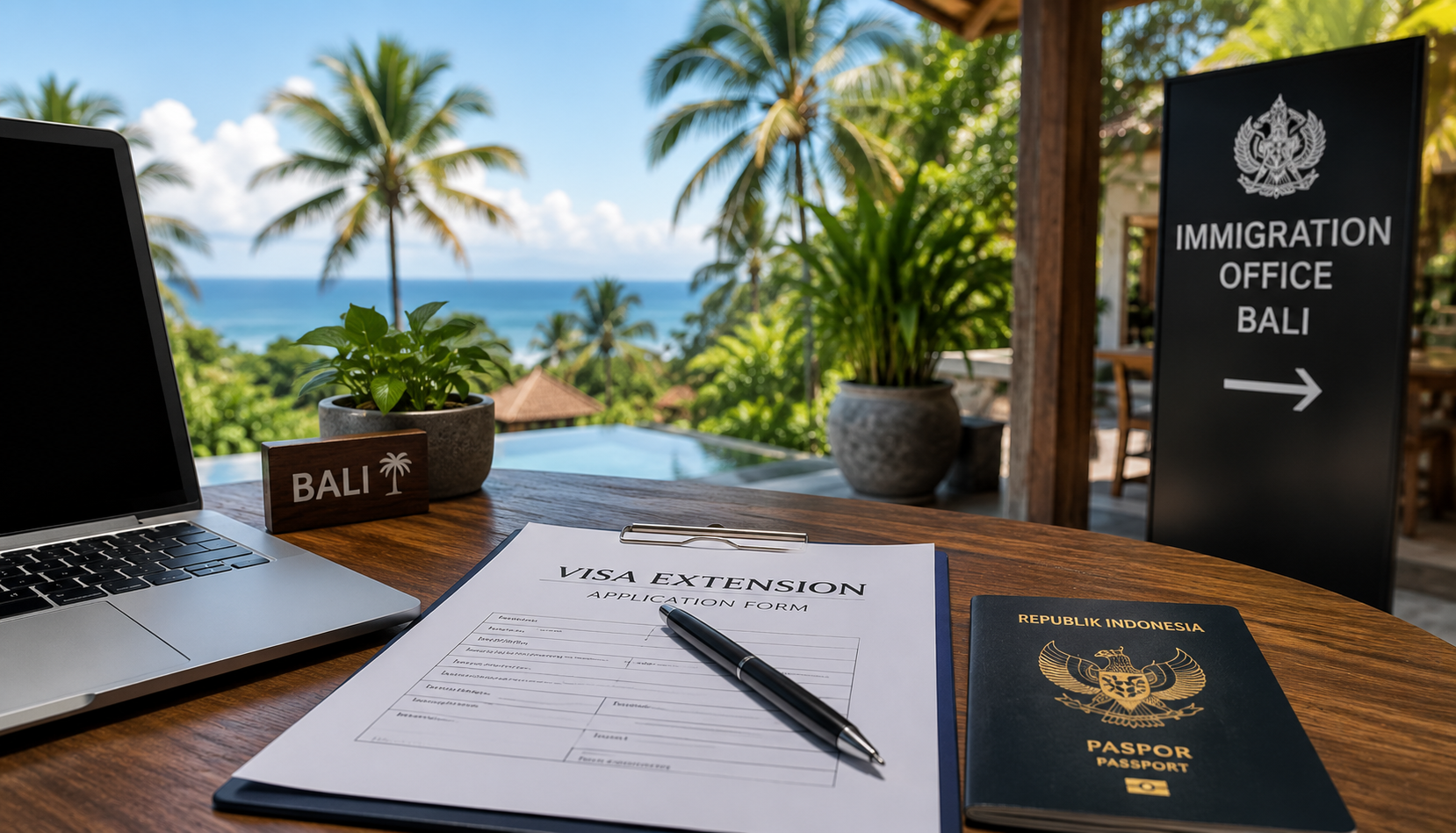
Almost everyone who comes to Bali for a month ends up wondering whether they can stay for two. The answer is usually yes — but extending an Indonesian visa in 2026 is a procedure with fixed rules, hard deadlines and a fine of one million rupiah for every day you get it wrong. It is not difficult; it is simply unforgiving of improvisation.
Two things have changed recently and catch people out. First, the process is now hybrid: you apply and pay online, then attend an immigration office in person for biometrics. Second, extensions are no longer generous — a visa on arrival can be extended exactly once, and there is no way to convert it into anything else without leaving the country.
This guide walks through the whole thing: identifying what you actually hold, what can be extended and by how much, the step-by-step procedure, timing, costs, what happens with a KITAS, and what overstaying really costs. Rules and fees change often, so treat this as a working map and confirm current requirements on the official immigration portal before you file.
Everything downstream depends on this, and many travellers are unsure. You hold an e-VoA if you applied online before flying and received a QR code by email — there is no sticker in your passport, and the visa exists digitally. You hold a sticker visa on arrival if you queued at the counter in the arrivals hall, paid there, and an officer put a physical sticker and stamp in your passport.
The other common documents are the B211A single-entry visit visa, arranged in advance through a sponsor and intended for longer stays, and a KITAS — a limited-stay permit for work, investment, retirement, study or family. A KITAS is not a visa in the tourist sense at all, and its renewal follows a completely different logic, covered further below.
Check your document before doing anything else, because the extension path, the number of extensions available and the paperwork all differ. If you are not sure what you are holding, the email confirmation and the stamp in your passport will tell you.
The ceilings are fixed, and knowing them prevents the most expensive planning mistakes:
| Visa | Extensions available | Maximum stay |
|---|---|---|
| VoA / e-VoA | Once, by 30 days | 60 days in total, then you must leave |
| B211A visit visa | Usually twice | Up to around 180 days |
| KITAS | Renewable, subject to type and sponsor | Depends on category; some require exit and re-entry |
Two hard rules sit behind that table. You cannot extend a visa on arrival more than once, and you cannot apply for a new visa while you are inside Indonesia — the day of arrival and the day of departure each count as a full day, so a 60-day stay really means 60. If you want longer than two months, the decision has to be made before your current visa expires: either switch to a B211A arranged through a licensed sponsor, or plan to exit and return.
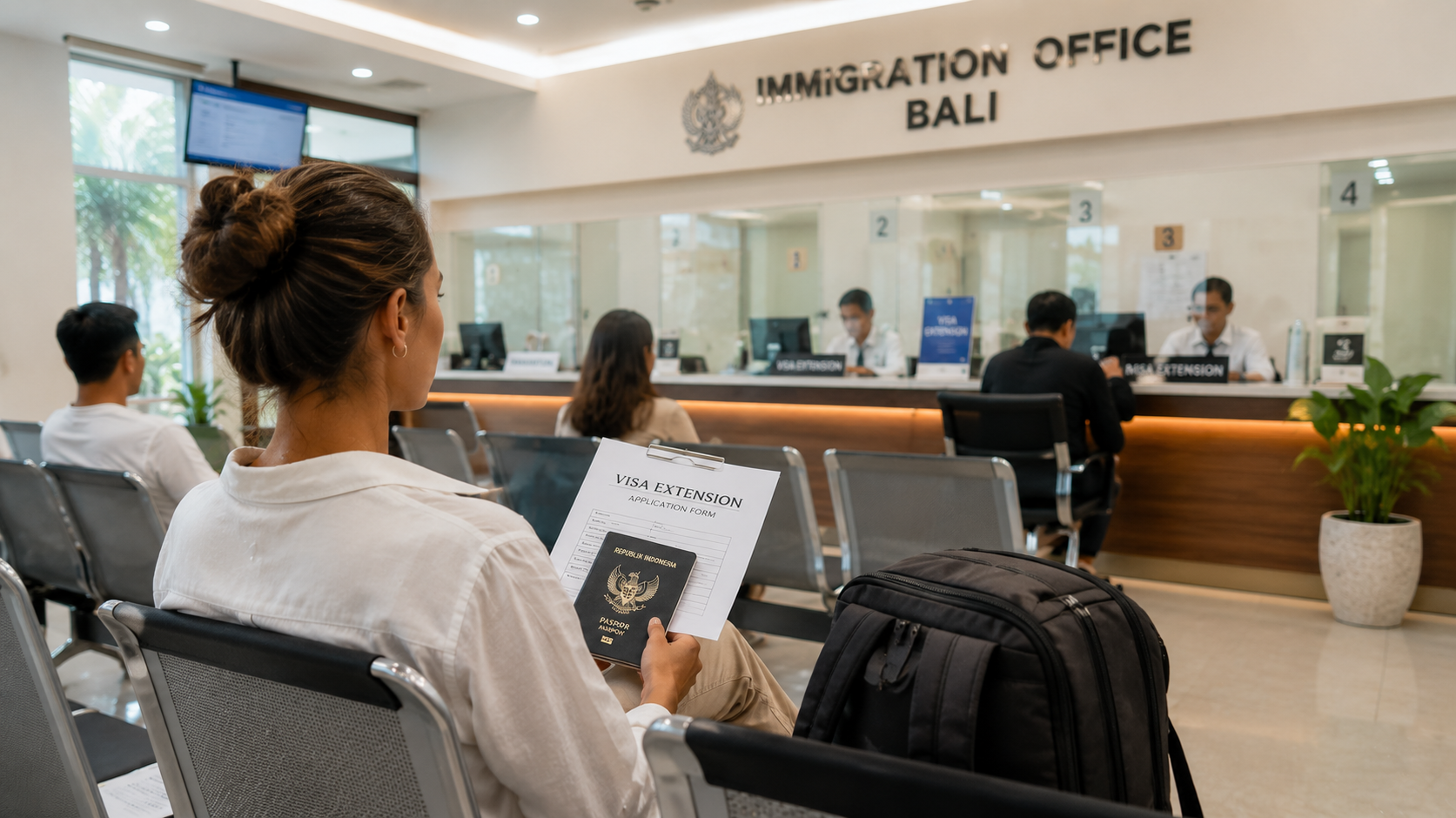
The process is now a hybrid of online filing and an in-person appointment. In outline it looks like this:
One point worth flagging honestly: since mid-2025 Indonesian immigration has required foreigners to appear in person for biometrics when extending, and this applies across visa types — e-VoA, B211A, and the various KITAS categories. A few sources describe a fully online extension with no office visit, so the requirement may be easing in some cases, but the safe assumption in 2026 is that you will attend once. Confirm on the official portal or with a licensed agent before you plan around it.
The single most useful habit is setting a calendar reminder on the day you arrive. A visa-on-arrival extension typically takes up to about seven working days to process, with express handling through an agent sometimes cutting it to two or three. That is why the fourteen-day rule exists: file two weeks out and a delay is an inconvenience, file three days out and it becomes a fine.
On cost, the government fee for a visa-on-arrival extension is around IDR 500,000, roughly thirty dollars. Using an agent adds a service fee on top, and for many visitors that is money well spent — an agent handles the filing, monitors deadlines, manages the queue and coordinates the biometric appointment. It also matters that if your application is submitted before your visa expires, you are not treated as overstaying while it is being processed, even though your passport may be held during that period.
A limited-stay permit does not work like a tourist visa. The key distinction is between a renewal and a new application: if you keep the same sponsor and the same KITAS type, you renew, which is comparatively straightforward. If you change your sponsor or move to a different category — say from a work KITAS to an investor KITAS through your own company — that is a new application, with new documents and a new timeline.
Some short-term KITAS categories additionally require you to exit and re-enter Indonesia to finalise the process, so it is worth confirming the mechanics for your specific permit well ahead of time. If you are moving from tourism toward residency, our complete guide to immigrating to Bali sets out the residency routes end to end, while the Bali business setup guide explains the PT PMA company structure that sits behind an investor KITAS.
One more habit for KITAS holders: if you plan to travel abroad during the permit’s validity, arrange a multiple exit and re-entry permit before leaving. Departing without one can void the permit you spent months obtaining.
The fine is IDR 1,000,000 for every day beyond your permitted stay, and it is enforced strictly. There is no grace period, no negotiating at the counter and no paying later: the amount is collected at the immigration desk at the airport, in rupiah, before you are allowed to check in for your departure flight.
Short overstays are expensive; long ones are worse. Extended overstaying can lead to detention, deportation and a re-entry ban, which turns a scheduling slip into a permanent problem for anyone who wants to keep coming back to Indonesia — or who is thinking about buying property here. That is the practical reason immigration compliance and property plans belong in the same conversation.
Sometimes the right move is a different visa rather than another thirty days. If you are on a visa on arrival and already know you want three or four months, switching to a B211A before your current permit expires is cleaner and cheaper than extending, leaving and returning. If you are working remotely, running a business or planning to buy property, a KITAS gives you temporary residency along with the practical benefits that come with it — a local bank account, long-term rentals and a driving licence.
The pattern worth avoiding is the one where a traveller stacks short extensions and repeated exits for a year, spends more on flights and fees than a proper permit would have cost, and still has no residency to show for it. Decide what you actually want the year to look like, then choose the document that matches.
For many visitors, extending a visa is the first step toward a longer commitment to the island. If that is where you are heading, our guide to the property purchase process in Indonesia explains the legal stages for foreign buyers, from ownership structures to completion.
How many times can I extend a visa on arrival in Bali?
Only once. A visa on arrival — whether the e-VoA obtained online or the sticker version bought at the airport — is valid for 30 days and can be extended by a further 30, giving 60 days in total. After that you must leave Indonesia, and you cannot apply for a new visa from inside the country. Note that the arrival and departure days each count as a full day.
Can I extend my Bali visa completely online?
In most cases, no. You file and pay online through the official immigration portal, but since mid-2025 foreigners have generally been required to attend an immigration office in person for biometric fingerprinting and a photograph. Some sources describe a fully online path for e-VoA holders, so the safest approach is to confirm the current requirement on the official portal or with a licensed agent.
How much does a visa extension cost in Bali?
The government fee for a visa-on-arrival extension is around IDR 500,000, roughly thirty US dollars, paid by card or through a designated Indonesian bank. If you use an agent, their service fee is charged on top. Other visa categories have different fees, so check the applicable rate for your specific permit before filing.
When should I start the extension process?
At least 14 days before your visa expires, and two to three weeks is safer. Processing a visa-on-arrival extension typically takes up to about seven working days, biometric appointment slots can fill up, and public holidays or system maintenance can consume your buffer. Setting a calendar reminder on the day you arrive is the simplest safeguard.
What happens if I overstay my visa in Bali?
You pay IDR 1,000,000 for every day beyond your permitted stay. The fine is collected at the immigration desk at the airport, in rupiah, before you can check in for your flight — there is no grace period and no option to pay later. Extended overstays can result in detention, deportation and a re-entry ban.
Which immigration office should I go to in Bali?
The one covering the region of your registered accommodation address, which in Bali generally means Ngurah Rai in Jimbaran, Denpasar or Singaraja. Your accommodation proof or sponsor letter must match that region, otherwise the submission can be rejected. Dress appropriately as well, since government offices expect covered shoulders and knees.
How is extending a KITAS different?
A KITAS follows different rules. If you keep the same sponsor and the same permit type, it is a renewal and relatively straightforward; changing sponsor or category counts as a new application. Some short-term KITAS categories also require you to exit and re-enter Indonesia to complete the process, so confirm the mechanics for your specific permit early.
Do I need an agent to extend my visa?
Not necessarily for a simple visa-on-arrival extension, which you can file yourself. An agent becomes genuinely valuable for sponsor-based visas and KITAS matters, where documentation and deadlines are more complex. Agents also monitor expiry dates and coordinate biometric appointments, which reduces the risk of an expensive scheduling mistake.
Extending a visa in Bali comes down to three things: know exactly what you hold, know the ceiling that applies to it, and start at least two weeks early. File online, pay the fee, attend the biometric appointment at the office matching your address, and keep the digital permit and receipts. And if the answer to “how long do I want to stay” is more than a couple of months, stop extending and choose a visa built for the length of stay you actually have in mind.
DDA Real Estate helps foreigners settle in Bali — from choosing a villa to live in to buying an investment property, with full legal support. Take a look at our offers in Bali and leave a request: we will find options for your budget and goal.