Kintamani Bali 2026: Hotels and How to Get There
Bali
EN
$
ft²
Other articles

Kintamani District on the Tropical Island of Bali: Photos, Hotels, How to Get There

Ekaterina Bocharova The author of the article, the Broker
#Blog DDA
16 August 3339 views

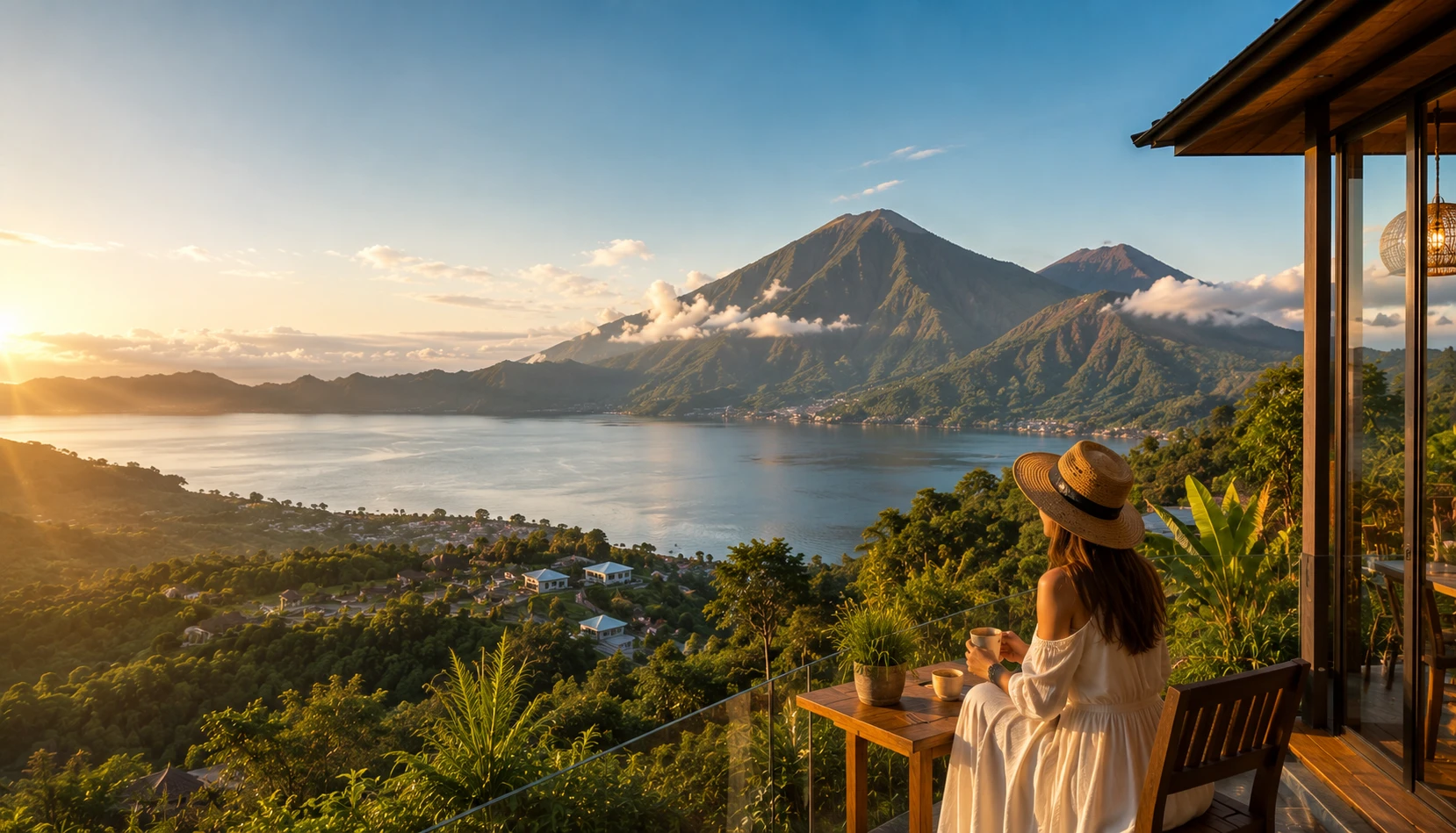
Kintamani is usually described as a viewpoint. It is more accurate to say it is a place you stand inside: the whole district sits within an enormous volcanic caldera, and the famous view is simply what you see when you look across it from the rim you happen to be standing on.

That geography produces the district's one practical division. The rim and the caldera floor are different places — different altitude, different temperature, different reasons to go — and visitors who treat them as one destination usually see half of it.

Below is what each half offers, why this is the coldest inhabited part of the island, how the district's day is shaped by people who arrive before dawn, where to stay and how to get there. Access arrangements, fees and operators change, so confirm current details locally rather than relying on any published account.

Rim and floor

Almost every decision about a visit follows from this split, and it is worth making deliberately rather than by accident:

The rimThe caldera floor
AltitudeHigh, cool, often in cloud by middayLower and warmer, sheltered by the walls
What is thereViewpoints, restaurants, most accommodationThe lake, hot springs, working villages
Why goThe view across the caldera and the volcanoBathing, boats, and the trailheads
Time neededAn hour if passing, a morning if stayingHalf a day, because the descent is slow
Best hourEarly morning before cloud buildsLate morning onward, once it warms

The road down is short in distance and long in time — it is steep and winding, and the return climb is slower still. Plan the floor as its own trip rather than as a detour from the rim.

The coldest part of Bali

People arrive from the coast in shorts and regret it within minutes of getting out of the car. At this altitude the temperature drops well below anything the beaches produce, mornings are genuinely cold, and cloud moves through in the afternoon rather than politely staying on the horizon.

Treat it as a mountain destination that happens to be on a tropical island. What that means in practice:

  • Bring a proper layer and something waterproof, whatever the coastal forecast said
  • Expect the view to close in by the middle of the day, so plan it for the morning
  • Check whether your accommodation has heating or at least warm bedding
  • Allow considerably longer for the drive than the distance suggests
  • Assume damp: surfaces, seats and paths stay wet longer than at sea level

The district runs on the pre-dawn trek

The volcano climb shapes everything here. Groups leave the villages in the small hours to reach the summit for first light, and by mid-morning most of them have gone back down and left the district entirely.

Which produces a rhythm worth exploiting: the district is busiest in the dark and unusually quiet by lunchtime. The wider question of when first light actually happens on the island — and how little it moves across the year — is covered in the piece on sunrise on Bali and where to see it. The climb is a mountain walk in the dark, not a viewpoint with a car park, and it is sold far more casually than it deserves.

The lake, the springs and the villages

On the caldera floor sits the island's largest lake, with hot springs feeding bathing pools at the water's edge — the district's other main draw and a very different experience from standing on the rim in the wind.

Around the shore are working villages, some reachable mainly by boat, including one known across Indonesia for a burial tradition unlike anything else on the island. The lake itself and its place in the island's water system are covered in the guide to Bali's highland lakes. These are inhabited places rather than attractions, and the ordinary courtesies apply more than they do at a beach.

What photographs well, and when

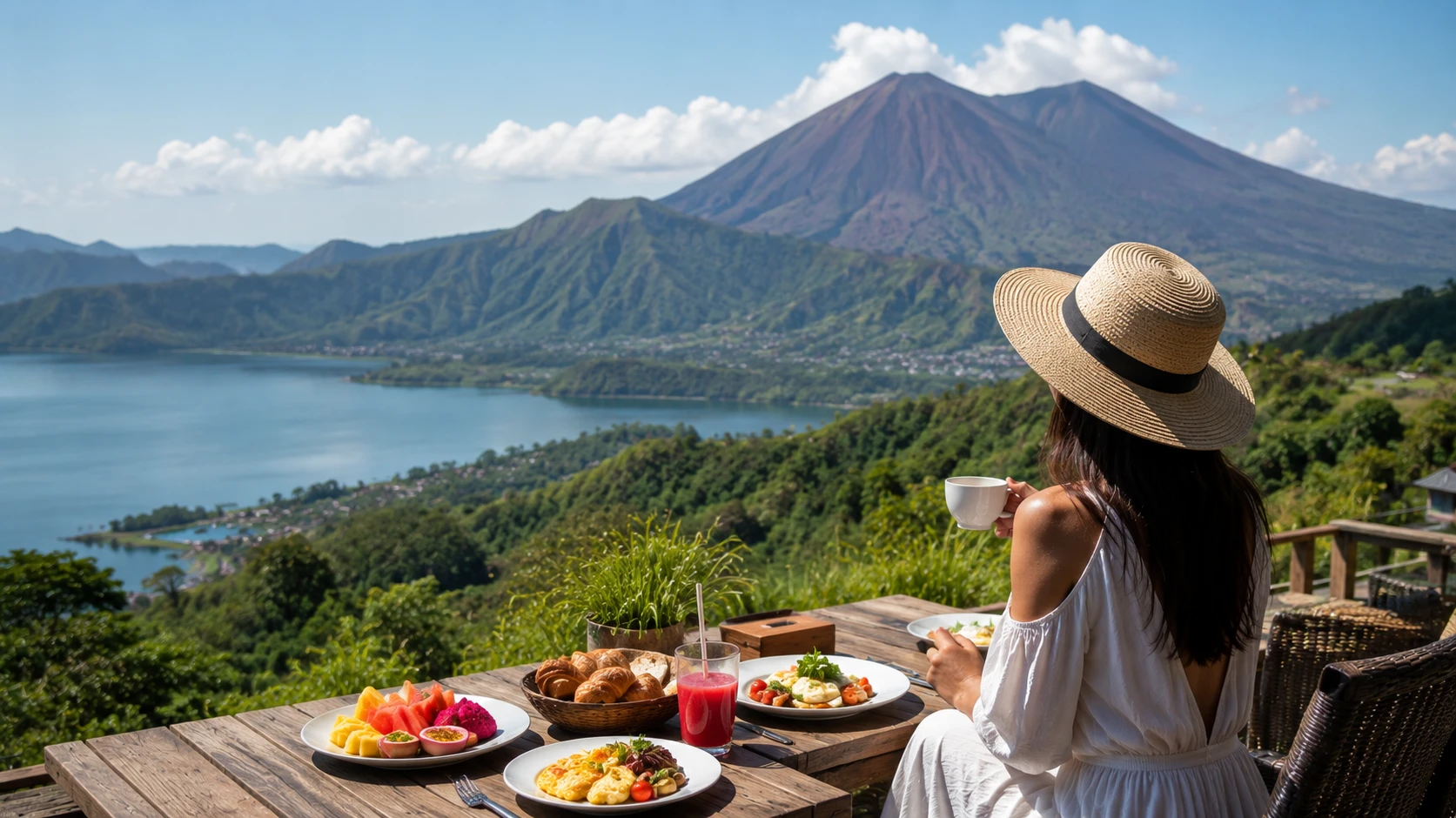
The images that draw people here are almost all taken from the rim looking across the caldera at the cone, with the lake below and mist in the middle distance. That shot depends entirely on hour and weather rather than on equipment.

Early morning is the only reliable window. By late morning the caldera fills with cloud from below, which can be beautiful in its own right but hides everything the postcards show. What else is worth the frame:

  • The lava field on the volcano's flank, visible as a dark scar from several points on the rim
  • The lake from the descent road, where the angle opens up halfway down
  • The terraced slopes on the outer side of the rim, which most visitors never turn around to see
  • Steam and morning mist on the water, best in the first hour after sunrise
  • Village life on the floor, with the usual restraint about photographing people

Where to stay

Accommodation divides along the same rim-and-floor line. The rim holds most of it, priced and positioned for the view, ranging from simple guesthouses to a handful of properties built specifically to face the caldera. The floor has fewer options, generally simpler, close to the springs and the trailheads.

The choice depends on what you came for: the rim for the view and an easy departure, the floor for the water and an early start on the mountain. Either way, staying overnight is what separates a good visit from a rushed one, because it puts you here at the two hours that matter — first light and the quiet afternoon.

Eating on the rim: an honest note

The restaurant strip along the rim exists to sell a view to coach groups, and the food is generally incidental to that. Buffets are the norm, prices reflect the panorama, and expectations should be set accordingly.

This is not a criticism of the district so much as a description of a business model. The better strategy is to come for the view and eat elsewhere — the coffee is the exception, since the surrounding highlands grow it and small local places do it properly.

Coffee, citrus and what the land does

The volcanic soil and the altitude make this productive agricultural country rather than merely scenic. Coffee grows across the district and is sold at roadside plantations that combine a tasting with a shop, and the local citrus is well enough regarded to be named after the area.

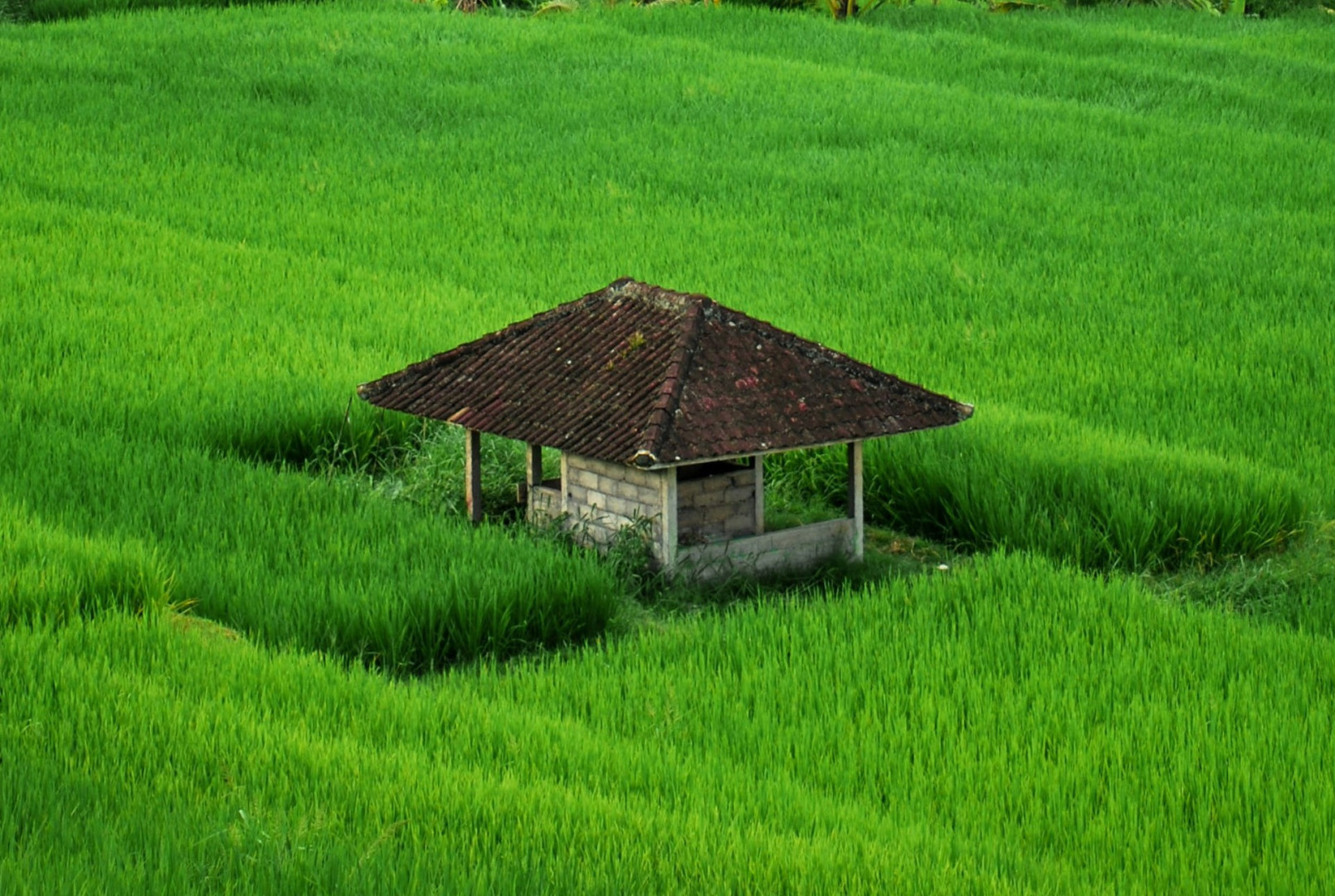
That agricultural character is worth noticing, because it explains the landscape you are looking at: terraced slopes worked by people who live here year-round, not a preserved view. The plantations vary widely in how genuine the experience is, and the ones aimed squarely at coach parties are recognisable from the car park.

Getting there

The district sits in the island's central highlands, and every route to it climbs. From the southern resort areas it is a long morning's drive; from the cultural centre inland it is considerably shorter and the usual approach.

Most visitors either hire a driver for the day or drive themselves, and both are reasonable. If you drive, the mountain roads deserve more respect than town traffic does, and the conditions attached to hiring a car on the island matter more here for that reason. A natural longer loop runs on toward the eastern coast rather than back the way you came — the guide to eastern Bali covers what sits at the other end of that road. Whatever the transport, leave early.

Guides, fees and settling terms

Access to the volcano is organised locally, guides accompany climbs, and the arrangements are made through operators rather than improvised at the trailhead. There have been long-standing complaints about pressure and unclear pricing around the climb, and the remedy is unglamorous but effective.

Agree everything in writing before the day: what is included, what is not, and the total. Book through your accommodation or an established operator rather than arranging it on the roadside, and treat an unusually low quote as a sign that something will be charged later rather than as a bargain.

Beyond a visit

People who come here repeatedly eventually ask what it would be like to stay. The honest answer is that the highlands are a different proposition from anywhere on the coast: cooler, quieter, agricultural in both use and designation, with thin services and a long road to anything institutional.

The land designation is the substantive part rather than an afterthought. The regencies in this part of the island are among those where new permits for tourism accommodation on agricultural land have been restricted — executive policy rather than codified law, so it can shift without legislation, which makes it something to verify for a specific plot on a specific date rather than to assume in either direction.

Questions we hear most

Is one day enough?

For the rim and a viewpoint, yes. For the caldera floor, the springs and the lake as well, no — the descent and the climb back take most of what is left of a day. Staying a night solves it and also gives you the two best hours.

Do I need to climb the volcano?

No, and many visitors do not. The view from the rim is the image people come for, and it requires nothing more than getting up early. The climb is for people who enjoy walking and are prepared for cold, dark and steep.

How cold does it actually get?

Cold enough that a jacket is not optional in the early morning, and cold enough that unheated rooms are noticeably chilly at night. It is the coldest inhabited part of the island, and visitors packing for a beach holiday consistently underestimate it.

Is it worth it in the wet season?

It can be spectacular and it can be entirely hidden, sometimes on the same morning. The landscape is greener and the mist is dramatic, but the postcard view is less reliable. Go early and accept that the weather decides.

Can it be combined with other stops?

Yes, and the natural loop continues east and down toward the coast rather than returning south the way you came. That turns a there-and-back day into a route, which is a better use of the driving either way.

Key takeaways

  • You are inside a caldera, not at a viewpoint — the rim and the floor are two different trips
  • The coldest inhabited part of the island — a mountain destination on a tropical island
  • Morning or nothing — cloud fills the caldera from below by the middle of the day
  • The district empties by lunchtime — the pre-dawn trek economy leaves the afternoon quiet
  • Settle guide terms in writing first — an unusually low quote signals a later charge

A cold morning is the reason people buy up here

Not the view, which they could visit, but the temperature — the ordinary pleasure of needing a jacket at breakfast after a year on the coast. DDA Real Estate is a real estate agency working in Indonesia, and highland enquiries almost always come from people who already live on the island and want somewhere to escape the heat rather than from first-time buyers. It is a legitimate motive and a narrow market, and both halves need saying: the setting is genuinely unmatched, and the demand, the services and the resale are thin in a way the coast is not.

Look at our offers in Bali and leave a request: we will set out what a highland location gives you and what it permanently withholds, check what the land designation actually permits on a specific plot, and be straightforward about where a place that is wonderful to wake up in would be difficult to own or to sell.

Popular
5 June 4206384 view
Dubai Rent Prices 2025: Average Apartment Rental Costs in Dubai Dubai's rental market continues its upward climb in 2025, driven by population growth and limited new supply, pushing average prices up by 10%
#Blog DDA
2 July 2409372 view
DLD Fees in Dubai: Everything You Need to Know Buying property in Dubai? Don't let hidden fees surprise you! Our essential guide breaks down ALL Dubai Land Department (DLD) fees
#Blog DDA
23 November 1783971 view
How to Buy a SIM Card in Turkey in 2026: Prices, IMEI Registration, eSIM Options, and Best Mobile Operators Overview of mobile operators, available types of SIM cards, and home Internet providers
#Blog DDA
5 July 1732059 views
How Much is the Real Estate Agent Commission in Dubai? Find out how much real estate agent commission costs when buying property in Dubai.
#Blog DDA
5 February 1415169 views
How Foreigners Can Own Property in Bali: Understanding PT PMA (2025) Foreigners can't own freehold land in Bali, but a PT PMA (foreign-owned company) allows secure property ownership under Hak Guna Bangunan (HGB) or Hak Pakai (HP) rights
#Blog DDA
28 August 1172241 view
Oqood vs Title Deed in Dubai: Key Differences You Must Know Buying property off-plan in Dubai? Oqood registration is mandatory to secure your ownership rights.
#Blog DDA