
Monkey Forest in Ubud, Bali: How to Visit
Bali
EN
$
ft²
Other articles

Monkey Forest on the Tropical Island of Bali: Photos, Description, How to Get There

Ekaterina Bocharova The author of the article, the Broker
#Blog DDA
26 August 1008 views

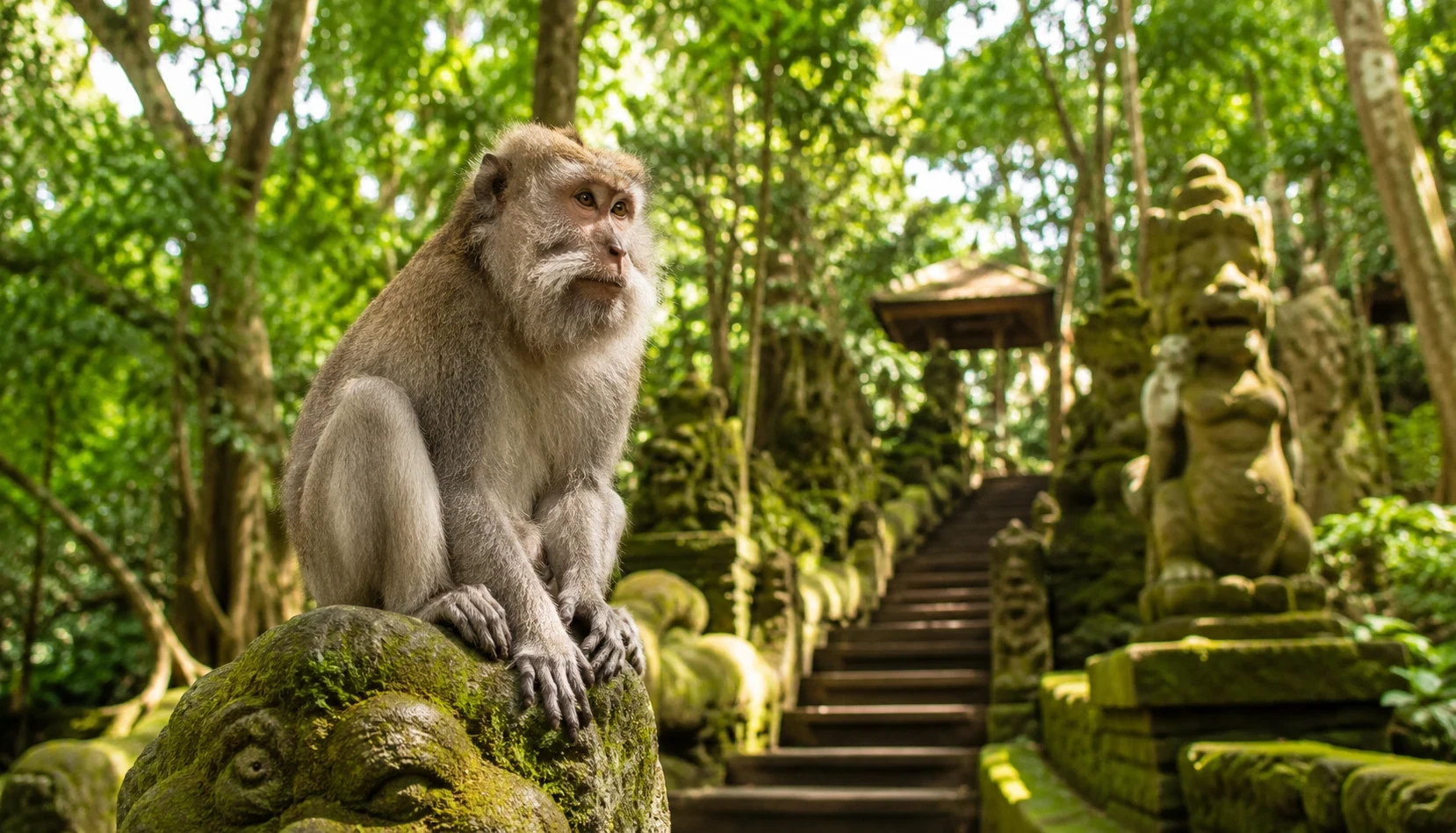
The name suggests a wildlife park. It is a temple complex in a sacred forest, and the monkeys live there rather than being kept there. Three working temples stand inside it, and the site is managed by the village that owns them.

That changes what the rules mean. They are not park bureaucracy. They exist because several hundred wild macaques with a social hierarchy live in a place where visitors walk through.

Below is what the site actually is, what provokes the animals, what to do if you are bitten, when to go and how to get there. Access, hours and fees change, so confirm the current details before you set out.

A temple complex in a forest

The site sits at the southern end of Ubud's main street, inside a valley of tall trees. It is owned and run by the surrounding village community, and the money it takes goes to the temples and their upkeep.

Paths and stone bridges run through the ravine, and the trees are old and dense enough to change the temperature as you walk in. The forest itself is the attraction as much as the animals are, which is easy to forget while something is trying to open your bag.

The temples inside

There are three, and they are working temples rather than ruins. The main one sits in the middle of the site; another stands by the bathing pools; a third is associated with funerary rites and sits deeper in the valley.

Visitors generally see them from outside, since the inner courtyards are restricted as they are anywhere else on the island. How Balinese temples are arranged and why access works that way is covered in the guide to the island's main temples. The carvings are worth as much attention as the macaques, and almost nobody gives them any.

The animals are wild

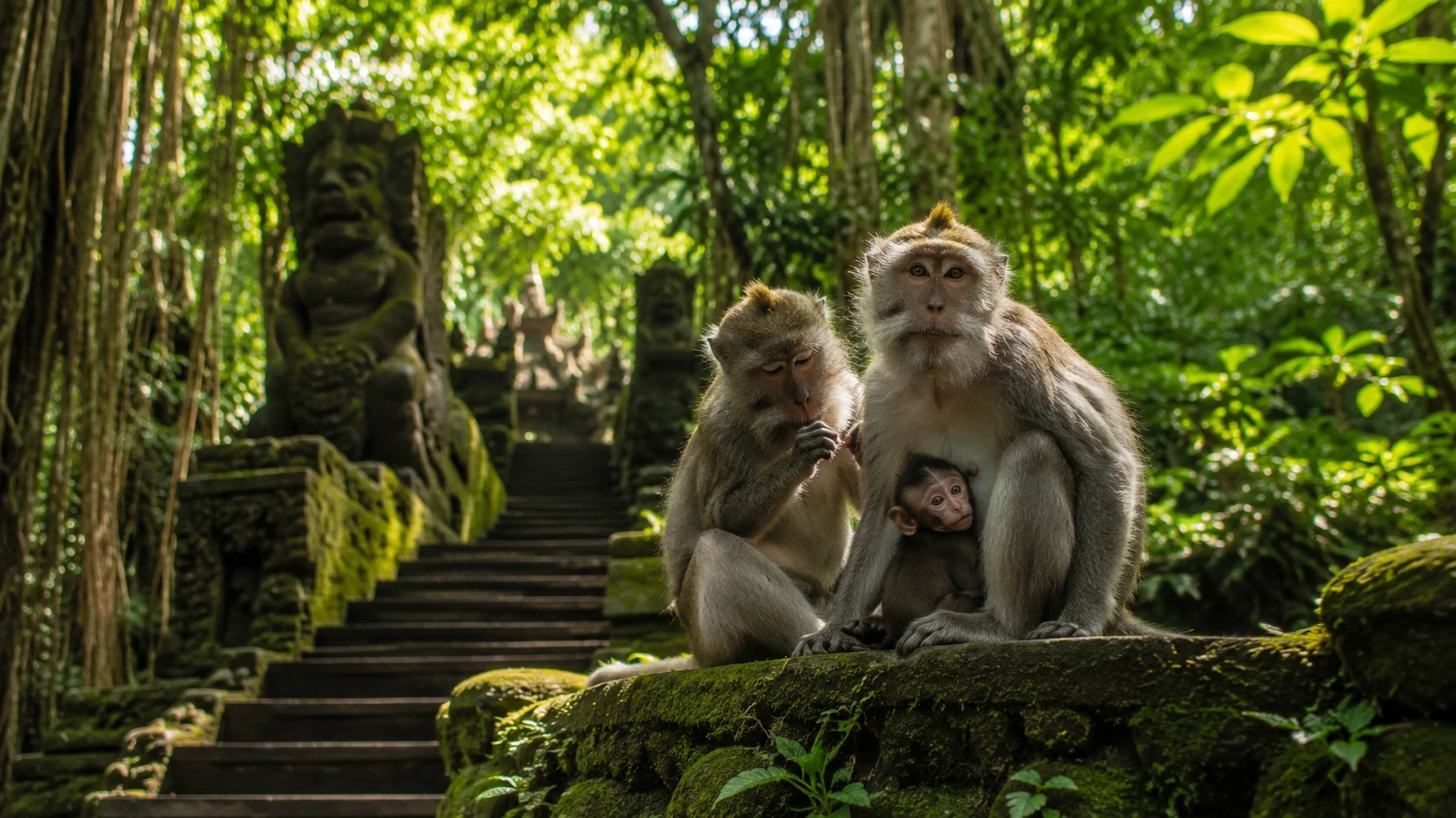
Several hundred long-tailed macaques live in the valley in troops with their own territories and hierarchies. They are habituated to people, which is not the same as tame.

A habituated animal has simply stopped being afraid of you. It has not agreed to be touched, photographed at arm's length or relieved of an object it has taken. Adult males are large, fast and confident, and mothers with infants are the least tolerant of anyone approaching.

What provokes them

Most incidents come from a handful of specific behaviours, and every one of them is avoidable:

  • Direct eye contact, which reads as a challenge rather than as interest
  • Showing teeth, so smiling at a macaque is a threat display
  • Carrying visible food or drink, including a water bottle in your hand
  • Loose bags, open pockets and rustling plastic
  • Sunglasses, hats and anything shiny worn where it can be grabbed
  • Reaching for something an animal has taken
  • Standing between a mother and her infant, usually by accident

Put everything loose inside a closed bag before you enter. This one habit prevents most of what goes wrong here.

Theft and the exchange

Some individuals take objects deliberately and wait. Phones, glasses, hats and bottles are the usual targets, and the behaviour is learned rather than random.

Staff know it well and will usually help retrieve an item, generally by trading food for it. Do not attempt the exchange yourself and never pull an object back. Find a member of staff, describe what was taken, and wait. Grabbing is what turns a lost phone into a bite.

If you are bitten or scratched

This is the section most guides leave out, and it matters more than anything else here. Bites and scratches happen, usually minor, and the response is the same regardless of severity.

Wash the wound thoroughly with soap and running water for several minutes, then go to a clinic the same day. Rabies exists in Indonesia, and the decision about post-exposure treatment is a doctor's rather than yours. Do not wait to see whether it looks infected. The general picture of health risks on the island explains why this one is treated seriously, and the safety basics for Bali cover what to have arranged before you need it.

Feeding

Bananas are sold at the entrance and feeding is permitted in designated conditions, usually with staff nearby. Whether to take part is a judgement call.

Holding food makes you the most interesting object in the valley, and several animals will arrive at once. If you want the calm version of this visit, buy nothing and carry nothing. Watching from two metres away is a better experience than being climbed on.

Going with children

Children are at eye level with the animals, which changes the dynamic entirely. A macaque that ignores an adult will investigate a child, and a child's instinct is to reach out or to run.

Hold hands throughout and keep children off the ground where troops are gathered. Brief them beforehand: no food, no touching, no running, no looking an animal in the eye. Small children are better carried through the busiest sections.

What photographs well

The images people come away with are mostly of the forest rather than of the animals: mossy stone, root systems over walls, light through high canopy, the carved bridges.

For the macaques, distance produces better pictures than proximity, and early light is far kinder than midday. Keep the phone on a strap and both hands on it — the photograph you take from arm's length is the one that costs you the phone.

When to go

Opening time, without exception. The site is quiet, the light is good, the animals are active and the coach groups have not arrived.

By late morning the paths are busy and the valley is hot. Late afternoon is the second-best window, quieter again as groups leave, though the light is heavier. Rain empties the place and the forest looks better for it, if you do not mind wet paths.

Getting there

The entrance sits at the end of the street named after it, a short walk from the centre of Ubud. From anywhere in the town itself, walking is the sensible option.

From further away, a driver or a scooter gets you there, and parking exists near the entrances. Arriving by car in the middle of the day is the worst combination, because the surrounding streets are narrow and congested. What that traffic is like day to day is part of the wider picture of living in Ubud.

Tickets and practicalities

Entry is ticketed, with separate adult and child rates, and there are several entrances around the site. Sarongs are not generally required for the paths, though dressing respectfully is expected.

Allow an hour to ninety minutes. What to have with you is short:

  • A closed bag with a zip, not an open tote
  • Water kept inside that bag rather than in your hand
  • Shoes with grip, since stone steps stay wet in the shade
  • Insect repellent, because the valley is damp
  • A phone strap or a pocket that fastens

The forest as a piece of the village economy

The site is not run by a company or a national park. It belongs to the surrounding village, and the ticket money maintains the temples, pays staff and supports the community that owns it.

That arrangement explains things visitors sometimes find odd: ceremonies taking priority over access, sections closed without notice, staff who are villagers rather than rangers. You are a guest on community land, not a customer in a park, and the difference shows in how requests are made and expected to be received.

What the macaques do all day

Knowing the rhythm makes a visit better. Mornings are for foraging and moving between areas, so the animals are active and spread out. Midday is for resting in shade, and the valley goes quiet.

Late afternoon brings activity again, with more social behaviour: grooming, play, the occasional dispute that sounds far worse than it is. Disputes between animals are not aimed at you, but standing in the middle of one is how bystanders get hurt. If a chase starts, step off the path and let it pass.

Other places with macaques

This is not the only site on the island where monkeys and visitors meet. Several temples, including the well-known cliff temple in the south, have resident troops with the same reputation for taking glasses and phones.

The behaviour and the precautions are identical everywhere, so the habits learned here transfer. The difference is that in the forest the animals are the point, and elsewhere they are a hazard between you and the view.

Living near it

For anyone considering an address in central Ubud, the forest is a useful marker. It anchors the southern end of the busiest street, and the congestion around it is a daily fact rather than a seasonal one.

Macaques also range beyond the boundary into the surrounding lanes, and households nearby keep windows and bins secured for that reason. Neither is a reason to avoid the area, but both belong in the picture before signing a lease a few streets away.

Questions we hear most

Is it safe?

For visitors who follow the rules, yes, and thousands of people pass through daily without incident. The risk is not random: it concentrates around food, loose objects and people who try to touch or retrieve things themselves.

Will the monkeys jump on me?

Only if you are carrying something interesting or holding food. Visitors with nothing visible and no food are largely ignored. If one does climb on you, stay still, do not grab it, and let staff intervene.

Can I bring a child?

Yes, with supervision. Children are at eye level with the animals, so hold hands, carry small ones through busy sections and brief them beforehand: no food, no touching, no running, no eye contact.

What do I do if I am bitten?

Wash the wound with soap and running water for several minutes and go to a clinic the same day, however small it looks. Rabies exists in Indonesia and the decision about treatment belongs to a doctor, not to you.

How long does a visit take?

An hour to ninety minutes covers the paths and the temples without rushing. Photographers stay longer, and anyone arriving at opening will get more out of it than someone arriving at eleven.

Key takeaways

  • A temple complex, not a zoo — three working temples in a village-owned sacred forest
  • Habituated is not tame — the animals have stopped fearing you, nothing more
  • Everything loose goes in a closed bag — the single habit that prevents most incidents
  • Never retrieve a taken object yourself — find staff and wait
  • Any bite means a clinic the same day — regardless of how minor it looks

The forest marks where central Ubud gets busy

It sits at the end of the town's busiest street, and the congestion around it is a daily condition rather than a seasonal one. DDA Real Estate is a real estate agency working in Indonesia, and this is the sort of thing we point out about an address: what is two streets away, what happens on that street at eleven in the morning, and which side of a landmark you would rather be on.

Look at our offers in Bali and leave a request: we will tell you what surrounds each property and what the street is like on an ordinary weekday, not only what the listing photographs show.

Popular
5 June 4206384 view
Dubai Rent Prices 2025: Average Apartment Rental Costs in Dubai Dubai's rental market continues its upward climb in 2025, driven by population growth and limited new supply, pushing average prices up by 10%

#Blog DDA
2 July 2409372 view
DLD Fees in Dubai: Everything You Need to Know Buying property in Dubai? Don't let hidden fees surprise you! Our essential guide breaks down ALL Dubai Land Department (DLD) fees
#Blog DDA
23 November 1783971 view
How to Buy a SIM Card in Turkey in 2026: Prices, IMEI Registration, eSIM Options, and Best Mobile Operators Overview of mobile operators, available types of SIM cards, and home Internet providers
#Blog DDA
5 July 1732059 views
How Much is the Real Estate Agent Commission in Dubai? Find out how much real estate agent commission costs when buying property in Dubai.
#Blog DDA
5 February 1415169 views
How Foreigners Can Own Property in Bali: Understanding PT PMA (2025) Foreigners can't own freehold land in Bali, but a PT PMA (foreign-owned company) allows secure property ownership under Hak Guna Bangunan (HGB) or Hak Pakai (HP) rights
#Blog DDA
28 August 1172241 view
Oqood vs Title Deed in Dubai: Key Differences You Must Know Buying property off-plan in Dubai? Oqood registration is mandatory to secure your ownership rights.
#Blog DDA