
Everyday Life of Locals in Bali: Culture, Community and Ritual | DDA
Indonesia
EN
$
ft²
Other articles

Everyday Life of Locals in Bali

#Blog DDA
23 March 3906 views

To a visitor, Bali is beaches, rice terraces and sunsets. To the people who live here, it is a tightly organised system in which religion, community and nature structure almost every hour of the day. Around 85–87% of Balinese follow Balinese Hinduism, and daily life runs on a single guiding philosophy, Tri Hita Karana — the “three causes of well-being.” Understanding it is the difference between seeing Bali as an aesthetic and seeing it as a living society.

This is a walk through an ordinary Balinese day and the systems behind it: the offerings, the family compound, the banjar community, the subak rice cooperative, the naming system, work and food, and the endless calendar of ceremonies — plus how to move among it respectfully, whether you are visiting, living or investing here.

A day framed by offerings

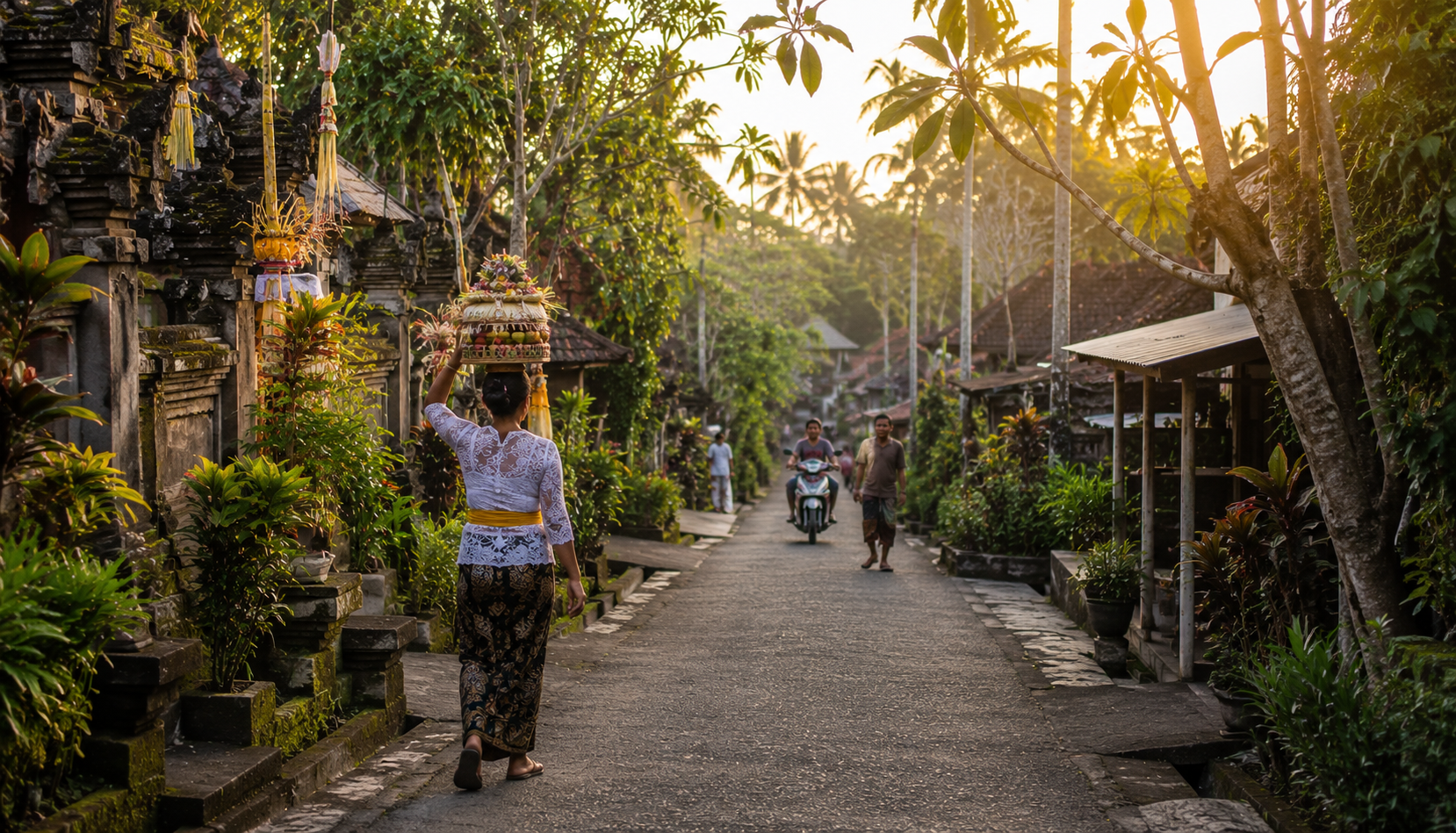
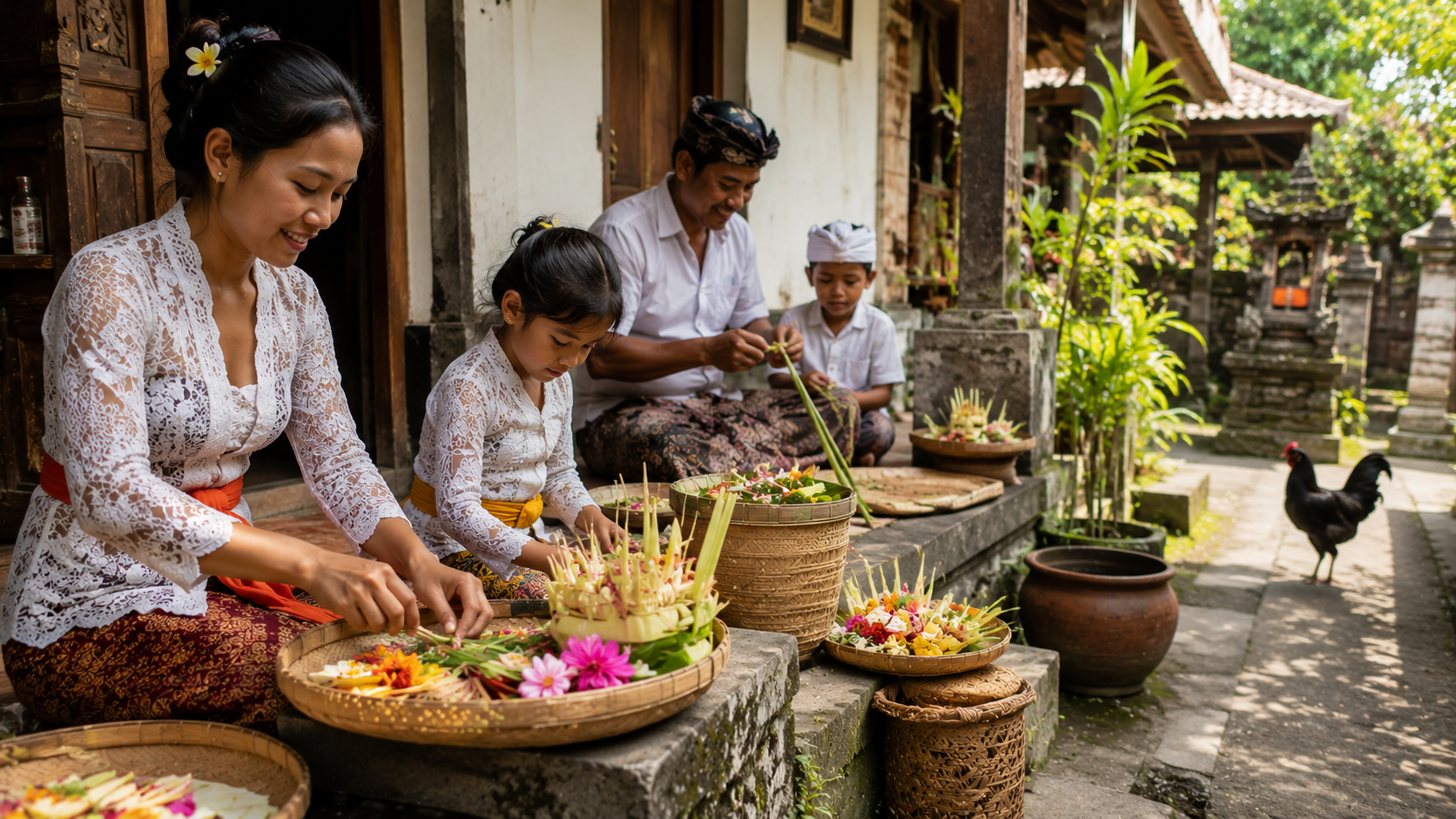
The Balinese day begins and ends with canang sari — small woven palm-leaf trays holding flowers, rice and incense, set out as daily offerings of gratitude. Family shrines receive them in the morning and again in the late afternoon, usually placed by a woman of the household in ceremonial dress. You will see them on shrines and doorsteps, shop counters, scooter seats, at the beach, even on a car dashboard. The first rule any newcomer learns: never step on or over them.

Those offerings are the most visible expression of Tri Hita Karana, which functions less like a belief and more like an operating system for the island. When traffic halts for a procession or a street shuts for a temple anniversary, this philosophy is the reason.

Tri Hita Karana: the three harmonies

Pillar Harmony with Everyday expression
ParahyanganThe divineDaily offerings, temple ceremonies, prayer
PawonganOther peopleThe banjar council, gotong royong, shared rituals
PalemahanNatureThe subak irrigation system, offerings to trees and animals

Break one part — spiritual, social or natural — and the Balinese sense that the whole balance is disturbed. That is why so much time and money go into ceremonies, community duties and the careful management of land and water.

The family compound

Most Balinese live in multigenerational family compounds, and the layout follows the philosophy of balance. The family temple occupies the most sacred corner, oriented toward the mountains (kaja) and Mount Agung, the island’s holiest peak. Living quarters sit in the middle; the kitchen and less sacred functions are placed accordingly. Even a modern city house keeps a small shrine inside the walls, where the day’s offerings are made. In effect, every home is also a temple.

The banjar: community as glue

If Tri Hita Karana is the philosophy, the banjar is the machinery — the neighbourhood community council, which every married Balinese man is expected to join. It decides collectively on ceremonies, conflict resolution and social welfare, and organises gotong royong: voluntary cooperative labour on temples, festivals and disaster relief. Its customary law, awig-awig, guides daily conduct and conservation. When a road closes without warning for a cremation, it is usually the banjar at work.

Subak: a thousand years of shared water

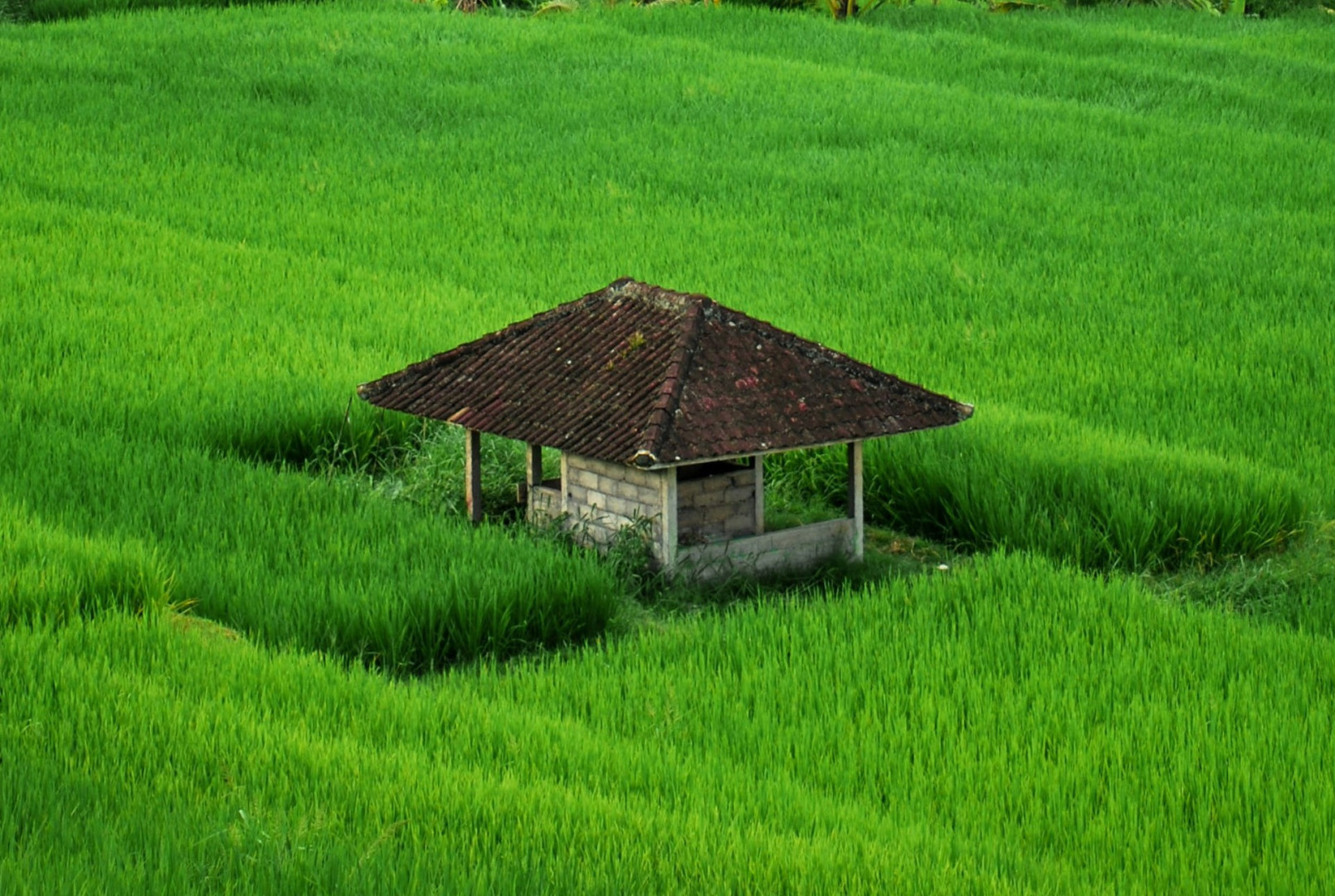
The rice terraces around Ubud and Jatiluwih are not just scenery — they are subak, a cooperative irrigation system over a thousand years old and recognised by UNESCO. Water is shared by agreed rules, coordinated through water temples, so agriculture, religion and community operate as one. It is Tri Hita Karana made physical.

Names that tell a story

Spend a day here and you will meet a Wayan at the hotel, a Wayan driving your car and a Wayan serving lunch. Balinese names are based on birth order, not gender, and follow a cycle of four — after the fourth child it repeats (a fifth may be “Wayan Balik,” Wayan again). A prefix marks gender: I for men, Ni for women.

Birth order Common names Prefix
First-bornWayan, Putu, GedeI / Ni
Second-bornMade, Kadek, NengahI / Ni
Third-bornNyoman, KomangI / Ni
Fourth-bornKetutI / Ni

Names can also signal caste — Ida Bagus and Ida Ayu for the Brahmana, Anak Agung or Cokorda for the Ksatria nobility, Gusti for merchant lineages — though the Sudra commoner class is the large majority. Caste is far softer than in India: it rarely decides careers today and shows up mostly in etiquette and the polite speech levels of Basa Bali, the local language most Balinese use with family alongside Bahasa Indonesia.

Work, food and the rhythm of the week

Bali’s economy is now dominated by tourism — hospitality, guiding, driving, small enterprise — and much of the workforce includes migrants from Java, Lombok and eastern Indonesia. Yet many families still farm rice and pass down crafts: batik and ikat weaving, wood and stone carving, gamelan music and dance. Everyday food is local and unpretentious: nasi campur from a neighbourhood warung, often bought at markets that open before dawn.

The week runs on a calendar most visitors never see. Alongside the Gregorian and lunar Saka calendars, Bali keeps the 210-day Pawukon cycle, which sets temple anniversaries (odalan) and holidays like Galungan and Kuningan. Because odalan recur every 210 days across tens of thousands of temples, ceremonies are effectively constant — part of the working week, not an interruption to it.

Ceremonies as a calendar

Life is marked by ritual from birth onward. Manusa Yadnya rites include the otonan (a 210-day “birthday”), the tooth-filing that marks adulthood, weddings, and finally ngaben, the cremation that returns the soul to the elements. Over these sit village odalan and island-wide days — most strikingly Nyepi, the Day of Silence, when the whole island, airport included, stops for 24 hours. For locals, this is not spectacle; it is the schedule around which ordinary life is arranged.

Living respectfully among locals

  • Mind the offerings. Never step on or over a canang sari on the ground.
  • Dress for temples. A sarong and sash, shoulders and knees covered, at any sacred site.
  • Yield to ceremony. Give way to processions; expect roads to close without notice.
  • Use your right hand for giving and receiving; the left is considered unclean.
  • Ask about names kindly. Curiosity is welcome; “why is everyone called the same?” is not.
  • Support the local economy. Warungs, markets and family businesses keep money in the community.

If you are putting down roots

Plenty of visitors decide to stay, and integrating well starts with respecting the systems above. The practical side is its own subject: how to immigrate to Bali, which areas suit living on the island, and — for those who plan to earn here — how to work in Bali legally or set up a business among the warungs and studios that define local life.

Frequently Asked Questions

What are the little baskets of flowers I see everywhere?

They are canang sari — daily offerings of flowers, rice and incense set out as gratitude, usually each morning and late afternoon. You will find them on shrines, doorsteps, shop counters and even scooters. Never step on or over them.

Why does everyone in Bali seem to have the same name?

Balinese names are based on birth order, not gender or surname. First-born is Wayan (or Putu, Gede), second Made (or Kadek, Nengah), third Nyoman (or Komang), fourth Ketut — then the cycle repeats. Prefixes I (male) and Ni (female) mark gender.

What is Tri Hita Karana?

The Balinese philosophy of balance across three relationships: with the divine (Parahyangan), with other people (Pawongan) and with nature (Palemahan). It underlies daily offerings, the banjar and the subak system.

What is a banjar?

The neighbourhood community council. Every married Balinese man belongs to his local banjar, which organises ceremonies, resolves disputes, manages welfare and coordinates gotong royong — voluntary cooperative work.

What is the subak system?

A cooperative rice-irrigation system over a thousand years old, recognised by UNESCO. Farmers share water by agreed rules through water temples, tying agriculture directly to religion and community.

Does the caste system still affect daily life?

It exists but is far softer than in India. Caste rarely decides careers today; people of any caste work in tourism, business or government. It shows up mainly in name titles, etiquette and polite speech levels.

Why do roads close for ceremonies?

Bali follows the 210-day Pawukon calendar, so temple anniversaries and life-cycle rites happen almost constantly across tens of thousands of temples. Processions and cremations, organised by the banjar, regularly close streets.

The bottom line

Everyday life in Bali is not the postcard — it is offerings made before dawn, a compound built around a family temple, a banjar that closes the road for a cremation, and water shared through channels a thousand years old. If it draws you to stay, DDA Real Estate helps foreigners settle and buy the right way, with full legal support — start with our complete guide to buying property in Bali as a foreigner, then get in touch.

Popular
5 June 4206636 views
Dubai Rent Prices 2025: Average Apartment Rental Costs in Dubai Dubai's rental market continues its upward climb in 2025, driven by population growth and limited new supply, pushing average prices up by 10%
#Blog DDA
2 July 2409498 views
DLD Fees in Dubai: Everything You Need to Know Buying property in Dubai? Don't let hidden fees surprise you! Our essential guide breaks down ALL Dubai Land Department (DLD) fees
#Blog DDA
23 November 1784475 views
How to Buy a SIM Card in Turkey in 2026: Prices, IMEI Registration, eSIM Options, and Best Mobile Operators Overview of mobile operators, available types of SIM cards, and home Internet providers
#Blog DDA
5 July 1732311 views
How Much is the Real Estate Agent Commission in Dubai? Find out how much real estate agent commission costs when buying property in Dubai.
#Blog DDA
5 February 1415610 views
How Foreigners Can Own Property in Bali: Understanding PT PMA (2025) Foreigners can't own freehold land in Bali, but a PT PMA (foreign-owned company) allows secure property ownership under Hak Guna Bangunan (HGB) or Hak Pakai (HP) rights
#Blog DDA
28 August 1172430 views
Oqood vs Title Deed in Dubai: Key Differences You Must Know Buying property off-plan in Dubai? Oqood registration is mandatory to secure your ownership rights.
#Blog DDA