Off-plan properties
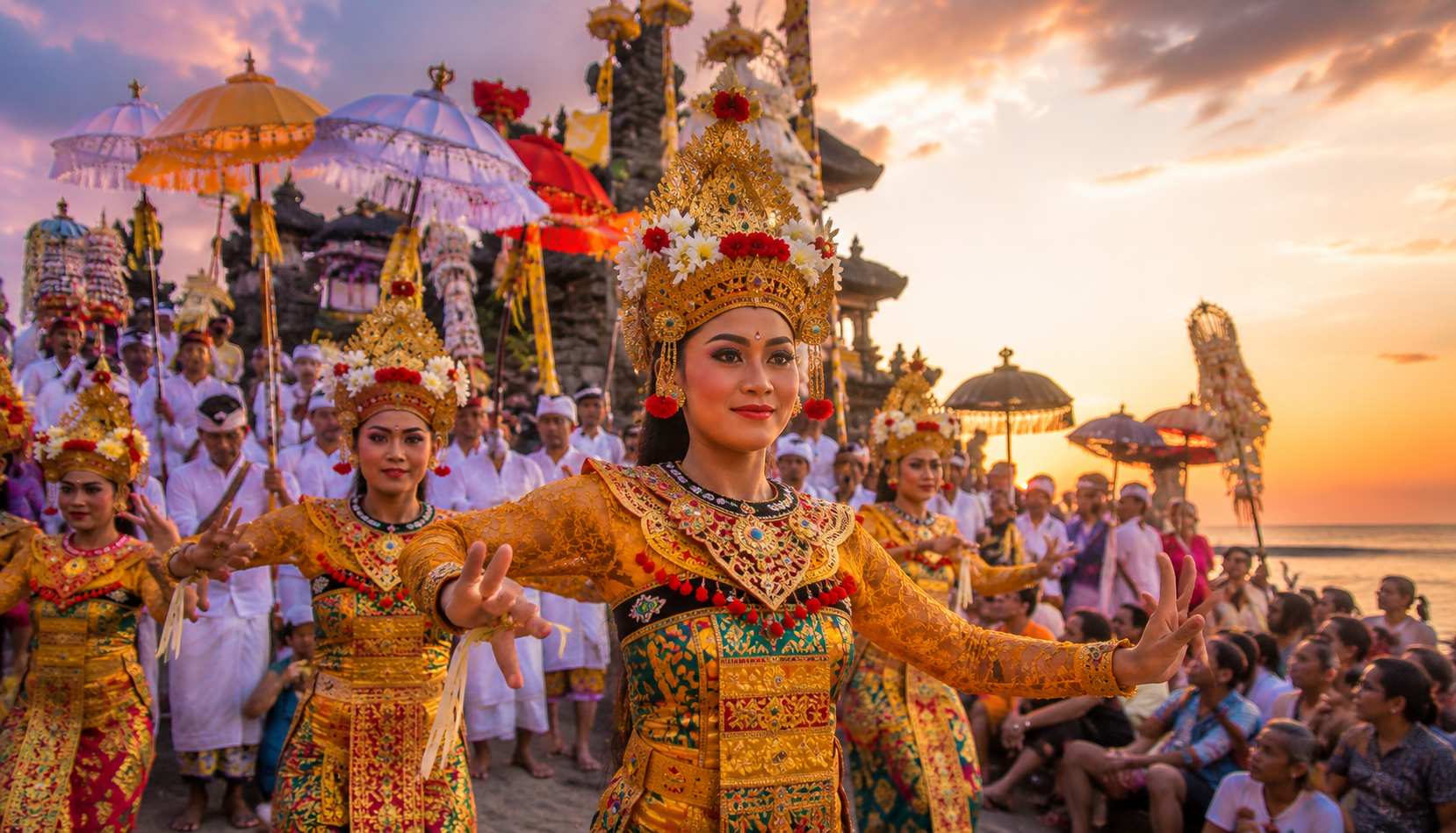
Bali runs on two festival calendars at once. One is sacred — the island-wide silence of Nyepi, the ancestral homecoming of Galungan — timed by the Balinese Saka and Pawukon systems, so the dates shift every year. The other is cultural and international: the month-long Bali Arts Festival, the yoga-and-music BaliSpirit Festival, Asia’s largest literary gathering in Ubud. Together they make Bali worth planning a trip — or a move — around.
Below are the festivals worth building an itinerary around, each with its 2026 dates, location and why it earns a place on your calendar — plus the practical rules every visitor now has to follow. If you love the island enough to stay, the best areas to base yourself in Bali put you within reach of most of them.
The Balinese New Year (Saka) is the island’s most extraordinary event. On Nyepi (19 March 2026), all of Bali shuts down for 24 hours: no flights, no traffic, no outdoor activity — a full day of silence and reflection.
The night before (18 March 2026) is the opposite: the Ogoh-Ogoh parade, when villages carry giant papier-mâché demon effigies through the streets to be symbolically burned. Three days earlier, the Melasti purification procession heads to the sea; the day after Nyepi, Sesetan village holds Omed-Omedan, a good-natured mass “kissing ritual.”
Practical note
You cannot leave your hotel on Nyepi, so book a villa or resort with a full-board “Nyepi package.” It is the one day a year to experience total island silence.
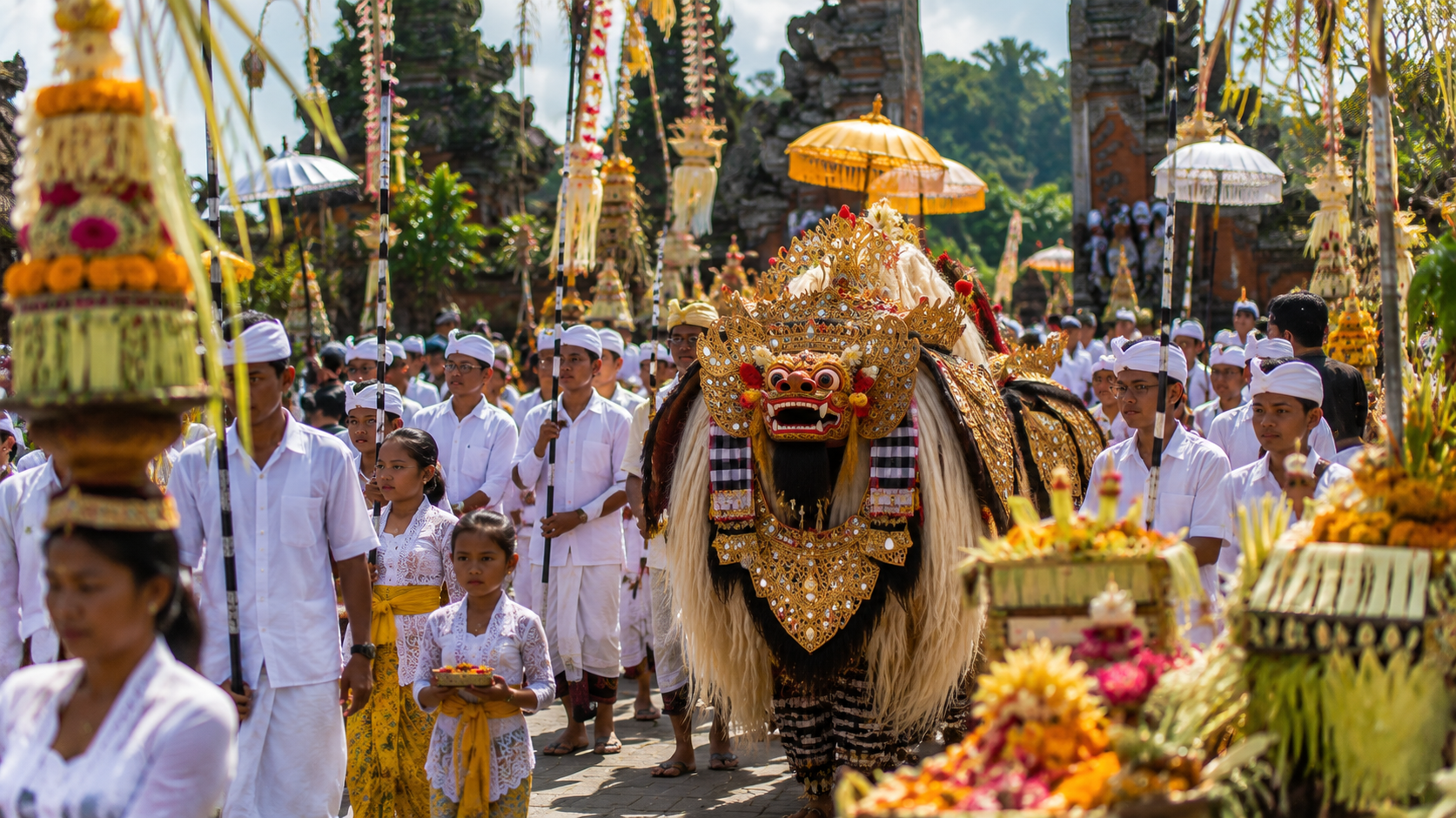
Galungan (17 June 2026) marks the victory of dharma over adharma, and the ten-day period when ancestral spirits return to their families. It closes with Kuningan (27 June 2026). Following the 210-day Pawukon calendar, these occur roughly twice a year.
The visual signature is the penjor — tall, arching bamboo poles decorated with coconut leaves, flowers and fruit, lining every street. For the most elaborate displays, head to Ubud or the preserved village of Penglipuran, where the penjor are among the finest on the island.
The island’s flagship cultural event runs a full month — 13 June to 11 July 2026 — at the Taman Budaya (Werdhi Budaya) Art Centre in Denpasar. It opens with a grand parade and fills weeks with gamelan, dance, craft markets and inter-regency competitions. Most of it is free or low-cost.
One of the world’s premier yoga, dance and music festivals, at the Bali Purnati Center in Gianyar, drawing participants from 50+ countries. In 2026 it is scheduled for 22–26 April (dates shift between April and May). Expect world-class teachers, ecstatic-dance nights and global-music concerts.
Held at Taman Kuliner in central Ubud (29–31 May 2026, dates vary slightly), Indonesia’s premier culinary event. Michelin-starred chefs and Indonesian experts run masterclasses, tastings and talks — from crispy roast suckling pig to regional street food.
Often called Asia’s largest literary festival, UWRF (21–25 October 2026) brings authors, thinkers and performers to Ubud for four days of talks and cross-cultural exchange. It books out early — reserve accommodation well ahead.
A joyful, largely free spectacle at Padang Galak beach near Sanur during the windy dry season. Village teams fly enormous traditional kites — some over ten metres long — believed to send messages to the gods for an abundant harvest. Great for families and photographers.
A raw ritual unique to Tenganan, one of Bali’s oldest villages (Karangasem). Around 21–23 June 2026, young men duel with a rattan shield and thorny pandan leaves, honouring the god Indra. It follows the village’s own calendar — confirm dates locally.
| Festival | 2026 dates | Where |
|---|---|---|
| Ogoh-Ogoh Parade | 18 March | Island-wide |
| Nyepi (Day of Silence) | 19 March | Island-wide |
| BaliSpirit Festival | 22–26 April* | Bali Purnati, Gianyar |
| Ubud Food Festival | 29–31 May* | Taman Kuliner, Ubud |
| Bali Arts Festival (PKB) | 13 June – 11 July | Art Centre, Denpasar |
| Galungan / Kuningan | 17 / 27 June | Island-wide |
| Perang Pandan | ~21–23 June* | Tenganan, Karangasem |
| Bali Kite Festival | July* | Padang Galak, Sanur |
| Ubud Writers & Readers | 21–25 October | Ubud |
* Dates for these events shift year to year or follow traditional calendars — confirm locally 2–3 weeks before travel.
Many visitors come for a festival and end up wanting a base here. Foreigners can’t hold freehold land, but you can legally own a home in Bali through a PT PMA or a leasehold, and long-term living is straightforward once you understand how to immigrate to Bali and which KITAS residency permit fits you. Some festival regulars go further and set up a business in Bali.
When is Nyepi in 2026, and can I travel that day?
Nyepi falls on 19 March 2026, with the Ogoh-Ogoh parade on 18 March. You cannot travel: the airport closes for 24 hours and roads shut. Book a “Nyepi package” in advance.
What is the best month to visit Bali for festivals?
June–July is the richest window: Galungan, Kuningan, the month-long Bali Arts Festival and Perang Pandan all fall then. March (Nyepi) and October (Ubud Writers & Readers) are the other standouts.
Do I have to pay to attend Bali’s festivals?
Religious ceremonies and the Kite Festival are generally free. BaliSpirit, Ubud Food Festival and UWRF charge entry. Every foreign visitor also pays the one-time IDR 150,000 tourist levy.
What should I wear to temple ceremonies?
Modest clothing covering shoulders and knees, plus a sarong and sash — required at sacred sites under Bali’s 2025 rules. Sarongs cost IDR 50,000–150,000 locally.
When are Galungan and Kuningan in 2026?
Galungan is 17 June 2026 and Kuningan is 27 June 2026. They follow the 210-day Pawukon calendar and recur roughly twice a year. Look for the tall penjor poles.
From the total silence of Nyepi to the month-long artistry of Pesta Kesenian Bali, the island’s festivals are its living heartbeat. If one of them makes you want to put down roots, DDA Real Estate can help you find the right home and structure the purchase legally. Explore our complete guide to buying property in Bali as a foreigner, then get in touch.