Off-plan properties
For many people considering a move abroad, healthcare becomes one of the deciding factors alongside visas, housing and cost of living. This is especially true for families with children, retirees and investors planning to spend part of the year on the island.
Over the past decade, Bali has significantly improved its healthcare infrastructure. Private hospitals, international clinics, specialized medical centers and modern dental practices now serve both locals and the growing expat community. While Bali is not yet a medical hub on the scale of Singapore or Bangkok, it offers a high standard of care for most everyday healthcare needs.
This guide covers the best hospitals in Bali, healthcare costs, emergency medical services, dentistry, family healthcare and the areas of the island that offer the best access to medical facilities.
Healthcare in Bali consists of both public and private providers.
Most expatriates and foreign residents choose private hospitals and clinics because they offer:
For routine healthcare, diagnostics, pediatric care, dentistry and emergency treatment, private healthcare on Bali is generally sufficient.
For highly specialized procedures such as advanced oncology, cardiac surgery or complex neurosurgery, patients may still be referred to larger medical centers in Jakarta or overseas destinations such as Singapore and Bangkok. This makes international medical insurance one of the most important aspects of relocating to Bali.
Several hospitals are particularly popular among international residents.
| Hospital | Location | Best For |
|---|---|---|
| BIMC Hospital | Kuta, Nusa Dua | Emergency care, tourists, expats |
| Siloam Hospitals Bali | Denpasar | Diagnostics, specialists, hospitalization |
| Bali International Hospital | Sanur | International healthcare, medical tourism |
| Bali Royal Hospital | Denpasar | Maternity care, family medicine |
| Kasih Ibu Hospital | Multiple locations | General healthcare and family services |
BIMC Hospital
BIMC is one of the most recognized private hospitals among foreigners living in Bali. It is frequently used for emergency treatment, accidents, infections, dehydration and general medical consultations.
Its experience working with international insurance providers makes it particularly attractive for expats and tourists.
Siloam Hospitals Bali
Siloam is one of Indonesia’s largest private healthcare networks.
The Bali branch offers a broad range of services including specialist consultations, diagnostic imaging, laboratory testing and inpatient care.
Many long-term residents choose Siloam as their primary healthcare provider.
Bali International Hospital
Located in Sanur, Bali International Hospital represents one of the most significant healthcare developments on the island in recent years.
The hospital continues to expand its international partnerships, specialist services and healthcare programs. Its development is expected to strengthen Sanur’s position as one of Bali’s most attractive locations for families, retirees and long-term residents.
For investors and property buyers, proximity to this healthcare hub is becoming an increasingly important factor.
One of the most common concerns among expats is what happens when urgent medical care is needed.
Emergency Medical Care in Bali
In an emergency, the recommended steps are:
Hospitals commonly used by foreigners for emergency care include:
| Hospital | Emergency Department |
|---|---|
| BIMC Hospital | 24/7 |
| Siloam Hospitals Bali | 24/7 |
| Bali International Hospital | 24/7 |
| Kasih Ibu Hospital | 24/7 |
Emergency response times can vary depending on traffic and location.
In densely populated areas such as Canggu, Seminyak and Ubud, many residents choose to travel directly to the hospital rather than wait for an ambulance.
For residents living in more remote areas of the island, knowing the nearest emergency facility in advance is strongly recommended.
One advantage of private healthcare in Bali is the widespread availability of doctor-on-call services. Many clinics provide home visits directly to villas, apartments and hotels.
This service is commonly used for:
For families with children, retirees and long-term residents, access to home healthcare can be extremely convenient.
Families represent a large proportion of Bali’s long-term expat population. Fortunately, pediatric healthcare is well developed in the island’s main residential areas.
Healthcare for Children
Private hospitals and clinics offer:
The strongest family healthcare infrastructure can be found in:
These areas generally provide easier access to pediatricians, hospitals and emergency services. For routine childhood illnesses, vaccinations and preventive care, Bali offers healthcare standards that meet the expectations of many international families.
An increasing number of expatriate families choose to have their children in Bali.
Private hospitals provide:
The hospitals most frequently used by foreign families include:
The cost of childbirth depends on the hospital, room category and whether additional medical intervention is required.
For low-risk pregnancies, many families find Bali’s private healthcare system more than adequate. For high-risk pregnancies, some families prefer to consider Singapore or Bangkok as alternatives.
Healthcare costs vary depending on the provider, specialist and complexity of treatment.
| Service | Approximate Cost |
|---|---|
| Doctor home visit | 350,000–800,000 IDR |
| Private clinic consultation | 500,000–1,500,000 IDR |
| Specialist consultation | Higher depending on specialty |
| Emergency room visit | $150–300+ |
| Hospital admission | Varies by condition |
| Intensive care | Several thousand dollars per day |
Healthcare costs can vary significantly depending on the doctor's specialization, the hospital, diagnostic testing and insurance arrangements. This is another reason why comprehensive health insurance is strongly recommended.
Medical insurance is essential for anyone planning to live on Bali long term.
A good policy should cover:
Special attention should be paid to scooter accident coverage, as road accidents remain one of the most common reasons foreigners require emergency treatment.
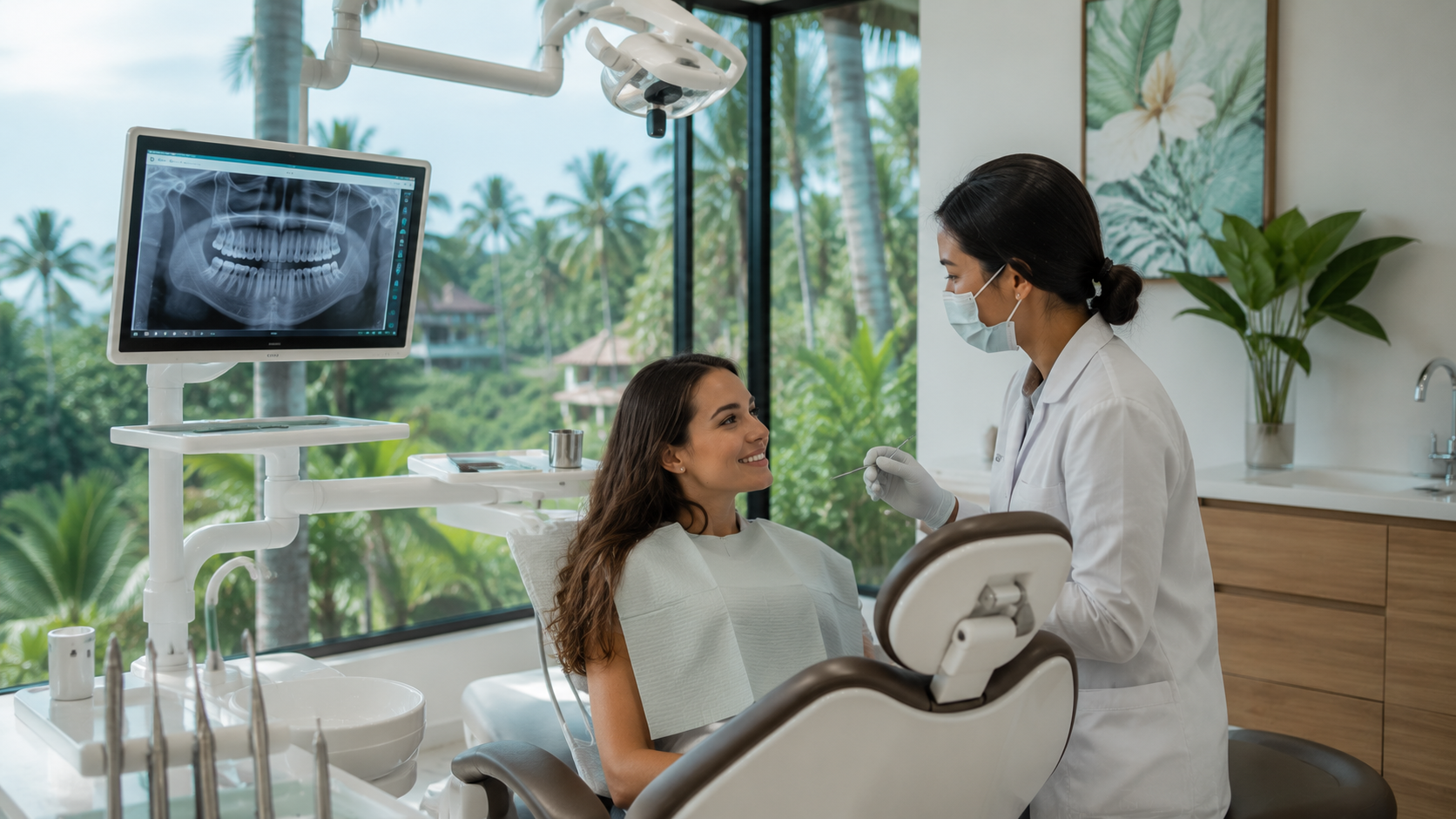
Dentistry is one of Bali’s strongest medical sectors. The island has a large number of modern dental clinics serving both residents and medical tourists.
Popular treatments include:
Many patients from Australia, Europe and North America find dental treatment in Bali considerably more affordable than in their home countries.
| Service | Approximate Cost |
|---|---|
| Dental consultation | $20–40 |
| Professional cleaning | $40–100 |
| Filling | $50–150 |
| Whitening | $150–350 |
| Crown | $300–700 |
| Veneer | $300–800 per tooth |
| Implant | $900–2,000+ |
For major procedures, it is advisable to request a written treatment plan before beginning treatment.
Access to healthcare varies considerably depending on location.
| Area | Hospitals | Pediatric Care | Travel Time to Major Hospital |
|---|---|---|---|
| Sanur | Excellent | Excellent | 5–10 minutes |
| Denpasar | Excellent | Excellent | 5–15 minutes |
| Nusa Dua | Good | Good | 10–20 minutes |
| Jimbaran | Good | Good | 15–20 minutes |
| Canggu | Moderate | Good | 30–45 minutes |
| Ubud | Moderate | Moderate | 40–60 minutes |
| North Bali | Limited | Limited | 60+ minutes |
For families, retirees and long-term residents, Sanur is often considered one of the strongest locations due to its combination of healthcare infrastructure, lifestyle and accessibility.
Like any tropical destination, Bali has certain health risks that newcomers should understand.
The most common include:
Dengue remains one of the most common tropical infections in the region. Anyone experiencing high fever, severe fatigue, body aches or other symptoms should seek medical attention promptly.
Most health risks can be minimized through common-sense precautions, proper hydration, mosquito protection and adequate insurance coverage.
Many buyers focus primarily on beaches, rental yields and property design. However, healthcare infrastructure can have a significant impact on both quality of life and long-term property value.
This is particularly important for:
Properties located near quality healthcare facilities often prove more attractive to both residents and tenants. This is one reason why areas such as Sanur, Nusa Dua, Jimbaran and parts of Denpasar continue to attract strong interest from long-term residents.
Useful materials: “Health Insurance in Bali”, “Immigration to Bali: complete guide for expats and travelers”, “How to work on Bali: Official Visas, PT PMA, and Tax Compliance”.
Are there English-speaking doctors in Bali?
Yes. Most private hospitals and international clinics employ English-speaking doctors and medical staff.
Can I call a doctor to my villa in Bali?
Yes. Many private healthcare providers offer doctor-on-call services throughout the island.
What should I do if I suspect dengue fever?
Seek medical attention as soon as possible. Early diagnosis and monitoring are important, particularly during the first few days of symptoms.
Is healthcare in Bali good enough for families?
For routine healthcare, pediatric care and most common medical needs, Bali’s private healthcare system serves families well.
Which area is best for families in terms of healthcare?
Sanur, Denpasar, Jimbaran and Nusa Dua generally offer the strongest combination of hospitals, pediatric services and emergency care.
Do I need health insurance to live in Bali?
While not always legally required, comprehensive international health insurance is strongly recommended for all long-term residents.
For families, retirees and long-term residents, access to quality healthcare is just as important as proximity to the beach or investment potential.
The team at DDA Real Estate helps clients identify villas, apartments and residential communities located near hospitals, schools, shopping areas and essential infrastructure.
Whether you are relocating, investing or planning a retirement lifestyle in Bali, we can help you find a property that supports both your financial goals and your quality of life.
Contact DDA Real Estate for a personalized property selection based on your budget, lifestyle and healthcare priorities.