
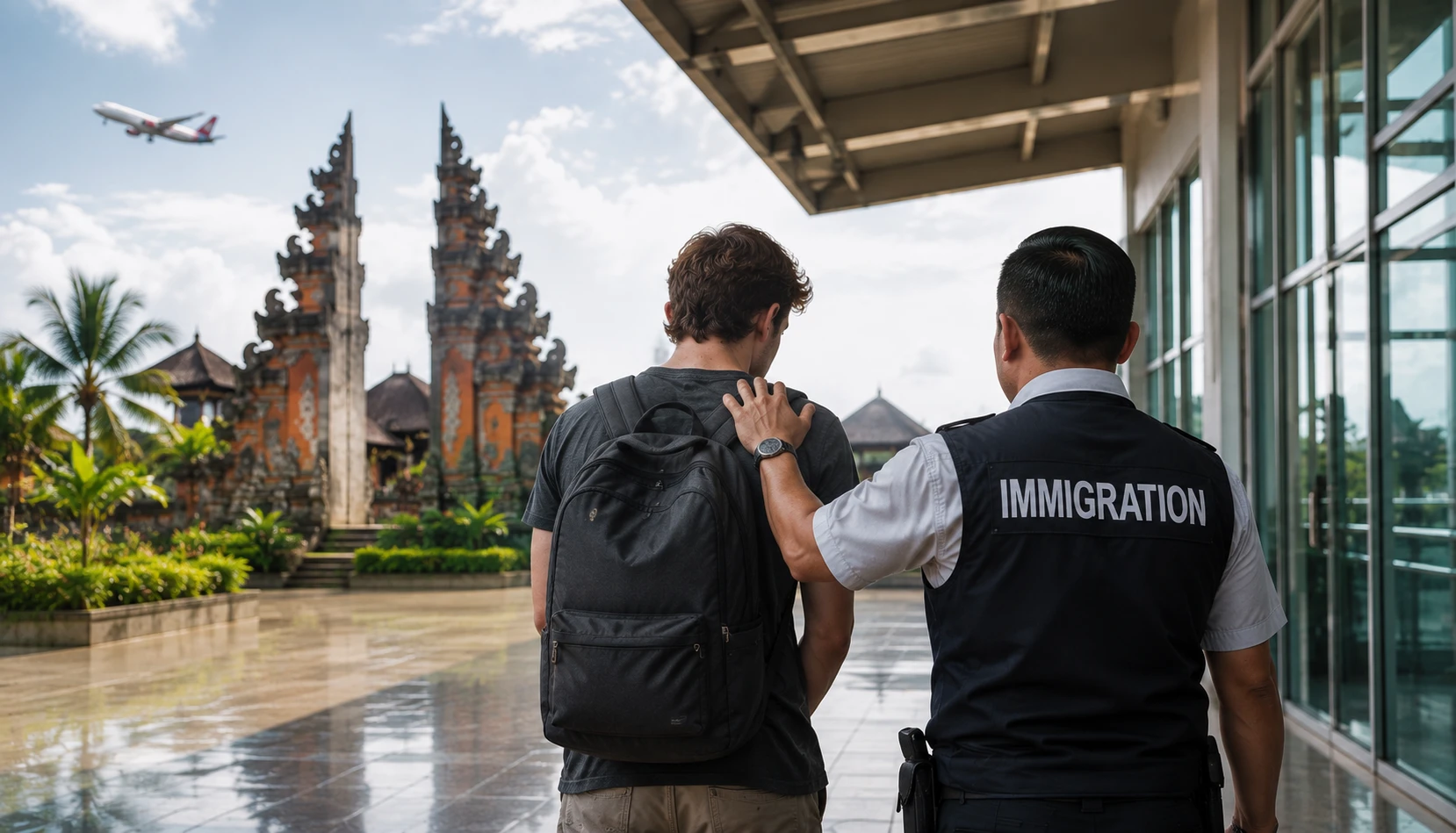

Reasons for Deportation from Bali Explained
Indonesia
EN
$
ft²
Other articles

Reasons for Deportation from Bali

Natalia Gubareva The author of the article, the Broker
#Blog DDA
29 August 819 views

Deportation is rarely the consequence of one dramatic act. It is usually the end of a chain of administrative failures that accumulated over months — working on a visit permit, an overstay left unresolved, income earned without the right paperwork.

The second thing worth understanding is that leaving is not the penalty. The penalty is the re-entry ban that follows, and it applies to the whole country rather than to one island.

Below is what the recorded grounds actually are, how the process runs, what the ban means and how the situations arise. This is general information rather than legal advice — anyone facing a real case needs a lawyer in Indonesia, immediately.

The grounds in practice

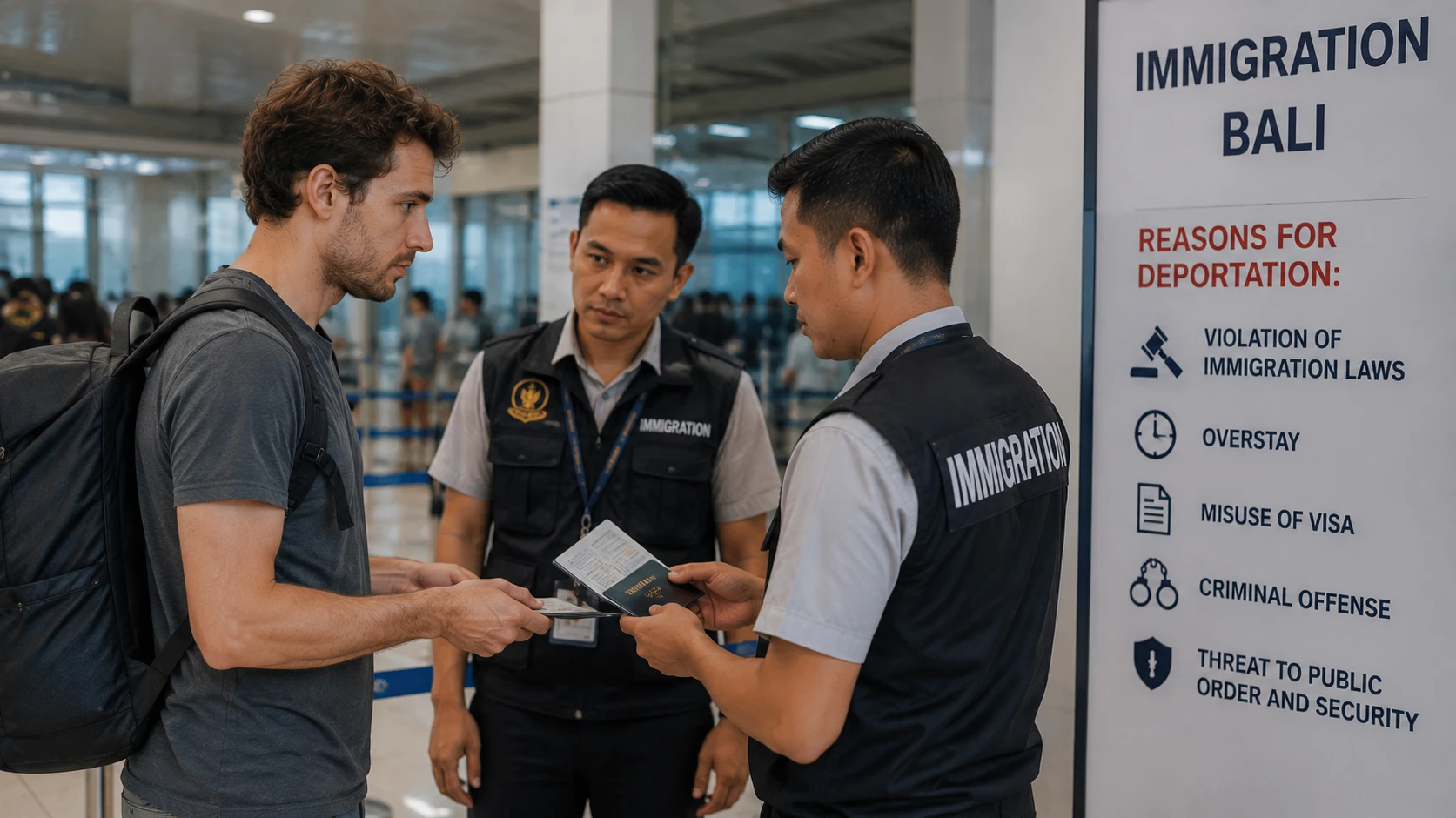
Immigration cases concerning foreigners cluster into a small number of categories, and most of them are administrative rather than criminal:

  • Working or earning without a permit that allows it
  • Overstaying beyond the point where a fine resolves it
  • Activity that does not match the permit held
  • Running a business without the required licences
  • False information or documents in an application
  • Public order offences and behaviour that draws official attention
  • Disrespect toward religious sites or local customs, where it becomes a public matter

The first three account for most cases involving otherwise law-abiding people. Nobody sets out to breach a permit condition; they take a small job, extend a stay, or start something informal that grows.

Working on the wrong permit

This is the largest single category and the one people misunderstand most. A visit permit does not allow work, and the definition of work is broader than employment by a local company.

Teaching a class, taking photographs for payment, managing a rental, running a stall, providing services to guests — all of it is activity that requires the right permission. Remote work for a foreign client is treated as a separate question and is not automatically safe either. Dedicated routes exist that make a working life here lawful, and the guide to moving to Bali for permanent residence sets them out.

Overstay that was not closed

A short overstay is an administrative matter settled with a fine. Beyond a certain length it stops being a fine and becomes a case.

The change is not gradual. Past the threshold, paying more is not an option, and the matter moves to administrative action with detention and removal as possible outcomes. An overstay is cheapest on day one and unresolvable after a certain point, which is why it is closed immediately rather than accumulated until departure.

Activity that does not match the permit

Permits are issued for a stated purpose. A permit granted for one activity does not cover another, even when both are lawful in themselves.

A permit tied to a company covers work for that company. A permit granted as a spouse does not by itself authorise employment. Holding a valid permit is not the same as being allowed to do what you are doing, and this distinction produces cases involving people who believed they were fully compliant.

Business without licences

Running an unlicensed business is a licensing matter for a local person and an immigration matter for a foreigner. That is the asymmetry people miss.

Letting property without the required registrations, running a café or a rental fleet informally, offering services from a villa — each can be treated as activity outside the permit's terms. For a foreigner the licensing failure and the immigration failure arrive together, and the second is the more serious of the two.

Documents and applications

False or misleading information in an application is treated seriously, and it includes things applicants think of as tidying up: an address you do not live at, a sponsor who does not employ you, a purpose that does not match reality.

Agents sometimes propose these arrangements as normal practice. The applicant signs the form, and the applicant carries the consequence. An agent who suggests stating something untrue is telling you what they think of your risk, not theirs.

Behaviour and public order

A smaller category, but a visible one. Cases involving foreigners behaving badly at temples, on the road or toward officials attract attention precisely because they are unusual.

The island's tolerance for visitors is broad and its patience with public disrespect is not. Filming in restricted areas, climbing on sacred structures, aggression toward police — these become official matters quickly. What the sacred sites are and how visitors are expected to behave at them is set out in the guide to the main temples of Bali, and the wider safety basics for Bali cover the rest. Anything that becomes a public story moves faster through the system.

How the process runs

Deportation is an administrative procedure rather than a criminal one, which means it does not require a court conviction. The sequence is broadly consistent:

StageWhat happensWhat matters
DetectionA check, a complaint or a reportOften triggered by someone else's report
InvestigationQuestions, documents examinedGet a lawyer here, not later
DecisionAdministrative order issuedGrounds are recorded and stay recorded
DetentionHeld pending removal, in some casesLength varies considerably
RemovalDeparture at your own costTicket usually paid by you
BanEntry prohibition recordedThe consequence that outlasts everything else

The point to act is the investigation, not the decision. Afterwards the options narrow sharply.

The ban is the real penalty

Leaving costs a flight. The entry prohibition that follows costs everything you built here.

It applies to Indonesia as a whole, not to Bali, and it is recorded in a system that is checked on every future application. Length depends on the grounds. A ban does not pause a lease, a company or a property, and managing any of those from outside the country without being able to enter is the practical difficulty nobody plans for.

What happens to property

Ownership is not affected by an immigration decision. A leasehold interest, a company holding, a property you paid for — none of it is confiscated because you were removed.

The difficulty is operational rather than legal. Renewals, tax filings, disputes with tenants and eventual sale all normally involve being present or holding a properly executed power of attorney. Every one of those assumes someone can act locally. Anyone with assets here should already have a power of attorney arranged, for reasons that have nothing to do with immigration.

Who reports these things

Cases usually begin with information rather than with a patrol. A competitor, a former partner, a neighbour, a dismissed employee or a guest with a complaint.

Informal arrangements are stable until a relationship turns. That is the practical argument for doing things properly even when the informal version works: the risk is not detection by the state, it is a disagreement with someone who knows.

The grey areas

Several common situations sit in genuinely unclear territory, and treating them as safe because everyone does them is the mistake:

  • Remote work for foreign clients while on a visit permit
  • Managing your own rental property personally rather than through an operator
  • Selling goods or services informally within an expatriate community
  • Teaching, coaching or instructing on an unpaid or barter basis
  • Helping in a business owned by a partner or spouse
  • Content creation that generates income from foreign platforms

Widespread practice is not the same as permitted practice. The number of people doing something says nothing about how it is treated when one of them becomes a case.

If you are contacted by immigration

Contact does not mean a decision has been made. It usually means questions, and how they are answered matters more than most people realise.

Get a local lawyer before answering substantively, be truthful rather than creative, and keep a written record of what was asked. Do not sign anything you have not read in a language you understand. A translated explanation from the person asking you to sign is not a translation.

Voluntary departure

In some situations leaving voluntarily before matters proceed produces a better outcome than being removed. In others it makes no difference at all, and in some it is not available.

This is precisely the judgement a lawyer is for. It depends on the grounds, the stage and whether a ban has already been recorded. Deciding it yourself, based on what someone in a group chat did, is how avoidable bans happen.

How to stay out of all of it

The preventive list is short and none of it is difficult, which is what makes the cases frustrating:

  • Hold a permit that matches what you actually do
  • Close any overstay immediately rather than at departure
  • Keep the renewal calendar and the reporting obligations current
  • License what needs licensing before it starts earning
  • Never state anything in an application you would not defend in person
  • Use a lawyer for structure rather than an agent with a shortcut
  • Keep a power of attorney in place for anything you own

Where you live matters less than what you do

Enforcement attention follows visibility rather than geography. A business operating openly draws more of it than a quiet household anywhere on the island.

That said, areas with dense foreign populations and heavy informal commerce see more activity, simply because more is happening. Ubud is one such place, and the account of living in Ubud describes what that density looks like day to day. The variable you control is your paperwork, not your address.

Questions we hear most

Can I be deported for an overstay?

A short overstay is settled with a fine. Beyond a certain length it stops being a fine and becomes an administrative case, with detention and removal among the possible outcomes. The change is abrupt rather than gradual.

Is remote work for a foreign company allowed?

It is a genuinely grey area rather than a settled permission, and a visit permit does not authorise work. Dedicated routes exist for people working remotely, and using one removes the question entirely.

What happens to my property?

Ownership is unaffected. The difficulty is operational: renewals, filings and a sale usually need someone able to act locally. A properly executed power of attorney solves most of it, and it should exist before it is needed.

How long does a ban last?

It depends on the grounds, and it applies to Indonesia as a whole rather than to Bali. It is recorded and checked on future applications, which is why it matters far more than the removal itself.

Should I leave voluntarily if there is a problem?

Sometimes it helps and sometimes it changes nothing, and occasionally it is not available. The answer depends on the grounds and the stage, so it is a question for a lawyer in Indonesia rather than for a forum.

Key takeaways

  • It is usually a chain, not an event — administrative failures accumulated over months
  • The ban is the penalty — it covers the whole country and outlasts everything else
  • A valid permit is not blanket permission — the activity has to match it
  • Cases start with a report — usually from someone who knows your arrangements
  • Act at the investigation stage — after the decision the options narrow sharply

Assets stay, access does not

That asymmetry is the part worth planning for, and it applies well beyond immigration — illness, a family emergency or a closed border produce the same problem. DDA Real Estate is a real estate agency working in Indonesia. We are not lawyers and do not advise on immigration. What we do raise, before a purchase rather than after, is who can act on your behalf if you are not here, and whether the way you plan to use a property matches what your status permits.

Look at our offers in Bali and leave a request: we will set out what each property will require of you in practice, what can be handled remotely and what cannot, and say plainly when a plan needs a lawyer before it needs a listing.

Popular
5 June 4207392 view
Dubai Rent Prices 2025: Average Apartment Rental Costs in Dubai Dubai's rental market continues its upward climb in 2025, driven by population growth and limited new supply, pushing average prices up by 10%

#Blog DDA
2 July 2409624 view
DLD Fees in Dubai: Everything You Need to Know Buying property in Dubai? Don't let hidden fees surprise you! Our essential guide breaks down ALL Dubai Land Department (DLD) fees
#Blog DDA
23 November 1785168 views
How to Buy a SIM Card in Turkey in 2026: Prices, IMEI Registration, eSIM Options, and Best Mobile Operators Overview of mobile operators, available types of SIM cards, and home Internet providers
#Blog DDA
5 July 1732500 views
How Much is the Real Estate Agent Commission in Dubai? Find out how much real estate agent commission costs when buying property in Dubai.
#Blog DDA
5 February 1415862 view
How Foreigners Can Own Property in Bali: Understanding PT PMA (2025) Foreigners can't own freehold land in Bali, but a PT PMA (foreign-owned company) allows secure property ownership under Hak Guna Bangunan (HGB) or Hak Pakai (HP) rights
#Blog DDA
28 August 1172619 views
Oqood vs Title Deed in Dubai: Key Differences You Must Know Buying property off-plan in Dubai? Oqood registration is mandatory to secure your ownership rights.
#Blog DDA