Off-plan properties
Choosing a condominium near daily infrastructure is one of the most effective ways to improve everyday life in Thailand. The right address saves time, reduces transport costs and makes routines more predictable. This guide explains how to assess walkability, groceries, healthcare, schools, transport and building services before buying or renting.
A beautiful lobby is easy to admire, but daily convenience is what makes a condominium comfortable after the excitement of moving fades. Write down where you travel on a normal weekday: work, groceries, school, healthcare, exercise and evening errands. The best location is the one that removes friction from the journeys you repeat most often.
Rank each destination by frequency rather than by prestige. A supermarket visited four times a week usually matters more than a landmark visited once a month. Choose the daily routine before choosing the building. This approach also helps investors identify the needs of the tenants they expect to attract.
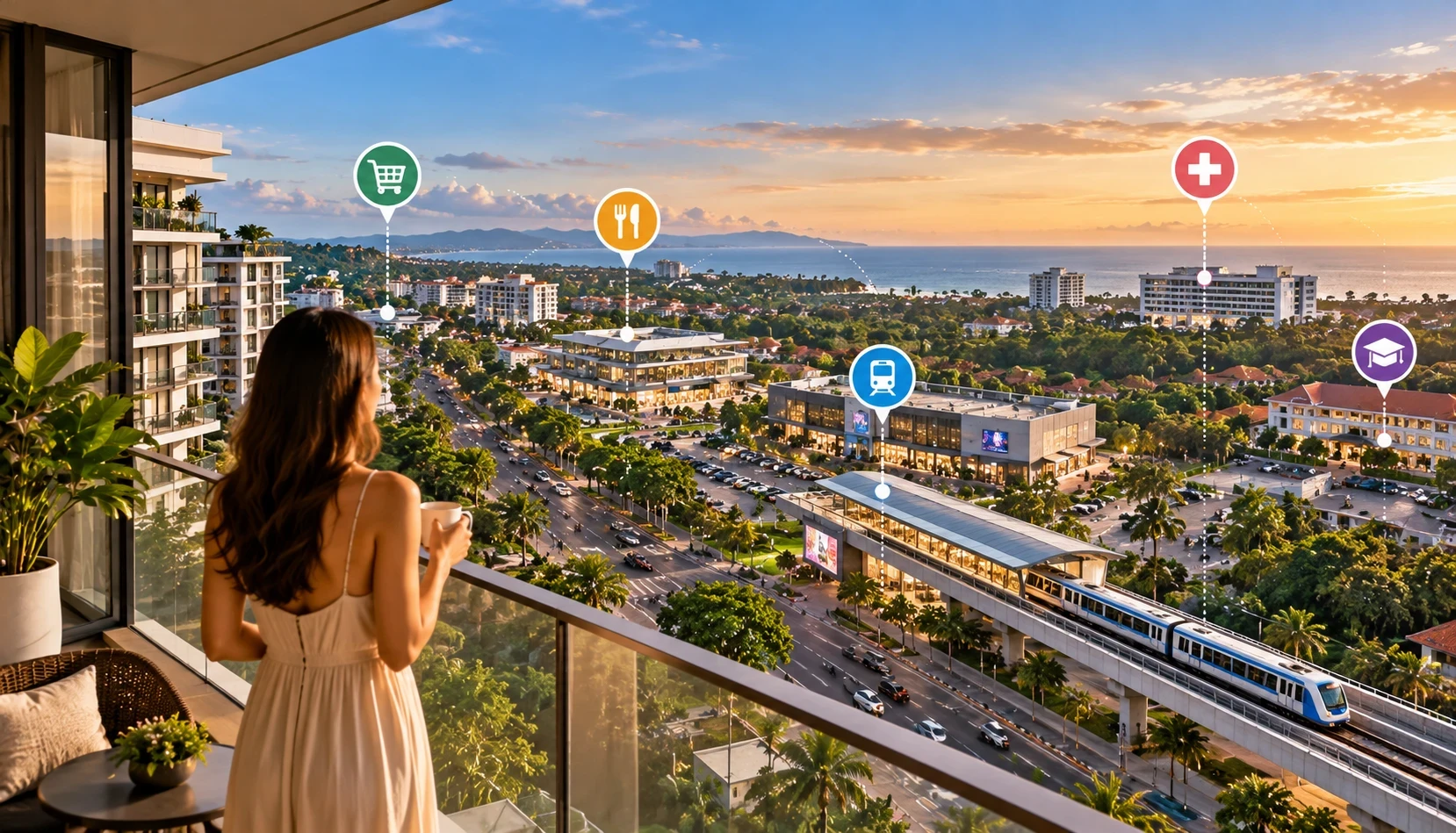
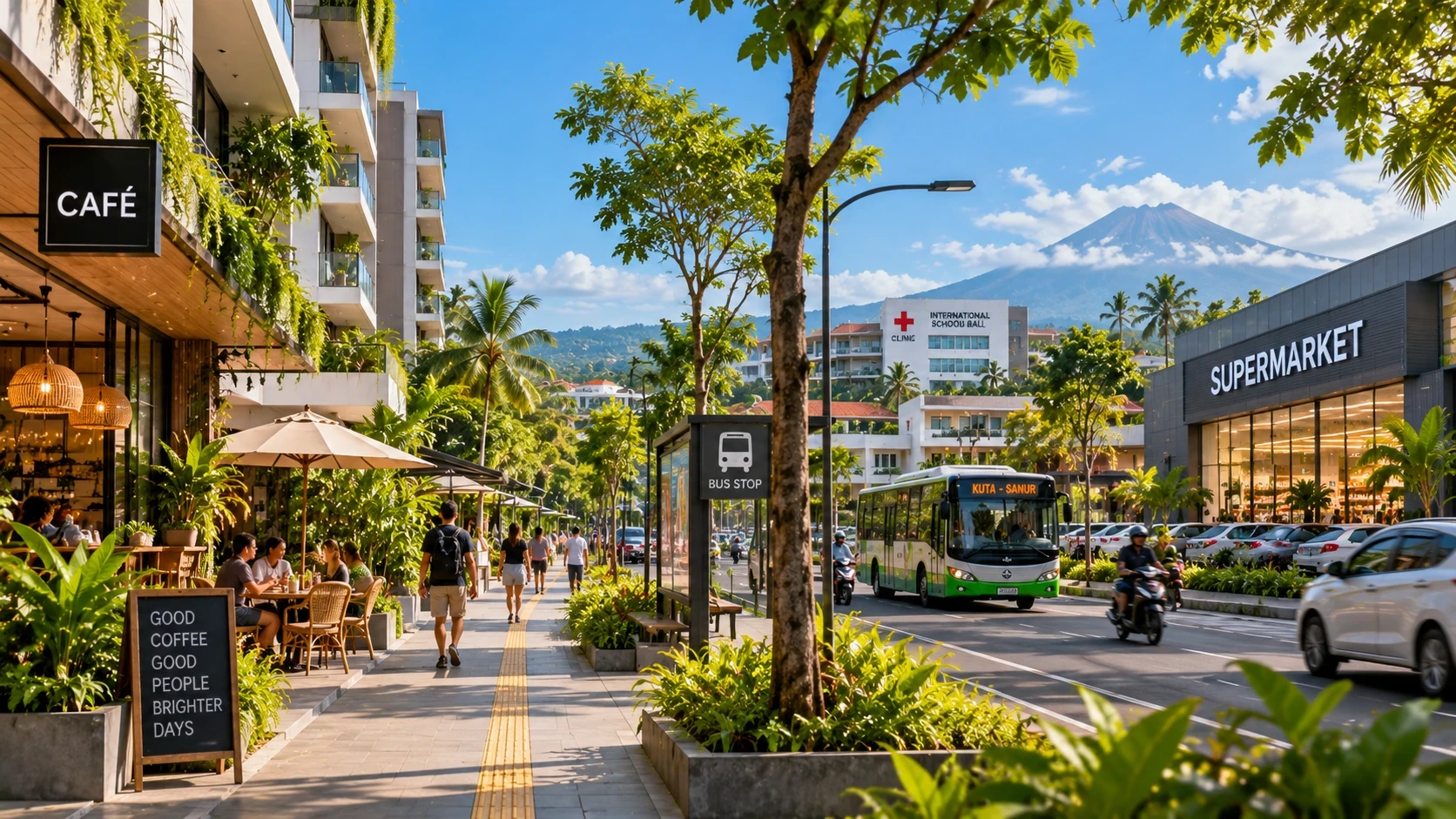
Essential infrastructure includes more than a shopping mall. It covers reliable transport, food shopping, pharmacies, medical care, banking, delivery access, internet service, utilities and safe routes between them. Families may also need schools, childcare and outdoor recreation.
Separate necessities from lifestyle extras. A rooftop pool cannot compensate for an unsafe crossing to the nearest shop. List your non-negotiable services first and treat cafés, restaurants and leisure venues as secondary advantages unless they are central to your routine.
An address advertised as 500 meters from a station may involve a long detour, a footbridge or a road without sidewalks. Use a map to identify the route, then walk it yourself with a timer. Include the actual condominium entrance rather than the edge of its land plot.
Five hundred meters on a map is not the same as five comfortable minutes on foot. Heat, traffic lights, steep slopes and rain change the experience. Walk at the time of day you would normally travel, and repeat the test after dark if evening errands matter.
Pedestrian safety can vary dramatically between adjacent streets in Thailand. A route may include parked motorbikes, drainage openings, uneven paving or a busy junction with no convenient crossing. A short walk is useful only when residents can complete it comfortably.
Inspect every crossing on the route, not just the building entrance. Consider children, older residents, strollers and luggage. If the route requires stepping into fast-moving traffic, treat the advertised walkability as a serious limitation rather than a minor inconvenience.
In Bangkok, access to BTS and MRT services can make commuting predictable, provided the station connects to the destinations that matter. In Phuket, Pattaya and other resort markets, local transport coverage is different and hired rides may remain essential.
A nearby station is valuable only when it serves your actual route. Count transfers, waiting time and the walk at each end. For areas without rail, check transport availability in the morning, late evening and rainy weather rather than relying on one successful ride.
Convenience stores are useful for quick purchases, but they may not replace a supermarket or fresh market for a household that cooks regularly. Check food variety, delivery coverage, opening hours and whether the route is comfortable with shopping bags.
A complete grocery option within a practical radius reduces recurring transport costs. If the nearest large supermarket requires a paid ride, estimate how many trips you will make each month. A cheaper condo can become less economical once routine errands are included.
A pharmacy nearby is helpful, but it does not substitute for access to a clinic or hospital. Identify the closest appropriate facilities, check their actual operating hours and test the road route from the building during periods of heavier traffic.
Healthcare access should be judged by usable travel time and service level. Families may need pediatric care; retirees may prioritize specialist access. Do not assume that the closest facility can handle every medical need, and keep emergency arrangements separate from routine visits.
For households with children, school choice can dominate the location decision. A school that appears close may be across a congested road network, and pickup queues can turn a short distance into a long daily commitment.
Test the school run during actual arrival and dismissal periods. Check transport options, after-school activities and whether parents can manage other errands on the same trip. A family-friendly condo needs a practical routine, not merely a school pin on the map.
Different residents use the same neighborhood differently. A remote worker may need quiet cafés and backup connectivity; a family prioritizes safe routes and schools; a retiree may favor healthcare and accessible shopping. Score each service according to your household rather than copying someone else’s checklist.
The table below is a decision framework, not a claim about a specific project. Give the highest weight to the services you will use most frequently and test them on the ground before committing.
| Resident profile | Priority infrastructure | What to test |
|---|---|---|
| Remote professional | Reliable internet, transport, groceries | Test workday commute and in-unit signal |
| Family | School, clinic, safe crossings | Repeat the school run at peak hours |
| Retiree | Hospital, pharmacy, easy walking | Check access without stairs or a vehicle |
| Long-term rental investor | Transport, jobs, daily shopping | Compare actual tenant demand and costs |
Tourist districts can offer restaurants, beach clubs and attractive scenery while lacking practical daily services. Some shops are seasonal or cater to short-stay visitors rather than long-term residents. Busy nightlife can also affect sleep and access.
A lively holiday area is not automatically a convenient residential area. Check laundry services, fresh food, banking, clinics and delivery reliability. Read our checklist for the neighborhood around a property for a broader neighborhood inspection approach before selecting a property.
Road noise, bars, construction sites and late deliveries can be hard to detect during a midday viewing. Visit the street after sunset and during morning rush hour. Open the windows if possible and inspect the unit’s orientation relative to traffic.
Noise is a location cost that a good interior cannot fully remove. Ask about nearby vacant plots and approved construction. Compare a high floor with a lower one rather than assuming elevation automatically eliminates noise from roads or nightlife.
Heavy rain can expose weak drainage, inaccessible entrances and streets that are unpleasant to walk. Check the slope from the building to nearby services and ask residents whether water collects around junctions, parking ramps or the main gate.
Inspect drainage and wet-weather access before paying a deposit. A route that works only in dry weather is not reliable daily infrastructure. Request maintenance information for pumps, basement drainage and shared building systems where applicable.
Neighborhood convenience matters little if elevators are unreliable, security is poor or water pressure is inconsistent. Ask the juristic person or management team about maintenance schedules, service interruptions, parking rules and emergency systems.
Building management is part of everyday infrastructure. Review common-area fees, reserve funds and recent maintenance records where available. A modern lobby is less important than functioning lifts, secure entry, dependable utilities and a responsive management team.
For remote work, check the available fixed-line internet providers and mobile coverage inside the unit, not only in the lobby. Ask whether the building permits multiple providers and whether delivery couriers can reach the entrance efficiently.
Test connectivity in the exact apartment before assuming it is work-ready. Concrete walls, floor level and provider availability can affect service. A reliable parcel system, clear address and practical loading area can save time on everyday errands.
Compare monthly housing costs with the price of transport, parking, deliveries and the time spent on errands. A cheaper condo farther from services may require regular taxi trips or a second vehicle. Include those expenses in your personal budget.
Evaluate total monthly living cost, not just the asking price. For an investment, separate potential rent from operating expenses and vacancy. Our guide to realistic condo rental potential explains why realistic tenant demand and recurring costs matter more than headline yield claims.
Tenants often prioritize the same conveniences as owner-occupiers, but preferences depend on the target segment. Office workers may value transit, families need schools, and long-stay retirees may prioritize clinics and grocery access.
Match infrastructure to the tenant profile before forecasting rental income. Compare completed competing units, achievable rents and occupancy patterns. A new shopping mall nearby does not guarantee higher returns if the building has weak management or too much local competition.
In Thailand, foreign buyers can generally own qualifying condominium units within the statutory foreign ownership quota, subject to the building’s status and transaction requirements. Infrastructure quality does not replace a title and document review.
Confirm the foreign quota, title, payment documentation and building permits independently. Ask a qualified lawyer to review the transaction and use our guide to buying an apartment in Thailand for background on the buying process. Never treat an agent’s map or brochure as proof of legal eligibility.
Bangkok, Phuket and Pattaya offer very different transport systems and daily routines. Even within Bangkok, two condos a short distance apart may differ in station access, street safety, noise and neighborhood services.
Compare addresses using the same checklist and the same time windows. For examples of how transit, amenities and residential character differ across districts, see our Bangkok neighborhoods for expats. Avoid ranking areas solely by popularity or promotional rental projections.
Make one visit during your expected weekday routine and another during the evening or weekend. Walk to the grocery store, test transport, order a delivery and check the building entrance. Speak to a resident or nearby shopkeeper about recurring problems.
A repeatable on-site test beats a polished sales presentation. Keep notes on travel time, crossings, noise, shade, rain exposure and service quality. If possible, rent nearby briefly before making a long-term purchase decision.
How close should a condo be to essential services?
There is no universal distance. Prioritize a safe, repeatable route to groceries, healthcare and the transport you actually use.
Is a condo near BTS or MRT always better?
Not necessarily. The line must serve your destinations, and the walk to the station must be safe and practical.
Should families prioritize schools or shopping?
School travel often deserves greater weight because it happens at fixed peak-hour times; basic groceries and healthcare still matter.
Can nearby infrastructure improve rental demand?
It can make a unit more appealing to a suitable tenant group, but rent and occupancy still depend on price, supply and building quality.
What should I check before paying a deposit?
Inspect daily routes and building systems, then independently verify title, ownership eligibility, fees and contractual terms.
DDA Real Estate helps clients compare condominium locations in Thailand, review everyday infrastructure and assess ownership requirements before committing.
Explore our Thailand condo listings and send an inquiry: share your budget, preferred city and daily priorities so we can help shortlist practical locations.