Off-plan properties
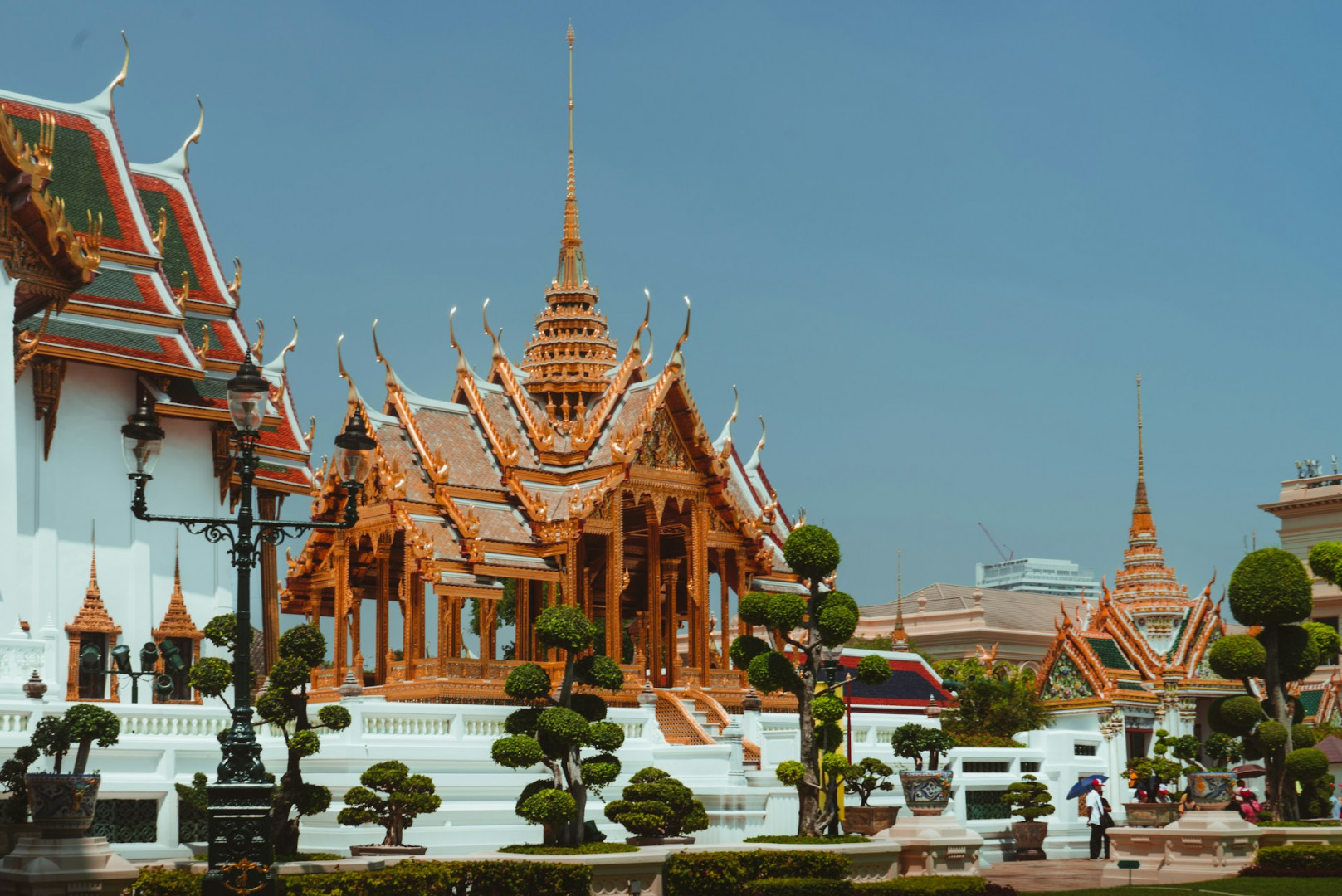
The Grand Palace in Bangkok is the main tourist attraction in the capital of Thailand. Crowds gather at its walls every day. Some come for the Temple of the Emerald Buddha, others to see the royal architecture. But without preparation, a visit can turn into long queues, fines for inappropriate clothing, and heatstroke.
In 1782, King Rama I moved the capital from Thonburi to Bangkok. A new royal residence began construction on the right bank of the Chao Phraya River. The first buildings were wooden, but they were quickly replaced with brick and stone. The complex was designed as the administrative and religious center of the kingdom.
The palace was officially named Phra Borom Maha Ratchawang. Until 1925, the kings of Siam lived here, and government offices were also located on the grounds. After the death of King Rama VI, the monarchs moved to other residences, and the Grand Palace began to be used only for official ceremonies.
During the 20th century, the complex underwent several restorations. It suffered damage from bombing in World War II, but the main buildings survived. Today, the palace remains a symbol of royal power and the top tourist spot in Bangkok.
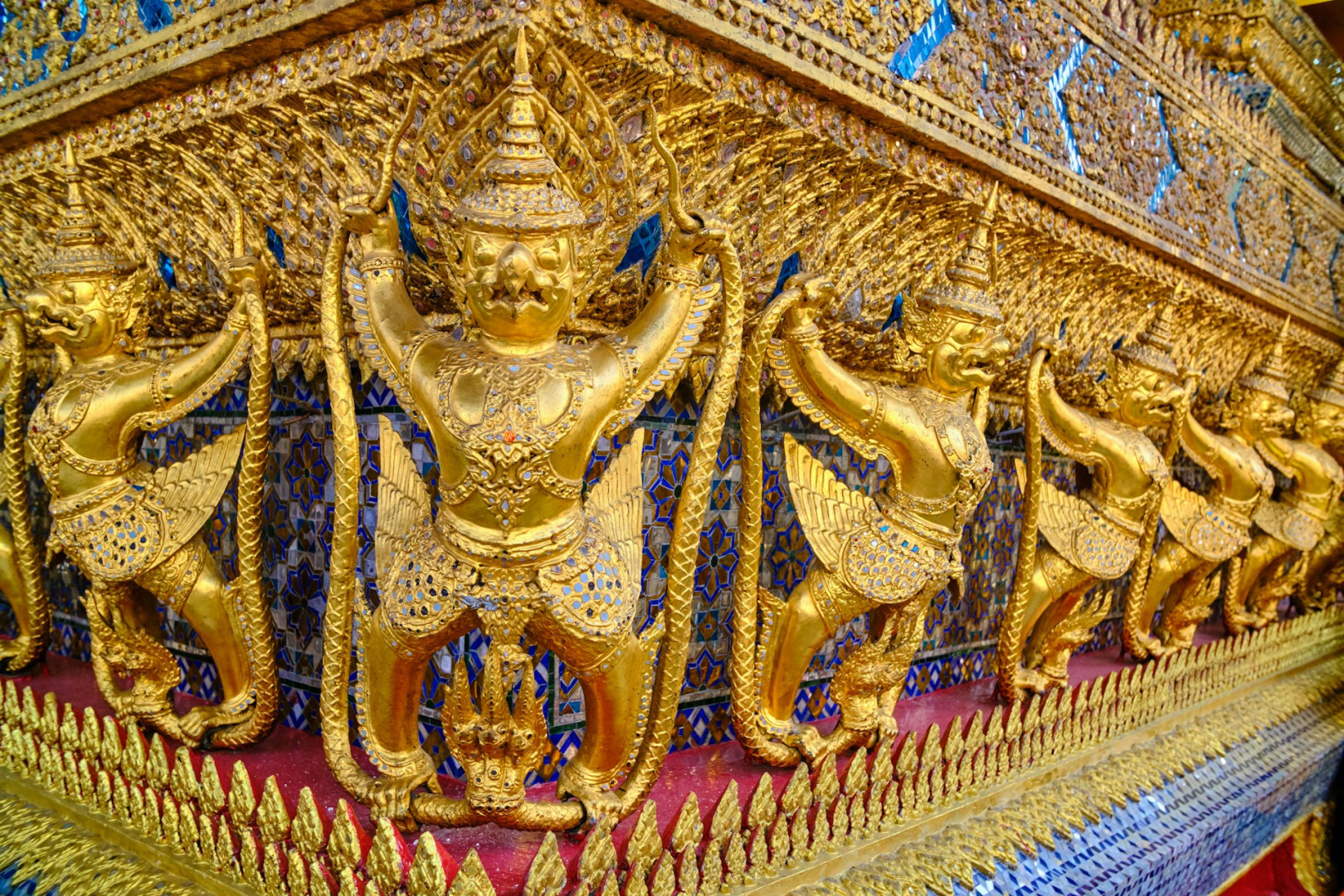
The area of the complex is 218,000 square meters — larger than 30 football fields. Inside, there are 95 statues of demon giants holding the roof of the Temple of the Emerald Buddha. Each statue weighs about one ton.
The Emerald Buddha is actually carved from a single piece of jade. The green tint of the stone gave it its name. The statue is 66 centimeters tall. Three times a year, the King of Thailand personally changes its golden robes to mark the rainy, winter, and summer seasons.
One of the throne halls — Phaisan Thaksin — was used for royal audiences. It contains no nails. All wooden parts are joined using traditional locking techniques without metal fasteners.
Along the outer wall of the palace runs a gallery of murals depicting the Ramakien — the Thai version of the Indian epic Ramayana. The paintings stretch for about one kilometer. They have been completely repainted three times due to damage from sun and humidity.
Address: Na Phra Lan Road, Phra Nakhon district, Bangkok, 10200.
The palace is located in the historic Rattanakosin district, on the banks of the Chao Phraya River. The nearest MRT station is Sanam Chai (Blue Line). From there, it is a 10–15 minute walk.
By taxi from central Bangkok (Siam, Sukhumvit), the trip takes 20–40 minutes depending on traffic. The fare is about 100–150 baht. On a tuk-tuk, you can negotiate from 150 baht, but drivers often try to take you to clothing shops first.
Public buses: routes 1, 3, 6, 9, 15, 19, 30, 32, 33, 39, 43, 44, 47, 53, 59, 60, 64, 65, 70, 80, 82, 91, 123, 201, 203, 503. The stop is called "Sanam Luang" or "Wat Phra Kaew."
By river taxi: Tha Chang pier (Chao Phraya Express Boat with orange or yellow flags). From the pier, it is a 5-minute walk to the entrance.
The palace is open daily from 8:30 AM to 3:30 PM. The entrance closes at 3:00 PM. Ticket booths operate until 3:30 PM, but it is better to arrive at 8 AM to avoid queues.
Ticket price — 500 baht for foreigners (about 14 USD). Children under 120 cm tall enter free. The price includes access to the palace itself, the Temple of the Emerald Buddha, the Queen's Museum of Textiles, and the Dusit Throne Hall.
Tickets are sold only on site. No online booking. After 3:00 PM, cashiers may refuse to sell tickets even if you are ready to pay.
Important: the palace closes during royal ceremonies and state visits. Dates are announced on the official website 2–3 days in advance. Between 2024 and 2026, there are about 10–12 such days per year.
Dress code — the strictest in Thailand. Shoulders and knees must be covered. No tank tops, shorts, skirts above the ankle, tight leggings, ripped jeans, or transparent fabrics.
Allowed: T-shirts with sleeves, button-up shirts, trousers, long skirts, sarongs worn over shorts, closed footwear (not flip-flops, but sandals with a back strap are fine).
Checks are done at the entrance. If your clothing does not meet the requirements, you can rent a long skirt or pants for 100–200 baht (500 baht deposit). However, queues at the rental point can be long — up to 40 minutes.
Shoes must be removed before entering the Temple of the Emerald Buddha. Socks can stay on. There is no shoe storage — visitors leave shoes on racks or simply on the floor. Be prepared to search for your sandals among hundreds of others after the queue.
Prohibited:
Chewing gum, food, and drinks are banned throughout the grounds. Water can be bought inside but consumed only in designated areas.
Enforcement is strict: uniformed staff patrol the area. Violators may be expelled without a refund. There are known cases of tourists being escorted out for taking selfies with a demon statue.
The best time to visit is from 8:30 AM to 10:00 AM. After 11 AM, the heat becomes unbearable. Shade is only available near the walls and in a few galleries. Bring water, a hat (remove it inside the temple), and wet wipes.
If you are planning a trip to Thailand and want not only to visit palaces but also to explore options for long-term living or real estate investment, contact DDA Real Estate. We operate in Thailand, the UAE, Indonesia, and Turkey. We provide advice on any question — from choosing a neighborhood to legal support for the transaction. Our clients receive a personal airport meeting, luxury car transfers, and assistance with paperwork. Individual approach without template solutions.