
Off-plan properties
Dubai’s rental market offers strong yields and stable demand driven by expats and relocators. However, alongside profitability comes operational reality: tenant management, property upkeep, and, inevitably, handling property damage.
These issues may seem minor at first, but in practice they directly affect net income, vacancy periods, and long-term asset value. A professional approach is not just about reacting to damage — it is about managing risk systematically.
Below is a practical, investor-focused guide to handling tenant-caused damage in Dubai.
Every case starts with one critical question: Is it normal wear and tear or actual damage?
This refers to natural deterioration over time:
These are the landlord’s responsibility.
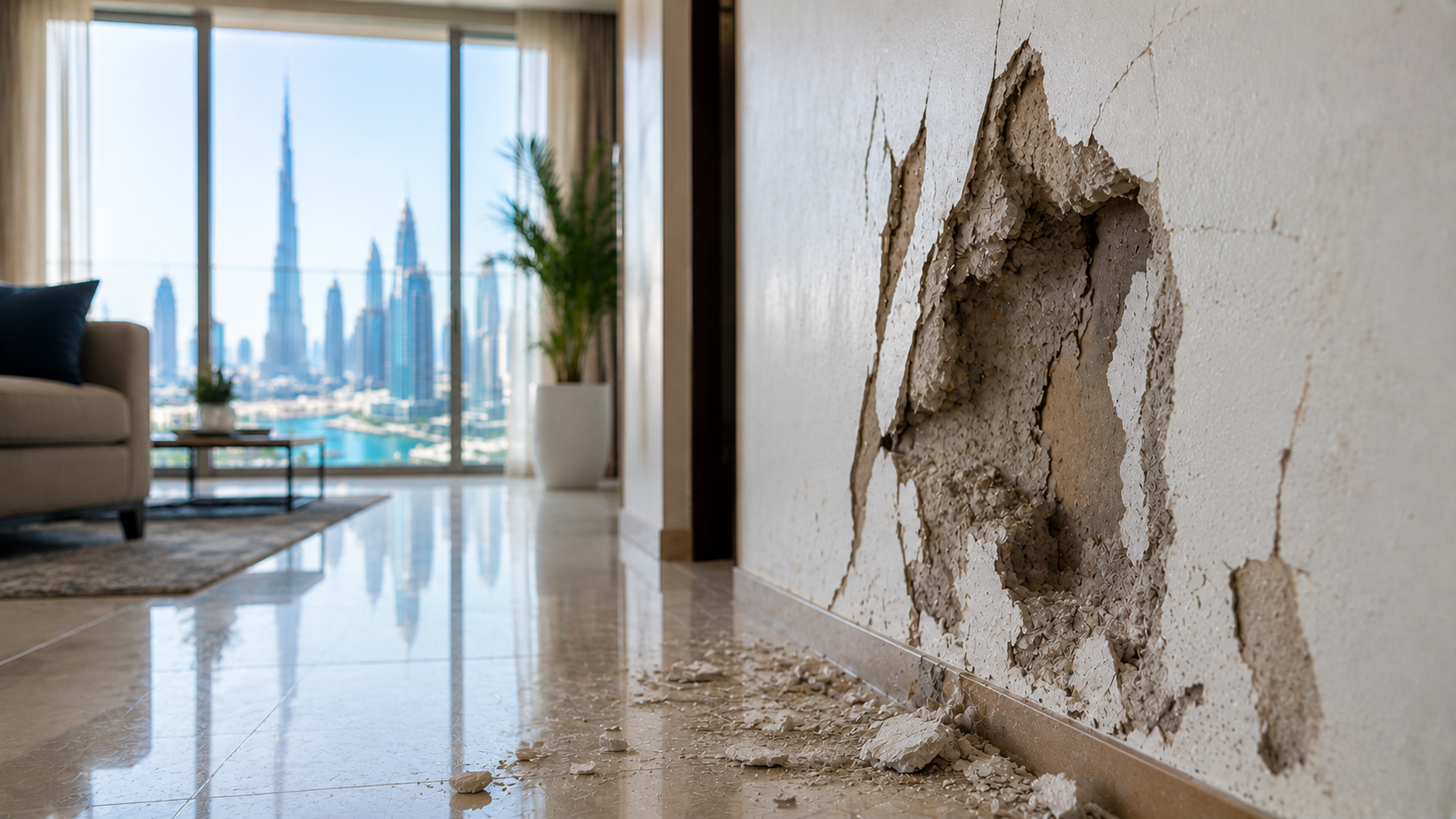
Damage results from misuse or negligence:
This is the tenant’s responsibility.
The boundary between these categories is often subjective.
That is why the most important tool is not opinion — but documented evidence of the property condition.
All rental contracts in Dubai are registered through Ejari, and the tenancy agreement defines the legal framework.
Typically, it includes:
The contract is not a formality.
Its wording directly affects:
One of the most underestimated steps is documenting the property condition before move-in.
A professional approach includes:
Without documentation:
With documentation:
In Dubai, the standard deposit is:
It covers:
The deposit is not automatically yours to keep.
You must:
A structured approach is essential.
Compare the property with the original condition report.
Explain to the tenant:
Transparency reduces conflict.
Deduct only:
Return the remaining deposit.
In more serious cases, the deposit may not cover the damage.
Options include:
Legal action is possible but requires:
In practice, disputes usually occur in:
These conflicts are not about damage itself — but about lack of clarity and documentation.
Professional investors focus on prevention, not just repair.
Key measures:
Poor tenant selection is the primary source of damage-related losses.
For non-resident investors, management is critical.
A professional management company:
Without management:
With management:
Property damage directly affects:
Even minor but recurring damage can significantly reduce:
Read also: “What Is ROI in Dubai Real Estate? What Investors Need to Know”.
Can a landlord deduct repair costs from the deposit?
Yes, but only for damage beyond normal wear and tear and with proper documentation.
What if the tenant refuses to pay?
The case can be escalated to the Rental Dispute Settlement Centre (RDSC).
Is normal wear and tear chargeable?
No, it is the landlord’s responsibility.
How can damage be proven?
Through inspection reports, photos, and documented evidence.
Is property management necessary?
Not mandatory, but highly recommended to protect income and asset value.
Real estate investment in Dubai is not just about buying the right property — it is about managing it correctly.
DDA Real Estate helps investors:
We approach real estate as an investment system — not just a transaction.
If you are planning real estate investment in Dubai, DDA Real Estate will help you not only choose the right property, but also structure its management to minimize risks and maximize long-term returns.