
Off-plan properties
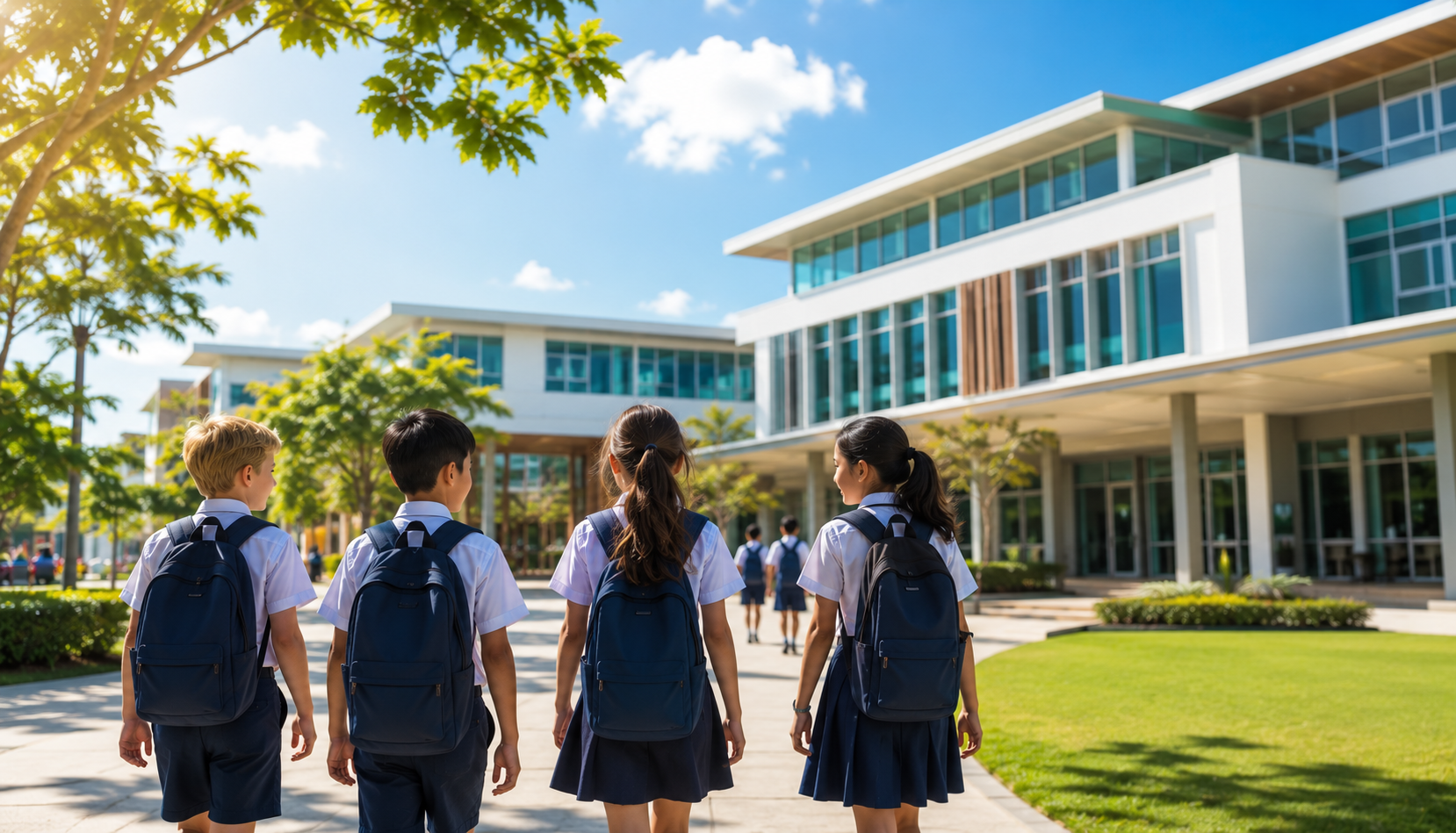
Moving abroad with children turns one practical worry into the deciding factor of the whole relocation: schooling. Thailand handles that worry better than most of the region. The country hosts more than 200 international schools, teaching British, American and IB programmes to graduates who go on to universities worldwide — and it does so at a fraction of what comparable schools charge in Singapore or Hong Kong. For most expat families, the real challenge is not finding a good school but narrowing down an unexpectedly large field.
Below we map out the decisions that actually shape your shortlist: which curriculum fits your child, what you should budget, and which cities and islands concentrate the best campuses. Because the school you pick usually dictates the neighbourhood you live in, it is worth weighing where it makes the most sense to live and buy in Thailand in parallel.
Before comparing campuses, settle on a teaching system — it determines your child's qualifications, university pathways and how painlessly they slot into a new classroom. As a rule, pick the curriculum closest to what your child already studies; continuity matters more than prestige. Here is how the main options compare:
| Curriculum | Qualifications | Best suited to |
|---|---|---|
| British | IGCSE, then A-Levels | UK and Commonwealth families wanting a structured ladder |
| IB | PYP, MYP, Diploma | Internationally mobile families after a rounded education |
| American | High-school diploma, AP | US families who prefer flexibility and a broad college route |
| Bilingual / other | Canadian, IPC and mixed models | Families on tighter budgets or with specific language goals |
British and IB schools command the highest fees, American programmes generally sit in the middle, and bilingual or independent schools are the gentlest on the wallet. None of these limits university options later — graduates from all of them progress to strong institutions across the globe.
Thailand's international schools are not spread evenly — they gather in a few hubs, each offering a different rhythm of life:
| Region | Character | Who it suits |
|---|---|---|
| Bangkok | Huge choice, top-tier campuses, city pace | Career-driven parents, every curriculum |
| Phuket & islands | Beach lifestyle, boarding, mid-to-high fees | Families wanting sea and space |
| Chiang Mai | Calm, affordable, tight-knit communities | Budget-aware and long-stay families |
| Pattaya & Hua Hin | Compact, growing, some boarding | Commuters and weekend-city families |
Bangkok remains the heavyweight, with well over a hundred campuses clustered along Sukhumvit, in Bang Na and across greater Nonthaburi. The islands tell a different story — slower, greener and increasingly chosen by families who want the sea on their doorstep. If that is your dream, our guide to property on Koh Samui explains local rules and the kind of homes that work well near the island's schools.
Fees swing widely depending on the city, the curriculum and a school's reputation. Rather than quote a single figure, it helps to think in tiers:
| Tier | Annual tuition (guide) | Typical profile |
|---|---|---|
| Entry | ฿150,000 – ฿350,000 | Smaller or bilingual schools |
| Mid | ฿400,000 – ฿650,000 | Solid British/American campuses |
| Premium | ฿700,000 – ฿1,200,000+ | Flagship Bangkok and boarding schools |
*These are indicative annual tuition bands and shift every academic year. Plan for add-ons beyond tuition: a one-time registration fee, a refundable deposit, and recurring charges for transport, uniforms, examinations and occasional building-fund levies. Ask each school for a full, itemised quote before you commit.
The names below illustrate the range on offer — think of them as landmarks, not a league table:
Glossy prospectuses tell you little. These checks tell you more:
School, visa and housing are tangled together, so it pays to plan them as one. Children typically study on an education (ED) visa or as dependents on a parent's long-stay permit — the DTV, Thailand Elite or an investor visa among them — which makes sorting the family's status an early priority. As for the home itself, renting close to your chosen school before you buy keeps the first months flexible. And if the legal side of foreign ownership feels daunting, it is less restrictive than the rumours suggest; we untangle it in the facts about foreign property ownership in Thailand. When you are ready to settle near the campus for good, our practical tips for buying property in Thailand set out the steps in order.
What do international schools in Thailand cost per year?
Expect anything from about ฿150,000 at smaller or bilingual schools to ฿1,200,000 and beyond at flagship Bangkok and boarding campuses. The capital spans the widest and most expensive range, while Chiang Mai and the islands deliver better value. Remember to budget registration, deposit, transport and exam fees on top.
How do I pick between British, IB and American?
Start from what your child already studies, since continuity eases the move. British schools run IGCSE and A-Levels, the IB offers a broad rounded path, and American campuses use a diploma with AP courses. British and IB usually cost more; American tends to sit mid-range; all lead to universities worldwide.
Which location is best for schooling?
Bangkok offers the deepest choice and the top-tier campuses; Phuket and Pattaya add boarding; Chiang Mai is the value pick with a relaxed pace. The right answer depends on where you work, what you can spend and the lifestyle you are after.
How do I know a school is genuinely reputable?
Check for accreditation from CIS, WASC or NEASC and membership of ISAT. Independent accreditation is the single most reliable signal of quality, so treat it as your first filter rather than an afterthought.
How far ahead should I apply?
Months in advance wherever possible. Popular schools maintain waiting lists at the main entry years, so begin early, keep your documents ready and shortlist a second option in case your first choice is full.
Will my child need a visa to study?
Yes. Most pupils hold an education (ED) visa or join as dependents on a parent's long-stay visa, such as the DTV, Thailand Elite or an investor visa. Always confirm the current requirements before relocating.
The school sets the destination; the right home makes it work. DDA Real Estate guides expat families through every step — pairing the ideal neighbourhood and property with your chosen school, arranging the appropriate visa and managing the legal paperwork. With bilingual specialists handling the details, your family can spend its energy on settling in rather than sorting logistics.