
Off-plan properties
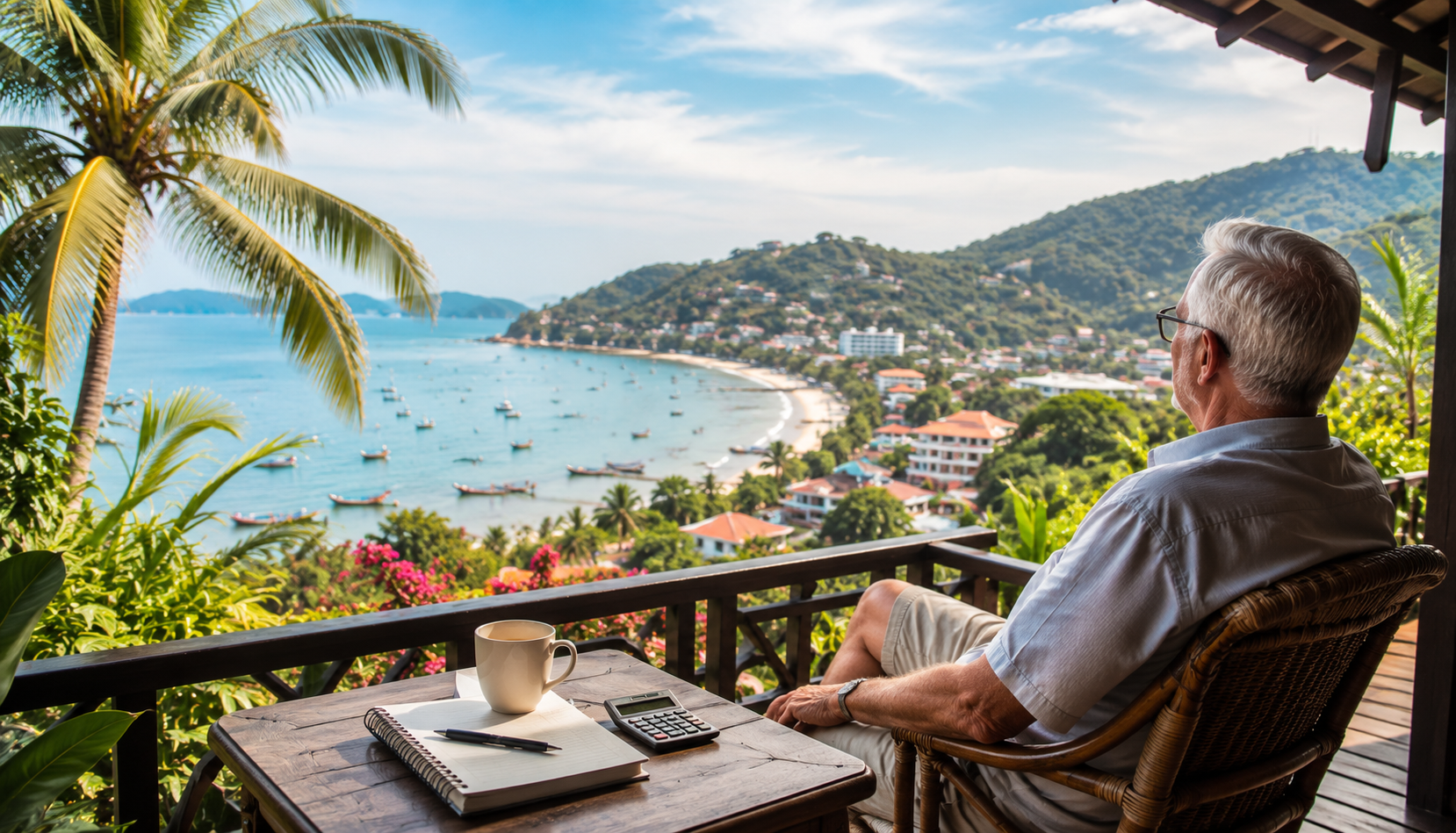
"You can retire in Thailand for almost nothing" is one of the internet's favourite half-truths. The honest 2026 answer is more useful: $1,500 a month buys a genuinely comfortable, if modest, retirement in the right Thai city — and falls short in the wrong one. At today's rate that figure is roughly 50,000–55,000 THB, enough for a tidy condo, good local food, healthcare and the occasional treat in places like Chiang Mai or Hua Hin, but stretched thin in central Bangkok or beachfront Phuket. This breakdown puts real numbers to that promise, line by line, and is honest about the two things most cheerful guides skip: the visa-income paradox and the costs that don't show up until you are already there.
Short answer: yes, with care, and mostly outside the two priciest cities. The number that matters is not the headline but the gap between your fixed costs and your discretionary spending. Rent, utilities and insurance are largely non-negotiable; food, transport and leisure are where Thailand's affordability either rescues or sinks your budget. Live like a local — markets over malls, a scooter over a car, a northern city over a beach resort — and $1,500 leaves a real cushion. Insist on Western supermarkets, central addresses and frequent flights home, and the same sum evaporates. The figure works; the lifestyle around it is the variable.
Here is what a realistic single-person retirement budget looks like in a mid-sized Thai city such as Chiang Mai in 2026. Figures are monthly and deliberately conservative — they assume comfort, not hardship:
| Expense | Monthly (THB) | Monthly (USD) | Notes |
|---|---|---|---|
| Rent (1-bed condo) | 15,000 | ~440 | Modern unit outside city centre |
| Utilities and internet | 2,500 | ~75 | Electricity, water, fibre, SIM |
| Food (mostly local) | 12,000 | ~350 | Markets, street food, some cooking |
| Transport | 2,500 | ~75 | Scooter or songthaew and taxis |
| Health insurance | 5,000 | ~145 | Basic expat policy, age-dependent |
| Visa and admin (avg.) | 1,500 | ~45 | Annual costs spread per month |
| Leisure and buffer | 12,500 | ~370 | Dining out, trips, the unexpected |
| Total | 51,000 | ~1,500 | Comfortable-modest in the north |
The total lands right around the $1,500 mark with a meaningful buffer built in. The single biggest lever is housing: drop rent by living slightly out of the centre and the whole budget loosens. The second is food — eating where Thais eat keeps a month's meals near 12,000 THB, while leaning on imported goods can double that line alone. Health insurance is the wildcard, rising sharply with age, so treat the 5,000 THB figure as a younger-retiree estimate and budget more past 65.
Thailand is not one price. The same budget that feels generous in the north can feel tight on a southern beach, so the city you choose matters as much as how you live. The comparison below sums up where a $1,500 retirement sits comfortably and where it starts to strain:
| City | $1,500 verdict | The catch |
|---|---|---|
| Chiang Mai | Comfortable | Burning season air (Feb–Apr) |
| Hua Hin | Comfortable | Smaller expat scene than the south |
| Pattaya | Workable | Discipline needed near the centre |
| Bangkok | Tight | Central rent eats the budget |
| Phuket | Difficult | Beachfront living pushes costs up |
Chiang Mai is the long-standing favourite for budget-minded retirees: low rents, a deep expat community, excellent food and good hospitals, with the well-known caveat of the February-to-April burning season, when air quality drops and many residents plan a temporary move south. Hua Hin offers a calmer coastal version of the same value. Pattaya is workable on this budget if you avoid the priciest central blocks, and its mix of districts gives flexibility — useful context if you are also weighing where it is better to buy real estate in Thailand. Bangkok and Phuket, by contrast, demand real discipline at $1,500 and reward a higher number.
Here is the catch that trips up budget retirees. You can live on $1,500, but the classic retirement visa often asks you to prove more than that. The Non-Immigrant O-A retirement visa (age 50+) requires either 800,000 THB held in a Thai bank or a monthly income of 65,000 THB — close to $1,900, comfortably above a $1,500 budget. In other words, qualifying for the visa can demand a higher income than the lifestyle itself costs. Many retirees bridge this with the lump-sum bank deposit instead of the income route, or look at alternatives such as the longer O-X visa or the Destination Thailand Visa, which active retirees increasingly use. The lesson is simple: plan the visa maths separately from the living-cost maths, because they are not the same number.
A clean monthly table hides a few lumpy realities that can quietly break an underfunded budget. Building these into an annual buffer is what separates a sustainable retirement from a stressful one:
None of these is a deal-breaker, but together they argue for keeping a few months' expenses in reserve rather than running the budget to the last baht.
On a $1,500 budget most retirees rent, and sensibly so — it keeps you flexible while you learn which city actually fits. But over a ten- or fifteen-year retirement, rent is the largest single cost, and buying a modest condo can turn that monthly outflow into a fixed asset. Foreigners can own condominium units outright under the 49% foreign-ownership quota in each building, which makes a small condo the cleanest path; houses and land follow different rules that are widely misunderstood, so it is worth reading past the myths on legal foreign property ownership in Thailand before deciding. If you do buy, the essential tips for buying an apartment in Thailand walk through the process, and it pays to understand the property purchase taxes in Thailand so the costs hold no surprises.
Is $1,500 a month enough to retire in Thailand in 2026?
Yes, for a comfortable but modest lifestyle in cities like Chiang Mai or Hua Hin, where $1,500 (around 50,000–55,000 THB) covers a tidy condo, local food, transport, basic health insurance and a buffer. It is tight in central Bangkok and difficult on beachfront Phuket.
Where is the cheapest place to retire in Thailand?
Chiang Mai is the classic budget choice, with low rents, a large expat community, great food and good hospitals. Smaller cities and Hua Hin are also affordable. The main trade-off in Chiang Mai is the February-to-April burning season and its poor air quality.
How much income do you need for the Thai retirement visa?
The Non-Immigrant O-A visa (age 50+) requires either 800,000 THB in a Thai bank account or a monthly income of about 65,000 THB (roughly $1,900). Note this can be higher than a $1,500 living budget, so many retirees use the lump-sum deposit route instead.
What hidden costs should retirees budget for?
Rising health insurance with age and large out-of-pocket medical or dental bills, the 800,000 THB visa deposit, annual visa admin and 90-day reporting, seasonal relocation in Chiang Mai, the 2024 foreign-income tax change, and currency fluctuations between dollars and baht.
Should I rent or buy when retiring in Thailand?
On a $1,500 budget most retirees rent first to stay flexible. Over a long retirement, buying a modest condo — which foreigners can own outright under the 49% quota — can convert rent into an asset, though houses and land follow stricter rules worth understanding in advance.
Retiring in Thailand on $1,500 a month is realistic — for the right person, in the right city, with the visa and the hidden costs planned in advance rather than discovered later. The team at DDA Real Estate helps future retirees choose a location that fits their budget, weigh renting against buying a condo, and navigate the ownership and visa questions that decide whether the numbers truly work. Reach out for a personalised consultation and turn a spreadsheet dream into a confident, well-planned move.