Off-plan properties
Most guides open this question with lifestyle — community pool or private one, tower views or a garden. For a foreigner buying in Thailand, that is the wrong place to start. The first question is legal: what title can you actually hold? A condo you can own outright, in your own name. A villa sits on land, and land is the one thing a foreigner cannot own here. That single fact quietly decides more than any amount of taste. This guide lines the two up on everything that matters — ownership, price, yield, upkeep, lifestyle and resale — so the right choice for you becomes obvious.
Before you compare pools and gardens, settle the ownership question, because it is the fork in the road that everything else follows from. A condo you can own freehold, in your own name, under the Condominium Act — the cleanest title a foreigner can hold in Thailand. The one catch is the 49% rule: foreigners may own up to 49% of a building's floor area, the remaining 51% must stay Thai, and in the most sought-after projects that foreign share sells out early. A villa is a different animal, because it stands on land — and land is precisely what a foreigner cannot own. In practice a villa purchase splits in two: you own the building outright, and you hold the plot beneath it on a registered 30-year lease. Those leases are usually marketed as 30+30+30, three consecutive terms, but only the first is firmly guaranteed; the renewals are promises written into a contract, not rights written into the law. So a condo is a freehold decision and a villa is a leasehold one, and if title in your own name is non-negotiable, the choice is already half made. The mechanics of both are laid out in our guide to freehold and leasehold ownership in Thailand.
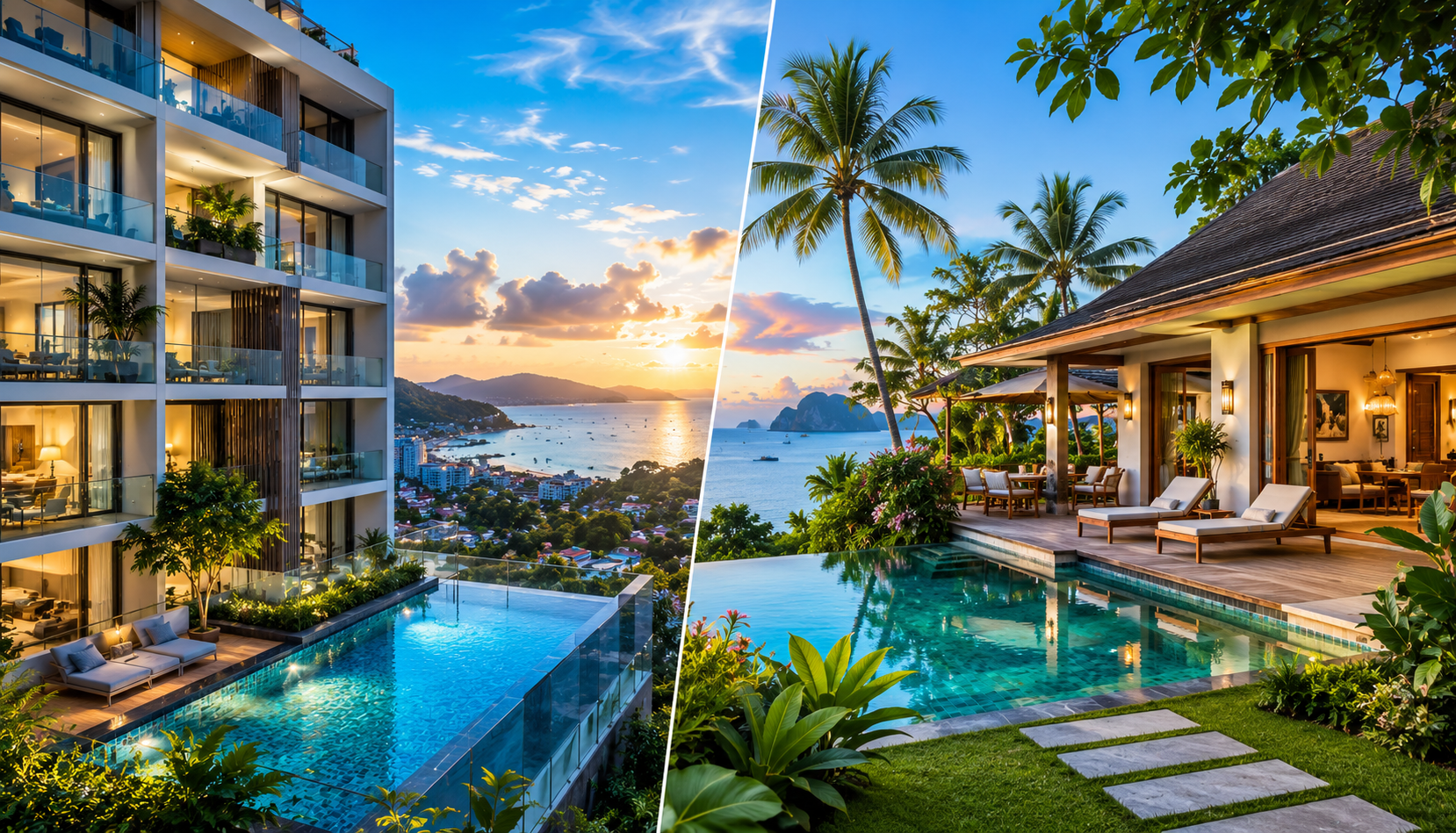
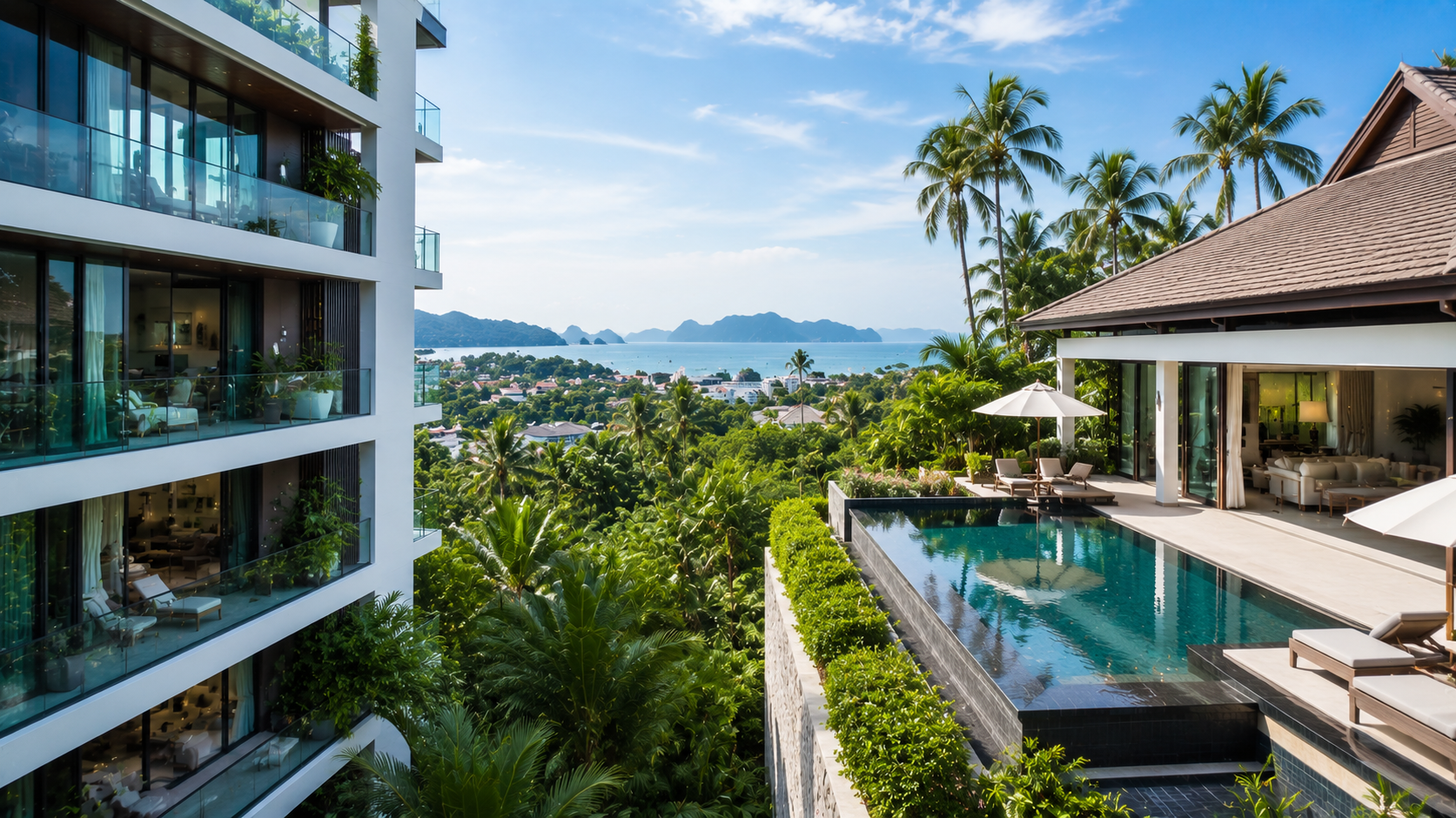
The condo is the default entry point for foreign buyers, and it earns that place. It is the lock-and-leave option: the building's management runs the pool, the gym, the security and the upkeep, so you can come and go without a list of chores waiting for you. It is the liquid option, easy to let and easy to resell to the widest pool of buyers, Thai and foreign alike. And it is the affordable one, opening the market at a price a villa never touches. The trade-offs are the flip side of the same coin — a monthly fee for all that convenience, walls shared with neighbours, less space and privacy, and the standing question of whether the foreign quota still has room.
The villa is the home rather than the unit. It buys space, a private pool, a garden and a kind of privacy no tower can offer, which is why it suits families, pets and anyone settling in for the long haul; rented well, it also commands strong nightly rates and competitive yields. But everything that makes it a home also makes it more work and more risk. You own the building yet only lease the land, you carry the full weight of upkeep from the pool to the security, the entry price is several times a condo's, and when you sell, the buyer pool is smaller and the leasehold slower to transfer. The Thai-company route sometimes pitched as a way to "own" the land is a legal grey area under active enforcement — a subject we separate from the rumours in our piece on the myths of foreign ownership in Thailand.
Set side by side, the trade-offs read at a glance.
| Aspect | Condo | Villa |
|---|---|---|
| Ownership | Freehold in your name, within a 49% quota | Building only; land on a 30-year lease |
| Typical entry | From about 2–4M THB | Rarely below 7–12M THB |
| Rental yield | Around 5–8%, easy to let | Around 7–9% for a well-run leasehold villa |
| Upkeep | Handled by the building for a monthly fee | All on you: pool, garden, repairs, security |
| Space and privacy | Compact, shared walls, shared amenities | Large plot, private pool, real privacy |
| Resale | More liquid, large buyer pool | Slower; lease transfer needs consent |
| Best for | Investors, couples, lock-and-leave | Families, long-term living, space |
The sticker price is only the opening line. A condo adds a monthly common-area fee — roughly 50 to 100 baht per square metre — plus a one-off contribution to the sinking fund and, at purchase, another 3 to 7 percent of the price in registration, legal and transfer costs. A villa swaps that service charge for hands-on running costs: pool and garden care, repairs, higher utilities across a larger footprint, and sometimes private security. Both share two constants — rental income is taxable, and a freehold purchase must be funded from abroad in foreign currency to produce the FET form the Land Office needs to register it. The full breakdown of transfer fees, stamp duty and taxes is set out in our guide to property purchase taxes in Thailand.
If numbers drive the decision, two patterns matter. On yield, the gap is smaller than people expect — Thailand's average gross residential yield sits around 6.5%, with condos typically in the 5–8% range and well-managed leasehold villas often a touch higher at 7–9%; tenants simply do not care about your title. On resale, the gap is wide and consistent: a freehold condo is more liquid, transfers simply and appeals to a global buyer pool, while a leasehold villa sells more slowly and needs landlord consent to transfer. For a data-led view of where the returns actually sit, see our Phuket investment locations guide.
Geography quietly narrows the choice. Condos cluster where land is scarce and demand is dense — central Bangkok, the Pattaya seafront, and Phuket's west-coast beach areas — so if you want to live in the middle of things, a condo is often the only realistic option. Villas live where there is room to build: hillsides, quieter coastal pockets and inland estates, trading a central address for space and calm. Deciding the area first often settles the condo-or-villa question by itself, which is why it is worth reading up on where it is better to buy in Thailand before you fall for a specific property.
Strip away the detail and it comes down to a short checklist. Lean toward a condo if:
Lean toward a villa if:
Whichever way you lean, the same handful of mistakes catches foreign buyers:
Can a foreigner own a condo in Thailand?
Yes — freehold, in your own name, as long as the building's 49% foreign quota has not been filled.
Can a foreigner own a villa?
Not the land; you own the building and take a registered 30-year lease on the plot, often structured as 30+30+30.
Which is cheaper to buy?
The condo, by a wide margin — many start around 2–4M THB, while a modern pool villa rarely begins below 7–12M.
Which earns a better rental yield?
It is close; condos are easier to rent and more liquid, while a well-run leasehold villa can yield a little more.
Which is less hassle to own?
The condo — the building's management handles the upkeep, whereas a villa owner is responsible for everything.
Is the 49% quota a problem?
Only when it is full, which happens early in hot Phuket and Pattaya projects, so confirm availability in writing before you pay.
Which is better for resale?
The condo — freehold title and a larger buyer pool make it noticeably more liquid than a leasehold villa.
Condo or villa is rarely a matter of taste alone — it is where your budget, your lifestyle and Thai ownership law meet. Get those three to agree and the right property almost picks itself. DDA Real Estate helps international buyers do exactly that: weighing freehold against leasehold for your goals, verifying the quota or the lease before any money moves, and matching the area and the asset to how you actually want to live and invest. Tell us the plan, and we will find the home that fits it.