
Cost of Living: Phuket vs Chiang Mai vs Pattaya (2026)
971 56 596-5009
day and night
Dubai
EN
$
ft²
Other articles

Cost of Living in Phuket vs. Chiang Mai vs. Pattaya: A Detailed Breakdown

Elizaveta Silakova The author of the article, the Broker
#Blog DDA
31 May 378 views

Thailand is one of the best-value places in the world to base yourself — rent alone tends to run 70–80% below the United States — but the three destinations expats weigh up most often are far from interchangeable on price. Chiang Mai is the budget champion, Phuket carries an island premium, and Pattaya sits in between as the affordable coast. Where you land shapes not just your monthly outgoings but the whole texture of daily life.

This breakdown puts real 2026 figures on the categories that decide a budget — rent, food, transport, utilities and a realistic monthly total — so you can see which city fits your wallet and your lifestyle. Amounts are in US dollars with Thai baht where useful (roughly 35 THB to the dollar), and they move with the neighbourhood, the season and how you choose to live.

How to read these numbers

Before the city-by-city detail, three variables swing a Thai budget more than the map does. First, food style: eating local street and market food costs a fraction of Western restaurants, and that single choice can move your monthly spend by $300–600. Second, area and season: a tourist strip costs far more than a residential neighbourhood, and island rents climb in the November–March high season. Third, electricity: air conditioning runs most of the day in the tropics, and some landlords charge 7–9 THB per unit against the government rate of about 4.2, so always check the lease. The figures below assume a comfortable single renting a one-bedroom condo, mixing local and occasional Western food, travelling moderately, and carrying private health insurance.

Phuket: island living at a premium

Phuket is the priciest of the three, and tourism is the reason — demand pushes up rent, dining and transport across the island. A one-bedroom condo runs roughly $400–900 a month, with Patong and Kamala commanding the steepest rates and residential pockets like Rawai, Chalong and Kathu offering far better value; inland, a modest life can start near $1,000 all-in, while beachfront luxury climbs past $3,000.

The hidden cost is mobility. Phuket has no real public transport, so a scooter (about 3,500 THB a month) or a car is effectively essential, with Grab filling the gaps. Western food is the most expensive in the country here — mains of 350–600 THB in tourist areas — though local seafood in Rawai or Chalong is a bargain. Factor in high-season pricing and notorious traffic, and a comfortable single realistically budgets around $1,400–2,200 a month. Best for beach lovers with a bit more to spend.

Chiang Mai: the value champion

Up north, Chiang Mai is where Thailand’s low cost of living stops sounding like a myth. A one-bedroom runs about $250–450, with the trendy Nimman district at the top of that range and neighbourhoods like Santitham 20–30% cheaper; many condos throw in a pool, gym and security. Add the country’s best café and coworking scene and a deep, established community of remote workers, and the lifestyle-to-cost ratio is hard to beat.

Getting around leans on cheap songthaews and motorbikes rather than any metro, and daily costs stay low across the board. A comfortable single lands around $870–1,300 a month (roughly 30,000–45,000 THB), and a lean, sharing-based budget can dip under $700. The real caveat is the burning season: from roughly February to April, agricultural smoke pushes air quality to some of the worst on earth, and many residents simply decamp to the coast until the rains clear it. Best for digital nomads, budget-minded retirees and anyone who prefers mountains to beaches.

Pattaya: the affordable coast

Pattaya splits the difference: a genuine beach city with low prices and an easy two-hour hop to Bangkok. Its reputation puts some people off, but it has one of Thailand’s largest and longest-established expat communities and a deep supply of affordable condos — a one-bedroom in Central Pattaya or quieter Jomtien Beach typically runs less than the Phuket equivalent for comparable comfort.

Day-to-day, Pattaya is cheap to live in. The city’s baht-bus songthaews are among the most convenient and inexpensive local transport in the country, groceries and dining span every budget, and healthcare is solid. A comfortable single generally budgets around $1,000–1,700 a month, with Jomtien offering a calmer, more residential feel than the busy centre. Best for budget-conscious expats who want the coast plus quick access to the capital.

Side by side

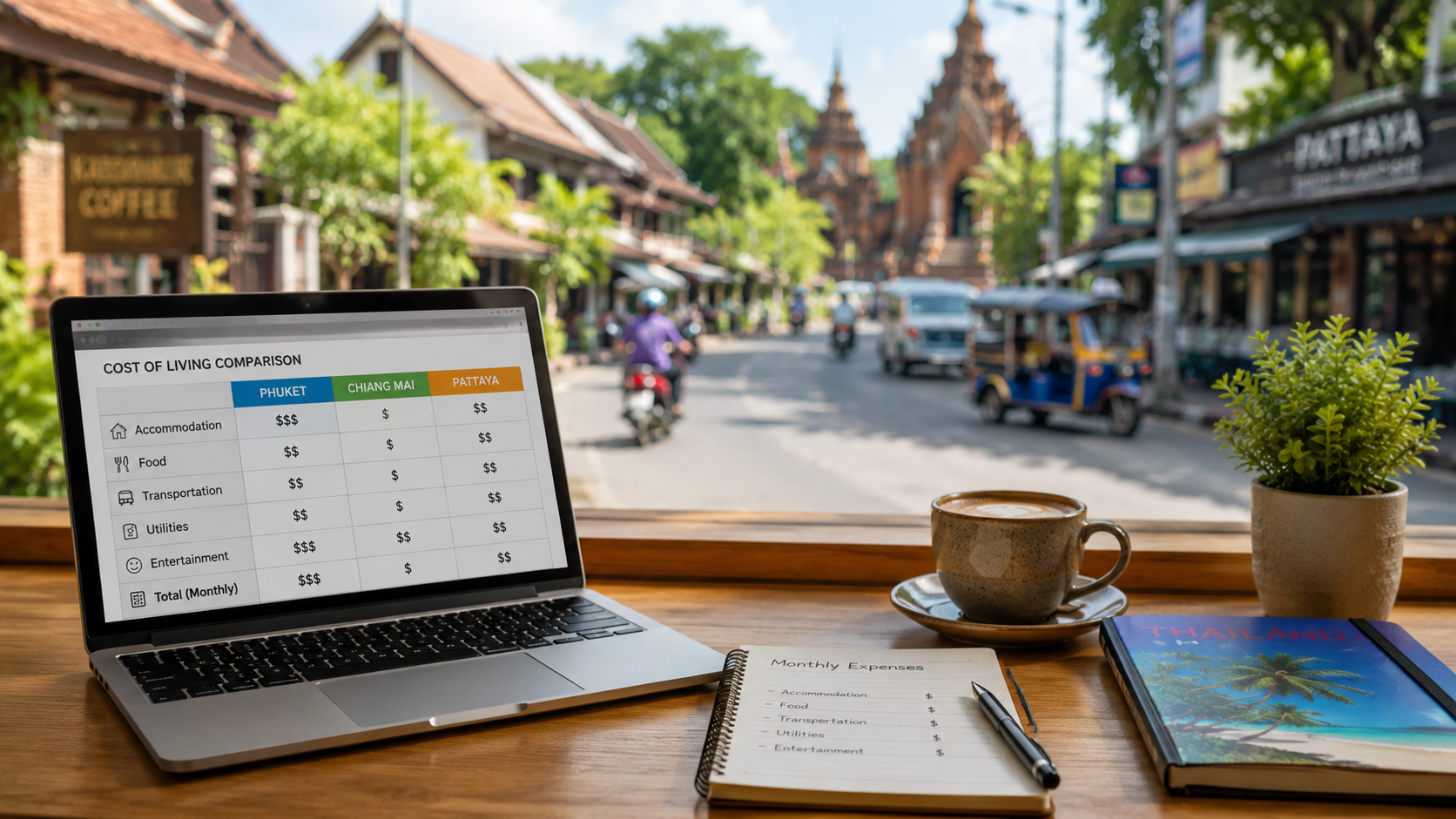
Category (monthly) Phuket Chiang Mai Pattaya
Rent, 1-bed condo$400–900$250–450$300–550
Local meal$2–4$1.50–3$2–3
Utilities + internet$70–190$60–160$65–170
TransportScooter/car essentialSongthaew/bikeCheap baht-bus
Comfortable single$1,400–2,200$870–1,300$1,000–1,700

The ranking is consistent: Chiang Mai is cheapest, Pattaya sits in the middle, and Phuket costs the most — but lifestyle, not just price, should decide the winner for you.

Which city suits you

Reduced to essentials: choose Chiang Mai for the lowest costs, the strongest nomad community and cool mountain air — as long as you can plan around the burning season. Choose Phuket if beaches and an international, resort-style life justify the premium and the need for your own wheels. Choose Pattaya for an affordable coastal base with a big expat scene and Bangkok on the doorstep. Your own habits — how you eat, where you live, how often you travel — will still move the final number more than the city label.

Renting, buying, and making it permanent

Whichever you pick, a few practicalities apply everywhere. Deposits are usually two months’ rent, leases run 6–12 months, and it pays to confirm the electricity rate before signing. Sort your visa pathway before committing to a year-long lease — the Destination Thailand Visa and retirement routes have different requirements — and note that spending more than 180 days a year makes you a Thai tax resident. If a trial stay turns into something longer and you decide to buy, a foreigner can own a condominium outright within a building’s 49% foreign quota; our essential tips for buying an apartment in Thailand, the guide to leasehold versus freehold, and our piece debunking the myths about foreign ownership cover exactly how it works.

Frequently Asked Questions

Which is cheapest: Phuket, Chiang Mai or Pattaya?

Chiang Mai is the cheapest of the three by a clear margin, with a comfortable single budget of roughly $870–1,300 a month. Pattaya sits in the middle at about $1,000–1,700, and Phuket is the most expensive at around $1,400–2,200 due to its island and tourism premium. Your lifestyle can shift all three figures significantly.

How much does it cost to live in Phuket per month?

A comfortable single in Phuket typically budgets around $1,400–2,200 a month, covering a one-bedroom condo ($400–900), food, a scooter or car, utilities and insurance. A modest inland lifestyle can start near $1,000, while beachfront luxury can exceed $3,000 in rent alone. Tourist areas like Patong cost noticeably more than Rawai or Chalong.

Is Chiang Mai really as cheap as people say?

Yes. One-bedroom rents of $250–450, street meals from about $1.50, and cheap local transport make Chiang Mai one of Thailand’s best-value cities, with comfortable monthly budgets around $870–1,300. The main trade-off is the February-to-April burning season, when air quality drops sharply and many residents temporarily relocate.

What is the cost of living in Pattaya?

Pattaya is mid-range, with a comfortable single generally spending around $1,000–1,700 a month. Affordable condos in Central Pattaya and Jomtien, very cheap baht-bus transport, and a wide range of dining keep costs down, while the two-hour link to Bangkok adds convenience. Jomtien tends to be calmer and more residential than the centre.

Why is Phuket more expensive than Chiang Mai?

Phuket’s costs are driven by tourism demand and its island setting: rent, dining and services all carry a premium, imported groceries cost more, and the lack of public transport means budgeting for a scooter or car. Chiang Mai, inland and less tourist-dependent, has lower rents and cheaper everyday costs across the board.

Do I need a car or scooter in these cities?

In Phuket, effectively yes — there is no real public transport, so most residents rent a scooter (around 3,500 THB a month) or a car. Chiang Mai and Pattaya are more manageable without one thanks to songthaews, motorbike taxis and ride-hailing, though a scooter still adds convenience, especially in Chiang Mai.

How much should I budget for utilities in Thailand?

Expect roughly $60–190 a month for electricity, water and internet combined, with electricity the main variable because air conditioning runs constantly in the heat. Watch for landlords who charge 7–9 THB per unit rather than the government rate of about 4.2 THB — always check the electricity terms in your lease before signing.

Can foreigners buy property in these cities?

Yes, with limits. Foreigners can own a condominium outright (freehold) as long as the building stays within its 49% foreign-ownership quota; land and houses are more restricted and usually involve leasehold or a company structure. Because rules and building specifics vary, it is worth understanding ownership options before buying in any city.

The bottom line

There is no single cheapest-and-best city — only the right match for your budget and the life you want. Chiang Mai wins on pure cost and nomad community, Phuket on beaches and international polish, Pattaya on affordable coastal living with Bangkok next door. Whichever way you lean, renting first is the smart way to test the fit. And if Thailand starts to feel like home, DDA Real Estate helps foreigners rent, buy and invest with full legal support — our guide to property investment in Thailand for foreigners is a good next step. Get in touch and we’ll match options to your budget and goals.

Popular
5 June 4071564 view
Dubai Rent Prices 2025: Average Apartment Rental Costs in Dubai Dubai's rental market continues its upward climb in 2025, driven by population growth and limited new supply, pushing average prices up by 10%
#Blog DDA
2 July 2358531 view
DLD Fees in Dubai: Everything You Need to Know Buying property in Dubai? Don't let hidden fees surprise you! Our essential guide breaks down ALL Dubai Land Department (DLD) fees
#Blog DDA
5 July 1681470 views
How Much is the Real Estate Agent Commission in Dubai? Find out how much real estate agent commission costs when buying property in Dubai.
#Blog DDA
23 November 1604295 views
How to Buy a SIM Card in Turkey in 2026: Prices, IMEI Registration, eSIM Options, and Best Mobile Operators Overview of mobile operators, available types of SIM cards, and home Internet providers
#Blog DDA
5 February 1384992 view
How Foreigners Can Own Property in Bali: Understanding PT PMA (2025) Foreigners can't own freehold land in Bali, but a PT PMA (foreign-owned company) allows secure property ownership under Hak Guna Bangunan (HGB) or Hak Pakai (HP) rights
#Blog DDA
28 August 1136898 views
Oqood vs Title Deed in Dubai: Key Differences You Must Know Buying property off-plan in Dubai? Oqood registration is mandatory to secure your ownership rights.
#Blog DDA