Off-plan properties
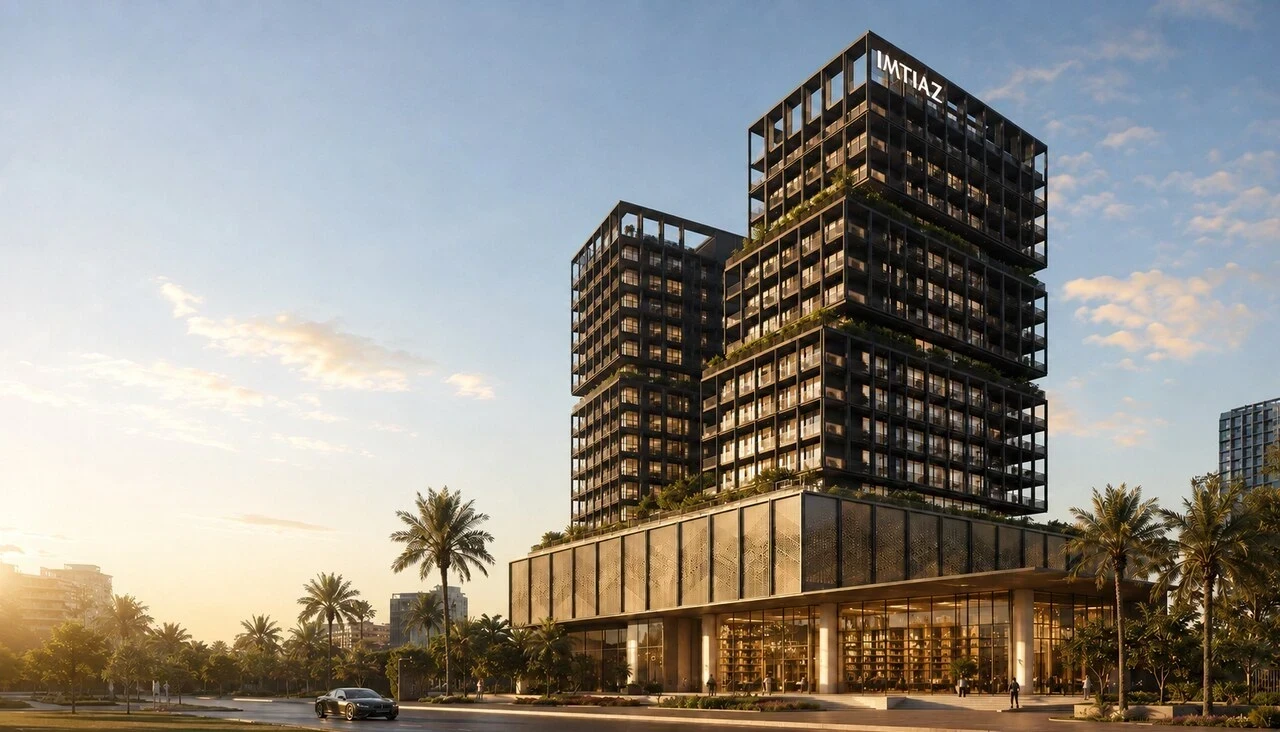
Dubai closed 2025 with AED 682.5 billion in transactions and 214,912 sales, a 49.6% surge in deal value YoY. Off-plan accounted for 76% of Q3 2025 transactions. Year-over-year price level entering 2026 is approximately +15%. Average price per sqft (Feb 2026): AED 1,667 — a 91% increase since 2020. Q1 2026 mortgage transactions: +16.1% YoY. End-user demand now dominates over speculative activity, supporting more stable forecasts going forward.
| Forecaster | 2026 Forecast |
|---|---|
| ValuStrat | ~10% overall; villas +17.7%; apartments +7.4% |
| Knight Frank | Prime ~3%; mainstream ~1% |
| Cavendish Maxwell | 4–7% depending on segment/location |
| Banke International | Prime/luxury 6–10%; mid-market 2–7% |
| Sands of Wealth | Villas +13–15%; townhouses +11–13%; apartments +10–12% |
| Risk view (Fitch) | 10–15% correction in some segments due to pipeline |
Consensus: real but moderate appreciation; villas/townhouses outperform apartments; prime locations outperform mid-market; waterfront holds particularly well. Fitch's correction view is a minority case but worth tracking at the submarket level.
Tier 1: Established Premium
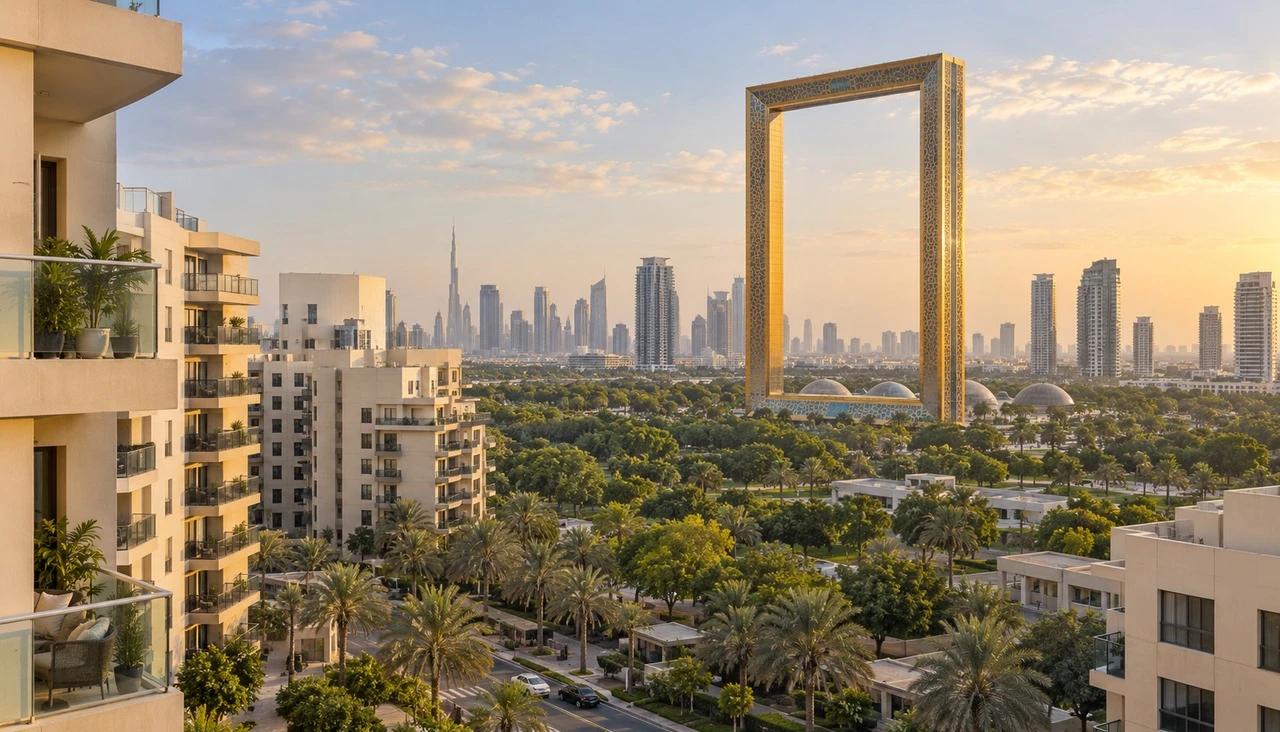
Palm Jumeirah, Downtown Dubai, Dubai Hills Estate, DIFC, Emirates Hills, Jumeirah Bay Island. Outlook: 6–18% appreciation depending on segment. Profile: capital preservation, ultra-prime international demand, constrained supply, strongest exit liquidity. For why location quality drives long-term property performance, see: why location matters in real estate: 6 key reasons.
Tier 2: Established Mid-Market — Best Yield-Plus-Growth
JVC, JVT, Arjan, Town Square, Business Bay, Dubai Marina, Arabian Ranches. Outlook: 4–9% appreciation; rental yields 6–8% in mid-market apartments. Best combination of accessible entry, rental income, and capital growth. For current Dubai rental benchmarks: Dubai rent prices 2025: average apartment rental costs.
Tier 3: Emerging Growth Areas
Dubai South, Dubai Creek Harbour, MBR City, MBR Gardens (AED 14.5B H1 2025), Dubai Silicon Oasis. Highest growth potential over 5–10 year horizon; highest execution risk. Off-plan typically the entry route. For the off-plan vs ready framework: off-plan vs resale property in the UAE: investment, income and risk compared.
Beyond Dubai: Ras Al Khaimah and Abu Dhabi
Ras Al Khaimah: high growth driven by Wynn Al Marjan Island (UAE's first integrated casino, opening 2027); entry prices below Dubai equivalents. Abu Dhabi: Q1 2026 transactions 7,200+ (second strongest ever); mortgage activity +42.1% YoY. Both serve as portfolio diversifiers. For RAK details: Ras Al Khaimah property investment: key benefits and growth potential.
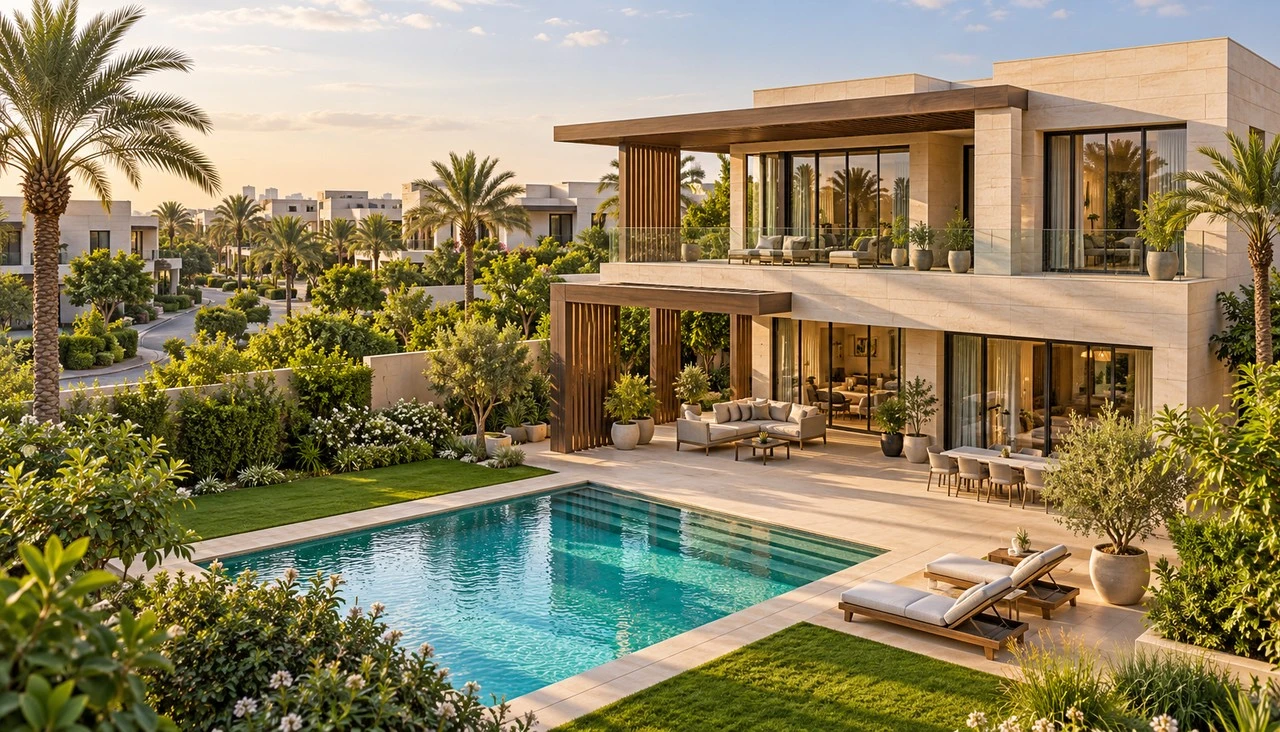
ValuStrat: villas +17.7% vs apartments +7.4% in 2026. Drivers: structural villa supply constraint (master-planned communities require multi-year development cycles); rising family demand from long-term expatriates; Golden Visa expanding the pool of villa-scale buyers; apartment supply growing faster mathematically suppresses per-unit appreciation. Spread is not expected to invert in 2026.
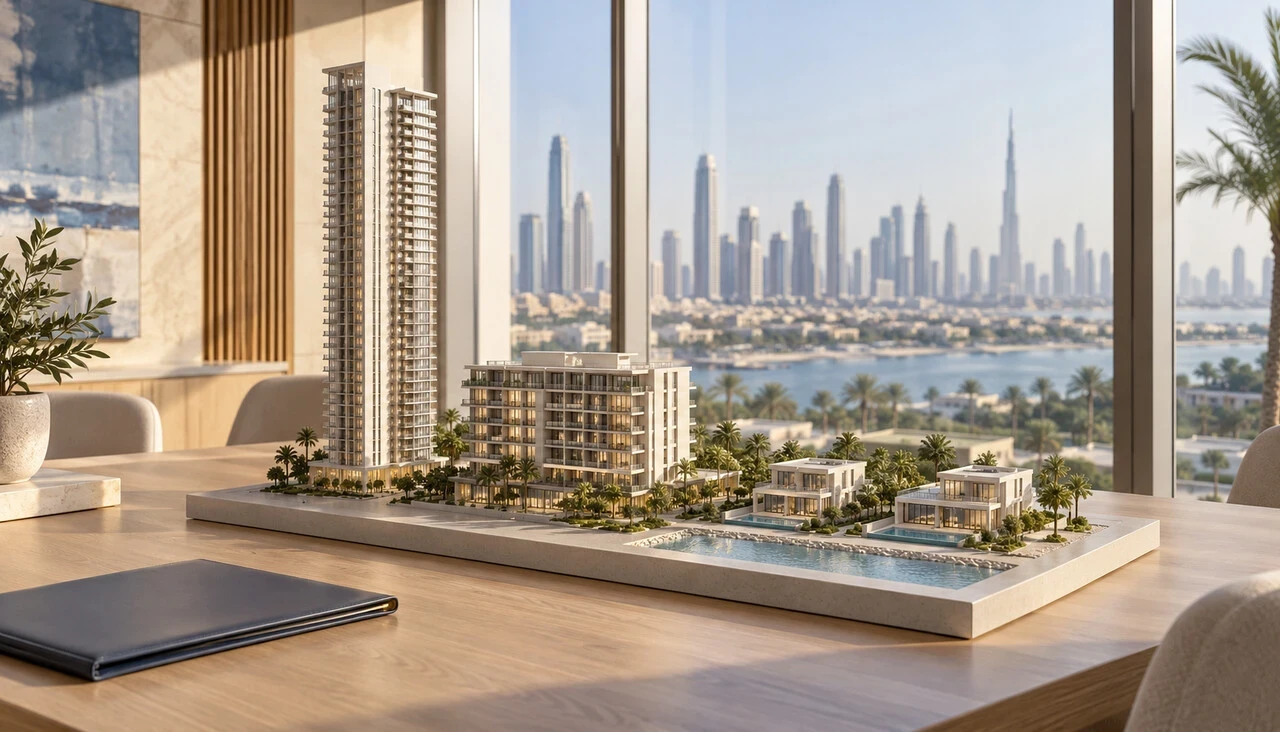
76% of Q3 2025 transactions were off-plan. Off-plan: capital growth focus, 3+ year horizon, payment plan flexibility, developer execution risk. Ready: immediate income, market-rate pricing, lower execution risk. UAE banks offer construction-linked mortgages for off-plan with conversion at handover. For complete off-plan mortgage framework including LTV ratios and eligibility: guide to mortgage for off-plan property in Dubai.
| Segment | Gross Yield 2026 |
|---|---|
| Mid-market apartments (JVC, Arjan, Town Square) | 6–8% |
| Central apartments (Marina, Downtown, Business Bay) | 5–7% |
| Studio and 1BR | 6–9% |
| Premium apartments (Palm, DIFC, Emirates Hills) | 4–6% |
| Villas (Dubai Hills, Arabian Ranches) | 4–6% |
Q1 2026 rental growth has decelerated from the double-digit 2023–2024 peaks to a healthier 6–8% pace in key communities. This is moderation, not reversal.
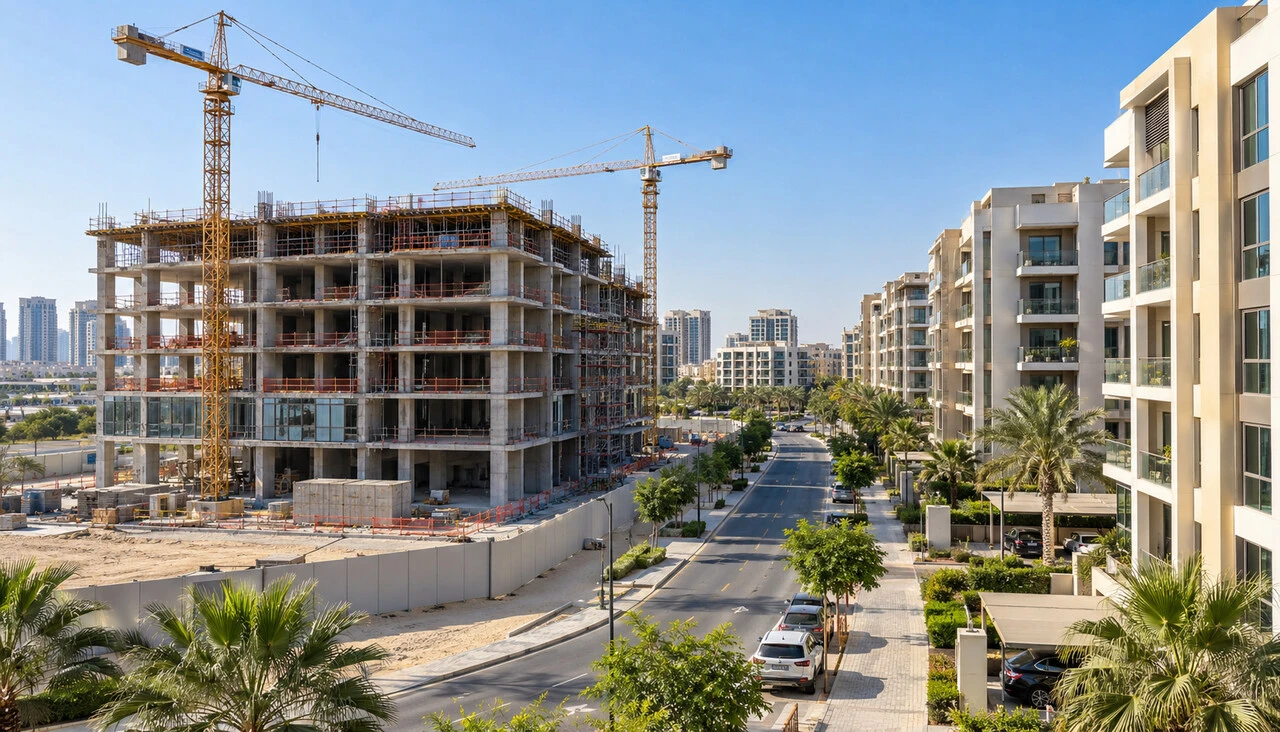
150,000 units launched in 2025; ~210,000 unit pipeline through 2028. Mitigating factors: (1) actual handovers historically come in below launched figures (typically 60–75% effective rate); (2) population absorbs ~400,000 new residents annually. Real risk concentrates at the submarket level: specific districts with concentrated off-plan delivery in 2026–2027 can experience local oversupply. Selective location analysis is the answer.
Population growth (400K/year to 5.8M by 2040); lower interest rates (Fed cuts 2025; EIBOR stable; mortgage activity +16% Q1 2026); UAE GDP growth ~5% in 2026 (IMF); Golden Visa programme; no income tax on rental earnings; infrastructure expansion (Etihad Rail, Dubai Metro Blue Line, Al Maktoum Airport); 100% foreign ownership in freehold zones. For Dubai ownership framework: freehold vs leasehold property in Dubai: which is right for you.
Yield-focused: JVC, Arjan, Town Square, Business Bay; studio/1BR; 6–8% gross. Capital growth: Dubai Creek Harbour, Dubai South, MBR City; off-plan; 10–18% appreciation potential. Capital preservation: Palm Jumeirah, Emirates Hills, Downtown; ready prime; 3–6% steady appreciation. Family end-user: Dubai Hills Estate, Arabian Ranches, Town Square; villas/townhouses; 10–17% appreciation + lifestyle. Diversification: Ras Al Khaimah + Abu Dhabi to reduce single-emirate exposure.
Beyond purchase price: 4% DLD transfer fee, AED 4,000–5,250 trustee office fee, 2%+VAT agency commission, NOC fee AED 500–5,000, 0.25% mortgage registration (if financed), annual service charge AED 8–25/sqft. For complete DLD fee breakdown: DLD fees in Dubai: everything you need to know.
What is the overall 2026 forecast?
Consensus: 4–10% residential appreciation with villas outperforming apartments (+17.7% vs +7.4% per ValuStrat); prime locations outperforming mid-market; waterfront holding particularly well. Knight Frank's 3% prime / 1% mainstream represents the conservative bottom.
Will there be a 2026 correction?
Majority view: no correction, just deceleration. Fitch warns of 10–15% correction in oversupplied segments. Reality: correction risk is real at the submarket level but not citywide.
Fastest-growing areas in 2026?
Dubai Hills Estate (12–18%), DIFC branded residences, Palm Jumeirah waterfront villas, MBR City, Dubai Creek Harbour. Shared pattern: constrained supply + strong lifestyle proposition + international buyer demand.
What rental yields can I expect?
5–8% gross average. Mid-market apartments lead at 6–8%; studio/1BR can reach 6–9%; villas 4–6%; branded residences 5–7%. Significantly exceeds most global investor markets.
The 2026 market is fundamentally healthier than the 2021–2022 cycle peak. End-users dominate, speculation has receded, population growth continues at scale, and the supply pipeline is being absorbed sustainably. What has changed is the spread between excellent and average choices. This is a market that rewards precision. Contact a DDA Real Estate advisor for 2026 portfolio analysis and access to pre-vetted opportunities across every tier of the market.