

Off-plan properties
In Turkey, the area of real estate is calculated differently than in most other countries, and advertising materials often indicate the gross area including walls, balconies, and common areas of the building. The difference between the stated and actual living space can reach 20–40%, so understanding the local measurement system helps make informed purchasing decisions.
Three main types of area are used in the Turkish real estate market, and knowing them will help correctly interpret the numbers in advertisements and documents.
Brüt alan (gross area) – this is the total area of the apartment, including its share in the common areas of the building. It includes external walls, balconies, terraces, staircases, corridors, halls, as well as a share in the infrastructure of the residential complex. This is the area most often indicated in advertising materials and cadastral documents. It reflects the buyer's full share of ownership, not just the internal space of the apartment.
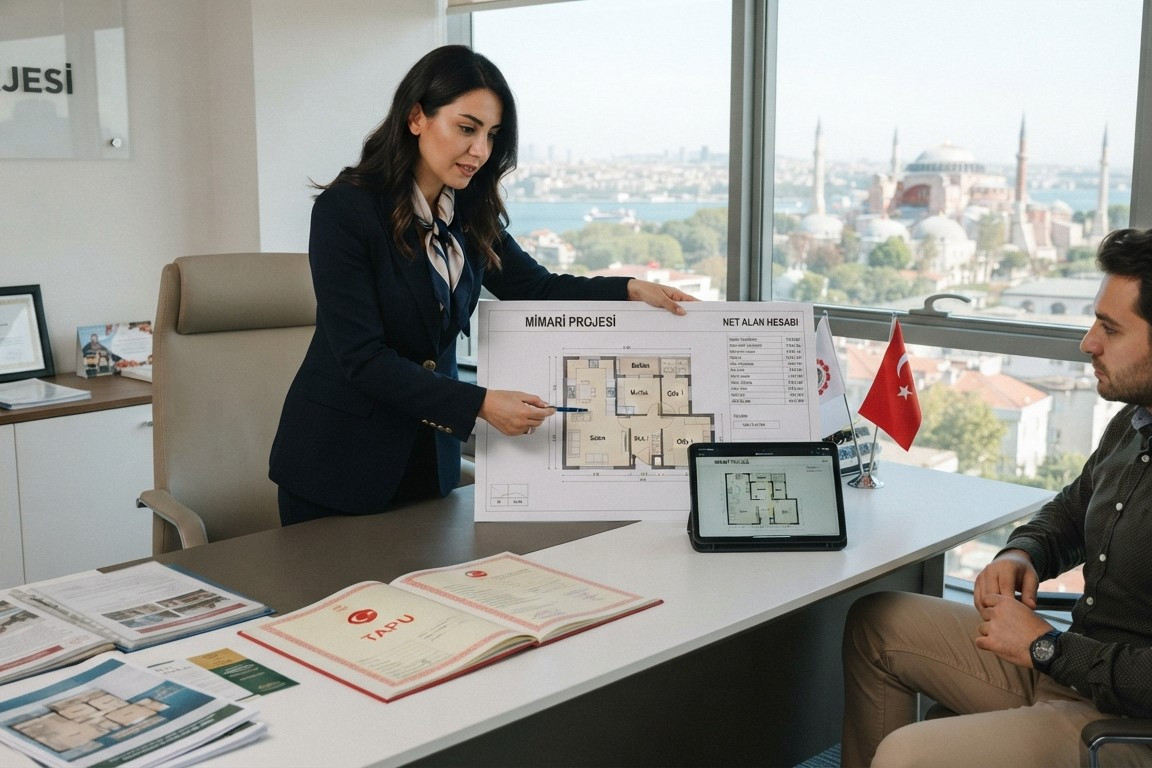
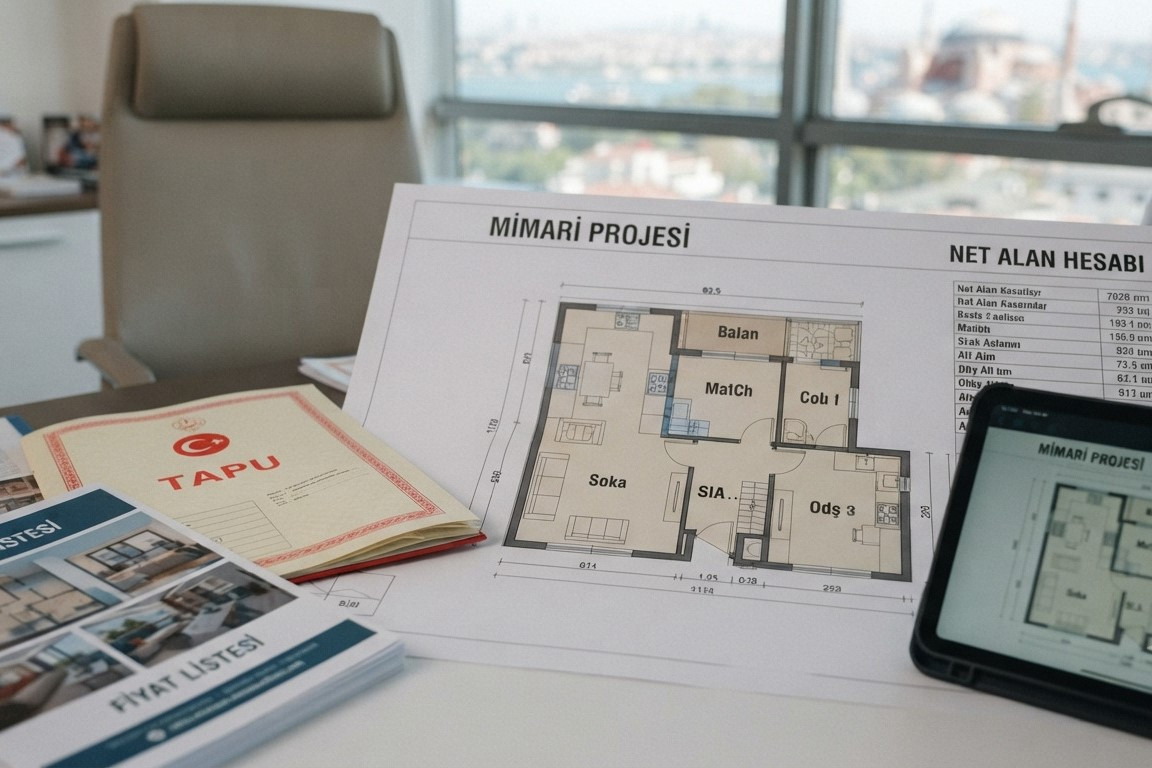
Net alan (net area) – this is the actual usable area of the apartment, the space that the owner can actually use. This includes rooms, kitchen, bathrooms, internal corridors and wardrobes. Balconies, terraces and wall thickness are not included in this indicator. This is the indicator that shows how many square metres you actually get «on the floor».
Tapu alanı (area according to TAPU) – this is the area recorded in the cadastral register and indicated in the title deed. It is usually closer to the usable area, but may include part of the share in common areas. In old-style TAPU, the area was not indicated at all – only the share of the land plot was recorded. After obtaining permission to put the building into operation (Iskan), cadastral data may be clarified.
Area type |
Includes |
Used for |
Brüt |
External walls, balconies, terraces, shares in common areas (elevators, halls, corridors, infrastructure) |
Advertising, marketing materials, cadastre |
Net |
Rooms, kitchen, bathrooms, internal corridors, wardrobes (without walls and balconies) |
Assessment of actual space, rental, price per m² |
Tapu |
Depends on the document (may be Brüt, Net or a combination) |
Legal registration of ownership |
The difference between gross and net area can range from 15% to 40%. The larger the residential complex and the more infrastructure it has: swimming pools, fitness centres, halls, car parks – the greater the difference between these indicators.
In most cases, as a rough estimate of the actual living area, you can subtract 20% from the gross figure. For example, an apartment with a gross area of 120 m² actually has about 100 m² of net area. However, the exact ratio depends on the specific project and layout, so relying on an average coefficient without checking the documents is not advisable.
Important: there is no single legislative standard in Turkey that regulates the mandatory indication of area in gross or net terms. Different developers and sellers may indicate different types of area, so it is incorrect to compare properties based solely on the numbers in advertisements.
To avoid a situation where the actual area of the apartment turns out to be smaller than expected, it is worth following a few simple rules.
This system of area accounting has developed in Turkey for a reason. It is related to the peculiarities of legislation on shared ownership in apartment buildings. Apartment owners legally own not only their premises, but also a share in the building – staircases, elevators, corridors, technical rooms and sometimes even in the infrastructure of the complex. The division of area makes it possible to fairly distribute among the owners not only the living space, but also the common areas, as well as the obligations for their maintenance.
In addition, the «gross» indicator directly affects taxation: in Turkey, the VAT rate when buying a home depends on the net area (up to 150 m² – 1%, over – 18%).
When buying real estate in Turkey, the key rule is not to trust the numbers in advertising materials without checking the documents. The gross area is always larger than the actual living area, and the difference can reach 20–40%. Ask the seller for the architectural plan, clarify the net area and, if in doubt, measure the property yourself during the inspection. A correct understanding of the area calculation system in Turkey will help avoid unpleasant surprises and make an informed choice.
If you are planning to buy real estate in Turkey and want to get professional help in choosing a property with a full understanding of all legal and technical nuances, DDA Real Estate specialists will help you understand the documentation, check the actual area of the property and choose an option that meets your expectations. Contact us for a consultation to get complete information about the purchase process and all related aspects.