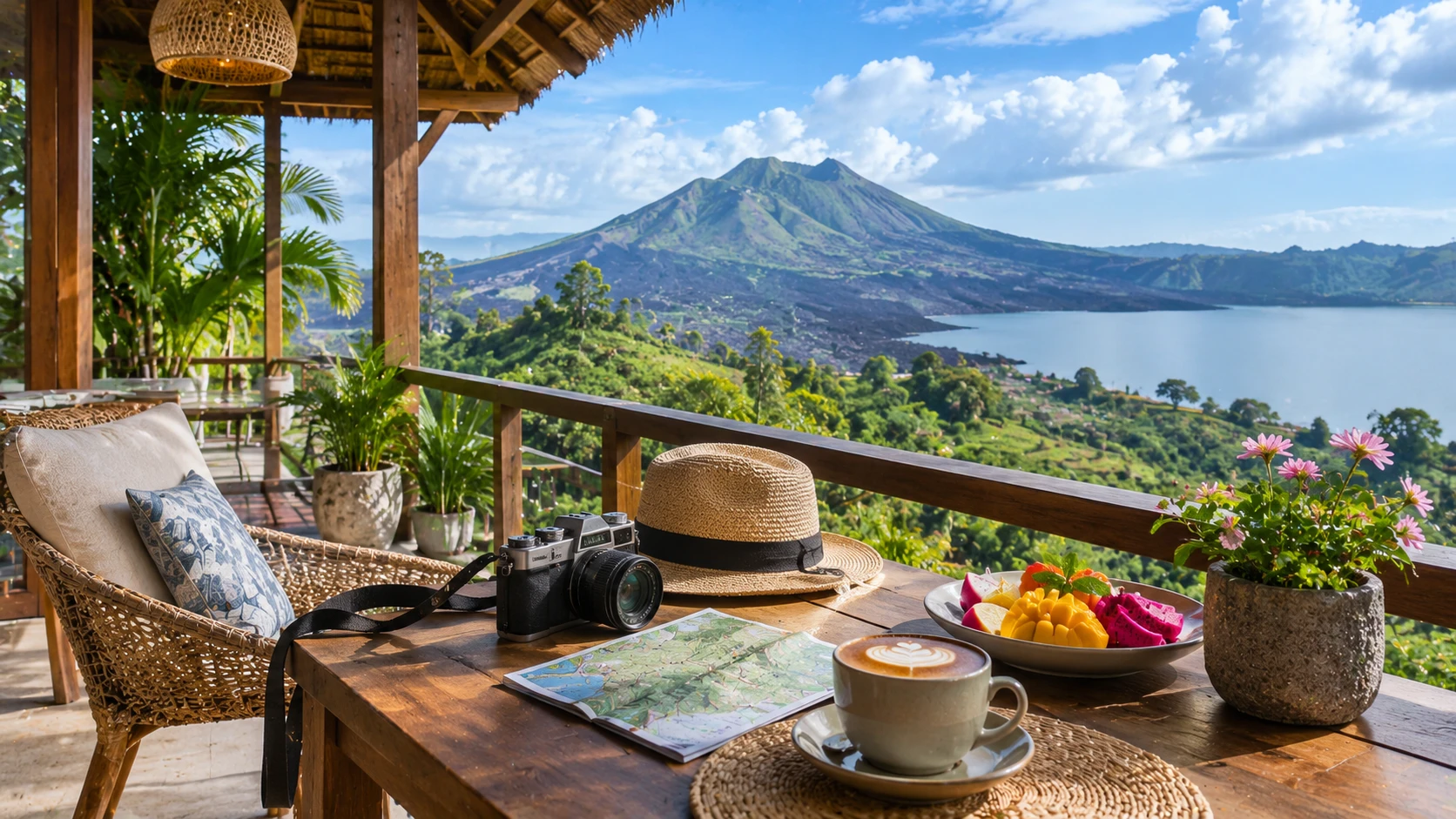
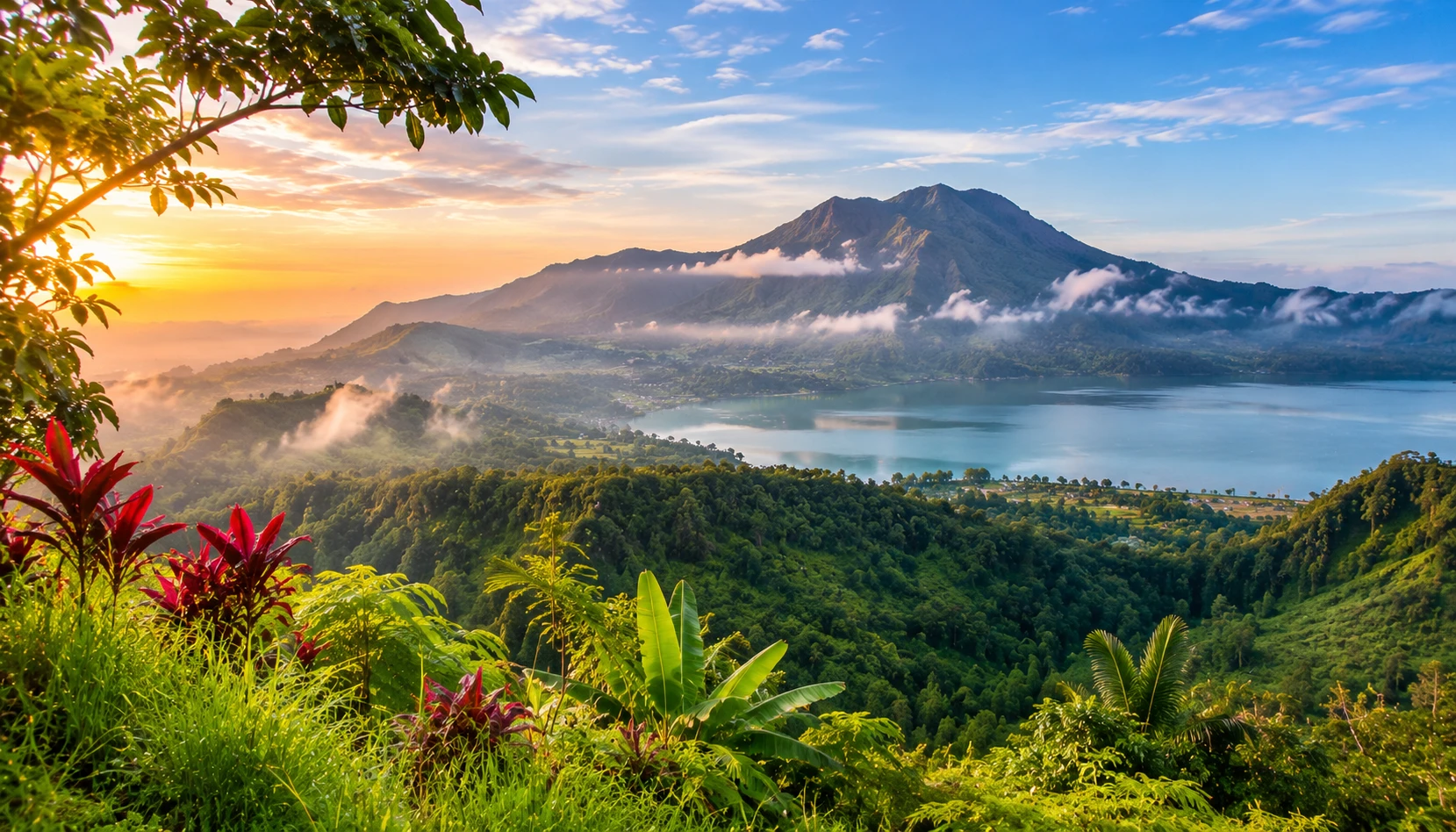
Kintamani is usually described as a viewpoint. It is more accurate to say it is a place you stand inside: the whole district sits within an enormous volcanic caldera, and the famous view is simply what you see when you look across it from the rim you happen to be standing on.
That geography produces the district's one practical division. The rim and the caldera floor are different places — different altitude, different temperature, different reasons to go — and visitors who treat them as one destination usually see half of it.
Below is what each half offers, why this is the coldest inhabited part of the island, how the district's day is shaped by people who arrive before dawn, where to stay and how to get there. Access arrangements, fees and operators change, so confirm current details locally rather than relying on any published account.
Rim and floor
Almost every decision about a visit follows from this split, and it is worth making deliberately rather than by accident:
| The rim | The caldera floor | |
|---|---|---|
| Altitude | High, cool, often in cloud by midday | Lower and warmer, sheltered by the walls |
| What is there | Viewpoints, restaurants, most accommodation | The lake, hot springs, working villages |
| Why go | The view across the caldera and the volcano | Bathing, boats, and the trailheads |
| Time needed | An hour if passing, a morning if staying | Half a day, because the descent is slow |
| Best hour | Early morning before cloud builds | Late morning onward, once it warms |
The road down is short in distance and long in time — it is steep and winding, and the return climb is slower still. Plan the floor as its own trip rather than as a detour from the rim.
The coldest part of Bali
People arrive from the coast in shorts and regret it within minutes of getting out of the car. At this altitude the temperature drops well below anything the beaches produce, mornings are genuinely cold, and cloud moves through in the afternoon rather than politely staying on the horizon.
Treat it as a mountain destination that happens to be on a tropical island. What that means in practice:
- Bring a proper layer and something waterproof, whatever the coastal forecast said
- Expect the view to close in by the middle of the day, so plan it for the morning
- Check whether your accommodation has heating or at least warm bedding
- Allow considerably longer for the drive than the distance suggests
- Assume damp: surfaces, seats and paths stay wet longer than at sea level
The district runs on the pre-dawn trek
The volcano climb shapes everything here. Groups leave the villages in the small hours to reach the summit for first light, and by mid-morning most of them have gone back down and left the district entirely.
Which produces a rhythm worth exploiting: the district is busiest in the dark and unusually quiet by lunchtime. The wider question of when first light actually happens on the island — and how little it moves across the year — is covered in the piece on sunrise on Bali and where to see it. The climb is a mountain walk in the dark, not a viewpoint with a car park, and it is sold far more casually than it deserves.
The lake, the springs and the villages
On the caldera floor sits the island's largest lake, with hot springs feeding bathing pools at the water's edge — the district's other main draw and a very different experience from standing on the rim in the wind.
Around the shore are working villages, some reachable mainly by boat, including one known across Indonesia for a burial tradition unlike anything else on the island. The lake itself and its place in the island's water system are covered in the guide to Bali's highland lakes. These are inhabited places rather than attractions, and the ordinary courtesies apply more than they do at a beach.
What photographs well, and when
The images that draw people here are almost all taken from the rim looking across the caldera at the cone, with the lake below and mist in the middle distance. That shot depends entirely on hour and weather rather than on equipment.
Early morning is the only reliable window. By late morning the caldera fills with cloud from below, which can be beautiful in its own right but hides everything the postcards show. What else is worth the frame:
- The lava field on the volcano's flank, visible as a dark scar from several points on the rim
- The lake from the descent road, where the angle opens up halfway down
- The terraced slopes on the outer side of the rim, which most visitors never turn around to see
- Steam and morning mist on the water, best in the first hour after sunrise
- Village life on the floor, with the usual restraint about photographing people
Where to stay
Accommodation divides along the same rim-and-floor line. The rim holds most of it, priced and positioned for the view, ranging from simple guesthouses to a handful of properties built specifically to face the caldera. The floor has fewer options, generally simpler, close to the springs and the trailheads.
The choice depends on what you came for: the rim for the view and an easy departure, the floor for the water and an early start on the mountain. Either way, staying overnight is what separates a good visit from a rushed one, because it puts you here at the two hours that matter — first light and the quiet afternoon.
Eating on the rim: an honest note
The restaurant strip along the rim exists to sell a view to coach groups, and the food is generally incidental to that. Buffets are the norm, prices reflect the panorama, and expectations should be set accordingly.
This is not a criticism of the district so much as a description of a business model. The better strategy is to come for the view and eat elsewhere — the coffee is the exception, since the surrounding highlands grow it and small local places do it properly.