

Off-plan properties
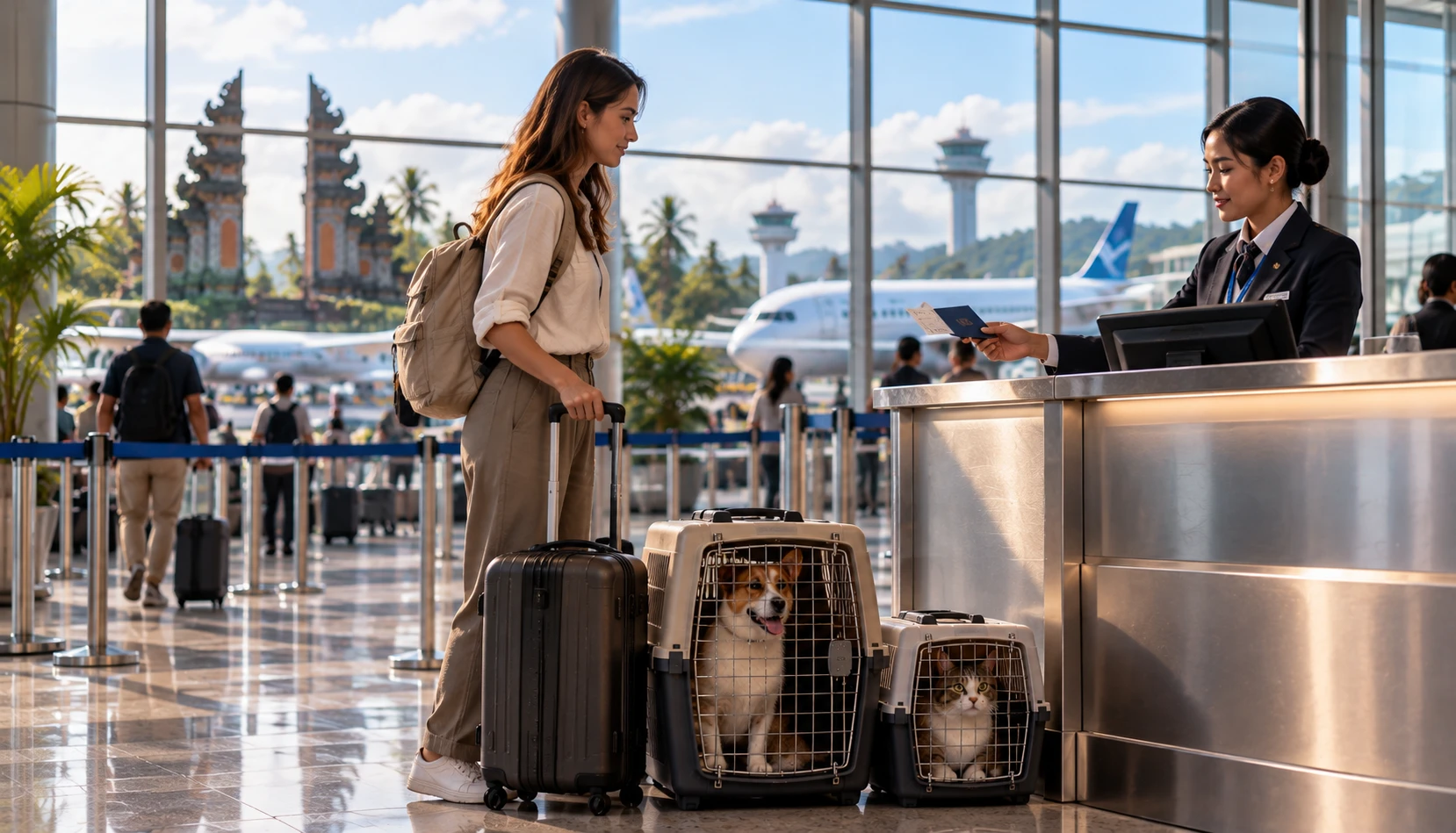
Moving to Indonesia with a dog or cat is possible in some circumstances, but the process starts with the destination, not the airline. Animal-health rules differ by species, origin and entry point, and an international arrival does not automatically authorise travel to another Indonesian island. For owners planning a move in 2026, the safest approach is to secure written confirmation of the permitted route before buying a ticket.
This guide explains the paperwork, rabies controls, quarantine steps and housing questions that matter most. It distinguishes national procedures from destination-specific restrictions and avoids treating an agent’s estimate as an official approval. Rules can change, so the final decision belongs to Indonesia’s animal quarantine and veterinary authorities.
A legal entry point is the first decision. Indonesia is an archipelago, and disease-control measures can differ across provinces and islands. A pet accepted through one airport may still be ineligible for onward movement to the island where its owner intends to live. Ask the quarantine office responsible for the arrival airport and the destination province to confirm the route in writing.
Do not assume that a connection through Jakarta solves a restriction elsewhere. The animal’s full itinerary, including domestic transfers and overnight stays, needs to be cleared before the international booking becomes non-refundable.
Entry is conditional, not automatic. Dogs and cats can be imported through approved channels when the animal, origin, documentation and intended destination meet the applicable requirements. The Indonesian Quarantine Agency describes advance notification, veterinary certificates, arrival inspection and quarantine release as parts of the import procedure.
A personal pet is not necessarily processed in the same way as a commercial animal shipment. Ask the authorities which exemptions apply to non-commercial companion animals and which veterinary approvals remain mandatory for your specific case.
Never treat Bali as an ordinary domestic destination for a dog or cat. Rabies-control restrictions have historically made bringing these animals onto the island especially difficult. Do not rely on an old article claiming either universal permission or an unconditional nationwide ban; request current written clearance from the Bali veterinary and quarantine authorities before planning entry or transit.
An international flight arriving elsewhere in Indonesia does not itself create permission to transfer a pet to Bali. Owners relocating to Bali should resolve this issue before signing a long-term lease or arranging transport.
Different itineraries require different checks. The table below shows the practical question to settle first; it is not a list of guaranteed approved routes.
| Scenario | Main concern | Action before booking |
|---|---|---|
| International arrival to Jakarta | Origin-specific eligibility and quarantine | Confirm import approval and entry facility |
| International arrival to another port | Whether that port accepts the animal | Ask the local quarantine office |
| Onward travel to Bali | Destination-specific rabies restrictions | Obtain written clearance; do not assume access |
| Inter-island domestic move | New veterinary and quarantine checks | Verify departure and destination rules |
Several agencies may be involved. Badan Karantina Indonesia oversees quarantine inspection and release, while the Ministry of Agriculture’s animal-health authorities may issue or specify veterinary import recommendations. Airlines and the exporting country’s veterinary authority apply their own requirements.
Use official portals for current instructions: karantinaindonesia.go.id for quarantine guidance and the relevant agriculture service for import conditions. If a relocation company handles filings, ask to see the original approval rather than a screenshot of an informal message.
Identification must match every record. Have a veterinarian verify that the microchip can be scanned and that its number appears consistently on vaccination records, laboratory reports and the official health certificate. ISO-compatible identification is a practical standard to discuss with the destination office, but do not assume one chip specification satisfies every case.
A one-digit discrepancy can delay document review. Scan the animal at the clinic before collecting final paperwork, and carry both digital copies and paper originals.
Rabies documentation is a central control. An Indonesian government import-condition document for dogs and cats from the United States specifies a minimum age of three months, vaccination with an inactivated rabies vaccine and an antibody titre of at least 0.5 IU/ml. Those conditions come from a particular origin-specific approval, not a universal schedule for every exporting country.
Check whether your country’s approved protocol specifies a waiting period after vaccination, an accredited laboratory, a test-validity window or additional vaccines. Allow for laboratory turnaround and possible repeat sampling instead of arranging testing at the last minute.
The official certificate is more than a pet passport. Indonesia’s quarantine guidance requires a health certificate issued by the competent authority in the country of export. A government import-condition example also calls for a clinical examination within five days before departure, but the actual timing must be checked against the approval for your origin.
Book the veterinary appointment only after confirming which government endorsement, stamp or digital certification will be accepted. A private clinic’s note may not replace an officially issued or endorsed export certificate.
Submit the right application before departure. The Indonesian Quarantine Agency describes registration through its applicable quarantine systems, a prior notice filed before export and a PTK Online arrival request. The detailed path can differ for pets and other animals, so confirm which steps the office requires rather than copying a livestock-import checklist.
Keep reference numbers, receipts and email confirmations together. Do not assume a completed online form means permission has been granted: wait for the relevant written approval and confirm that the arrival port and animal details are correct.
The route must work for both the animal and the paperwork. Confirm the airport is an authorised entry point for your species and origin. Then check the airline’s acceptance policy, breed restrictions, temperature embargoes, crate standards and whether the animal travels in the cabin, hold or as manifested cargo.
Ask whether every transit airport permits live-animal transfers. An attractive low fare can become unusable when a connecting carrier refuses pets or requires a separate customs clearance.
A compliant crate is not a substitute for preparation. Choose a carrier meeting the operating airline’s requirements, with enough room for the pet to stand, turn and lie naturally. Introduce the crate well ahead of travel and practise calm periods inside it.
Discuss feeding, hydration and any medical conditions with a veterinarian. Sedation can carry risks during air travel and should never be improvised to make a nervous animal easier to transport.
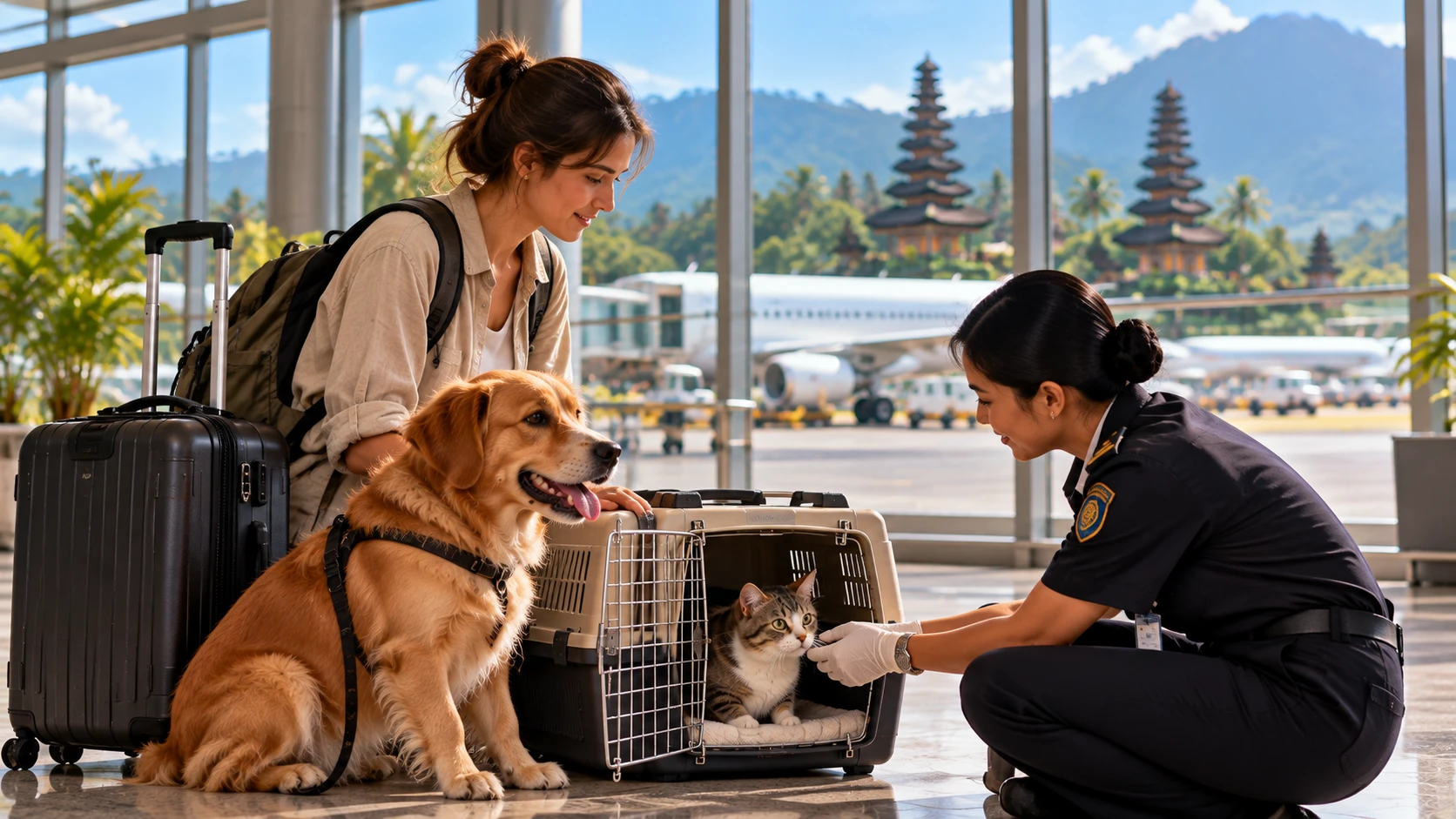
Arrival is an inspection stage, not an automatic release. The owner or authorised representative must present the animal and supporting records to quarantine officials at the designated entry point. Officials may verify identity, assess clinical health, review test results and direct further quarantine measures.
Release follows successful completion of the applicable checks and issuance of the quarantine release certificate. Arrange ground transport only after understanding when the animal can legally leave the facility.
There is no safe universal number of days. Duration depends on the risk assessment, animal category, origin, approved facility and findings at arrival. Older online guides often quote a fixed period, but that may not apply to your itinerary or to the current rules.
Request the likely range and the conditions that could extend it. Ask how feeding, veterinary care, owner visits and emergency decisions are handled, and obtain a written estimate of all facility charges.
Build a cost range, not a single advertised package price. Expenses can include microchipping, vaccination, antibody testing, export certification, official applications, airline handling, crate purchase, cargo agents, quarantine services and local transport.
Pricing varies sharply by origin and animal size. A relocation quote should separate government fees from the agent’s service fee and identify which costs remain payable if the flight changes or an additional test is required.
Domestic travel is a second compliance event. Indonesian quarantine guidance issued in 2026 states that movement of rabies-susceptible animals between islands can require a veterinary certificate, vaccination documentation, protective rabies antibody titre results and quarantine reporting at departure and arrival.
Because disease status differs by region, a pet that has cleared international entry may still face a separate restriction on the next leg. Never assume a domestic ferry or short flight is exempt.
Species and age change the requirements. Very young animals may not meet minimum vaccination or antibody-testing conditions. Birds, rabbits, reptiles and other pets may face different animal-health, wildlife or CITES rules, and some species require permits beyond ordinary companion-animal paperwork.
For unusual pets, obtain the scientific species name and ask the competent authority about protected status and import eligibility before booking transport.
Work backwards from confirmed approval, not from moving day. Begin by identifying the intended destination and authorised port, then obtain the origin-specific veterinary conditions. Next schedule vaccination, antibody testing and official certification, leaving room for laboratory delays.
Only after the approvals and route are aligned should you lock in flights, quarantine arrangements and accommodation. The last week is for the final examination and certificate, not for discovering that a document is missing.
A legally imported pet still needs a suitable home. Ask landlords and building managers about pet clauses, permitted breeds or sizes, deposit deductions and noise rules. Written approval matters more than an agent’s verbal assurance. Our property selection guide explains other checks worth making before committing to a home.
For a longer relocation, compare neighbourhood access, secure outdoor space, shade, drainage and nearby veterinary care. Our guide to Bali neighbourhoods explains why the right district matters beyond the appearance of a villa.
Think about the animal’s daily routine. Heat, humidity, traffic and unfamiliar parasites can make the first weeks challenging. Arrange a local veterinary appointment, review parasite prevention and identify a safe walking route before the pet arrives.
If the move includes children, coordinate the family’s schedule and housing search rather than solving the pet’s needs in isolation. The family relocation checklist offers a useful framework for sequencing a household move.
The costliest error is committing before permission is clear. Other common problems include inconsistent chip numbers, expired or mistimed tests, unsupported transit airports, missing official endorsements and misunderstanding an island-specific restriction.
The same principle applies to residency and housing: paperwork should determine the timeline. Read our guide to moving to Indonesia when planning the human side of the relocation.
Can I bring my dog directly to Bali?
Do not book on that assumption. Bali has destination-specific rabies controls; obtain explicit current written permission from the competent authorities before any flight or onward transfer.
Is a rabies vaccine enough?
Not necessarily. Applicable conditions may also require an antibody titre test, official veterinary certificate and other origin-specific documents.
Is quarantine always exactly seven or fourteen days?
No. The actual measures and duration depend on the authorised route, current rules and official risk assessment.
Can I fly into Jakarta and then take my pet to another island?
Only if the separate domestic movement requirements and destination restrictions are satisfied. International release alone does not guarantee onward permission.
Should I hire a pet relocation agent?
An experienced agent can help coordinate filings and carriers, but ask for official approval documents, itemised fees and written confirmation of the complete itinerary.
DDA Real Estate helps international buyers and renters assess homes, neighbourhood access and everyday living conditions in Indonesia. We can help you shortlist housing that suits your household while animal-import permissions remain a separate matter for the competent authorities.
Explore our property options in Indonesia and send an enquiry: tell us your preferred area, rental or purchase budget and your pet’s housing needs. We can discuss suitable homes once the destination and legal travel route are clear.