
Off-plan properties
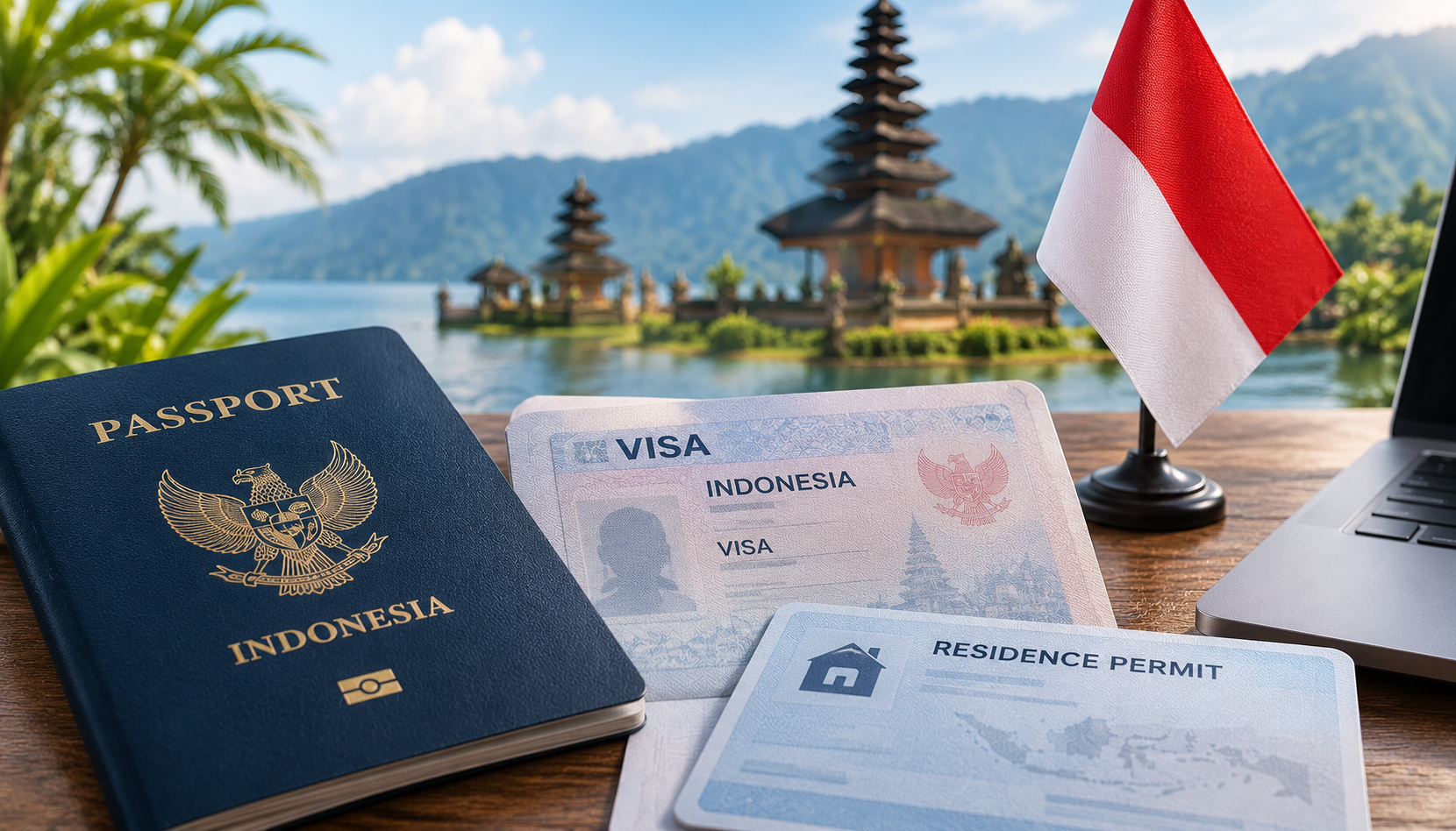
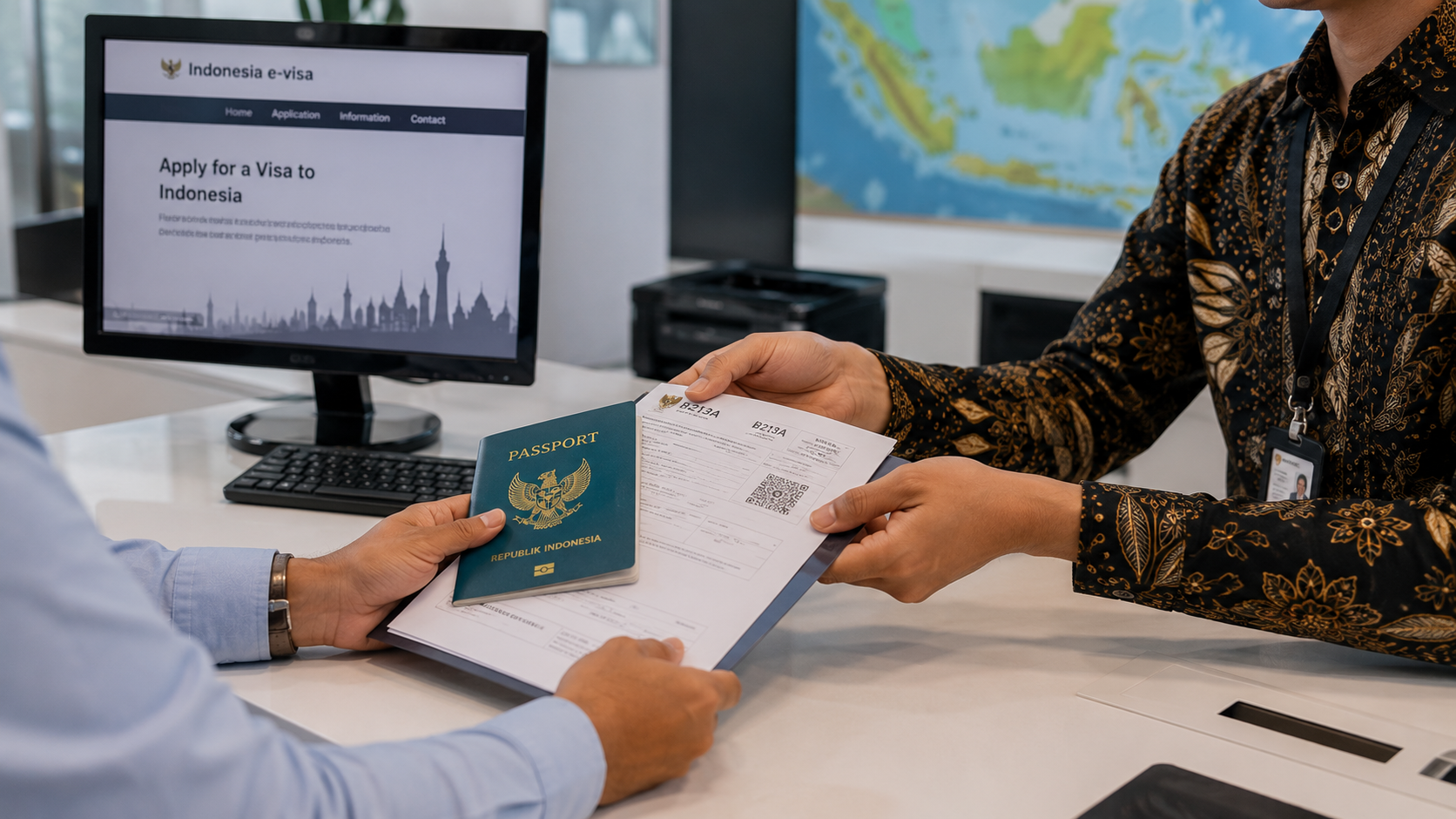
Almost every confused conversation about living in Indonesia comes from collapsing two different documents into one word. A visa is an entry document: it authorises you to arrive. A stay permit is what actually lets you live here, and it is issued after you land. The limited stay visa gets you through the airport with 60 to 90 days of validity; the limited stay permit is granted at the immigration checkpoint; and the card recording that permit is what people call a KITAS. Functionally the permit and the card are the same thing — the K simply stands for the card.
Getting that architecture right matters more in 2026 than it did three years ago, because the enforcement layer underneath it has hardened. Overstaying now costs IDR 1,000,000 per day from the first day with no grace period, and crossing 60 days converts an administrative fine into automatic deportation. The third amendment to the immigration law, passed in 2024, extended the available entry bans considerably, and biometric records at entry and exit have made short overstays far harder to miss.
This article maps the system by the three questions that actually distinguish one permit from another — who sponsors you, what you are allowed to earn, and how renewal works — rather than by category names, which are the least informative part. It also sets out what property ownership does and does not do for your status. Requirements and figures are current as of July 2026, several points are reported inconsistently across sources and that is flagged where it happens, and any individual application should be confirmed with the immigration authorities or a licensed Indonesian consultant.
The sequence is fixed and worth memorising, because most application errors are sequencing errors. A limited stay visa is issued before arrival and authorises entry for the purpose of obtaining a permit — typically valid 60 to 90 days. On arrival it converts into the limited stay permit itself. The card recording that permit is the KITAS. Above it sits the permanent stay permit, generally issued for five years and renewable, which people call a KITAP.
Underneath both sits a third tier that is not residence at all: visit visas and visa on arrival, which permit presence but not living. The distinction is not academic. A stay permit unlocks the ordinary machinery of life here — a local bank account, a long-term lease in your own name, tax registration. A visit visa unlocks none of it, which is why running a household on consecutive visit visas makes every practical step harder than it should be. The broader picture of how these routes fit together for someone relocating is set out in our complete immigration guide for Bali.
Category names tell you almost nothing. Two permits with similar labels can differ completely on the things that govern daily life. Ask these three instead, in this order.
Answer those three and the right category usually identifies itself. Start from the name and you land in the system's most common failure mode: a mismatch between the purpose you declared and what you actually do.
The table sets out the principal routes as described in 2026. Treat it as orientation rather than a decision, since thresholds and durations are revised administratively.
| Route | Sponsor and earning rights | Duration and renewal |
|---|---|---|
| Work permit | Indonesian employer or a foreign-invested company; tied to that sponsor. Employer handles manpower approval and the foreign worker levy first | Usually one or two years, renewed before expiry |
| Investor permit | Your own foreign-investment company; directors, commissioners and shareholders qualify. Doubles as residence and work authorisation | Commonly cited at two years and renewable; can lead to permanent status |
| Remote worker permit | No local sponsor; requires a contract with an employer registered outside Indonesia and foreign-source income only | Up to one year, multiple entry; renewal mechanics disputed — see below |
| Second home | No personal or corporate sponsor; the deposit or property acts as the guarantee. Does not grant ordinary local work rights | Multi-year; funds or property must be maintained throughout |
| Retirement | Available from a qualifying age with proof of income; no local employment | Renewable, and a recognised route toward permanent status |
| Family or spouse | Sponsored by an Indonesian spouse or family member | Renewable; the shortest recognised path to permanent status |
Two figures for the second home route illustrate why this article gives ranges rather than single numbers. One widely cited version requires a cash deposit of around USD 130,000 held in the applicant's own name at a state-owned Indonesian bank, or ownership of an apartment valued at a minimum of USD 1,000,000, with leasehold agreements explicitly not qualifying. Another describes the deposit threshold as IDR 2,000,000,000, roughly USD 150,000. Both appear in 2026 guidance. Confirm the current figure before planning around either.
This is where sources diverge most sharply, and it has real financial consequences. The remote worker permit launched in April 2024 as Indonesia's first purpose-built residence route for people employed by companies abroad, requiring an employment contract with a foreign-registered employer and annual income commonly cited at a minimum of USD 60,000.
What it does not do is state clearly how many times it can be extended. Some agents describe one further year for a maximum of two, others up to five extensions across six years. A third account holds there is no genuine in-country renewal at all: you apply for an exit permit, leave, and reapply from abroad each time. Multiple agents reported in 2026 that the third description matches practice, which means budgeting for an annual exit flight and time abroad while the new application processes. The route is also generally described as not leading to permanent residence.
The practical lesson generalises beyond this one category. When a permit is described as renewable, ask specifically whether renewal happens in-country or requires departure, and get the answer from immigration or a licensed consultant rather than from a sales conversation.
The permanent stay permit is the highest status available short of citizenship: generally five years, renewable, and free of the annual cycle that governs limited permits. The qualifying periods reported for 2026 differ by route.
Continuity is the operative word in all three. Breaks in lawful status, overstays and permit violations complicate later applications, on a record that is now digital and cross-referenced. For anyone holding an investor permit through a company, there is a specific and underrated failure mode: corporate reporting obligations feed directly into immigration status, and lapsed filings have blocked permit renewals outright. How that reporting calendar works is covered in our guide to reporting requirements for companies on Bali.
Less than most buyers expect, and the misunderstanding is expensive because it inverts the order of decisions. Buying property in Indonesia confers no immigration status by itself: there is no citizenship-by-investment route, and owning a villa does not entitle you to live in it beyond whatever permit you separately hold.
Investment interacts with the system at one point only: it can support a permit. A foreign-investment company can underpin an investor permit for its directors and shareholders. A qualifying property or deposit can underpin the second home route, though the qualifying thresholds are the disputed figures above and leasehold structures are excluded from the property option in at least one published version. Since foreign nationals cannot hold freehold land, the ownership structure and the immigration structure are usually decided together — which is an argument for settling the permit question before choosing the property rather than after.
Compliance in Indonesia is now recorded rather than observed, and the arithmetic is unforgiving.
For anyone with a home, a business or a family here, the permit calendar deserves the same attention as any other recurring obligation, and problems are cheaper to handle before the expiry date than after it.
A stay permit is also what makes ordinary administrative life possible, and the gap from visit-visa status shows up in small practical matters first. One of the earliest most new residents meet is driving legally, which has its own procedure and documentation — set out in our guide to obtaining an Indonesian driving licence.
What is the difference between a visa and a KITAS?
A visa authorises entry; the stay permit authorises living here and is granted after arrival. The limited stay visa is typically valid 60 to 90 days for the purpose of obtaining the permit, and the KITAS is the card recording it.
Can I live in Indonesia on repeated visit visas?
It remains possible but it is a weaker position than it used to be. Visit status does not unlock local banking, leases in your own name or tax registration, and the current system records declared purpose per application, so a pattern of repeated visit visas attracts scrutiny that a matched stay permit does not.
Does buying a villa give me residency?
No. Property ownership confers no immigration status on its own, and Indonesia has no citizenship-by-investment programme. Investment can support a permit — through a foreign-investment company for the investor route, or a qualifying property or deposit for the second home route — but the permit is the thing that grants residence, not the property.
Can I work remotely on the remote worker permit?
For an employer registered outside Indonesia, yes — that is precisely what it is for. Services provided to Indonesian entities or payment received in local currency fall outside it. The income threshold is commonly cited at a minimum of USD 60,000 per year, evidenced by a contract and supporting documents.
How long until I can apply for permanent status?
Reported figures differ by route: three consecutive years is described for investors and retirees, two years of marriage for spouses of Indonesian citizens, and three to five years in more general summaries. Continuity of lawful status matters throughout, and at least one route is described as not leading to permanent residence at all.
What happens if I overstay?
The fine is IDR 1,000,000 per day per person from the first day, with no grace period. Past 60 days deportation proceedings begin automatically, with an entry ban whose length is described inconsistently across sources — from six months to two years in some accounts, up to ten years and extendable in others.
Indonesia's system is more legible than its terminology suggests once you separate the two layers and stop reading category names as descriptions. A visa gets you in; a permit lets you live here; the card is just the record. Which permit fits you is settled by three questions — your sponsor, your source of income, and how renewal genuinely works — and those three also predict every problem people run into later. The enforcement layer has made precision cheaper than improvisation: a daily fine from day one, a hard cliff at sixty days, and a digital record that follows the application after next. For property buyers the sequencing conclusion is the useful one: decide the permit first, then the property, because the ownership structure and the immigration structure are ultimately the same decision.
DDA Real Estate helps you find property in Bali — from apartments in Canggu to villas on the Uluwatu cliffs, with zoning verification, document checks and support on ownership structure. Check out our offers in Bali and leave a request: we'll find options for your budget and goal.