

Bali Export Restrictions and Fines | DDA
971 56 596-5009
day and night
Dubai
EN
$
ft²
Other articles

What Not to Take Out of Bali: Goods and Fines

Ekaterina Bocharova The author of the article, the Broker
#Blog DDA
17 October 378 views

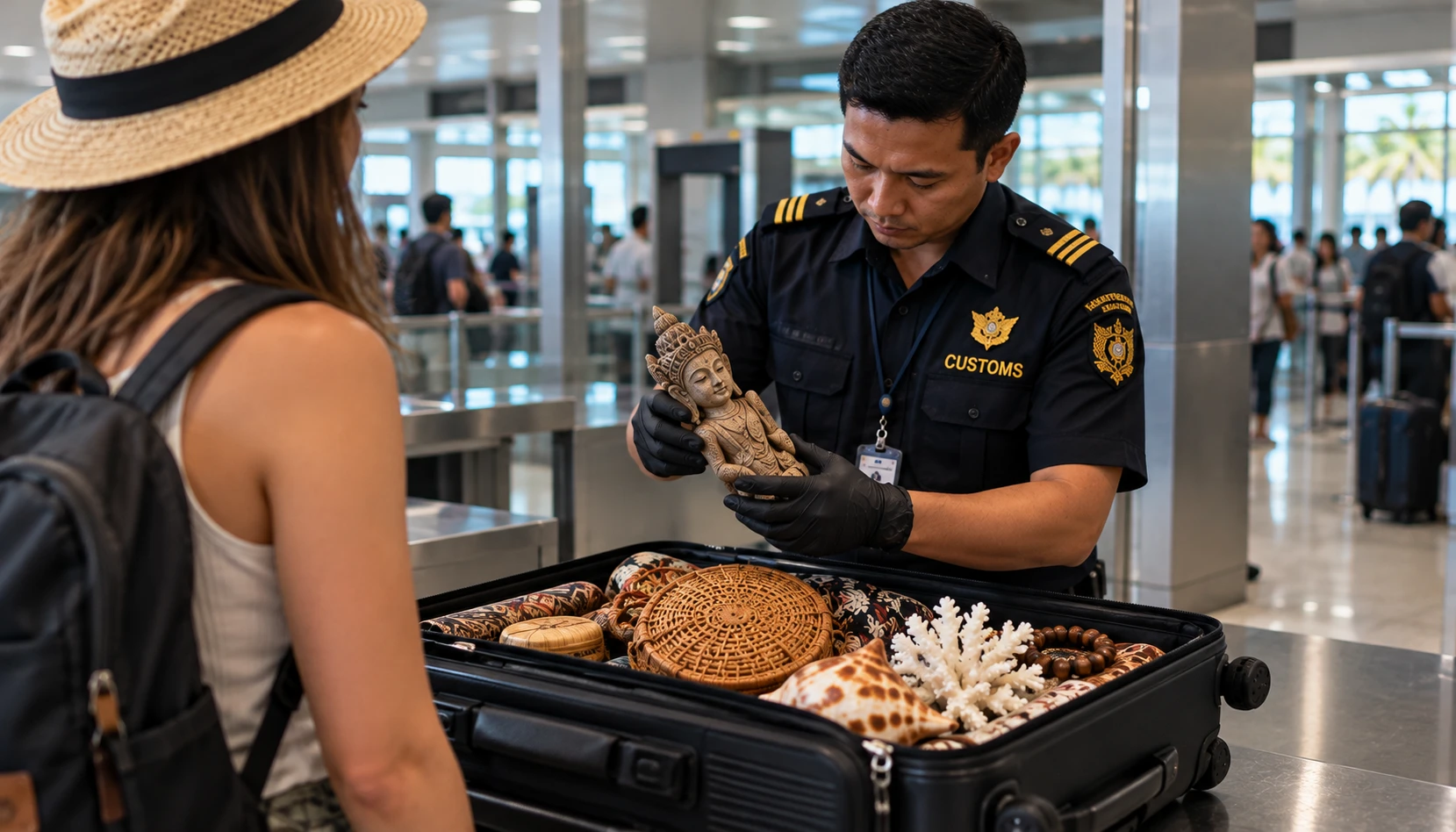
A souvenir bought in a Bali market is not automatically legal to take overseas. Indonesia controls exports of protected wildlife, certain natural materials, cultural objects and other regulated goods. Even a receipt may not establish that an item can cross the border.

The key is to distinguish prohibited exports from items that need permits or declarations. This guide explains the main risks when departing Bali, how cash rules work, and why there is no single fixed fine for every restricted souvenir.

Wildlife, coral and marine souvenirs

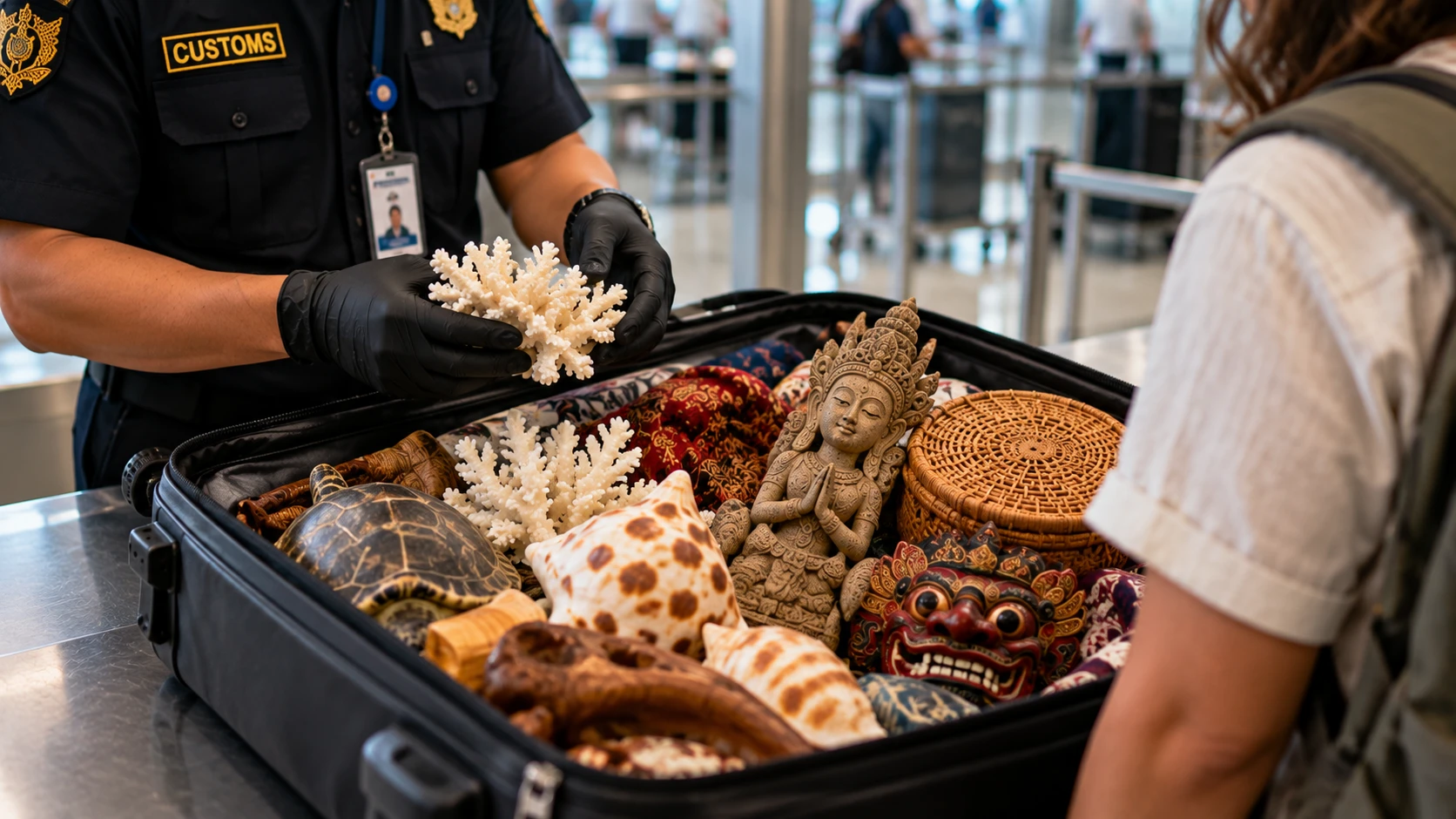
Coral pieces, turtle-shell accessories, ivory carvings, animal skins and products made from protected species deserve particular caution. Their legal status depends on the species, the source of the material and the applicable export permissions. An item sold openly in a shop is not proof of lawful origin.

Indonesia regulates protected plants and animals, while international trade in species covered by CITES can require export permits and, in some cases, documents from the destination country. Do not assume that a polished shell, dried seahorse or decorative coral is exempt simply because it is small or no longer alive. Check the species and required documents before buying. For broader trip planning, the Bali travel guide covers practical details beyond customs.

Ordinary commercially produced souvenirs that do not contain protected biological material present fewer wildlife-export concerns. When a seller cannot identify the material or provide evidence of lawful origin, choose another gift.

Antiques, sacred objects and cultural heritage

Old statues, archaeological finds, historic manuscripts and objects that may qualify as cultural heritage are different from newly made decorative crafts. Indonesian heritage protections can restrict removal of designated cultural property, and provenance matters.

A newly carved wooden figure is not automatically a protected antiquity, but a seller’s verbal assurance is insufficient for an object advertised as centuries old. Before purchasing valuable antiques, request documentation and verify whether an export authorization is required. The destination country may separately regulate imports of cultural property.

Plants, seeds, wood and food

Live plants, seeds, untreated wood and products of animal or plant origin may face export controls, phytosanitary requirements or restrictions in the country where the traveler lands. The rules depend on the exact species, processing and destination. A packet of commercially sealed coffee is not equivalent to a live orchid or an unprocessed plant cutting.

For wooden handicrafts, identify the timber if the item is made from a regulated species. For fruit, meat, seeds and plants, consult the destination country’s customs and agricultural authority before packing. Legal export from Indonesia does not guarantee legal import elsewhere. Travelers preparing for an extended visit can also review essential guidance for expat life in Bali.

Cash and valuable goods

Travelers taking cash or qualifying payment instruments worth IDR 100 million or more out of Indonesia must declare them. Taking IDR 100 million or more in rupiah banknotes abroad also requires prior permission from Bank Indonesia. Separate restrictions apply to foreign banknotes equivalent to IDR 1 billion or more; individuals generally cannot carry that amount in their own capacity without the applicable corporate framework and authorization.

The outbound cash declaration procedure applies before departure. The threshold is a reporting trigger, not a blanket ban on every amount above it. High-value jewelry carried for commercial export and other goods covered by export procedures may also require declarations.

Which items need extra checks?

ItemPractical rule
Coral and wildlife productsCheck species protection, CITES status and permits; avoid items of uncertain origin.
Antiques and archaeological objectsVerify heritage status and export authorization before purchase.
Plants, seeds and animal productsCheck Indonesian export rules and destination-country biosecurity requirements.
Cash of IDR 100 million or more equivalentDeclare on departure; additional authorization applies to specified rupiah and foreign-banknote movements.
Ordinary clothes and mass-produced craftsGenerally lower export risk, provided they contain no regulated materials and are not commercial consignments.

This table is a screening guide, not a substitute for classification by customs. The product’s material, origin, quantity and destination can change the answer.

What fines and penalties can apply?

There is no single fixed “Bali souvenir fine” for every restricted item. Customs authorities may hold goods for inspection, refuse export or seize items where the law allows. Serious wildlife trafficking, illicit trade in cultural property, false declarations and other offenses may trigger administrative or criminal proceedings under different statutes.

For cash, Indonesian customs expressly warns that failure to declare or inaccurate reporting may lead to administrative sanctions. The amount and legal basis depend on the specific facts; the applicable customs rules govern declarations and permits. Avoid relying on online claims that every shell, statue or cash discrepancy automatically carries the same fixed fine.

The country of arrival can impose separate penalties, even where an item was legally exported from Indonesia. That is particularly relevant for protected wildlife products, agricultural goods and cultural artifacts.

Before you leave Bali

Inspect souvenirs while there is still time to ask the retailer for an invoice, material description or permit. For anything made from coral, shell, bone, skin, feathers or rare wood, confirm what species was used. If the material cannot be identified, leave the item behind.

Keep declarations and authorizations accessible rather than buried in checked luggage. Review the airline’s dangerous-goods rules separately: cabin baggage restrictions on liquids, batteries and sharp objects are aviation-safety rules, not necessarily Indonesian export bans. For regulated exports, confirm the requirements with Indonesian customs before departure. For those planning to settle on the island, immigration requirements for Bali are another set of rules to check before departure.

Frequently Asked Questions

Can I take seashells home from Bali?

Not every shell is prohibited, but species protection and destination-country rules matter. Avoid coral and unidentified wildlife souvenirs until their status is confirmed.

Can I take a wooden statue out of Bali?

A newly made craft is generally different from a protected heritage object. Check the wood species and seek documentation for antiques or objects of uncertain age.

Is there a limit on cash when leaving Bali?

IDR 100 million or more in cash or covered payment instruments triggers an outbound declaration. Additional Bank Indonesia permission and foreign-banknote restrictions may apply.

Does a shop receipt make a coral souvenir legal?

No. A receipt shows a transaction, not species identification, lawful sourcing or export permission.

Will customs always issue a fine if an item is restricted?

No universal outcome applies. Authorities assess the goods and violation; inspection, seizure, administrative sanctions or criminal proceedings may be relevant depending on the law.

What to Remember

  • Check the material – Wildlife-derived souvenirs may be controlled even when sold openly.
  • Treat antiques carefully – Old or archaeological objects may require heritage clearance.
  • Declare large cash movements – The IDR 100 million threshold triggers reporting and may involve permits.
  • Check both countries – Legal export does not guarantee legal import at your destination.
  • Keep documents – Invoices, species details and permits make customs checks easier.

A sensible final check

A few minutes spent checking a souvenir’s origin can prevent an expensive problem at the airport. Prioritize ordinary manufactured gifts and leave uncertain wildlife products or undocumented antiquities behind.

Check the rules before buying. If your visit is turning into a plan to buy a home, DDA Real Estate can help you explore property options. Customs compliance and property transactions are separate matters, and both reward careful document checks.

Popular
5 June 4399164 view
Dubai Rent Prices 2025: Average Apartment Rental Costs in Dubai Dubai's rental market continues its upward climb in 2025, driven by population growth and limited new supply, pushing average prices up by 10%
#Blog DDA
8 October 2546145 views
DLD Fees in Dubai: Everything You Need to Know Buying property in Dubai? Don't let hidden fees surprise you! Our essential guide breaks down ALL Dubai Land Department (DLD) fees
#Blog DDA
23 November 2037231 view
How to Buy a SIM Card in Turkey in 2026: Prices, IMEI Registration, eSIM Options, and Best Mobile Operators Overview of mobile operators, available types of SIM cards, and home Internet providers
#Blog DDA
5 July 1877337 views
How Much is the Real Estate Agent Commission in Dubai? Find out how much real estate agent commission costs when buying property in Dubai.
#Blog DDA
5 February 1517040 views
How Foreigners Can Own Property in Bali: Understanding PT PMA (2025) Foreigners can't own freehold land in Bali, but a PT PMA (foreign-owned company) allows secure property ownership under Hak Guna Bangunan (HGB) or Hak Pakai (HP) rights
#Blog DDA
28 August 1297674 view
Oqood vs Title Deed in Dubai: Key Differences You Must Know Buying property off-plan in Dubai? Oqood registration is mandatory to secure your ownership rights.
#Blog DDA