Best Quiet Beach Towns in Thailand for Living (Beyond Crowds)
66 2 026-1660
day and night
Thailand
EN
$
ft²
Other articles

Best Beach Towns in Thailand for Quiet Living (Beyond the Tourist Crowds)

#Blog DDA
5 May 37989 views

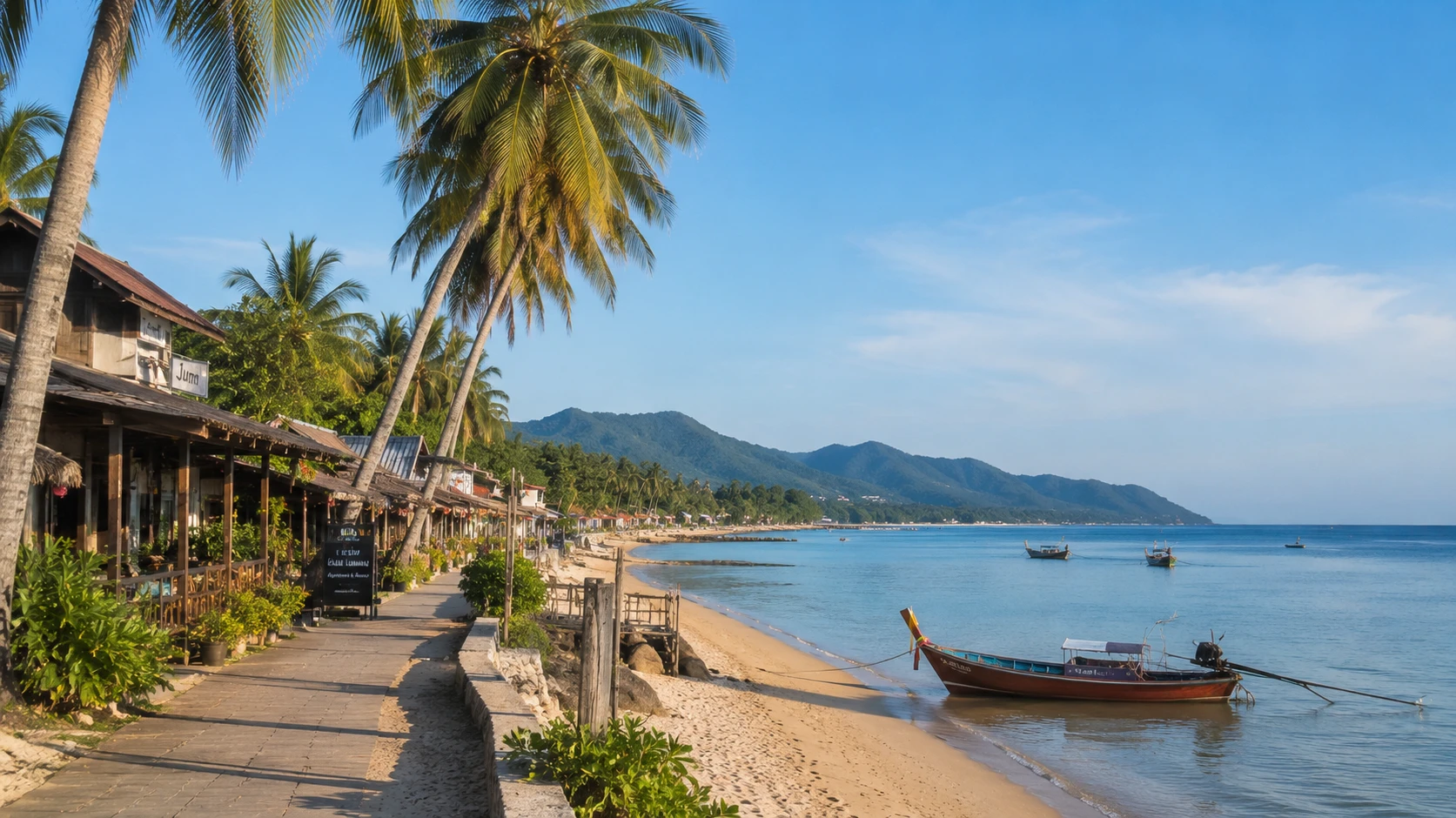
Thailand's headline beaches — Phuket, Pattaya, Koh Samui — earned their fame for a reason, but fame brings traffic, beach clubs and high-season chaos. For anyone who wants to actually live by the sea rather than holiday in it, the appeal lies elsewhere: in the smaller Gulf-coast towns and overlooked corners where the pace is slower and the sand is emptier. The catch is that "quiet" and "liveable" don't always overlap. A near-deserted beach is wonderful until you need a hospital, reliable internet or a place to actually buy. This guide focuses on towns that stay calm without cutting you off, and is honest about the trade-offs, including how a foreigner can realistically own a home in each. For a wider market view, our overview of where it is better to buy real estate in Thailand sets the national context.

Near Hua Hin: Quiet, but Still Connected

Pranburi (Prachuap Khiri Khan)

Thirty minutes south of Hua Hin, Pranburi is what Hua Hin used to be before it grew up. The coastline is wide and largely empty, the accommodation runs to small boutique resorts rather than high-rises, and Sam Roi Yot National Park, mangrove kayaking and the Khao Kalok headland are all on the doorstep. There is no nightlife to speak of, which is exactly the point. Because Hua Hin's hospitals, malls and airport are a short drive away, Pranburi is arguably the best balance of calm and convenience on this coast — ideal for couples, retirees and remote workers who want peace without isolation.

Cha-am (Phetchaburi)

Just north of Hua Hin, Cha-am is a long, gently sloping beach that fills with Thai families at weekends and goes quiet on weekdays. It is unpretentious and notably affordable — one of the cheapest places on the upper Gulf to settle — while still offering everyday amenities and quick access to Hua Hin. For a budget-minded base with a real town around it (rather than a resort strip), Cha-am is an easy recommendation.

Further South: Deeper Quiet, Fewer Crowds

Prachuap Khiri Khan (town)

The provincial capital is one of the few in Thailand with a beach set right in the downtown, framed by the monkey-topped Khao Chong Krajok hill and the curving bay of Ao Manao. This is a working fishing town with genuine Thai rhythm and very few foreign residents — you watch the boats come and go from the esplanade rather than dodge tour touts. It still has real infrastructure (hospital, train, markets), making it a strong pick for anyone who wants immersion over an expat bubble.

Ban Krut (Bang Saphan district)

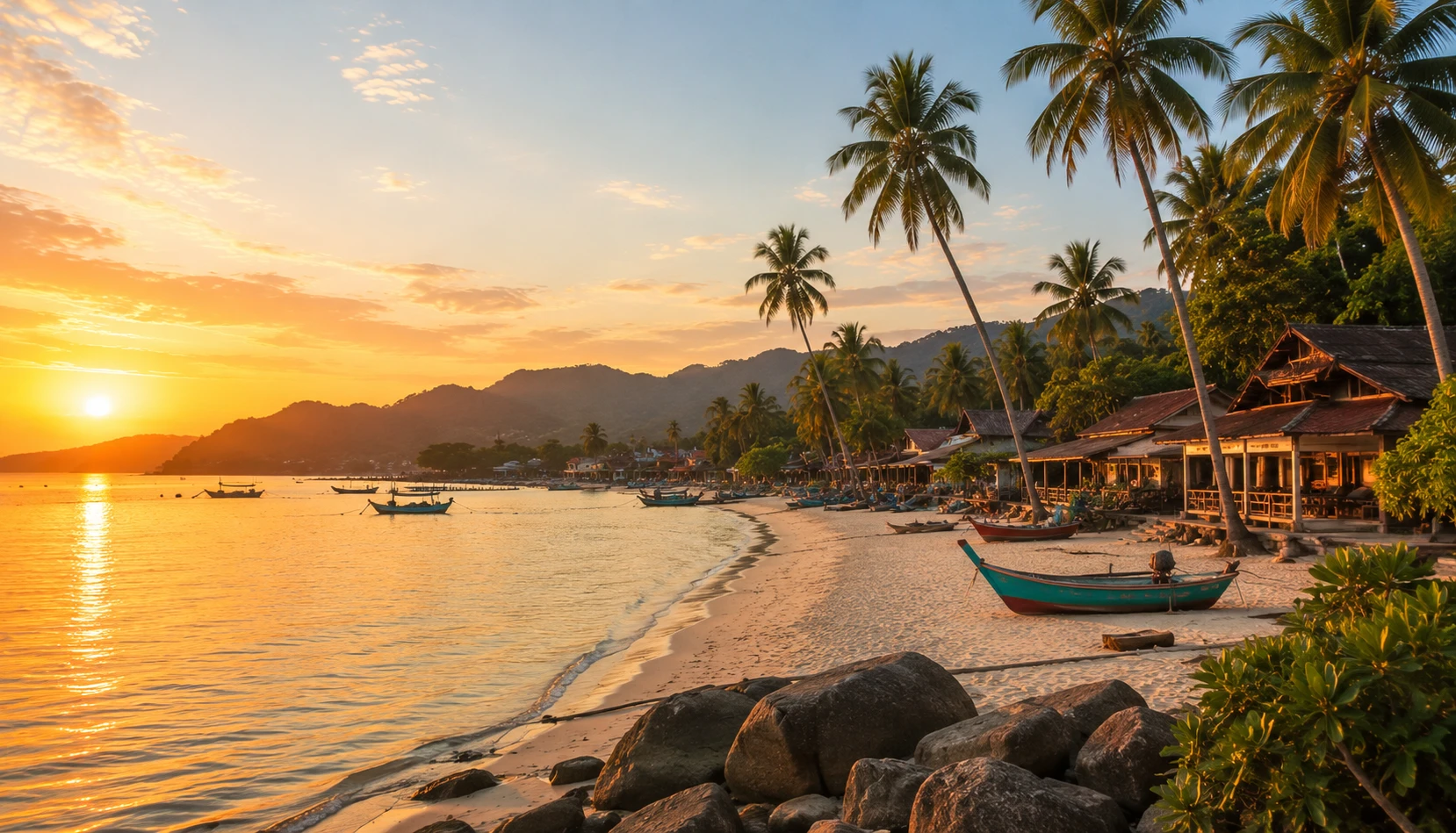
About 160 km south of Hua Hin, Ban Krut is roughly eight kilometres of palm-lined white sand with a golden Buddha on the headland, an active fishing village and some of the cheapest seafood in the country. There are no beach clubs and no high-rises; you can walk twenty minutes and pass a handful of people. The trade-off is honest: international amenities are minimal and serious healthcare means a drive to Bang Saphan or Prachuap. Ban Krut rewards the self-sufficient who genuinely want solitude over services.

Khanom (Nakhon Si Thammarat)

On the same Gulf waters as Koh Samui but an hour from the nearest airports, Khanom has the turquoise sea without the crowds — long empty beaches, a single sleepy main road, and pink dolphins offshore. For introverts and anyone craving real silence, few places in Thailand deliver it so completely. As with Ban Krut, the price of that peace is limited amenities and healthcare an hour away in Surat Thani or Nakhon Si Thammarat, so it suits those who value quiet above convenience.

The Eastern Alternative

Bang Saray (Chonburi)

On the opposite coast, Bang Saray is the antidote to nearby Pattaya — a calm fishing village with a pier, seafood restaurants and a slow weekday feel, yet only twenty to thirty minutes from Pattaya's hospitals, international schools and airports, with U-Tapao airport close by. It is the strongest "quiet but fully connected" option in the east, and a growing crop of low-rise condo projects makes ownership more straightforward here than in the deep-Gulf villages.

A few more spots are worth a look if these don't quite fit: Sam Roi Yot and Bang Saphan continue the empty-beach theme on the western Gulf, the coast around Nakhon Si Thammarat stays largely Thai, and Koh Lanta in Krabi offers a slower island alternative to Phuket and Samui — though island life is more seasonal and ferry-dependent.

Comparison at a Glance

TownRegionVibeBest for
PranburiPrachuap (W. Gulf)Boutique calm, natureCouples, remote workers near Hua Hin
Cha-amPhetchaburi (W. Gulf)Low-key, affordableBudget-minded, weekday quiet
Prachuap Khiri KhanPrachuap (W. Gulf)Authentic fishing townCultural immersion, few foreigners
Ban KrutPrachuap (W. Gulf)Off-grid, empty beachTrue solitude, the self-sufficient
KhanomNakhon Si ThammaratSilent Gulf shoreDeep quiet near Samui access
Bang SarayChonburi (E. coast)Village near PattayaQuiet but fully connected

Owning a Home in a Quiet Town: What to Know

Quiet beach towns change the property maths. Foreigners can own a condominium freehold, but only up to 49% of a building's saleable area — and small coastal towns simply have fewer condos than Phuket or Pattaya. Most homes here are houses and villas on land, and foreigners cannot own land outright. The two lawful routes are a leasehold (typically 30 years, renewable by contract rather than automatically) or a genuine Thai company; nominee arrangements designed to disguise foreign control are illegal. As DDA's 2026 review of foreign-ownership truths versus myths makes clear, the framework is workable when handled properly, with the standard transfer fee around 2% and the rest depending on the seller and holding period.

Whatever the structure, due diligence is the same everywhere: confirm the land sits on a Chanote title deed (the strongest form), verify the developer or seller, and have a lawyer review the contract — the same checklist we apply when buyers purchase on islands such as Koh Phangan. And remember that buying property does not grant residency: a home and a visa are separate processes, so retirees typically pair a purchase with a Non-O or Non-OA visa, and others with the LTR or Elite routes.

Frequently Asked Questions

Can foreigners buy property in these quiet towns?

Yes — condominiums freehold (within the 49% foreign quota), but as most homes here are houses on land, ownership is usually via a 30-year leasehold or a genuine Thai company.

Which town is best for retirees?

Pranburi or Cha-am: both stay calm while keeping Hua Hin's hospitals, shopping and airport within easy reach.

Where is the quietest?

Ban Krut and Khanom have near-empty beaches and the deepest silence, but the fewest international amenities.

Is healthcare available nearby?

Near Hua Hin (Pranburi, Cha-am) and Pattaya (Bang Saray), yes; in the remote spots expect to travel to a provincial hospital.

Do I need a visa to live there?

Yes. Buying property does not grant residency; retirees commonly use the Non-O or Non-OA visa, others the LTR or Elite routes.

Is the internet good enough for remote work?

Generally yes — 4G/5G and fibre reach most towns, though the most remote beaches can be patchier, so confirm coverage before committing.

Finding Your Quiet Corner of Thailand

The right quiet town depends on how much solitude you actually want versus how close you need to be to a hospital, an airport and a fast connection — and the answer is rarely the same for a retiree, a remote worker and a family. DDA Real Estate helps match the place to the life you have in mind, then handles the part that trips most buyers up: the ownership structure, the title checks and aligning the purchase with the right visa. Talk to us to shortlist towns and properties that fit your version of quiet, and to buy with the legal side done correctly.

Popular
5 June 4152141 view
Dubai Rent Prices 2025: Average Apartment Rental Costs in Dubai Dubai's rental market continues its upward climb in 2025, driven by population growth and limited new supply, pushing average prices up by 10%
#Blog DDA
2 July 2382282 view
DLD Fees in Dubai: Everything You Need to Know Buying property in Dubai? Don't let hidden fees surprise you! Our essential guide breaks down ALL Dubai Land Department (DLD) fees
#Blog DDA
23 November 1710198 views
How to Buy a SIM Card in Turkey in 2026: Prices, IMEI Registration, eSIM Options, and Best Mobile Operators Overview of mobile operators, available types of SIM cards, and home Internet providers
#Blog DDA
5 July 1702512 views
How Much is the Real Estate Agent Commission in Dubai? Find out how much real estate agent commission costs when buying property in Dubai.
#Blog DDA
5 February 1394568 views
How Foreigners Can Own Property in Bali: Understanding PT PMA (2025) Foreigners can't own freehold land in Bali, but a PT PMA (foreign-owned company) allows secure property ownership under Hak Guna Bangunan (HGB) or Hak Pakai (HP) rights
#Blog DDA
28 August 1145844 view
Oqood vs Title Deed in Dubai: Key Differences You Must Know Buying property off-plan in Dubai? Oqood registration is mandatory to secure your ownership rights.
#Blog DDA