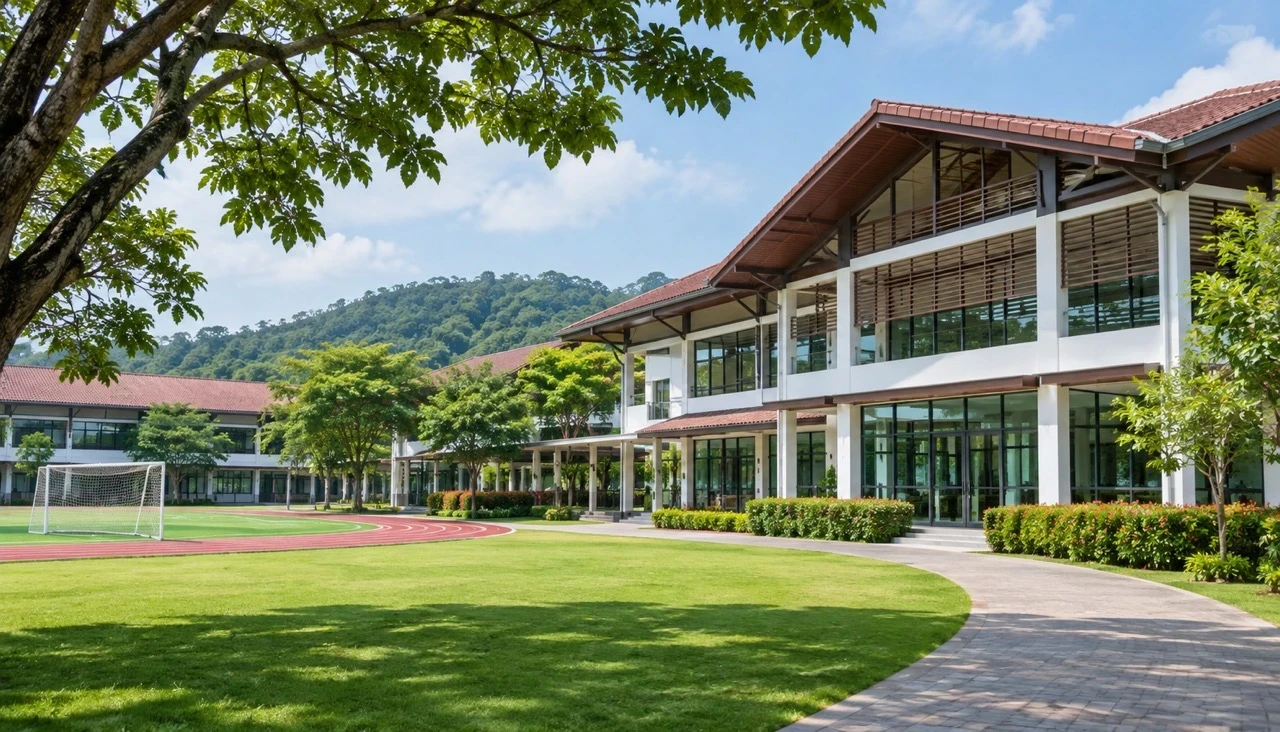
Moving abroad with children turns one practical worry into the deciding factor of the whole relocation: schooling. Thailand handles that worry better than most of the region. The country hosts more than 200 international schools, teaching British, American and IB programmes to graduates who go on to universities worldwide — and it does so at a fraction of what comparable schools charge in Singapore or Hong Kong. For most expat families, the real challenge is not finding a good school but narrowing down an unexpectedly large field.
Below we map out the decisions that actually shape your shortlist: which curriculum fits your child, what you should budget, and which cities and islands concentrate the best campuses. Because the school you pick usually dictates the neighbourhood you live in, it is worth weighing where it makes the most sense to live and buy in Thailand in parallel.
Start with the curriculum, not the brochure
Before comparing campuses, settle on a teaching system — it determines your child's qualifications, university pathways and how painlessly they slot into a new classroom. As a rule, pick the curriculum closest to what your child already studies; continuity matters more than prestige. Here is how the main options compare:
Curriculum | Qualifications | Best suited to |
|---|---|---|
British | IGCSE, then A-Levels | UK and Commonwealth families wanting a structured ladder |
IB | PYP, MYP, Diploma | Internationally mobile families after a rounded education |
American | High-school diploma, AP | US families who prefer flexibility and a broad college route |
Bilingual / other | Canadian, IPC and mixed models | Families on tighter budgets or with specific language goals |
British and IB schools command the highest fees, American programmes generally sit in the middle, and bilingual or independent schools are the gentlest on the wallet. None of these limits university options later — graduates from all of them progress to strong institutions across the globe.
Where to look: cities, coast and mountains
Thailand's international schools are not spread evenly — they gather in a few hubs, each offering a different rhythm of life:
Region | Character | Who it suits |
|---|---|---|
Bangkok | Huge choice, top-tier campuses, city pace | Career-driven parents, every curriculum |
Phuket & islands | Beach lifestyle, boarding, mid-to-high fees | Families wanting sea and space |
Chiang Mai | Calm, affordable, tight-knit communities | Budget-aware and long-stay families |
Pattaya & Hua Hin | Compact, growing, some boarding | Commuters and weekend-city families |
Bangkok remains the heavyweight, with well over a hundred campuses clustered along Sukhumvit, in Bang Na and across greater Nonthaburi. The islands tell a different story — slower, greener and increasingly chosen by families who want the sea on their doorstep. If that is your dream, our guide to property on Koh Samui explains local rules and the kind of homes that work well near the island's schools.
What it really costs
Fees swing widely depending on the city, the curriculum and a school's reputation. Rather than quote a single figure, it helps to think in tiers:
Tier | Annual tuition (guide) | Typical profile |
|---|---|---|
Entry | ฿150,000 – ฿350,000 | Smaller or bilingual schools |
Mid | ฿400,000 – ฿650,000 | Solid British/American campuses |
Premium | ฿700,000 – ฿1,200,000+ | Flagship Bangkok and boarding schools |
*These are indicative annual tuition bands and shift every academic year. Plan for add-ons beyond tuition: a one-time registration fee, a refundable deposit, and recurring charges for transport, uniforms, examinations and occasional building-fund levies. Ask each school for a full, itemised quote before you commit.