Most guides open this question with lifestyle — community pool or private one, tower views or a garden. For a foreigner buying in Thailand, that is the wrong place to start. The first question is legal: what title can you actually hold? A condo you can own outright, in your own name. A villa sits on land, and land is the one thing a foreigner cannot own here. That single fact quietly decides more than any amount of taste. This guide lines the two up on everything that matters — ownership, price, yield, upkeep, lifestyle and resale — so the right choice for you becomes obvious.
Start With the Law, Not the Lifestyle
Before you compare pools and gardens, settle the ownership question, because it is the fork in the road that everything else follows from. A condo you can own freehold, in your own name, under the Condominium Act — the cleanest title a foreigner can hold in Thailand. The one catch is the 49% rule: foreigners may own up to 49% of a building's floor area, the remaining 51% must stay Thai, and in the most sought-after projects that foreign share sells out early. A villa is a different animal, because it stands on land — and land is precisely what a foreigner cannot own. In practice a villa purchase splits in two: you own the building outright, and you hold the plot beneath it on a registered 30-year lease. Those leases are usually marketed as 30+30+30, three consecutive terms, but only the first is firmly guaranteed; the renewals are promises written into a contract, not rights written into the law. So a condo is a freehold decision and a villa is a leasehold one, and if title in your own name is non-negotiable, the choice is already half made. The mechanics of both are laid out in our guide to freehold and leasehold ownership in Thailand.
The Condo in One Glance
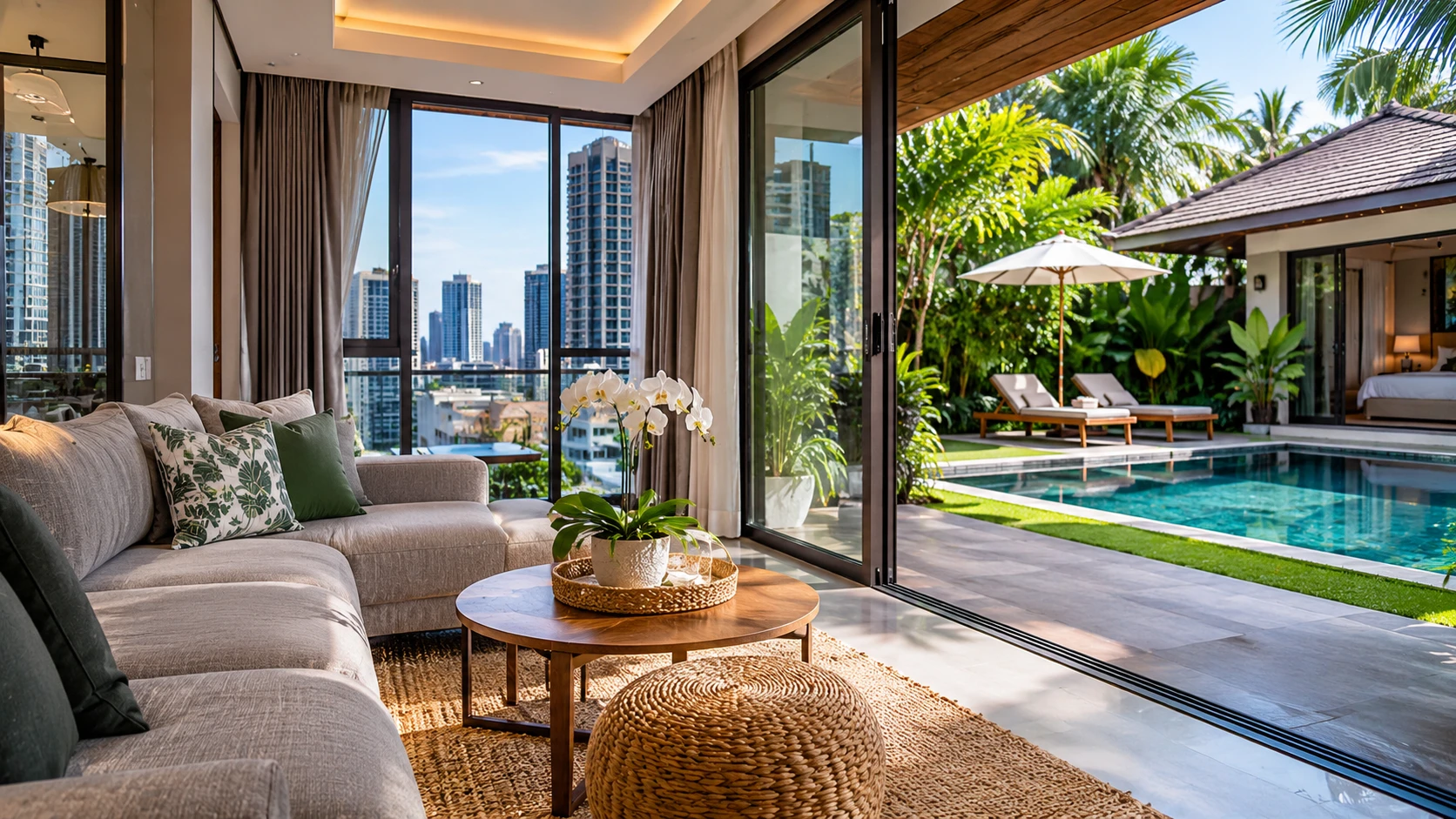
The condo is the default entry point for foreign buyers, and it earns that place. It is the lock-and-leave option: the building's management runs the pool, the gym, the security and the upkeep, so you can come and go without a list of chores waiting for you. It is the liquid option, easy to let and easy to resell to the widest pool of buyers, Thai and foreign alike. And it is the affordable one, opening the market at a price a villa never touches. The trade-offs are the flip side of the same coin — a monthly fee for all that convenience, walls shared with neighbours, less space and privacy, and the standing question of whether the foreign quota still has room.
The Villa in One Glance
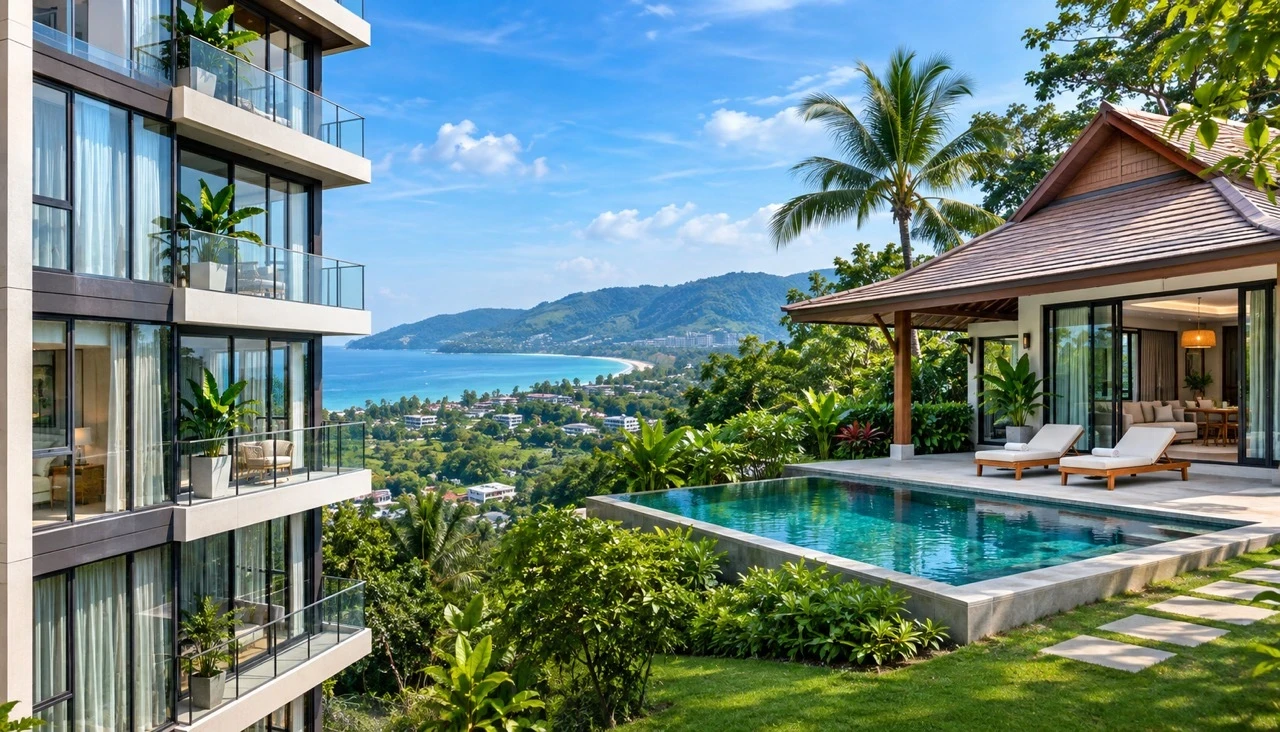
The villa is the home rather than the unit. It buys space, a private pool, a garden and a kind of privacy no tower can offer, which is why it suits families, pets and anyone settling in for the long haul; rented well, it also commands strong nightly rates and competitive yields. But everything that makes it a home also makes it more work and more risk. You own the building yet only lease the land, you carry the full weight of upkeep from the pool to the security, the entry price is several times a condo's, and when you sell, the buyer pool is smaller and the leasehold slower to transfer. The Thai-company route sometimes pitched as a way to "own" the land is a legal grey area under active enforcement — a subject we separate from the rumours in our piece on the myths of foreign ownership in Thailand.
Condo vs. Villa, Head to Head
Set side by side, the trade-offs read at a glance.
Aspect | Condo | Villa |
|---|---|---|
Ownership | Freehold in your name, within a 49% quota | Building only; land on a 30-year lease |
Typical entry | From about 2–4M THB | Rarely below 7–12M THB |
Rental yield | Around 5–8%, easy to let | Around 7–9% for a well-run leasehold villa |
Upkeep | Handled by the building for a monthly fee | All on you: pool, garden, repairs, security |
Space and privacy | Compact, shared walls, shared amenities | Large plot, private pool, real privacy |
Resale | More liquid, large buyer pool | Slower; lease transfer needs consent |
Best for | Investors, couples, lock-and-leave | Families, long-term living, space |