How to choose a property for long-term rental | DDA Real Estate
66 2 026-1660
Support 24/7
Thailand
EN
$
ft²
Other articles

How to Choose a Property for Long-Term Rental Demand

Alexandra Mitrofanova The author of the article, the Broker
#Blog DDA
1 November 5607 views

A condo can be priced at an attractive yield on paper and still remain vacant if the tenants it was priced for never materialise. In Thailand, steady long-term demand gathers around transit lines, offices, universities and hospitals, and checking these factors before signing a reservation agreement saves the most money. Bangkok, with more than 500,000 expats, is the main market, and the same checks work for other cities after local adjustments.

What Long-Term Rental Demand Really Means

Long-term demand shows how fast comparable units find a tenant and what rent they achieve. Leases usually run 12 months, so move-ins are rare, turnover costs stay low and income is easier to predict. Thai rules around stays under 30 days also push the market in this direction, which is one reason Bangkok guides describe strong long-term demand and a muted short-term market.

Demand belongs to a specific building and street rather than to a whole city. One condo near a BTS station can fill within days, while a similar unit a few streets away waits for months. Well-located condos in Bangkok are often quoted at gross yields of 4 to 7%, and the spread inside that range depends mostly on location and the tenant group the unit is aimed at.

Who Rents Long-Term in Thailand

Long-term rental demand in Thailand comes from several distinct groups, each with its own preferences for location, unit type and lease terms. Knowing which group a property is likely to attract helps when comparing buildings and estimating how quickly a unit can be rented out. The main tenant categories are:

  • Expats on 12-month contracts. They form the base of the Bangkok rental market and prefer Sukhumvit between Asok and Ekkamai.
  • Corporate assignees and embassy staff. Companies often pay the rent, and Sathorn and Silom attract these tenants with offices, embassies and international schools nearby.
  • Students at international institutions. They look for units close to campuses and a station.
  • Young professionals and creatives. Ari and Phaya Thai are popular with this group, and demand there keeps growing.
  • Thai renters. Many local buyers face mortgage limits, so a growing share of Thais rent for longer.
  • Long-stay foreigners on long-term visas. Government visa programs for long stays and digital nomads add to expat demand.

Which Location Factors Drive Stable Rental Demand

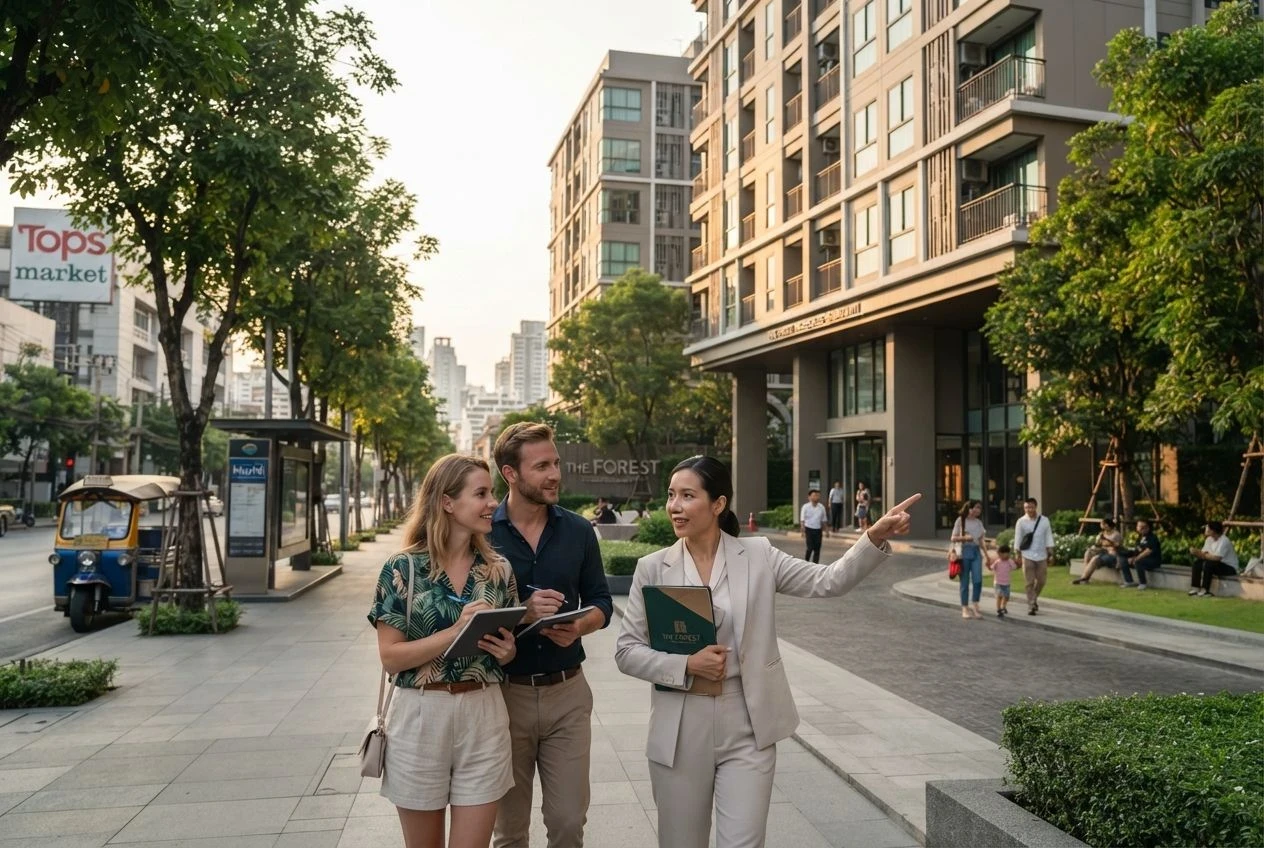
Transit access sits at the top of almost every Bangkok guide, and the rest depends on who is expected to rent the unit. Mapping the building against a few points shows quickly whether tenants will want it.

  • Walking distance to BTS or MRT stations.
  • Offices, universities and hospitals within a short ride.
  • Supermarkets, restaurants and daily services close to the entrance.
  • Embassies and international schools for corporate and family tenants.
  • New transport lines and mixed-use projects under construction nearby.
  • A balance between supply and demand, since neighbourhoods with too many new towers push rents down.

Which Property Features Tenants Look For

Tenants rarely inspect legal details, they judge the unit and the building in one viewing. A furnished, clean unit with working appliances rents faster, and a practical layout matters more than extra square meters. Some features depend on the building and affect how wide the tenant pool is.

  • Furniture and appliances in good working order.
  • A functional layout with a usable kitchen area and storage.
  • Building age and the quality of its management.
  • Shared facilities and security that match the price level.
  • Pet rules, which differ from building to building.
  • A view and noise level that suit long stays.

How to Check Real Rental Rates and Occupancy

Asking rents in listings often differ from signed contracts, so the figures need cross-checking from several sources before they go into a calculation. These steps take a few days and replace a seller's promise with real numbers.

  • Collect current listings for the same building and similar units, and note asking rents.
  • Ask local agents and the building's juristic office how long comparable units stay vacant and which lease lengths are typical.
  • Compare asking rents with rents actually signed, since the gap shows how much room negotiation takes.
  • Calculate gross yield by dividing annual rent by the purchase price, and compare it with the 4 to 7% range for well-located Bangkok condos.
  • Subtract running costs, taxes and expected vacancy months to see the net figure.
  • If the unit comes with a tenant, ask for the current lease and the payment history before agreeing to a price.

Which Legal and Ownership Points Affect Renting

Foreigners cannot own land in Thailand, so a condo is the usual route. Freehold ownership is available while foreign owners hold no more than 49% of the building's sellable area, and the available quota should be confirmed before paying a deposit. When the quota is full, the alternative is a registered leasehold of up to 30 years, which is a different asset with different resale options. Funds for the purchase must arrive in foreign currency and be documented with a Foreign Exchange Transaction form from the bank. The quota does not limit the right to rent out a legally owned unit.

The rental contract has its own rules. Renting a unit for fewer than 30 days counts as a hotel business under the Hotel Act and needs a license, while rentals of 30 days or more are treated as ordinary residential leases, and many condo buildings apply a 30-night minimum as well. Leases longer than three years must be registered with the Land Department, otherwise they are enforceable only for the first three years, and the registration fee is around 1% of total rent over the term. Security deposits usually equal one to two months of rent, and a 2025 consumer protection notification caps them at three months for monthly contracts.

Rental income is taxable regardless of nationality. Foreign landlords need a Thai tax ID and file an annual return, with progressive personal income tax rates from 5% to 35%. An accountant who works with foreign owners helps avoid errors in the first year.

A shortlist of two or three buildings, a written check of quota, title and lease terms, and a real rent comparison are the next steps before a reservation. A lawyer can verify the documents and the contract before any money changes hands, and a short consultation with the DDA Real Estate team can cover this stage. Leave a request on the website, and we will help you check the numbers before you commit.

Popular
5 June 4378815 views
Dubai Rent Prices 2025: Average Apartment Rental Costs in Dubai Dubai's rental market continues its upward climb in 2025, driven by population growth and limited new supply, pushing average prices up by 10%
#Blog DDA
2 July 2520315 views
DLD Fees in Dubai: Everything You Need to Know Buying property in Dubai? Don't let hidden fees surprise you! Our essential guide breaks down ALL Dubai Land Department (DLD) fees
#Blog DDA
23 November 2001951 view
How to Buy a SIM Card in Turkey in 2026: Prices, IMEI Registration, eSIM Options, and Best Mobile Operators Overview of mobile operators, available types of SIM cards, and home Internet providers
#Blog DDA
5 July 1859886 views
How Much is the Real Estate Agent Commission in Dubai? Find out how much real estate agent commission costs when buying property in Dubai.
#Blog DDA
5 February 1506078 views
How Foreigners Can Own Property in Bali: Understanding PT PMA (2025) Foreigners can't own freehold land in Bali, but a PT PMA (foreign-owned company) allows secure property ownership under Hak Guna Bangunan (HGB) or Hak Pakai (HP) rights
#Blog DDA
28 August 1274490 views
Oqood vs Title Deed in Dubai: Key Differences You Must Know Buying property off-plan in Dubai? Oqood registration is mandatory to secure your ownership rights.
#Blog DDA