

Off-plan properties
Most people approach this as a shopping decision — compare the providers, pick the best one, sign up. In Thailand that is frequently not the decision you get to make. The building determines which providers can actually serve you, and in a condominium the installation itself requires the management office's approval. A modern development is often wired primarily for one operator, and a neighbouring street can be dominated by another.
The second surprise is administrative and pleasant. You do not need a Thai national identity card to get home fibre, and you do not need a Thai bank account or a guarantor to start. What you genuinely do need is a Thai mobile number, because the carrier contract and account verification are tied to it — which makes a prepaid SIM the actual first step in a process most people assume begins with choosing a provider.
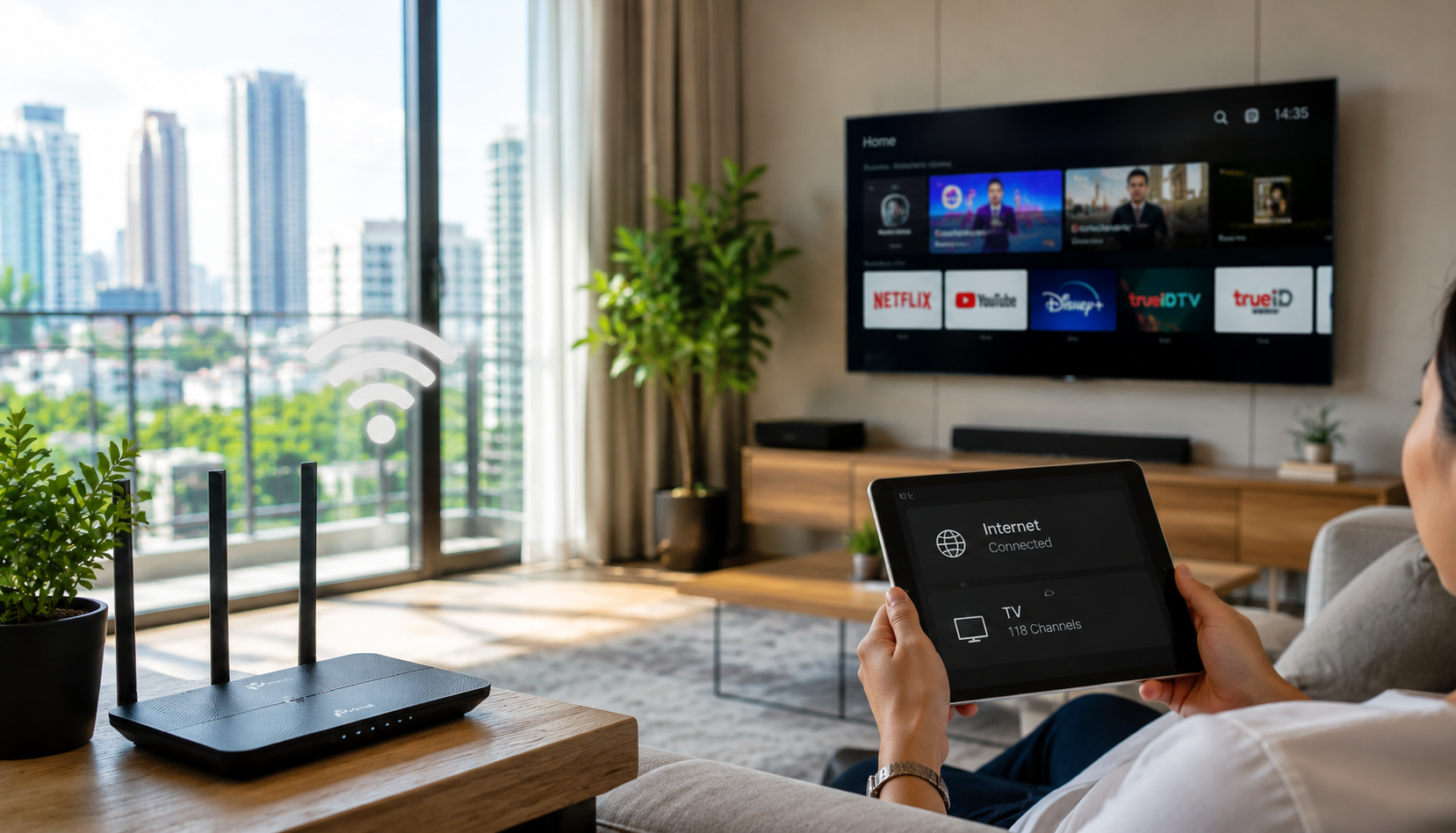
This article sets out who the providers are and what they cost, why availability is decided at building and street level rather than by city, what documents a foreigner actually needs, and how television fits in now that traditional cable matters far less than it does in Europe. Prices and packages are current as of August 2026 and change with each promotion, so treat the figures as orientation and confirm for your address.
Four names cover almost the whole market, and fibre accounts for roughly 95% of home connections nationally — everything outside a few remote rural pockets.
Prices sit in a narrow band. Entry plans start around THB 499 a month, AIS from about THB 599 for 500 Mbps symmetrical, True across roughly THB 549–1,199 for 100 to 1,000 Mbps, and NT from about THB 690 for 600 Mbps up to THB 900 for a gigabit. Most foreign households settle around THB 599–899 once mesh coverage or a streaming bundle is added.
Looking at a national provider ranking and picking a winner misses how this market actually works. Fibre is readily available across Bangkok, Chiang Mai, Phuket, Pattaya and the established expatriate areas, but availability at city level is not the same as availability at your address.
Condominiums, housing estates and villages often permit only one or two operators to function properly, because the in-building infrastructure was configured that way. One modern development is set up primarily for True, a neighbouring project for AIS. Neither is a preference you can override by choosing a different package.
The approval nobody mentions
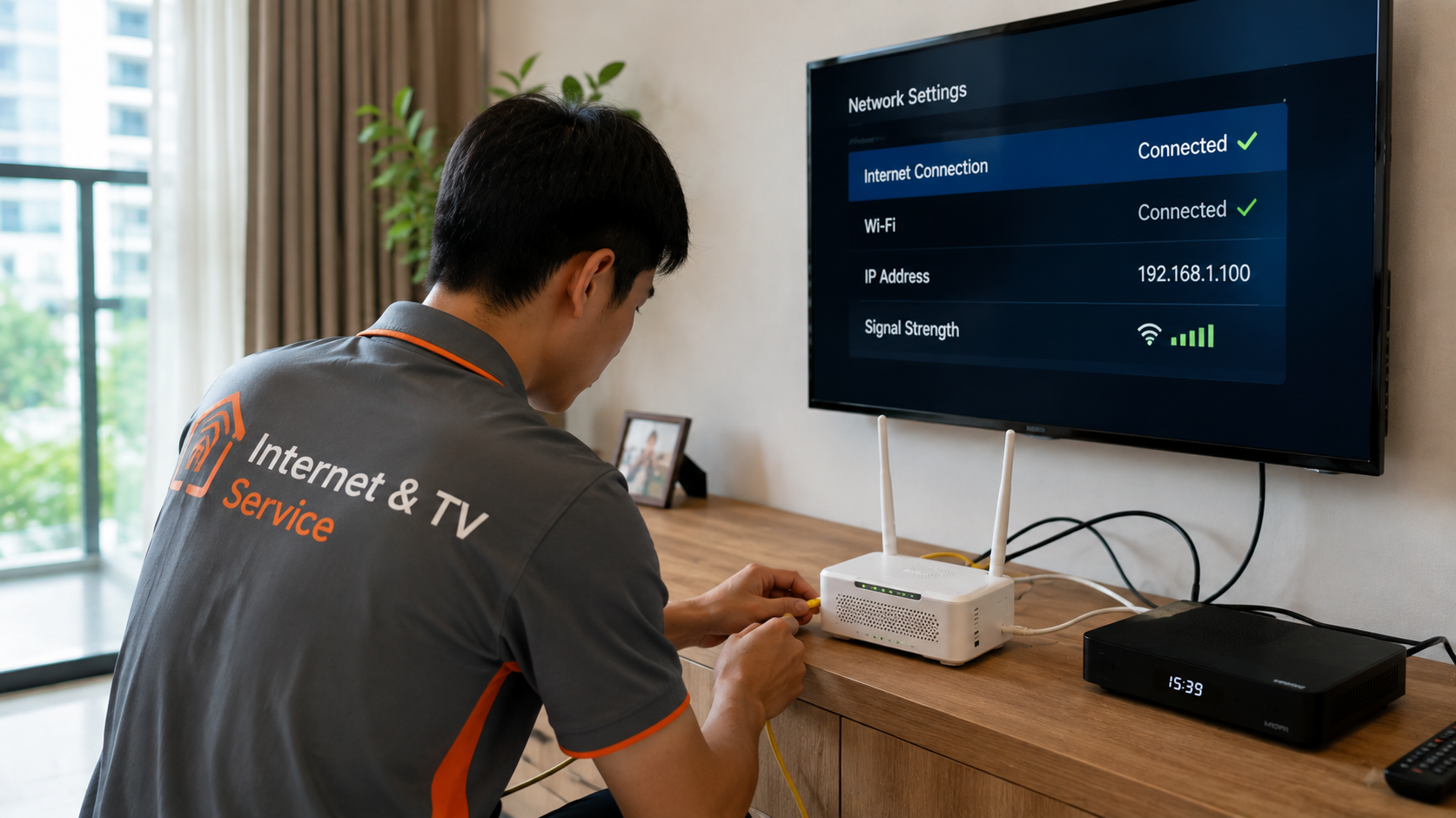
In a condominium, fibre installation is possible only with the approval of the building's management. Confirm it with the juristic person office before signing anything with a provider, because the sequence matters: a contract signed for a service the building will not let a technician install is a contract you still have to unwind.
The good news is that most modern developments already have fibre running throughout the building, which turns installation into an activation rather than a construction project. Condominium rules and how the juristic person office functions are covered more broadly in our guide to buying an apartment in Thailand.
For a rented house rather than a condominium, the equivalent gate is the landlord: permission for the installation is usually required, and providers commonly ask for the landlord's contact details as part of the application.
Less than most arrivals expect, and in a different shape.
Installation typically follows within three to seven business days of signing, with Bangkok zones usually at the faster end. Technicians bring the equipment, so nothing needs sourcing in advance.
| Provider | Typical speed and price | Where it makes sense |
|---|---|---|
| AIS Fibre (with 3BB) | From about THB 599 for 500 Mbps symmetrical | Default choice where available; strongest support for foreign customers |
| True Online | THB 549–1,199 for 100–1,000 Mbps | Urban and condominium-dense areas; good if you also use its mobile service |
| 3BB | Budget tier of the combined offering | Rural and semi-rural coverage the majors have not reached |
| NT | From THB 690 for 600 Mbps to THB 900 for 1 Gbps | Smaller provinces, sometimes the only option; peak-hour speeds vary |
| Prepaid mobile data | Airport SIMs from about THB 300 | The bridge while the fixed line is being arranged |
Home packages commonly carry a minimum one-year term, an installation fee and a router, though no-contract monthly plans exist alongside discounted annual contracts that include free router rental. The trade is the usual one: the monthly plan costs more and lets you leave, the annual plan is cheaper and does not.
Traditional cable plays a much smaller role for consumers here than in many European markets, and the practical choice is between an operator bundle and standalone streaming.
The bundles are competitive. Entertainment packages start around THB 599 a month and include international and local platforms alongside Thai channels; Netflix-inclusive packages start around THB 699 with streaming up to 4K. If you were going to subscribe to those services anyway, folding them into the internet bill is often cheaper than buying them separately.
The case against is portability. A bundle ties your entertainment to your internet contract and your address, so a move or a provider change unpicks both at once. For anyone whose stay is still open-ended, separate subscriptions on a fast connection remain the more flexible arrangement, and the connection is the part worth paying for.
Where you settle changes the baseline for all of this, since coverage, provider choice and competition all vary between the main destinations — our overview of where it is better to buy real estate in Thailand compares them on the practical dimensions.
Internet and television are two lines in a monthly budget that also carries rent, utilities, transport and food, and the total is what determines whether a package at THB 899 is sensible or extravagant. What those categories add up to in practice is set out in our guide to the cost of living in Pattaya.
Do I need a Thai ID to get home internet?
No. A passport plus one supporting document — a work permit, a long-stay visa, a signed lease or a title deed — is accepted by the major providers. No Thai bank account or guarantor is required either. What you do need is a Thai mobile number, since the contract and verification are tied to it.
Can I choose any provider I like?
Often not. Condominiums, housing estates and villages frequently permit only one or two operators, because the in-building infrastructure was configured that way. Check which providers serve your specific address before comparing packages, and in a condominium confirm installation approval with the management office.
What does home fibre cost?
Entry plans start around THB 499 a month. AIS begins around THB 599 for 500 Mbps symmetrical, True spans roughly THB 549–1,199 for 100 to 1,000 Mbps, and NT runs from about THB 690 to THB 900 for a gigabit. Most foreign households end up between THB 599 and 899.
How long does installation take?
Typically three to seven business days after signing, with Bangkok generally faster. Technicians bring the equipment. Most modern developments already have fibre throughout the building, which makes the visit an activation rather than a construction job.
Should I take a TV bundle or use streaming?
Bundles are good value if you would subscribe to those services anyway — entertainment packages start around THB 599 and Netflix-inclusive ones around THB 699. The drawback is portability: a bundle ties your entertainment to your address and contract, so separate subscriptions suit an open-ended stay better.
What if I rent a house rather than a condominium?
The landlord takes the place of the management office: their permission for the installation is usually required, and providers often ask for their contact details during the application. Everything else — documents, timelines, packages — works the same way.
The order of operations matters more here than the choice of provider, because the choice is frequently narrower than the national comparisons suggest. Find out what serves the building before you commit to the property, get a Thai SIM before you try to sign anything, clear the installation with the management office or the landlord, and only then compare packages among the operators that can actually reach you. Do it in that order and the whole thing takes a week; do it in the usual order and you discover the constraint after you have already signed two contracts.
DDA Real Estate helps you find property in Thailand — from Bangkok condominiums to villas in Phuket and Koh Samui, with document verification and full legal support. Check out our offers in Thailand and leave a request: we'll find options for your budget and goal.