Thai Festivals 2026: Songkran, Loy Krathong & Vegetarian
66 2 026-1660
day and night
Thailand
EN
$
ft²
Other articles

Thai Festivals You Should Experience: Loy Krathong, Songkran & Vegetarian Festival

#Blog DDA
12 June 1071 view

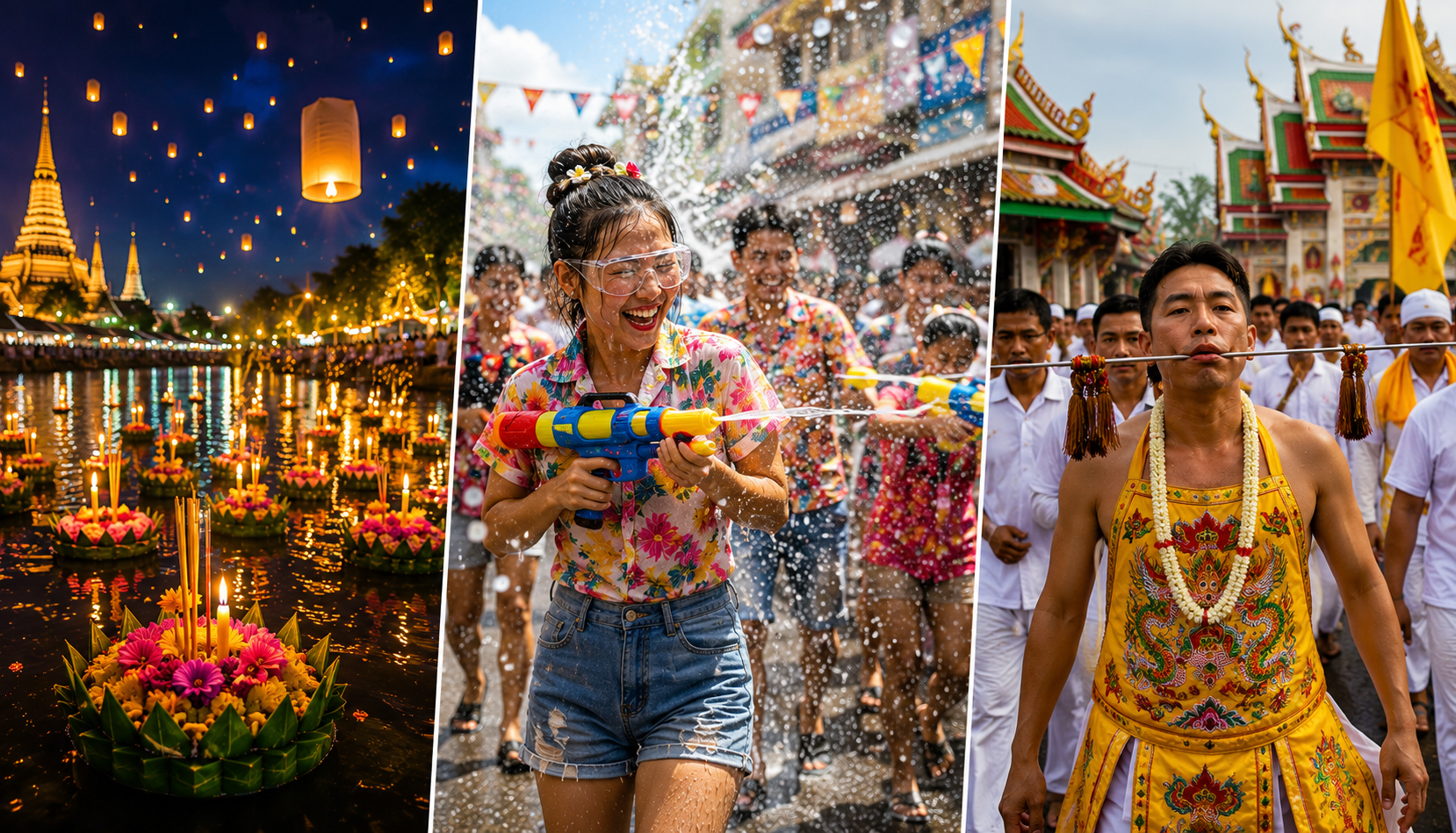
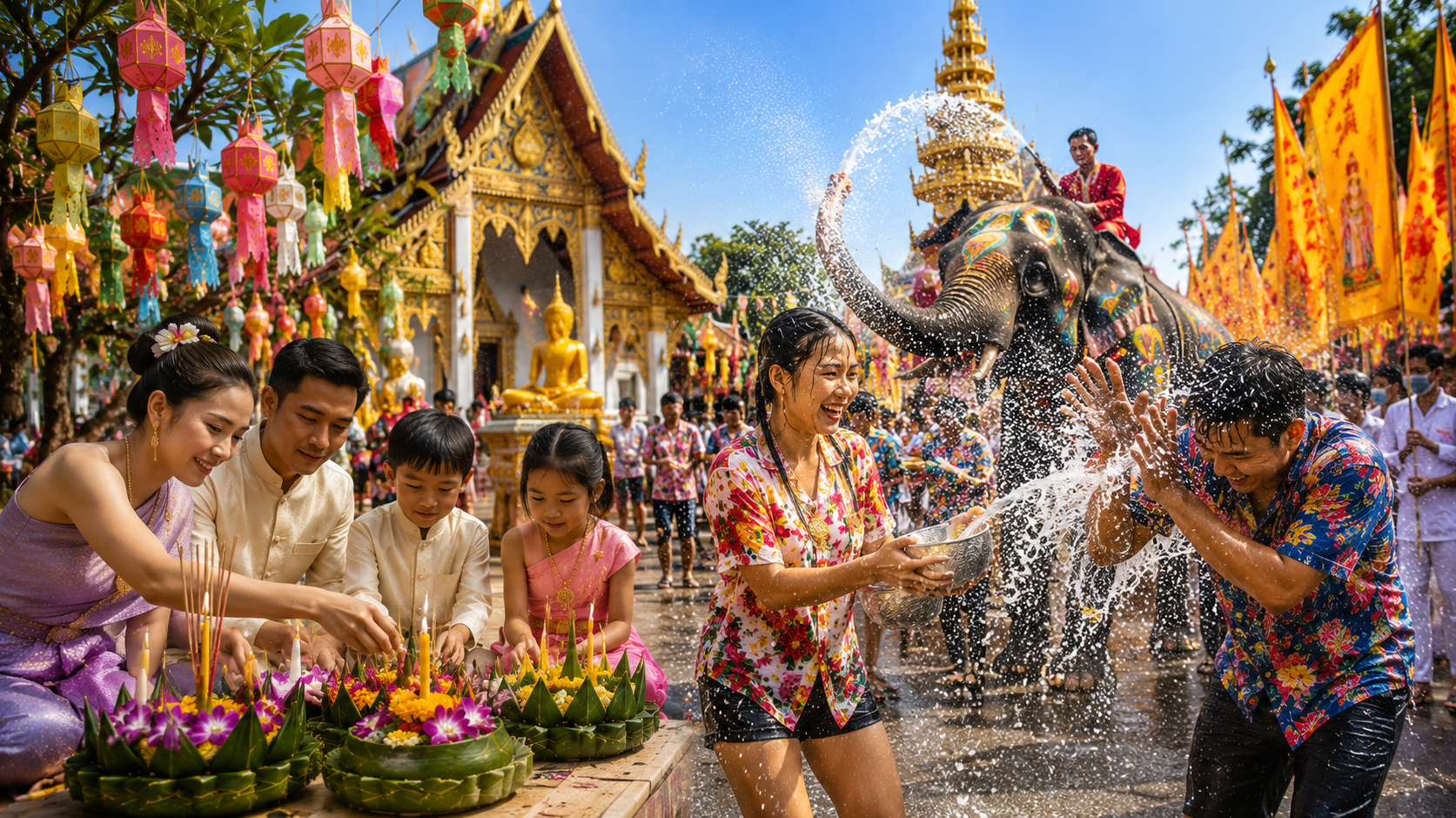
Thailand has more than twenty significant festivals a year, but three stand apart — not because they are the biggest tourist draws, though they are, but because each one shows you a completely different side of the country. Songkran is joy in its loudest form. Loy Krathong is quiet and almost cinematic. The Vegetarian Festival is intense, devotional and genuinely startling.

Seeing all three means understanding that Thai culture is not one thing. The water fight in April is a Buddhist blessing ritual that turned into a nationwide street party; the floating candles in November come from a courtly Siamese tradition of thanking the river; the nine days of processions in Phuket every autumn are Chinese Taoist in origin and have almost nothing to do with the rest of the calendar.

This guide covers what each festival actually is, when it falls in 2026, where to experience it, how to behave, and the practical planning that separates a great trip from a frustrating one. One caveat throughout: two of the three follow lunar calendars, so dates shift from year to year and are occasionally adjusted, and you should confirm them locally before booking flights.

Songkran: the Thai New Year, and the world’s biggest water fight

Songkran runs from 13 to 15 April every year — it follows the solar calendar, so unlike the other two festivals the dates are fixed, falling on a Monday to Wednesday in 2026. In Chiang Mai celebrations usually begin earlier, around 11 April, and run through the 15th, which makes the northern capital the longest and most committed party in the country.

Behind the water guns is a blessing. Water is poured to wash away the misfortunes of the past year, and the traditional observances are gentle: bathing Buddha images, pouring scented water over the hands of elders to receive their blessing, building small sand stupas in temple grounds, and visiting family. The street version — buckets, hoses and pickup trucks loaded with water barrels — grew out of that ritual and now dominates the cities.

Practically, expect to get soaked from the moment you leave your hotel, and plan accordingly: quick-drying clothes, a waterproof pouch for your phone and documents, and no electronics in open pockets. The important safety point is transport. Road accidents spike sharply during Songkran, so this is not the week to rent a scooter — use taxis or a ride-hailing app instead. Book accommodation two to three months ahead in Bangkok, Chiang Mai, Pattaya or Phuket; the good options go early.

Loy Krathong and Yi Peng: the festival of lights

Loy Krathong falls on the full moon of the twelfth lunar month, which in 2026 lands around 24–25 November depending on the source and the locality. At dusk, people carry small lotus-shaped floats made of banana leaves — each holding a candle, incense and flowers — to the nearest river, canal or lake, and set them adrift. The gesture is an offering of thanks to the water and a symbolic release of the past year’s negativity, often with a wish attached.

In Chiang Mai the same weekend brings Yi Peng, a distinctly northern Lanna tradition in which thousands of paper lanterns rise into the night sky. The two together — candles on the water, lanterns above it — are the most photographed nights in Thailand. In 2026 the Chiang Mai lantern celebrations are widely listed for 24–25 November.

Where you go changes the experience completely. Sukhothai, where the festival is said to have originated, stages it inside a historical park among thirteenth-century ruins and is the most atmospheric option. Chiang Mai offers the lantern-and-krathong combination. Bangkok has the Chao Phraya riverfront, and Ayutthaya sets the candles against ancient temple silhouettes.

A word on lanterns and cost. Organised mass releases near Chiang Mai are ticketed and expensive — commonly 3,500–5,500 THB per person including dinner and a lantern, with other ticketed venues starting around 2,500 THB. But you do not need a ticket: temples across the old city sell small lanterns for roughly 25–100 THB, and the riverside atmosphere is free. Note also that private lantern releases are restricted in many places for aviation and fire-safety reasons, so joining an organised event is often the only legal way to release one.

The Vegetarian Festival: nine days of devotion

This is the one most visitors have never heard of and never forget. Held over nine days in the ninth month of the Chinese lunar calendar — in 2026 commonly listed as 10–18 October, though dates can shift — the festival honours the Nine Emperor Gods and is Taoist rather than Buddhist in origin. Phuket Town is its centre, but it is also observed in Trang, Krabi, Bangkok’s Chinatown and Chiang Mai.

The visible part is the diet. Participants keep a strict vegan regime for the full nine days, avoiding meat, dairy, eggs and pungent vegetables such as garlic and onion, and restaurants across the island fly yellow flags to signal that they are serving festival food. For anyone who eats plant-based, it is one of the best weeks of the year to be in Thailand: even ordinary noodle shops switch their menus, and Bangkok’s Chinatown fills with mock-meat street food.

The other part is harder to describe politely. Devotees known as ma song enter trance states and perform extreme acts of devotion: walking over hot coals, climbing ladders of blades, and piercing their cheeks and bodies with skewers, swords and other objects, then processing through the streets accompanied by deafening firecrackers. It is a genuine religious practice, not a show. Watch with respect, keep a safe distance from the processions, protect your ears and eyes from the fireworks, and be aware that the imagery is graphic — this is not a festival for everyone, particularly small children.

The three at a glance

Festival When in 2026 Where What to expect
Songkran13–15 April (fixed)Nationwide; Chiang Mai from ~11 AprilWater fights, temple rituals, family visits
Loy KrathongAround 24–25 NovemberNationwide; Sukhothai, Chiang Mai, BangkokCandlelit floats on rivers at dusk
Yi Peng24–25 NovemberChiang MaiMass sky-lantern releases, mostly ticketed
Vegetarian FestivalAround 10–18 OctoberPhuket Town; also Trang, Krabi, BangkokVegan food, processions, intense rituals

Etiquette: how to take part without getting it wrong

  • Dress modestly at temples. Covered shoulders and knees are expected at any temple ceremony, including during Songkran.
  • Do not step over a krathong. Kicking or stepping over someone’s float is considered bad luck and is plainly disrespectful.
  • Ask before photographing rituals. Especially during the Vegetarian Festival, where participants are in a devotional state rather than performing.
  • Do not throw water at monks or elders. Songkran has an unwritten exemption list; ice water and high-pressure jets aimed at faces are also poor form.
  • Respect the alcohol rules. On the five major Buddhist holidays, alcohol sales are banned nationwide for 24 hours and bars close.
  • Choose eco-friendly krathongs. Banana-trunk and bread floats are widely available; foam versions are discouraged or banned in many places.

Planning: when to book and what to budget

Festival weeks are the hardest travel dates of the Thai year, and the fix is simply booking early. For Songkran in Bangkok, Chiang Mai, Pattaya or Phuket, two to three months ahead is the working minimum, and some guides suggest three to four. Yi Peng in Chiang Mai is the tightest of all: the mass-release events sell out and hotels fill three to six months out. Loy Krathong in Sukhothai needs a month or more, and Phuket during the Vegetarian Festival should be booked at least a month ahead.

Budgets vary hugely by choice rather than by festival. Songkran and Loy Krathong can be experienced for almost nothing — a water gun costs a few hundred baht, a krathong is under a hundred — while a ticketed lantern release runs into the thousands. If you are weighing up a longer stay rather than a single trip, our guide to the cost of living in Thailand puts these one-off expenses into the context of a monthly budget.

Two more planning notes. Transport across the country is heavily loaded during Songkran, so book intercity travel in advance and avoid driving. And if the festival is the reason for the trip, build in a buffer day on either side — lunar dates occasionally move, and local programmes rarely start and end precisely when the calendars say they will.

Why the dates move

It is worth understanding the calendar logic, because it explains most of the confusion online. Songkran follows the solar calendar and is therefore fixed at 13–15 April every year. Loy Krathong follows the Thai lunar calendar and falls on the full moon of the twelfth lunar month, so it drifts through November. The Vegetarian Festival follows the Chinese lunar calendar and moves around late September and October.

This is why you will see slightly different dates on different sites for the same year, and why sources sometimes disagree by a day. Treat published dates for the lunar festivals as strong indications rather than certainties, and confirm with a local source — a hotel, a municipal announcement, or the Tourism Authority of Thailand — before committing to non-refundable bookings.

Read also

For many visitors, a festival is what turns a holiday into a plan to come back for longer. If that is the direction you are heading, our Koh Samui property guide shows how an island market works for foreign buyers, and the article debunking the myths about foreign property ownership sets out what is genuinely permitted in Thailand and what is simply repeated online.

Frequently Asked Questions

When is Songkran in 2026?

Songkran falls on 13–15 April, as it does every year — it follows the solar calendar, so the dates do not shift. In 2026 they land on a Monday to Wednesday. Chiang Mai typically starts earlier, around 11 April, and celebrates through the 15th, making it the longest version of the festival in the country.

When is Loy Krathong in 2026?

Loy Krathong falls on the full moon of the twelfth lunar month, which in 2026 is listed around 24–25 November depending on the source. Chiang Mai’s Yi Peng lantern festival coincides with it, widely given as 24–25 November. Because the date is lunar, confirm it locally before booking non-refundable travel.

When is the Phuket Vegetarian Festival in 2026?

It runs for nine days in the ninth month of the Chinese lunar calendar, commonly listed as 10–18 October 2026, though the dates can shift and are sometimes confirmed late. Phuket Town is the main centre, with observances also held in Trang, Krabi, Bangkok’s Chinatown and Chiang Mai.

What actually happens during Songkran?

Traditionally, water is poured to wash away the past year’s misfortune: people bathe Buddha images, pour scented water over elders’ hands for a blessing, build sand stupas at temples and visit family. The street version is a nationwide water fight with buckets, hoses and water guns. Expect to get thoroughly soaked, and keep phones and documents in waterproof bags.

Is the Vegetarian Festival suitable for everyone?

The food side is wonderful and accessible for all, with restaurants across Phuket flying yellow flags to show they serve festival dishes. The ritual side is graphic: devotees in trance states pierce their cheeks and bodies and walk over hot coals. Watch respectfully and at a distance, and consider whether it is appropriate for children or anyone squeamish.

How much does a Yi Peng lantern release cost?

Organised mass releases near Chiang Mai typically cost 3,500–5,500 THB per person, usually including dinner, entertainment and a lantern, while other ticketed venues start from around 2,500 THB. You can also experience the festival for free: temples in the old city sell small lanterns for roughly 25–100 THB, and the riverside atmosphere costs nothing.

How far in advance should I book for these festivals?

Yi Peng in Chiang Mai is the tightest, with events and hotels going three to six months ahead. For Songkran in the main cities, two to three months is the practical minimum. Loy Krathong in Sukhothai needs a month or more, and Phuket during the Vegetarian Festival should be booked at least a month in advance.

Is it safe to travel during Thai festivals?

Generally yes, and these are family-friendly, welcoming events. The main exception is Songkran, when road accidents rise sharply — avoid driving or renting a scooter and use taxis or ride-hailing instead. At the Vegetarian Festival, keep away from processions and protect yourself from firecrackers. Elsewhere, standard crowd precautions apply.

The bottom line

If you can only time one trip around a festival, choose by temperament: Songkran in April for energy and immersion, Loy Krathong and Yi Peng in late November for beauty and quiet, and the Vegetarian Festival in October for something you will not see anywhere else. Book far earlier than feels necessary, confirm the lunar dates locally, dress and behave with respect at the ritual moments, and skip the rental scooter in April. Do that, and these three days on the calendar will explain more about Thailand than a month of ordinary travel.

DDA Real Estate helps foreigners find a home in Thailand — from an apartment for the winter season to an investment property, with full legal support. Take a look at our offers in Thailand and leave a request: we will find options for your budget and goal.

Popular
5 June 4152141 view
Dubai Rent Prices 2025: Average Apartment Rental Costs in Dubai Dubai's rental market continues its upward climb in 2025, driven by population growth and limited new supply, pushing average prices up by 10%
#Blog DDA
2 July 2382282 view
DLD Fees in Dubai: Everything You Need to Know Buying property in Dubai? Don't let hidden fees surprise you! Our essential guide breaks down ALL Dubai Land Department (DLD) fees
#Blog DDA
23 November 1710198 views
How to Buy a SIM Card in Turkey in 2026: Prices, IMEI Registration, eSIM Options, and Best Mobile Operators Overview of mobile operators, available types of SIM cards, and home Internet providers
#Blog DDA
5 July 1702512 views
How Much is the Real Estate Agent Commission in Dubai? Find out how much real estate agent commission costs when buying property in Dubai.
#Blog DDA
5 February 1394568 views
How Foreigners Can Own Property in Bali: Understanding PT PMA (2025) Foreigners can't own freehold land in Bali, but a PT PMA (foreign-owned company) allows secure property ownership under Hak Guna Bangunan (HGB) or Hak Pakai (HP) rights
#Blog DDA
28 August 1145844 view
Oqood vs Title Deed in Dubai: Key Differences You Must Know Buying property off-plan in Dubai? Oqood registration is mandatory to secure your ownership rights.
#Blog DDA