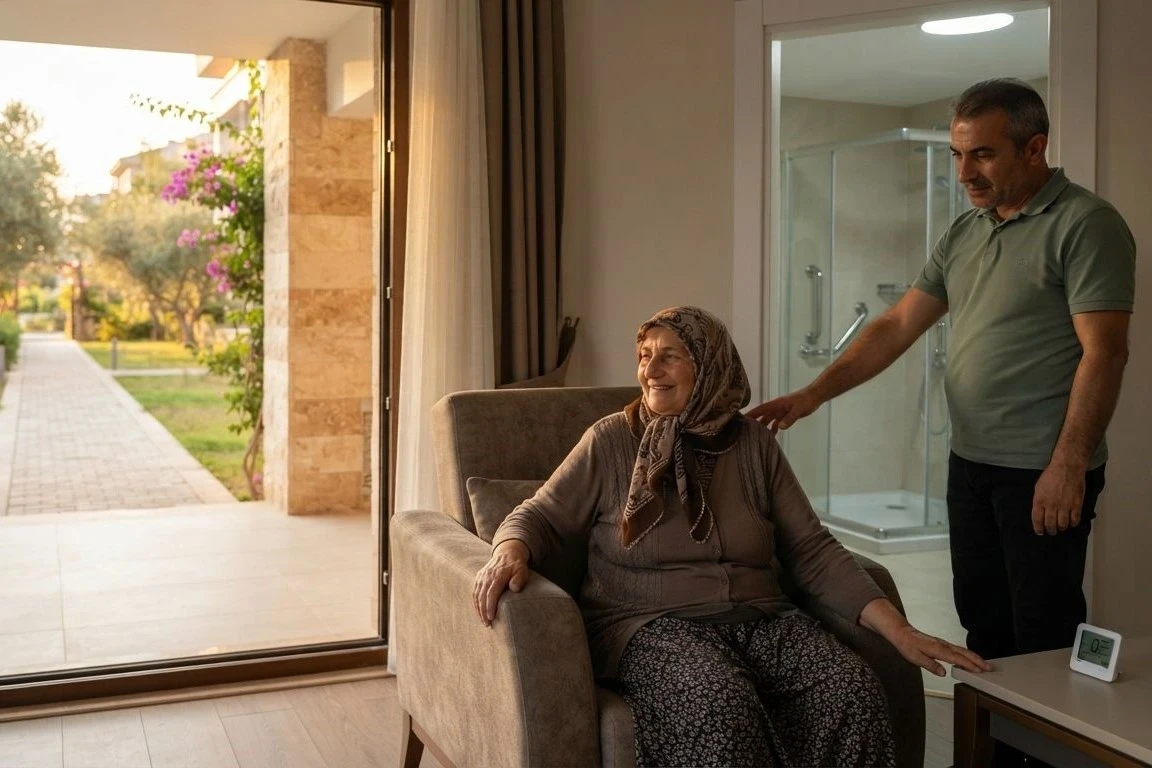
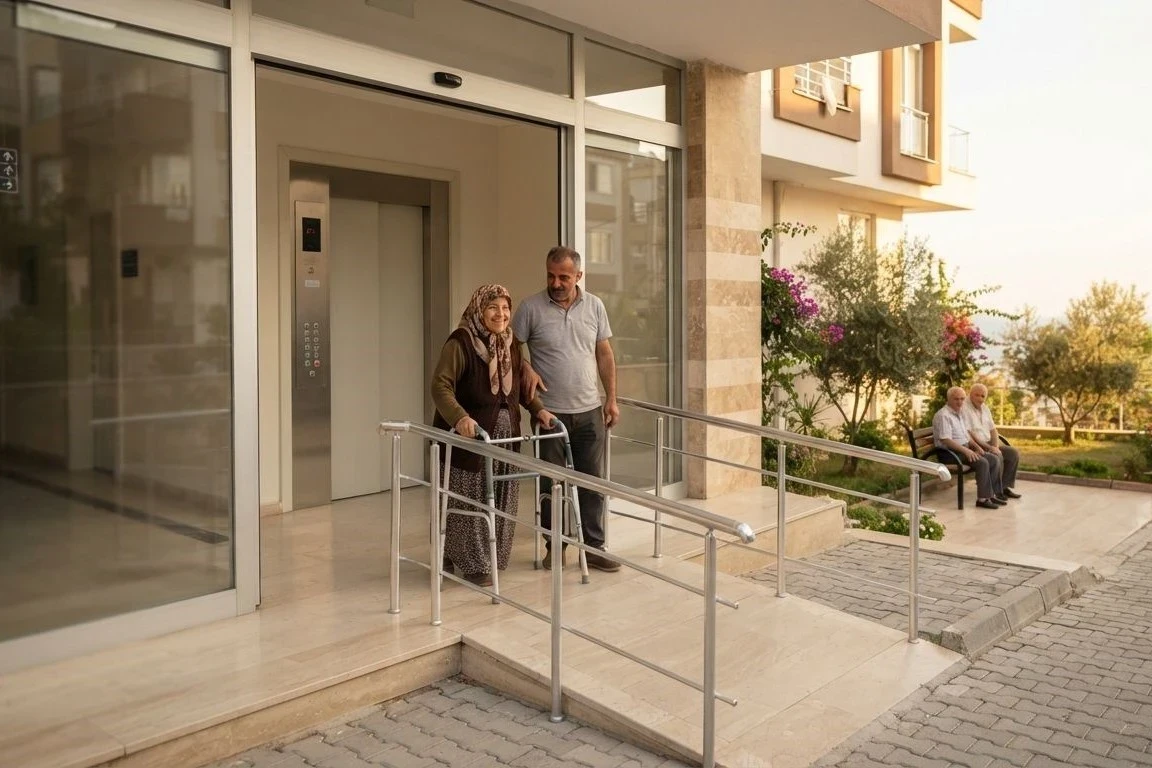
A home that works well for an older family member has a level entrance, a comfortable temperature all year, help within reach and neighbours who notice when something is wrong. Stylish interiors and sea views count for less than a working elevator and a bathroom without a high tub edge. The points below help you compare Turkish apartments and villas through that lens.
Which accessibility features matter most for older residents?
Stairs, steep entrances and narrow doorways cause more everyday problems than most buyers expect. Many older Turkish buildings have no elevator, and hilly coastal towns add slopes between the street and the front door.
- A reliable elevator. Look for a modern lift with a door wide enough for a wheelchair or walker, and ask about service contracts and repair times.
- A low floor level. A ground-floor or garden-floor apartment removes the need for lifts and stairs, while a first or second floor in a building with an elevator gives more light and privacy.
- Step-free entrances. A ramp or gently sloped path from the street to the lobby and from the lobby to the apartment makes daily trips easier.
- Wide doors and corridors. Space to turn a walker or wheelchair matters in hallways, bathrooms and the kitchen.
- A walk-in shower. A bathroom with a low or flush shower tray, grab bars and non-slip tiles is safer than a bathtub.
- Few internal steps. Split-level layouts, sunken living rooms and raised terraces increase fall risks.
- Gentle terrain around the building. Steep streets and uneven pavements make short walks tiring, especially in hilltop villages.
How do climate and comfort affect an older person's daily life?
Older residents feel heat, cold and damp more strongly than younger ones, and Turkish apartments are often designed with summers in mind. Coastal winters bring humidity, and many buildings have no central heating, relying on air conditioners with a heating function, electric heaters or gas boilers. Look for good window insulation, efficient heating and cooling in the living room and bedroom, cross ventilation and shaded balconies. Signs of damp, such as dark spots on walls or a musty smell, deserve attention on the viewing day. A floor plan with a sunny living room and a bedroom that stays cool in summer supports comfort in every season.
Which location factors make daily life easier?
- Pharmacy. A pharmacy within a short, flat walk simplifies regular prescriptions, and the night rota tells you where to go after hours.
- Clinic and hospital. A family health centre nearby and a hospital within 15 to 20 minutes cover routine and urgent needs.
- Grocery shops and markets. Daily shopping on foot keeps older residents active and independent, and weekly markets add fresh produce.
- Walkable terrain. Flat streets with pavements, crossings and benches for resting make short outings realistic.
- Public transport and taxis. A bus stop, tram or taxi rank within a few minutes helps those who no longer drive.
- Places to sit and meet. Parks, tea gardens and cafes nearby offer regular social contact.