Off-plan properties
Relocating abroad is never a small decision, but İzmir continues to stand out in 2026 as one of the most livable cities in Turkey for foreigners. Set on the Aegean coast, it offers a rare balance: a major urban center with universities, business districts, hospitals, and transport infrastructure, yet with a daily rhythm that feels noticeably calmer than Istanbul. For many expats, that combination is exactly what makes İzmir attractive — it delivers city convenience without giving up sea views, walkable neighborhoods, and a Mediterranean pace of life.
For expats, İzmir represents one of the clearest examples of Mediterranean living in Turkey. Long warm seasons, a coastline integrated into daily city life, and social routines built around cafes, promenades, local markets, and outdoor dining create a lifestyle that feels more relaxed than in many larger metropolitan areas. Districts such as Alsancak, Karşıyaka, and parts of the waterfront remain especially popular because they combine residential comfort with access to restaurants, ferries, cultural venues, and the sea.
Another reason foreigners adapt well here is the atmosphere of the city itself. İzmir is often described as one of the most open, secular, and internationally minded cities in the country. That does not mean it is «Westernized» in a superficial sense — rather, it means many expats find it easier to settle in socially, especially if they are looking for a place that feels modern, tolerant, and not overly formal in daily life. The result is a city where new arrivals can enjoy Turkish culture without feeling overwhelmed by the intensity that sometimes comes with faster, more crowded destinations.
Affordability remains one of İzmir's strongest advantages in 2026, although the conversation needs to be more nuanced than it was a few years ago. İzmir is still generally cheaper than Istanbul, with recent cost-of-living comparisons putting it around a quarter less expensive overall depending on the basket of costs used. At the same time, it is no longer accurate to present it as a «cheap» city in absolute terms. Inflation and housing pressure across Turkey have raised the cost of everyday life, especially for renters targeting premium coastal districts.
For expats, the practical conclusion is this: İzmir can still offer strong value, but your experience depends heavily on where and how you choose to live. Centrally located neighborhoods such as Alsancak, Karşıyaka, and parts of Bornova or Bayraklı tend to be more expensive, especially for furnished rentals or modern residences with amenities. Quieter areas and nearby coastal towns such as Urla can feel more residential and lifestyle-oriented, while Çeşme sits in a more premium bracket and usually should not be treated as the «budget» alternative. For day-to-day planning, recent crowd-sourced 2026 estimates place a single person's monthly living costs in İzmir at roughly $700 excluding rent, while a family of four is estimated at roughly $2,600 excluding rent. Those figures are not official price controls, but they are useful as directional planning benchmarks.
One of İzmir's biggest strengths for foreign residents is that the city functions well in practical terms. Adnan Menderes Airport remains a major gateway for both domestic and international travel, and the airport operator notes that a train line connects the airport to the city center in around 30 minutes. That kind of access matters not just for travel, but for families, remote professionals, and buyers who want a city that stays connected year-round.
Inside the city, public transport is one of the reasons many expats manage comfortably without a car, especially in central districts. İzmir Metropolitan Municipality describes the system as an integrated network combining bus, ferry, subway, and suburban rail services, which is particularly valuable in a coastal city where crossing the bay efficiently can make a big difference to everyday life. For expats choosing where to live, transport access can be as important as the property itself. A home that looks cheaper on paper but sits far from ferry or metro connections may feel less convenient over time than a slightly more expensive apartment in a better-connected district.
Healthcare is another reason many foreigners are comfortable in İzmir. As in the rest of Turkey, residence-permit processes are tied to insurance requirements, and the official immigration platform remains the reference point for applications and renewals. In practice, many expats prefer private hospitals and clinics for shorter waiting times, more predictable service, and better English-language support. Public healthcare can be available in certain cases for residents, but newcomers usually plan their first years around private insurance and private providers. This makes location important: if you are choosing between neighborhoods, access to reliable clinics and hospitals should be part of the decision, not an afterthought.
Like any relocation, moving to İzmir comes with adjustments. The first and most obvious is language. In international schools, private clinics, tourist-facing businesses, and some professional environments, English is often workable. But for everyday life — dealing with maintenance, shopping in local stores, navigating bureaucracy, speaking to building staff, or handling public paperwork — basic Turkish makes a real difference. Expats who settle in faster are usually the ones who make an effort with the language early.
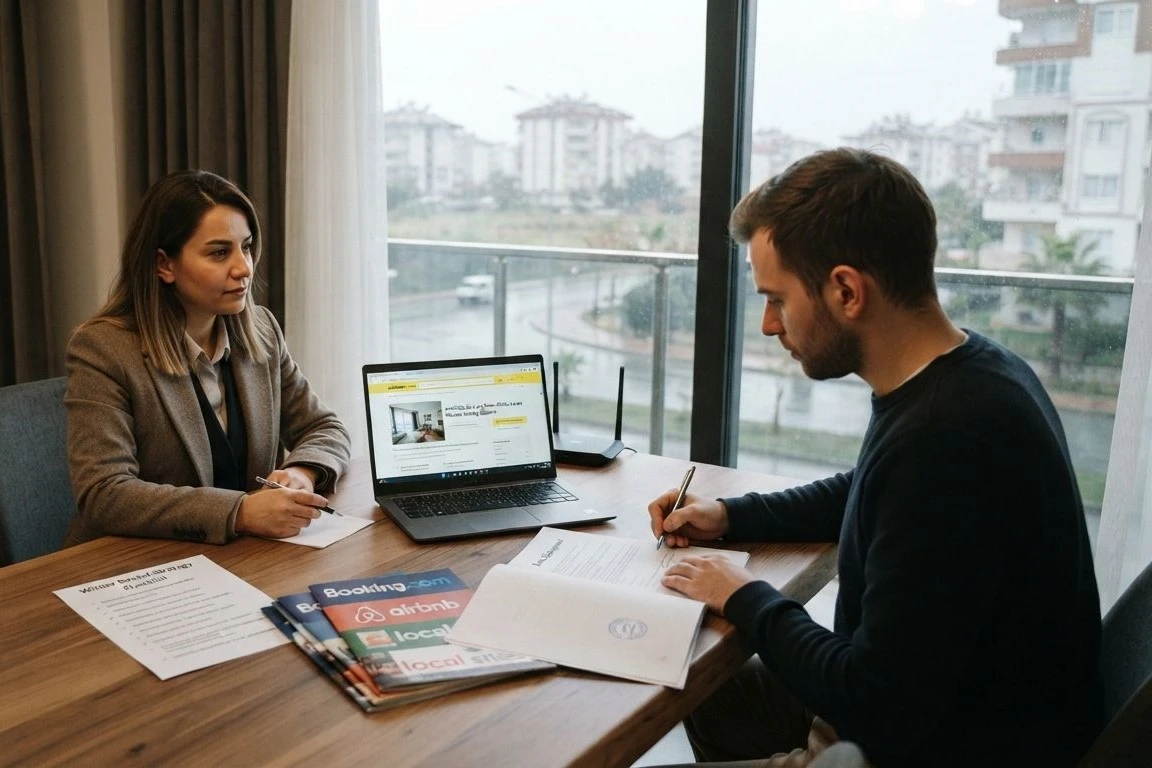
Bureaucracy is another reality. Residence permits, rental contracts, utility setups, property registration, and tax-number-related steps all require patience and documents. None of this makes İzmir a bad destination, but it does mean smooth relocation usually depends on preparation and good local guidance rather than improvisation. On top of that, Turkey's broader economic environment still affects household budgets. Inflation is lower than at its peak, but it remains relevant, and expats should still keep a financial buffer for rent adjustments, imported goods, school costs, and healthcare expenses.
For most foreigners, the positives of life in İzmir outweigh the complications. The city offers more than just a comfortable home base — it opens the door to the wider Aegean region. Weekends can mean beaches, vineyards, ancient sites, ferry trips, and small coastal towns rather than just «staying in the city.» That broader regional lifestyle is one of the reasons many expats stay longer than they initially planned.
The people who thrive most in İzmir tend to do three things well: they choose the right neighborhood for their actual lifestyle, they build routines locally rather than living like permanent tourists, and they engage with the city beyond the expat bubble. Morning walks on the seafront, ferry commutes, market shopping, neighborhood cafes, and day trips along the coast all help the city feel less like a relocation experiment and more like a real home.
Living in İzmir as an expat in 2026 means choosing a city that combines coastal beauty, practical infrastructure, and a more balanced lifestyle than many larger urban centers. It remains attractive because it offers a genuine middle ground: less intense than Istanbul, more urban than a resort town, and still well connected for work, family life, and travel.
With the right planning around housing, budget, healthcare, and residency, İzmir can be far more than a pleasant stop on the Aegean coast. For many foreigners, it becomes a city that supports long-term living, not just short-term escape.
Move to İzmir with confidence — DDA Real Estate helps expats settle into one of Turkey's most livable coastal cities, from choosing the right neighborhood to finding a home that matches your lifestyle, budget, and long-term plans.