Property in Turkey 2026: Specifics Guide
Turkey
EN
$
ft²
Other articles

Specifics of Buying Property in Turkey for Future Buyers 2026

Buse Gosen The author of the article, the Broker
#Blog DDA
3 August 1386 views

The procedure is not the hard part. What catches foreign buyers is a set of local conventions that have no equivalent at home — prices quoted in one currency and settled in another, a tax that the law splits evenly and the market rarely does, and four documents with similar names that mean quite different things.

On top of that sit the regulatory changes of 2022 and 2023, which redrew who can do what and where, and which still catch buyers working from advice written before them.

This guide covers the peculiarities rather than the steps: the paperwork that must come first, how money actually moves, what the title documents mean, the restrictions that decide whether a property can support residence, and what ownership costs annually. Figures reflect August 2026 and shift with the currency — verify before budgeting, and take Turkish legal advice on anything specific.

The Tax Number Comes Before Everything

Not before the purchase — before the search. This is the sequencing point that most first-time buyers get wrong.

The tax number is free, issued in half an hour at any tax office or online, and requires only a passport and a Turkish address. What it unlocks is everything else: preliminary agreements, deposits, the bank account, the registration itself. None of it proceeds without one.

The practical consequence is commercial rather than administrative. No serious seller negotiates with a buyer who does not have one, and no bank opens the account the transaction settles through. Arriving without it costs you a day and, more importantly, credibility. The procedure is set out in our guide to the Turkish tax number.

One clarification worth having early: the tax number is not a Turkish identity card. Non-resident buyers need only the former. The identity document arrives later and only if you pursue residence.

Sworn Translation Is a Real Cost Line

Every non-Turkish document in the transaction must be translated by a sworn translator certified by the Ministry of Justice, with an official seal. Ordinary translation services do not qualify, however competent.

ItemTypical costNote
Sworn translation250 – 800 TRY per pageIstanbul noticeably dearer than the coast
Notarisation200 – 500 TRY per documentRequired on top of translation for most documents
Apostille at homeVaries widelyOne day to four weeks depending on jurisdiction
Full document package5,000 – 15,000 TRYFor a typical foreign buyer

The apostille is the item that breaks timelines rather than budgets. It happens in your home country, before anything can be translated here, and in some jurisdictions it takes a month. Starting it late is the most common reason an otherwise straightforward purchase slips by weeks.

Choosing a translator who specialises in property documentation is worth the small premium — they recognise the vocabulary and flag inconsistencies that a generalist reproduces faithfully into Turkish.

How the Money Actually Moves

This is the peculiarity with the largest financial consequences and the least documentation.

Turkish law requires prices to be displayed in lira. In practice the overwhelming majority of foreign-buyer transactions settle in dollars or euros, because sellers protect themselves against currency movement. The lira figure in the listing is effectively a conversion of an underlying hard-currency price fixed on the day it was listed.

  • The official rate applies at registration. The central bank rate on the transaction day governs tax calculation and the official record, and it can differ from the rate you and the seller actually agreed.
  • Settlement runs through a Turkish account. Hard currency in, conversion on the day, lira out to the seller — with the transfer tax, insurance and notary fees paid from the same conversion.
  • Conversion spreads are 0.5 to 2 per cent. On a purchase of any size that is real money, and it varies enough between banks to be worth comparing before opening the account.
  • A preliminary agreement in lira carries risk. If completion comes weeks later, the currency has moved and the two parties disagree about who absorbs it. Sellers increasingly insist on hard-currency terms for exactly this reason.

The practical rule: agree the currency of the contract, not just the number. A price with no stated currency basis is not a price.

The 4% That Is Rarely Split

The transfer tax is 4 per cent of the registered value, payable at registration and not deferrable.

Turkish law splits it evenly — 2 per cent each — and the market frequently does not. Sellers commonly negotiate the whole 4 per cent onto foreign buyers, and because most buyers have never seen the statutory position they accept it as the norm.

This is a negotiating point worth several thousand dollars. On a 400,000 dollar property, the difference between paying your statutory half and paying the whole tax is roughly 8,000 dollars — more than the legal fees, the translations and the insurance combined.

Beyond the tax itself, expect the registry service fee at 750 to 1,500 lira, notary fees of 500 to 2,000, and a few hundred for official copies. Together they add a few hundred dollars rather than thousands.

A related local practice deserves a flat warning. Registering a value below the actual price reduces the tax and is tax evasion; it also creates a larger taxable gain when you sell, and it blocks any citizenship application that depends on the registered figure. How the tax picture works across ownership is set out in our guide to taxes in Turkey.

Four Documents That Sound Alike

Confusing these is the most expensive documentation error in the Turkish market.

DocumentWhat it isWhen it existsWhy it matters
TapuThe title deedAt transfer of ownershipProves legal ownership
İskanOccupancy certificateAfter completion and inspectionConfirms the building is legally habitable
Kat MülkiyetiFull condominium titleOnly once İskan existsComplete individual ownership
Kat İrtifakıPreliminary condominium titleDuring construction, before İskanTemporary, with real limitations

The risk sits entirely in the last row. Buying on preliminary title means mortgages are largely unavailable, insurance is limited, and conversion to full title depends on the building receiving its occupancy certificate — which some buildings never do, because of construction violations or unresolved bureaucracy.

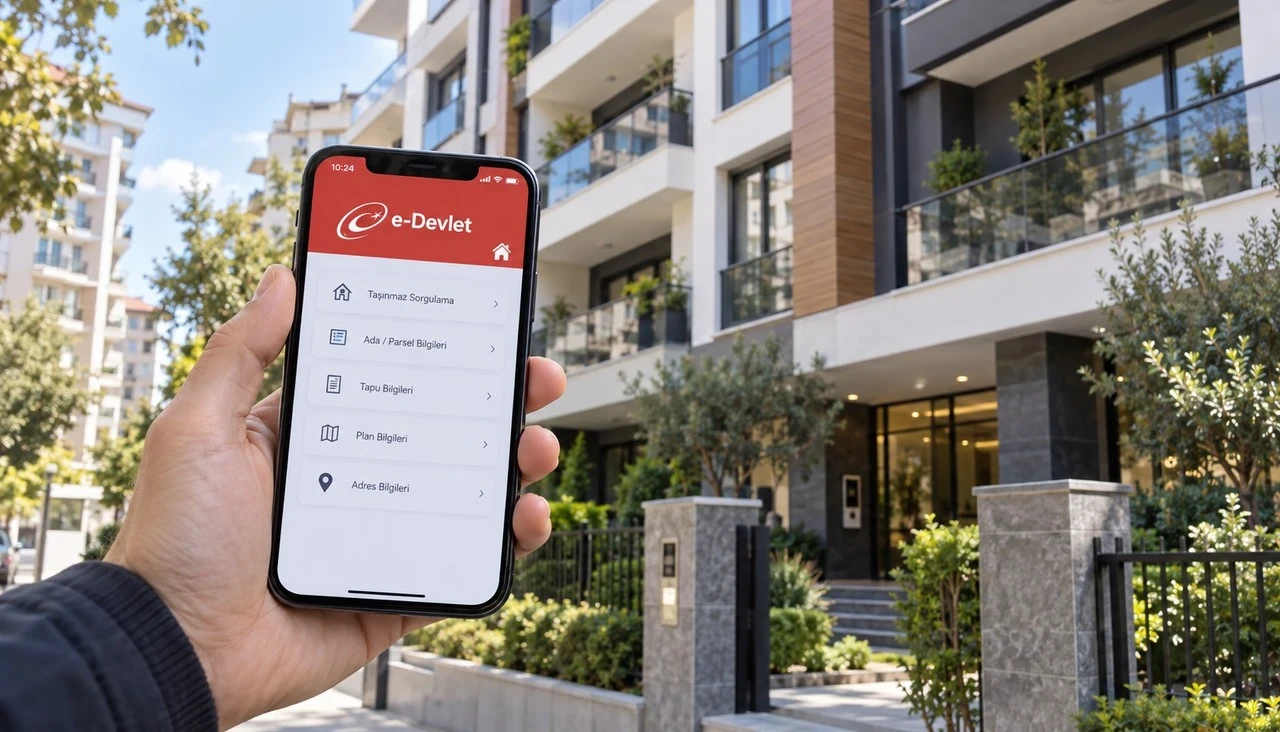
For anything newly completed or still under construction, establish whether the occupancy certificate has been issued and whether full title has followed. What the deed does and does not establish is set out in our guide to obtaining a tapu.

The Rules That Changed in 2022 and 2023

Four changes in eighteen months reshaped who can buy what and where, and advice written before them is now actively misleading.

WhenWhat changedEffect
June 2022Citizenship threshold raised to 400,000 USDFrom 250,000 — priced out mid-market applicants
June 202220 per cent density rule introducedOver 1,200 neighbourhoods closed to new residence permits
July 2023Ten Istanbul districts closed entirelyPurchase still legal; residence permit not obtainable
October 2023Residence threshold raised to 200,000 USDFrom 75,000 — low-cost residence purchases no longer work

The distinction that catches people is between buying and living. You may buy in a restricted district; you simply cannot obtain a residence permit through that property. The two are separate questions, and the second only becomes visible weeks later at the permit application — after the money has moved.

For remote workers there is now a route around the geography entirely: the digital nomad visa introduced in April 2024 grants renewable residence on income rather than property, and is unaffected by district restrictions. The conditions are covered in our guide to the digital nomad visa.

Insurance, Certification and Building Age

Three requirements that are formalities elsewhere and substantive here.

Earthquake insurance is compulsory for every residential property, and without it utility connections are refused outright. Premiums run 150 to 2,500 lira annually depending on size and location, with cover capped well below reconstruction cost for anything premium — supplementary private cover at 500 to 3,000 lira a year is strongly advisable above roughly 300,000 dollars of value. What the compulsory policy does and does not cover is set out in our guide to property insurance in Turkey.

One honest caveat about that policy. After the 2023 earthquakes, claims processing slowed considerably and some coverage was disputed after the event. Treat it as minimum legal compliance rather than as guaranteed protection, and price the supplementary cover accordingly.

On the building itself, the technical supervision certificate has been mandatory since 2001, and the seismic code was tightened substantially in 2019. Buildings completed since then with proper certification command a 15 to 25 per cent premium over comparable older stock — a premium that did not exist before February 2023 and now looks permanent. For anything older, an independent engineering assessment at 5,000 to 15,000 lira is money well spent.

What Ownership Costs Every Year

The annual figure surprises buyers more often than the transaction costs do.

ItemAnnual cost for a mid-range property
Property tax400 – 800 USD
Compulsory earthquake insurance150 – 500 USD
Supplementary insurance200 – 600 USD
Building maintenance charge3,000 – 8,000 USD
Utility standing charges500 – 1,000 USD
Tax representative500 – 1,500 USD
TotalRoughly 4,700 – 12,400 USD

The building charge dominates that list, and it is the one nobody asks about before buying. It varies by an order of magnitude between a plain block and a complex with pools and staff, and it is set by the building rather than negotiable.

Two administrative details specific to foreign owners: the annual property tax is paid in two instalments, in May and November, and non-resident owners must appoint a Turkish representative — usually a lawyer or accountant — to handle it. Missed payments accrue penalties monthly and can ultimately produce a charge over the property.

Buying Without Being There

Roughly a quarter to a third of foreign purchases now complete through a representative, which makes this a mainstream route rather than an unusual one.

A power of attorney executed at a Turkish consulate abroad, or notarised locally and apostilled, authorises a representative to sign at registration on your behalf. Turkish practice prefers a specific instrument limited to one transaction over a general authority, and that preference protects you.

The choice of representative is the whole risk. That person holds full legal authority within the scope granted. A qualified Turkish lawyer specialising in foreign transactions is the only sensible option — and using anyone connected to the seller defeats the purpose entirely.

The Markets Behave Differently

National generalisations are close to useless here; the four main markets have distinct dynamics.

  • Istanbul. The most complex and most expensive, with the widest price variation and the most restricted districts. Also the highest seismic exposure, which is why the foreign share has been declining as buyers grow more cautious.
  • Antalya. The fastest-growing foreign market, gaining precisely what Istanbul loses — low seismic risk, established coastal infrastructure and prices roughly half the Istanbul premium.
  • Alanya. Thirty to forty per cent below Antalya for comparable amenities, with distinct neighbourhood demographics that affect both price and future liquidity — the picture is set out in our guide to Alanya.
  • The Black Sea coast. Small but growing, with a different value proposition entirely: cooler and greener, priced far lower, and drawing Gulf buyers rather than Europeans.

Where Foreign Buyers Go Wrong

Six errors recur, and all are avoidable before money moves.

  • Using the seller’s lawyer. Or the agent’s recommendation. Independent representation costs 1,500 to 4,000 dollars and prevents multiples of that.
  • Accepting the seller’s valuation. Overpricing to foreign buyers of 10 to 30 per cent is routine. Independent comparison through public listings, or a professional appraisal, establishes the actual level — how the formal valuation works is covered in our guide to appraisal reports.
  • Not checking district status. Buying with residence in mind in a restricted neighbourhood. A check that takes minutes and is almost never done.
  • Accepting preliminary title. On the assumption that the occupancy certificate will follow. Sometimes it does not, permanently.
  • Believing the growth projections. The 20 to 30 per cent annual figures marketed in 2020 to 2022 did not survive contact with 2023. Five to ten per cent in dollar terms for quality property is the realistic expectation.
  • Underestimating the annual cost. Between five and twelve thousand dollars a year for a mid-range property, dominated by the building charge nobody asked about.

Frequently Asked Questions

What is the minimum for a residence permit through property?

Two hundred thousand dollars since October 2023, raised from 75,000. The property must be residential and in a permitted district, with an official valuation supporting the figure.

And for citizenship?

Four hundred thousand dollars since June 2022, across one or several residential properties, held for a minimum of three years. Spouse and minor children are included.

Can I buy without visiting Turkey?

Yes, through a power of attorney executed at a Turkish consulate or notarised and apostilled at home. A quarter to a third of foreign purchases now work this way, with a Turkish lawyer as representative.

Do I need a Turkish bank account?

In practice yes. Settlement runs through one, and it is required afterwards for property tax and utilities. It cannot be opened before the tax number.

What are total transaction costs?

Roughly 6 to 10 per cent above the purchase price: the transfer tax at 2 or 4 per cent depending on what you negotiate, agent commission, legal representation, notary and translation. Budget six per cent as a minimum.

How long does it take?

Four to ten weeks from agreement to registration, with the apostille and translation work usually determining the pace rather than the Turkish side.

Can foreigners get a mortgage?

Yes, with restrictions — typically 50 to 70 per cent of appraised value, at markedly different rates for lira and hard-currency lending. Most foreign buyers pay cash for practical reasons, and the comparison is in our overview of mortgages in Turkey.

Key Points to Remember

  • The tax number precedes the search, not the purchase. No serious negotiation and no bank account happen without it.
  • Agree the currency, not just the number. Lira listings settle in hard currency, and a contract without a stated basis is an argument in waiting.
  • The 4 per cent is legally split in half. Sellers routinely shift the whole of it onto foreign buyers who do not know the statutory position.
  • Buying and living are separate questions. A property in a restricted district is perfectly legal to own and cannot support a residence permit.
  • The annual cost is the building charge. Between three and eight thousand dollars a year, set by the complex, and rarely asked about before signing.

Local Conventions Are Not in the Contract

Nothing in this article is hidden. The statutory tax split, the district restrictions, the difference between preliminary and full title — all of it is public, and all of it is routinely absorbed as cost by buyers who did not know to ask. That is what local representation is actually for. DDA Real Estate is a real estate agency in Turkey. We work across Istanbul, Antalya, Alanya, Izmir, Bodrum and Mersin, and for foreign buyers that means checking district eligibility before viewings, establishing the currency basis before the price, and putting the tax split on the table as a negotiating item rather than an assumption.

Explore our listings in Turkey and get in touch: we will confirm whether a property supports the status you want, set out the full annual cost of holding it, and sequence the documents so the apostille is moving while you are still choosing.

Popular
5 June 4152078 views
Dubai Rent Prices 2025: Average Apartment Rental Costs in Dubai Dubai's rental market continues its upward climb in 2025, driven by population growth and limited new supply, pushing average prices up by 10%
#Blog DDA
2 July 2382282 view
DLD Fees in Dubai: Everything You Need to Know Buying property in Dubai? Don't let hidden fees surprise you! Our essential guide breaks down ALL Dubai Land Department (DLD) fees
#Blog DDA
23 November 1710135 views
How to Buy a SIM Card in Turkey in 2026: Prices, IMEI Registration, eSIM Options, and Best Mobile Operators Overview of mobile operators, available types of SIM cards, and home Internet providers
#Blog DDA
5 July 1702512 views
How Much is the Real Estate Agent Commission in Dubai? Find out how much real estate agent commission costs when buying property in Dubai.
#Blog DDA
5 February 1394505 views
How Foreigners Can Own Property in Bali: Understanding PT PMA (2025) Foreigners can't own freehold land in Bali, but a PT PMA (foreign-owned company) allows secure property ownership under Hak Guna Bangunan (HGB) or Hak Pakai (HP) rights
#Blog DDA
28 August 1145844 view
Oqood vs Title Deed in Dubai: Key Differences You Must Know Buying property off-plan in Dubai? Oqood registration is mandatory to secure your ownership rights.
#Blog DDA