A home is used every day, and the nearest hospital, pharmacy or family doctor becomes part of that routine sooner than most buyers expect. Families with young children, retirees and owners who spend several months a year in the country notice it first. A few hours spent checking medical access before signing the contract can shape which district, complex or town you choose.
How does healthcare work for foreign residents in Turkey, public and private?
Turkey runs two systems side by side.
- Public system. The General Health Insurance scheme is administered by the Social Security Institution (SGK). Employees of Turkish companies are registered from the first day of work, and other foreigners may be able to join voluntarily after a longer period of legal residence.
- Private sector. Private hospitals and clinics work on a paid basis, offer shorter waiting times and are the usual choice for foreign residents.
- Residence permit requirement. Applicants generally need a private health insurance policy that covers the whole permit period.
- Emergencies. Urgent care is provided to everyone, and the ambulance number is 112.
- Visitors and owners without a permit. They use private clinics on a fee-for-service basis or through travel and international insurance.
Rules and eligibility conditions change, so confirm them with the local SGK office or a lawyer.
What should you check near the property?
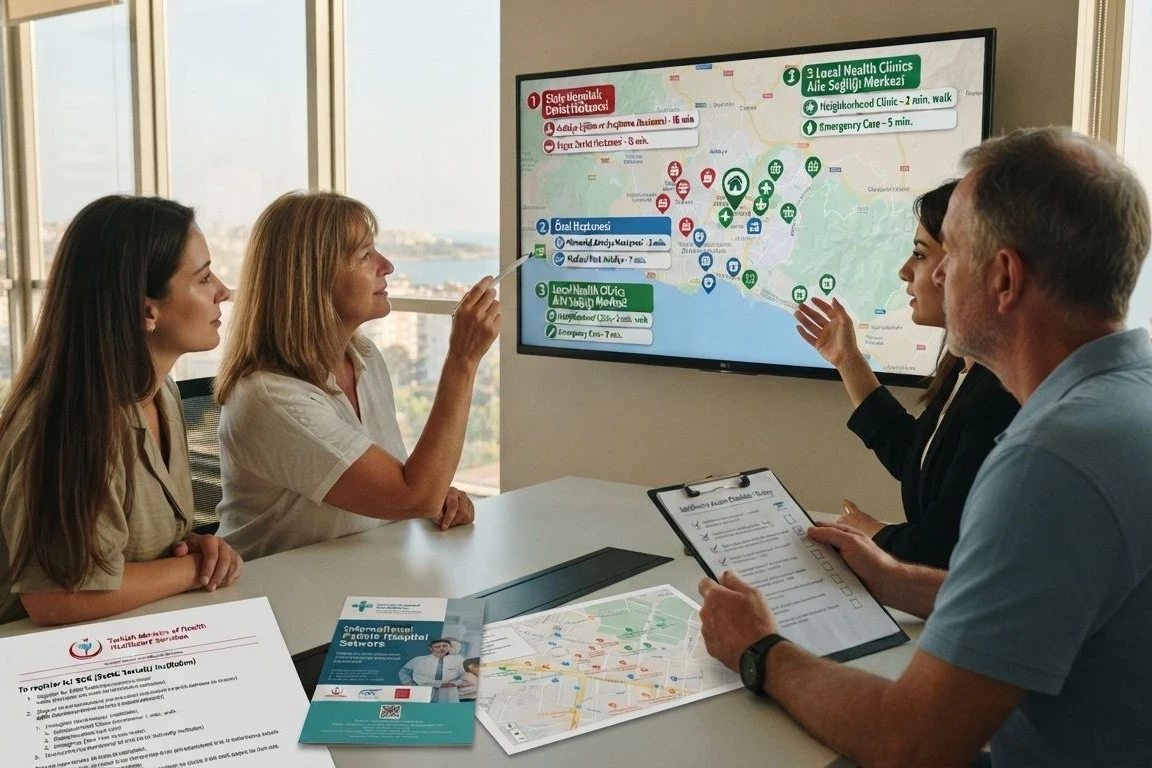
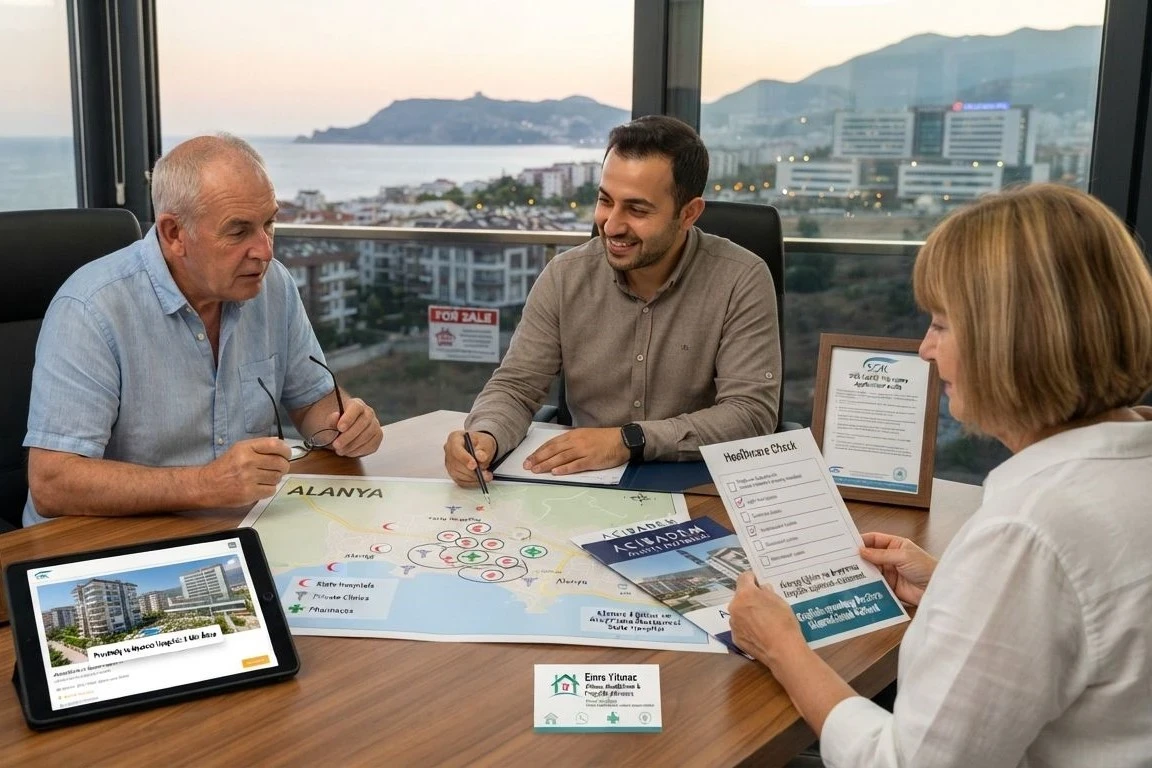
- Hospitals. Locate the closest state hospital and private hospital, and time the trip at different hours.
- large city and university hospitals cover a wide range of specialists
- district hospitals handle basic and urgent cases
- Clinics and family health centres. They cover routine appointments, vaccinations and check-ups.
- Specialists. Families should look for a paediatrician, a gynaecologist, a dentist and a cardiologist within reach.
- Pharmacies. Turkish pharmacies work on a rota, and at least one in each area stays open at night and on holidays. Find out which one serves your street.
- Emergency access. Check the road from the property to the nearest emergency department.
- narrow gates, steep roads or a single access route can slow an ambulance
- ask security staff how ambulances enter the complex
- Diagnostics. Laboratories and imaging centres nearby save time on routine tests.
A short checklist for the viewing day:
- Drive to the nearest hospital and note the travel time.
- Walk to the closest pharmacy and ask about the night rota.
- Visit the neighbourhood clinic and ask how appointments are made.
- Speak to two or three residents about where they go when someone falls ill.
- Check the access road to the complex at rush hour.
Which health insurance options exist for foreign owners?
- Residence permit holders. A private policy from a licensed insurer is usually needed in the first year, and it has to meet the minimum coverage set by the regulator.
- Long-term residents. Public coverage through SGK may become available after a longer period of legal residence, and some owners add a private plan to reach private hospitals.
- International policy holders. A portable policy travels with the owner between countries and may cover private hospitals in Turkey.
- Short-stay owners. Travel insurance or direct payment is common for those who visit for a few weeks a year.