Off-plan properties
Three islands, one name, one ferry — and three completely different holidays. Most people land on Gili Trawangan chasing the party they read about, then discover that Gili Air feels like another country and Gili Meno like another decade. That is the trick of the Gilis: a shared name and a shared reputation that quietly hide how far apart these specks of sand actually are in character. And there is a second story the travel blogs tend to skip, because it belongs on a property desk rather than a beach towel — that as Lombok next door emerges as "the Bali of twenty years ago," the same three islands are becoming three different investment cases too. This guide takes all of it honestly: what each island is really like, the practicalities nobody warns you about, and what it means to own rather than just visit.
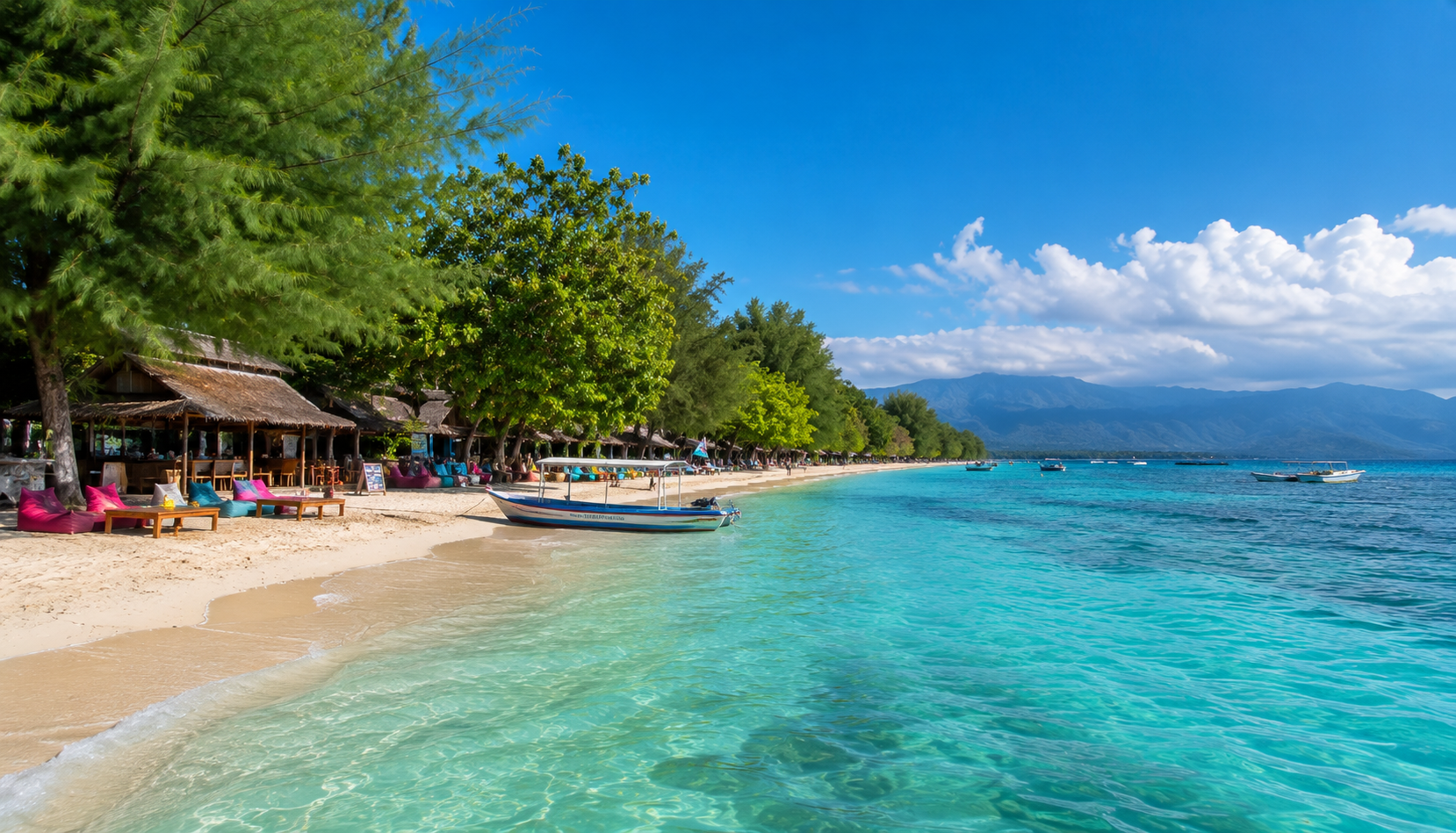
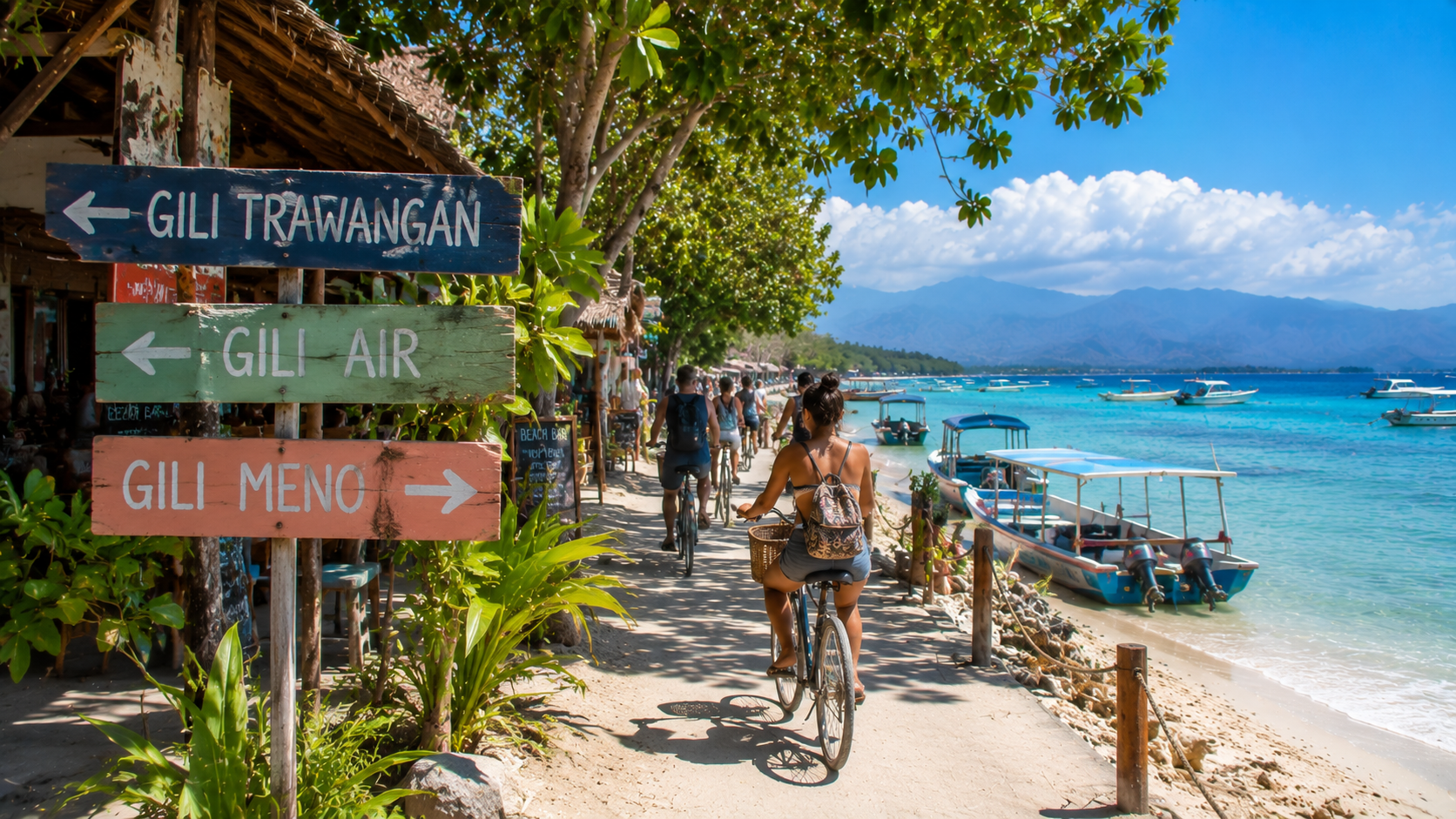
The Gilis sit just off the northwest corner of Lombok, close enough to see from its beaches, and they share a DNA before they diverge. All three are tiny — you can walk the perimeter of any of them in somewhere between ninety minutes and two hours — and all three are, by local law, free of engines. No cars, no motorbikes, no scooters; you move by bicycle, on foot, by cidomo (the horse-drawn cart), or, increasingly, on a quiet electric bike. The first thing you notice stepping off the boat is the sound, or the lack of it: waves, wind, hooves on packed sand, and none of the traffic roar that defines Bali. It is jarring for about an hour and then becomes the single best thing about the place. Beyond that shared calm, though, the three islands pull in genuinely different directions.
The Gilis can only be reached by sea. Fast boats run from several points on Bali — Padang Bai and Amed on the east coast are quickest, with Sanur and Serangan also serving the route — and take roughly an hour and a half to two and a half hours depending on the operator and the swell. From Lombok itself, the hop from Bangsal harbour is only twenty to thirty minutes. Most fast boats dock at Trawangan and Air; Meno is often reached by a short local boat from one of the other two. There is also a helicopter transfer for those who would rather skip the water entirely. One hard-won piece of advice outranks all the rest: never book your Gili-to-Bali crossing for the same day as an international flight. In January 2026 bad weather suspended services and left travellers stranded, and it will happen again — always leave a buffer day.
Trawangan — "Gili T" — is the largest and most developed, and its billing as the party island is true but out of date. The neon strip of a decade ago has matured into a west-coast corridor of design-minded sunset bars, and around them sits the fullest infrastructure of the three: dive schools on every stretch, a cheap and excellent night market by the harbour, restaurants, cafes with real WiFi, even co-working corners and a small digital-nomad scene. It is the only one of the islands with any active law enforcement, which quietly shapes its character. Come here for diving, for company, for solo travel where you will meet people by dinner, and for a genuine night out. Do not come here expecting silence or a deeply local feel — that is not what Trawangan sells, and it is honest enough not to pretend otherwise.
If Trawangan is the extrovert and Meno the recluse, Air is the one that gets along with everyone. Closest to Lombok and home to the largest local community of the three, it threads the needle between buzz and calm: enough good restaurants and the odd bar to keep an evening interesting, but a pace built around yoga shalas, slow mornings and easy snorkelling straight off the beach. It has quietly become a wellness hub, and it suits couples, families and the growing crowd of remote workers who want island life without either the party or the isolation. For anyone unsure which Gili is theirs, or planning to stay more than a few nights, Air is the safe, rewarding default.
Meno is the smallest, least developed and most private of the trio — honeymoon territory, and proudly so. The beaches are the best of the three and often empty, the accommodation runs to boutique resorts and small guesthouses rather than strips of bars, and after dark there is essentially nothing to do but look at the stars. Its signatures are a salt lake, a turtle sanctuary that rehabilitates injured sea turtles, and the eerie underwater sculptures by Jason deCaires Taylor offshore, now grown into an artificial reef. Meno runs almost entirely on cash, so bring plenty. This is the island for switching off completely; if you need stimulation, you will be bored by lunchtime on day two, and that is precisely the point.
Reduced to their essentials, the choice becomes clear.
| Island | In a phrase | Comes alive for | The catch |
|---|---|---|---|
| Gili Trawangan | The lively one, grown up | Divers, solo travellers, nightlife | Busiest and least local |
| Gili Air | The balance | Couples, families, wellness, longer stays | Fewer big nights out |
| Gili Meno | The quiet one | Honeymooners and switching off | Cash only; little after dark |
A handful of realities separate a smooth trip from a frustrating one. Money comes first: Trawangan has the most reliable ATMs and Air has decent card and QR acceptance, but Meno is cash-only and machines everywhere run dry in high season, so withdraw more than you expect to need before you go. Water and waste are a live issue — there is no processing infrastructure, so refill stations and a reusable bottle are the norm and single-use plastic genuinely matters here. The dry season from April to October brings calmer seas and the best diving visibility. Health care is basic, with small clinics only, so anything serious means a boat to Lombok or Bali. And a few safety notes worth taking seriously: do not swim between the islands, where currents are deceptively strong; stick to beer and wine rather than cheap local spirits; and remember that Indonesia's drug laws are severe regardless of how openly anything is offered.
Spend a week here and the thought arrives on its own — what would it take to have a piece of this? The answer starts with a hard rule: foreigners cannot own land outright anywhere in Indonesia, the Gilis included. What you can do is hold it through one of three routes — a leasehold (Hak Sewa), commonly twenty-five to thirty years and renewable; a Hak Pakai "right to use" title for a home; or a PT PMA, a foreign-owned company, holding an HGB "right to build," which is the standard vehicle for anything that earns rental income. The mechanics of each are set out in our guides to how foreigners can own property in Indonesia and the step-by-step purchase process.
The reason the numbers tempt people is Lombok next door. Often described as the Bali of twenty years ago, it runs roughly 40 to 60 percent cheaper than comparable Bali property, well-run villas tend to yield somewhere around 8 to 12 percent, and values have compounded at 15 to 20 percent a year over the past five. Behind that sits a real tourism build-out — the Mandalika special economic zone, its MotoGP circuit, an expanding international airport and new ports — lifting arrivals far faster than Bali's. If letting the property is the plan, our guide to renting out as a foreign investor covers how that works, and for a sense of the more established Bali alternative it is worth comparing against a hub like Canggu.
Now the honesty the sales sites gloss over. On the Gilis, title due diligence is not a formality but the whole game: much of the land is customary, held under old or informal certificates, and from February 2026 certain traditional certificates cease to be valid — so an independent notaris checking the title, the zoning and any encumbrances before money moves is non-negotiable. The nominee "shortcut," where a local holds the land for you, is illegal and void in court. And the market itself is thinner than Bali's: resale is slower, professional services less mature, liquidity lower. This is a patient investor's game, not a quick flip.
Whether you are booking a week or weighing a purchase, the same simple matching holds.
| If you want... | The island | Why |
|---|---|---|
| Nightlife, diving and easy company | Gili Trawangan | The most bars, dive shops and social energy |
| Wellness, family calm, a longer stay | Gili Air | A balanced pace and the biggest local community |
| Romance and near-total quiet | Gili Meno | Empty beaches, boutique stays, no crowds |
| Rental yield in a rising market | Any Gili, structured right | Lombok's tourism surge at pre-boom prices |
Plenty of people arrive for a week and start pricing a life. If that is you, the island stops being a beach and becomes a base, which brings visas, tax and logistics into play — the same framework that governs living and working anywhere in Indonesia, summarised in our overview of visas, company structures and tax compliance. Island life adds its own filters: reliable internet is real but uneven, everything costs more because it arrives by boat, and healthcare and schooling mean regular trips to the mainland. None of it is a dealbreaker, but it rewards planning the practical side as carefully as you chose the view.
The recurring ones are simple to sidestep. Trying to "do" all three islands in three days, when the Gilis reward staying put rather than hopping. Booking the return crossing on your flight day. Arriving on Meno with a card and no cash. Underestimating the sun and the currents. And, on the ownership side, falling for a bargain with a fuzzy title or a nominee structure — the two mistakes that turn a dream purchase into an unrecoverable one.
What are the Gili Islands?
Three small, car-free islands off the northwest coast of Lombok — Trawangan, Air and Meno — reached only by boat.
Which Gili is the best?
It depends on what you want: Trawangan for energy and diving, Air for balance and wellness, Meno for quiet and romance.
How do you get there?
By fast boat from Bali (about 1.5 to 2.5 hours) or a short hop from Bangsal on Lombok; most boats land on Trawangan and Air.
Are there cars on the islands?
No — only bicycles, walking, cidomo horse carts and some electric bikes; the absence of engines is the whole appeal.
Can foreigners buy property on the Gilis?
Not freehold, but through a leasehold, a Hak Pakai title or a PT PMA holding HGB; independent title due diligence is essential here.
Is Gili or Lombok property a good investment?
Yields and growth are strong and prices sit well below Bali, but resale is thinner and titles need careful checking, so it suits patient buyers.
When is the best time to visit?
April to October, the dry season, when the seas are calmer and diving visibility is at its best.
It is a short step from loving the Gilis to wondering whether you could own a corner of them — and that step is exactly where good advice earns its keep. DDA Real Estate helps international clients navigate the Lombok and Gili market with clear eyes: matching the right island and property to your goals, choosing the ownership structure that actually protects you, and running the title due diligence that this particular market demands. Come for the turtles and the sunsets; if the place gets under your skin, talk to us before you sign anything.