

Living in Ubud Bali 2026: Pros and Cons
Bali
EN
$
ft²
Other articles

Living in Ubud (Bali): Pros and Cons, Reviews

Anna Sarapkina The author of the article, the Broker
#Blog DDA
20 August 2205 views

Most arguments about Ubud are really arguments about two different places. The name covers a small congested centre and a wide ring of villages around it, and living in one is nothing like living in the other.

Almost every complaint you will read is about the centre. Almost every reason people stay is about what sits fifteen minutes outside it. Getting that distinction right is the difference between loving the place and leaving after a year.

Below is what the two halves are actually like, what residents consistently praise and consistently complain about, and what to check before committing. This is a general picture rather than a set of quotations, and conditions change, so verify anything specific on the ground.

The centre and the villages

The practical difference is large enough to deserve a table. Both are Ubud, and people mean different things when they use the word:

The centreThe surrounding villages
CharacterShops, cafes, coaches, foot trafficRice fields, compounds, quiet lanes
TrafficCongested most of the dayLight, but the road out passes through the centre
HousingSmall plots, close neighbours, higher pricesSpace, views, lower prices per square metre
WalkabilityGenuinely walkable, unusual for BaliNot walkable at all
NoiseTraffic and constructionCeremonies, roosters, insects
Who it suitsShort stays and people without transportResidents with a scooter or a car

Fifteen minutes out changes the price and the experience completely. It also adds a daily drive through the busiest part of town, which is the trade nobody mentions.

What people consistently praise

These come up again and again from people who have stayed several years, and they are the reasons the place holds its residents:

  • The food, which is unusually good and unusually varied for a town this size
  • A dense community of foreign residents, so meeting people takes weeks rather than years
  • Cooler nights than the coast, which makes sleeping easier
  • Green surroundings within a few minutes of anywhere
  • A real cultural life rather than a performance staged for visitors
  • Cheaper housing than the southern coastal corridors for the same space

The cultural point deserves emphasis. Ubud is a ceremonial centre, and the festivals worth experiencing on the island are not put on for tourists here. The classical dance forms are performed nightly and taught locally, which is why people interested in them settle here rather than on the coast.

What people consistently complain about

The complaints are just as consistent, and most newcomers underestimate all six:

  • Traffic in the centre, which is worse than the map suggests
  • Humidity, noticeably higher than on the coast, with damp and mould indoors
  • Insects and wildlife, from mosquitoes to things that come out of the rice fields
  • No beach, and a drive of over an hour to reach one
  • Construction noise, because the area is still being built out
  • The distance to the airport, which makes travel days long

Humidity is the one people underestimate most. Inland and surrounded by vegetation, Ubud holds moisture in a way the coast does not. Clothes dry slowly, leather grows mould, and air conditioning becomes a dehumidifier rather than a luxury.

The rice-field view problem

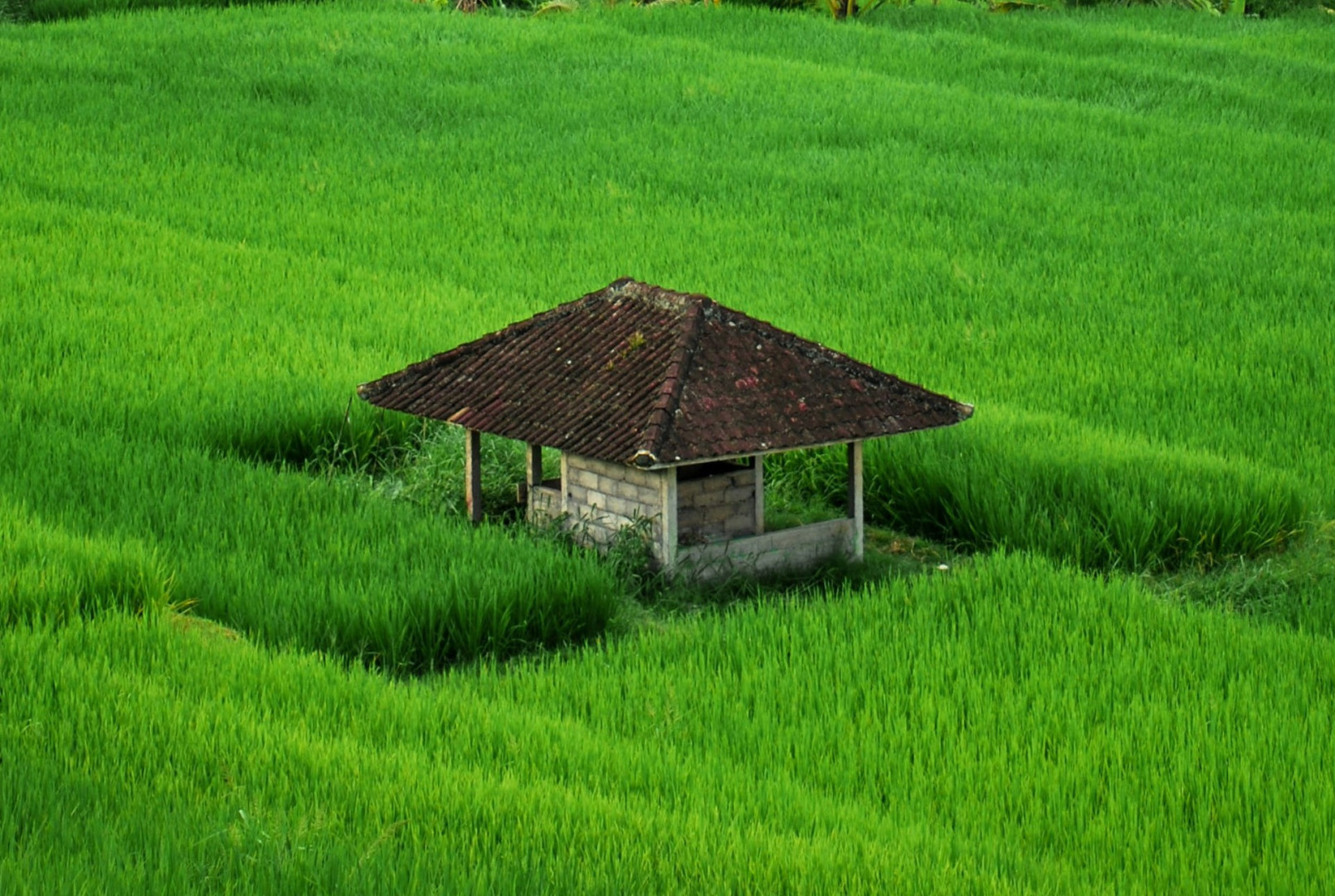
This deserves its own section because it costs people real money. A villa sold on its rice-field view is sold on land somebody else owns.

Fields around Ubud are actively being developed, and a view that exists today can be a wall in two years. Ask who owns the land in front and what its designation permits. If the answer is vague, price the property as though the view will go, because eventually it usually does. The same question belongs on the list of criteria for choosing property on the island wherever a view is part of what you are paying for.

Weather and the interior

Ubud sits inland and slightly higher than the coast. That produces more rain, more cloud, cooler nights and greener surroundings. It also produces the damp described above.

The wet season is more pronounced here than on the southern beaches. Afternoons close in, lanes turn to mud, and anything left in a closed room grows something. None of it is a reason to avoid Ubud, but it is a reason to view a house in the rain rather than in August.

Traffic and the road pattern

The problem is structural rather than seasonal. The centre is a small grid of narrow roads that were never built for this volume, and coaches bringing day visitors use the same streets as everyone else.

The consequence for a resident is that the drive out passes through it. Check your route to town at midday before you rent or buy. A house that is a pleasant ten minutes at seven in the morning can be forty at two in the afternoon, and that is the version you will do most often.

The community question

Ubud has an unusually dense foreign community built around wellness, yoga, healing practices and creative work. For some people this is the reason to live here. For others it is the reason not to.

Both reactions are common and neither is wrong. Spend a fortnight here before deciding which one you are. The community is easy to join and hard to avoid, and people who find it grating in week two do not find it less grating in year two.

Cost compared with the coast

Housing is cheaper than the southern coastal corridors for the same space, and the gap widens as you move out of the centre. Food and everyday services are cheaper too.

Against that, some things cost more. Anything requiring a trip to the coast, the airport or a large hospital costs time, and time is a real budget line for a resident. How Ubud sits against the other options is set out in the comparison of the island's main areas. The saving is genuine, and part of it is spent on driving.

Schools and medical care

This is where Ubud is thinner than the south. There are international schools in and around the town, but the choice is narrower, which matters if the first one does not suit your child.

Medical care follows the same pattern. Clinics handle ordinary problems locally, and anything serious means a drive south. For a family this is the section that decides it. For a couple without children it rarely registers at all.

Getting to the beach and the airport

The beach is over an hour away in traffic, and the airport is a similar drive that can stretch considerably at bad times. People who imagine weekly beach days generally stop after the first month.

Ubud works for people who want an interior life, not a coastal one with a green view. If the sea is part of your daily routine rather than an occasional outing, the coast is the honest answer and Ubud will disappoint.

Who it suits

The dividing lines are clear enough to state plainly, and they are not about budget:

  • Suits — remote workers who value community and cooler nights over the beach
  • Suits — people with a genuine interest in the culture, who will find more of it here than anywhere
  • Suits — couples and singles without school-age children
  • Does not suit — anyone whose routine involves the sea several times a week
  • Does not suit — families needing a wide choice of schools or specialist medicine nearby
  • Does not suit — people who travel often, because every trip starts with a long drive

Rent before buying

This applies everywhere and applies double here, because Ubud divides people sharply. Rent for at least one wet season before committing money to a purchase.

A dry-season month tells you almost nothing. Live through February before you sign anything. The humidity, the mud, the mould and the afternoon rain are the parts that decide whether people stay, and none of them are visible in July.

What to check on a property here

The general purchase checks apply, and Ubud adds several of its own:

  • Who owns the land in front and what it may become
  • How the plot drains, checked during rain rather than described
  • Ventilation and damp, especially in rooms that stay closed
  • Access road condition and whether it floods
  • Distance to the centre measured in midday traffic
  • Water supply and pressure, since some areas rely on wells
  • Land designation, since agricultural land carries restrictions in several regencies

The last point needs checking per plot rather than in general. Restrictions on new tourism accommodation on agricultural land apply in a number of regencies and are executive policy rather than settled law, so they can move without legislation.

Questions we hear most

Is Ubud too touristy to live in?

The centre is. The villages around it are not, and that is where most long-term residents live. Judging the whole area by the main street is like judging a city by its railway station.

How bad is the humidity really?

Noticeable enough to change how you store clothes and how often you ventilate. It is not unbearable, but it is the single most underestimated part of living here, and it is worse in the wet months.

Can I live in Ubud without a scooter?

In the centre, yes, which is unusual for Bali. Outside it, no. If you plan to live in a village and do not want to drive, factor in the cost of drivers, because it becomes a daily expense rather than an occasional one.

Is it cheaper than Canggu or Seminyak?

For housing of the same size, generally yes, and more so outside the centre. Everyday costs are lower too. The offset is travel time to the coast, the airport and specialist services.

Will the rice field behind my house stay?

Assume not unless you know who owns it and what the land permits. Development around Ubud has been steady, and views that felt permanent five years ago are now built out. Price the property on what it is rather than what it looks at.

Key takeaways

  • Ubud is two places — the congested centre and the villages, and the word means both
  • Humidity is the underestimated part — inland damp affects storage, clothes and buildings
  • A rice-field view is someone else's land — ask who owns it and what it may become
  • The community is the deciding factor — people either find it or find it exhausting
  • Rent through a wet season first — July tells you nothing about February

If Ubud sold itself to you on a two-week retreat

That is how most people meet it, and a retreat is a curated version of a place. DDA Real Estate is a real estate agency working in Indonesia. Ubud enquiries reach us more often than any other inland area, and the useful conversation is usually about the parts a short stay hides: the drive at midday, the damp in a closed room, the field behind the house and what the neighbours plan to build on it.

Look at our offers in Bali and leave a request: we will shortlist properties in the part of Ubud that matches how you actually intend to live, tell you what each one is like in the wet season, and say plainly when the coast would suit you better.

Popular
5 June 4206384 view
Dubai Rent Prices 2025: Average Apartment Rental Costs in Dubai Dubai's rental market continues its upward climb in 2025, driven by population growth and limited new supply, pushing average prices up by 10%
#Blog DDA
2 July 2409372 view
DLD Fees in Dubai: Everything You Need to Know Buying property in Dubai? Don't let hidden fees surprise you! Our essential guide breaks down ALL Dubai Land Department (DLD) fees
#Blog DDA
23 November 1783971 view
How to Buy a SIM Card in Turkey in 2026: Prices, IMEI Registration, eSIM Options, and Best Mobile Operators Overview of mobile operators, available types of SIM cards, and home Internet providers
#Blog DDA
5 July 1732059 views
How Much is the Real Estate Agent Commission in Dubai? Find out how much real estate agent commission costs when buying property in Dubai.
#Blog DDA
5 February 1415169 views
How Foreigners Can Own Property in Bali: Understanding PT PMA (2025) Foreigners can't own freehold land in Bali, but a PT PMA (foreign-owned company) allows secure property ownership under Hak Guna Bangunan (HGB) or Hak Pakai (HP) rights
#Blog DDA
28 August 1172241 view
Oqood vs Title Deed in Dubai: Key Differences You Must Know Buying property off-plan in Dubai? Oqood registration is mandatory to secure your ownership rights.
#Blog DDA