Main Temples of Bali: What to See and How
Bali
EN
$
ft²
Other articles

Main Temples of Bali

Natalia Gubareva The author of the article, the Broker
#Blog DDA
24 August 1764 view

Visitors arrive expecting buildings and find courtyards. A Balinese temple has no interior in the usual sense — it is a walled compound of open yards where the shrines stand under the sky, and the most sacred part is closed to visitors.

That changes what there is to see. You are looking at position, layout and, if you time it well, a ceremony. There is no nave to walk into and no dim hall to photograph.

Below is how the compounds are arranged, which temples matter and why they stand where they do, how to behave, and when to go. Practices vary between temples and ceremonies follow their own calendar, so check locally before planning a visit around one.

Three courtyards, not one building

Almost every temple on the island follows the same plan, and knowing it turns a confusing walk into a legible one:

CourtyardWhat it isAccess
OuterThe entrance yard, everyday gatherings, preparationsOpen
MiddlePavilions for offerings, gamelan, cooking for ceremoniesUsually open
InnerThe shrines themselves and the seats of the deitiesRestricted, often to worshippers only

The split gate at the entrance is the signature — a tower cut vertically down the middle, the two halves standing apart. Inside, the tiered black-thatched towers are the shrines, and the number of tiers marks their standing.

Why the famous ones stand where they do

The great temples are not distributed by convenience. A set of principal temples sits at the island's directional points and at its extremes: on the volcano, on a sea cliff, on a rock in the water, beside a crater lake.

They form a protective ring, with the mountain as the sacred direction and the sea as its opposite. Read that way, the map explains itself. The dramatic locations are the point rather than a happy accident, which is also why they photograph so well.

The mother temple on the volcano

The island's most important sanctuary sits high on the slopes of the great volcano in the east. It is a complex of many separate temples on ascending terraces, not a single site, and the climb up the steps is part of it.

It is also where visitors most often report friction — unofficial guides, compulsory-sounding charges, pressure at the gate. Arrange the visit through your accommodation or an established operator and agree the total beforehand. The eastern side of the island rewards a longer trip than a day dash, and the guide to eastern Bali covers what else sits along that road.

The sea temples

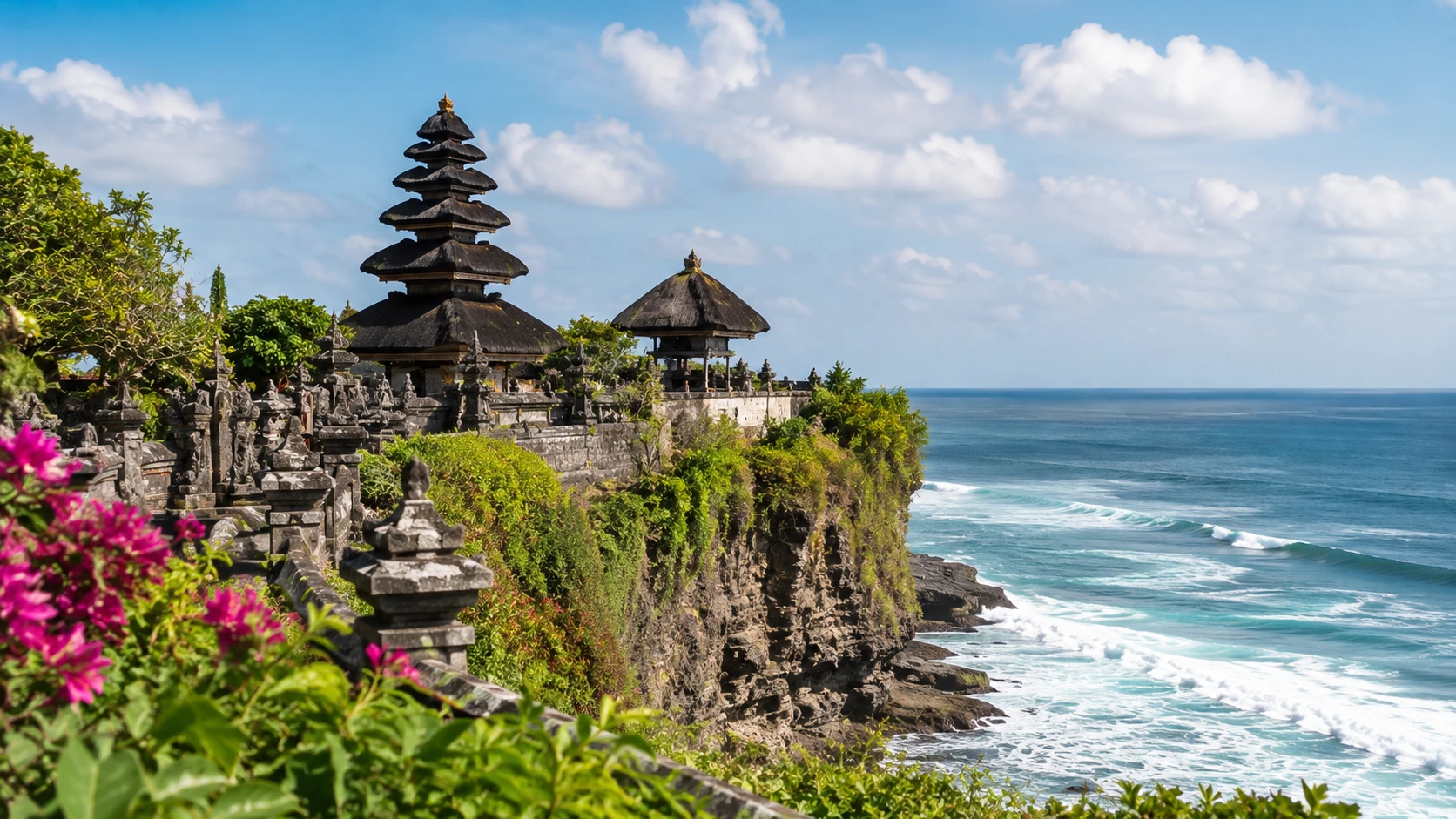
Two of the best-known stand on the water. One occupies a rock offshore that becomes an island at high tide and is reachable on foot at low tide. The other sits on a cliff high above the surf on the southern peninsula.

Both are sunset destinations and both get crowded for it. The cliff temple also has resident monkeys with a reputation for taking glasses and phones, which is not folklore. Put loose items in a closed bag before you walk in.

The lake temple

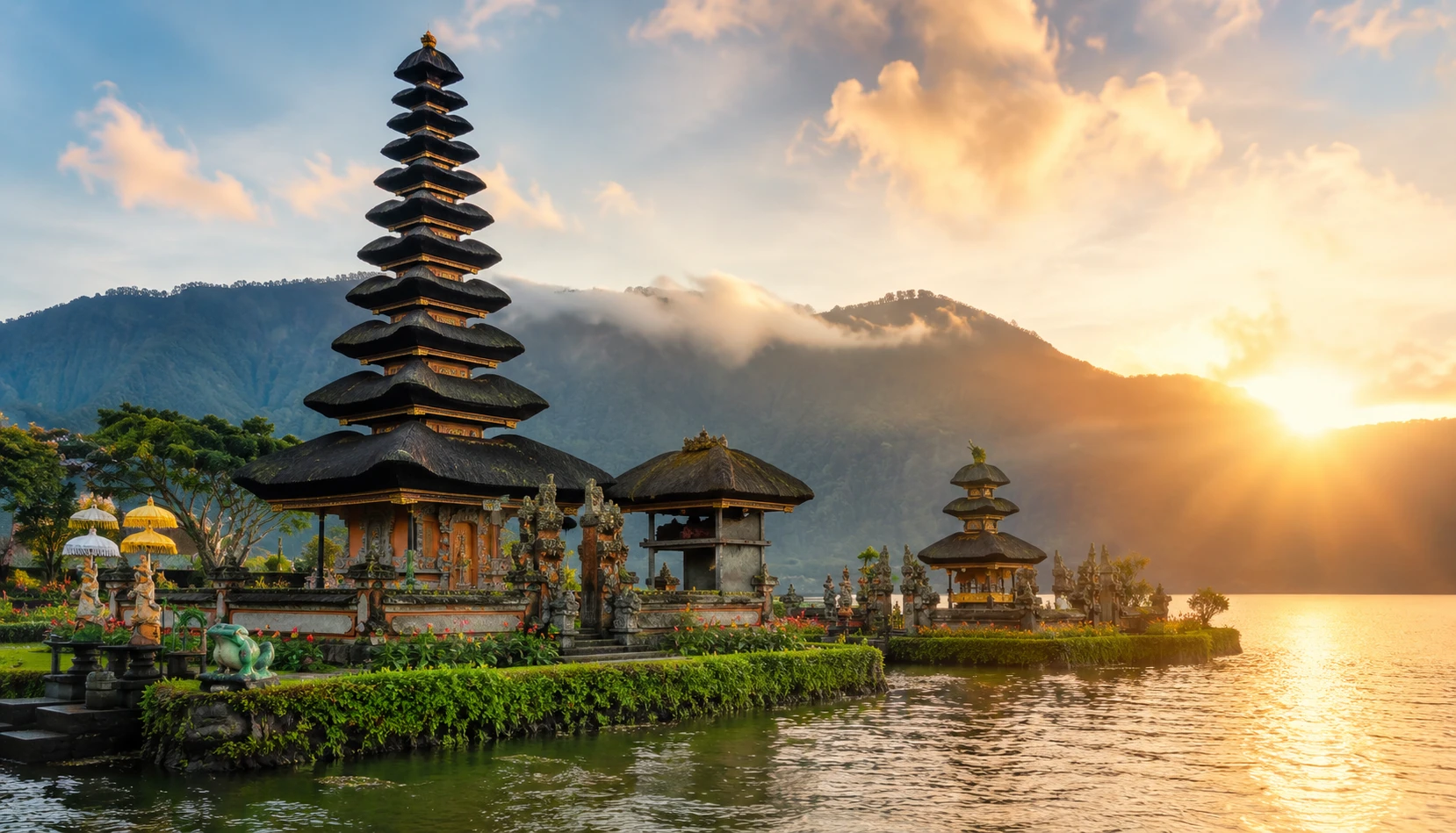
In the highlands, a temple sits at the edge of a crater lake and appears to float when the water is high. It is the image on the banknote and the one most people picture when they think of Bali.

Its position is functional as well as beautiful: the lakes feed the island's irrigation network, and the temples on their shores mark where water is allocated. That system is described in the guide to Bali's highland lakes. Go early — cloud fills the highlands by the middle of the day.

The water temples

A separate category, and the one visitors misread most often. At these sites people queue to bathe in spring water through a row of spouts, each with its own purpose.

This is a purification ritual with its own sequence and its own etiquette, not a swimming pool with a view. Visitors may usually take part, and it is worth doing properly. Ask what the sequence is and which spouts are skipped rather than copying the person in front, and wear the sarong provided rather than swimwear.

Dress and conduct

The rules are consistent across the island and enforced at the gate. None of them is difficult:

  • A sarong and sash are required, and are lent or hired at the entrance
  • Shoulders covered, and shoes off where you are asked to remove them
  • Do not climb on shrines or gates, or pose sitting on them
  • Do not stand higher than a priest or walk in front of someone praying
  • Menstruating women are asked not to enter, which is stated on signs and expected to be observed
  • Keep back from ceremonies and photograph them from a distance, if at all

The inner courtyard is usually closed to visitors, and where a sign says so it is not a formality to be tested.

Ceremonies change everything

A temple during a ceremony is a different place: full, loud, dressed in white and yellow, with gamelan playing and the whole village present. It is the best thing you can see on the island and the worst time for quiet sightseeing.

Every temple has its own anniversary festival on the Balinese calendar, so something is happening somewhere most weeks. The calendar of Balinese holidays and their dates is worth checking before you plan. If you arrive during one, stay at the back and follow what everyone else does.

Performances at temples

Several temples host evening dance performances, and the cliff temple's sunset performance is the best known. These are staged for audiences, which does not make them inauthentic — the forms are old and the performers are local.

What they are not is a religious ceremony, and it is worth knowing the difference before you buy a ticket expecting one. The classical dance forms each have their own story and setting. Book ahead for the sunset performance, because it sells out in high season and the good seats go first.

How many to visit

Fewer than the lists suggest. Three or four across a stay is plenty, and they should be different in kind rather than three variations on the same thing.

A sensible set is one great mountain complex, one sea temple, one lake or water temple. Temple fatigue is real and arrives faster than people expect, usually on the fourth in a week. Spacing them out works better than a temple day.

When to go

Early morning at almost all of them. Coaches arrive mid-morning, the light hardens, and the highland sites disappear into cloud by noon. The sea temples are the exception, since their point is the sunset.

The wet season is better for temples than for beaches. Fewer visitors, greener surroundings, and rain that usually falls in the afternoon rather than the morning.

Fees, guides and the gate

Entry charges are modest and normal. What causes trouble is everything around them: parking attendants, sarong hire, unofficial guides attaching themselves at the entrance, and donation boxes presented as compulsory.

None of that is a scandal, and most of it is avoidable with one habit: ask the price before accepting anything, including a sarong and a guide. A stated price agreed in advance ends the conversation. An unstated one continues at the exit.

Temples in daily life

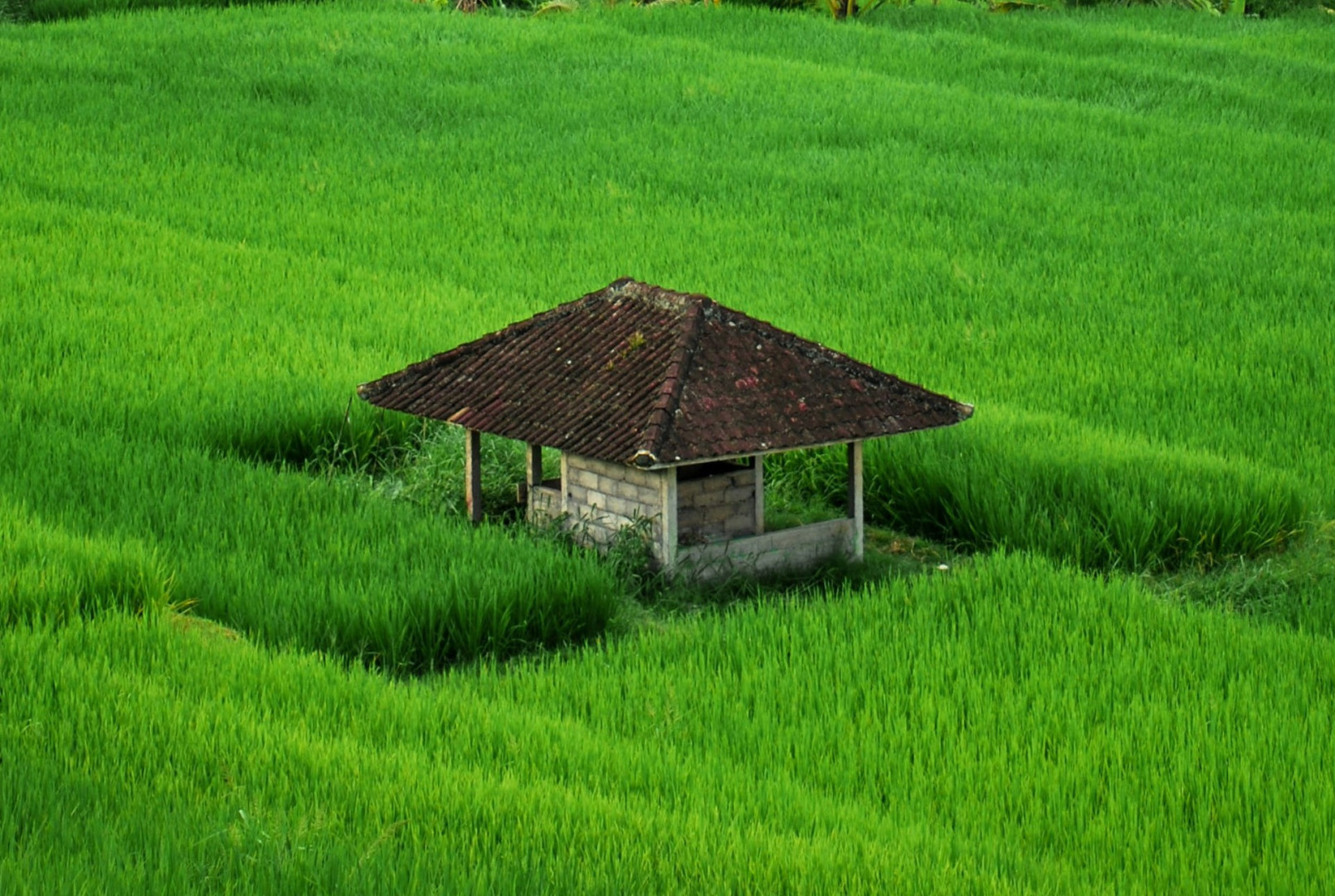
The famous ones are a fraction of the total. Every village has three temples of its own, every family compound has a house temple, and there are shrines at crossroads, in rice fields and in the corner of shopping centres.

Which means you do not need to travel to see this. The temple two streets from where you are staying is a working one, and watching an ordinary evening there tells you more than a coach trip to a famous site.

What this means if you live here

Ceremonies affect ordinary logistics more than newcomers expect. Roads close for processions, staff take days off for family and village obligations, and building work stops on certain dates.

None of it is an inconvenience to be worked around; it is the calendar the island runs on. Proximity to a village temple is worth knowing before you sign a lease — gamelan practice and pre-dawn preparations are part of living near one, and people react to that very differently.

Questions we hear most

Can non-Hindus enter?

Yes, into the outer and usually the middle courtyards, wearing a sarong and sash. The inner courtyard is generally restricted, and during ceremonies access is narrower still. Signs at the gate say what applies that day.

Do I need to hire a guide?

Not usually. At the largest complexes a guide adds context and helps with the crowds at the entrance, but agree the fee in advance. Elsewhere a short read beforehand does the same job.

Which one should I see if I only see one?

Depends on what you want. The mountain complex is the most significant, the cliff temple the most dramatic, the lake temple the most photographed. Pick by the kind of place you enjoy rather than by ranking.

Is photography allowed?

Generally yes in the open courtyards, with restraint around people praying and inside restricted areas. During a ceremony, keep back and consider not photographing at all. Nobody will stop you, which is exactly why judgement matters.

What if I arrive underdressed?

Sarongs are lent or hired at every visited temple, sometimes included in the entry fee. It is not a reason to skip a visit, though carrying your own sarong is cheaper and more comfortable than the hired ones.

Key takeaways

  • Courtyards, not interiors — the shrines stand in the open and the inner yard is usually closed
  • Position is the meaning — the great temples mark the island's directions and extremes
  • Three or four is enough — and they should differ in kind
  • Early morning, except at the sea temples — coaches and cloud both arrive mid-morning
  • Agree every price at the gate — sarong, parking, guide, donation

The temple near your house is part of the address

Not as a sight, but as a neighbour with a calendar. DDA Real Estate is a real estate agency working in Indonesia, and this is one of the things we mention when it applies: a village temple two doors away means processions past your gate, gamelan practice in the evenings and road closures on certain dates. Some buyers want exactly that. Others find out afterwards.

Look at our offers in Bali and leave a request: we will tell you what sits around each address and what the street sounds like on an ordinary evening, not just what the listing photographs show.

Popular
5 June 4206384 view
Dubai Rent Prices 2025: Average Apartment Rental Costs in Dubai Dubai's rental market continues its upward climb in 2025, driven by population growth and limited new supply, pushing average prices up by 10%
#Blog DDA
2 July 2409372 view
DLD Fees in Dubai: Everything You Need to Know Buying property in Dubai? Don't let hidden fees surprise you! Our essential guide breaks down ALL Dubai Land Department (DLD) fees
#Blog DDA
23 November 1783971 view
How to Buy a SIM Card in Turkey in 2026: Prices, IMEI Registration, eSIM Options, and Best Mobile Operators Overview of mobile operators, available types of SIM cards, and home Internet providers
#Blog DDA
5 July 1731996 views
How Much is the Real Estate Agent Commission in Dubai? Find out how much real estate agent commission costs when buying property in Dubai.
#Blog DDA
5 February 1415169 views
How Foreigners Can Own Property in Bali: Understanding PT PMA (2025) Foreigners can't own freehold land in Bali, but a PT PMA (foreign-owned company) allows secure property ownership under Hak Guna Bangunan (HGB) or Hak Pakai (HP) rights
#Blog DDA
28 August 1172178 views
Oqood vs Title Deed in Dubai: Key Differences You Must Know Buying property off-plan in Dubai? Oqood registration is mandatory to secure your ownership rights.
#Blog DDA