Menjangan Island 2026: Diving and Access
Bali
EN
$
ft²
Other articles

Menjangan - A Protected Island in Northern Bali

Ekaterina Bocharova The author of the article, the Broker
#Blog DDA
11 August 2772 view

Menjangan is the clearest evidence that the Bali most visitors know is one corner of the island. It is uninhabited, it sits inside a national park, and nothing will ever be built on it — which is precisely why the water around it looks the way it does.

It also sits on a coast that runs on the opposite calendar to the south. When the southern beaches are closed out by swell, the northwest is flat, and the diving season there peaks while the famous coast is at its roughest.

Below is what the island is, why the water is exceptional, how the crossing and the drive actually work, what the protected status means for visitors, and what that same protection has done to the coast you reach it from. Park rules, operator arrangements and access conditions change, so confirm the current position before travelling.

A national park, not a resort island

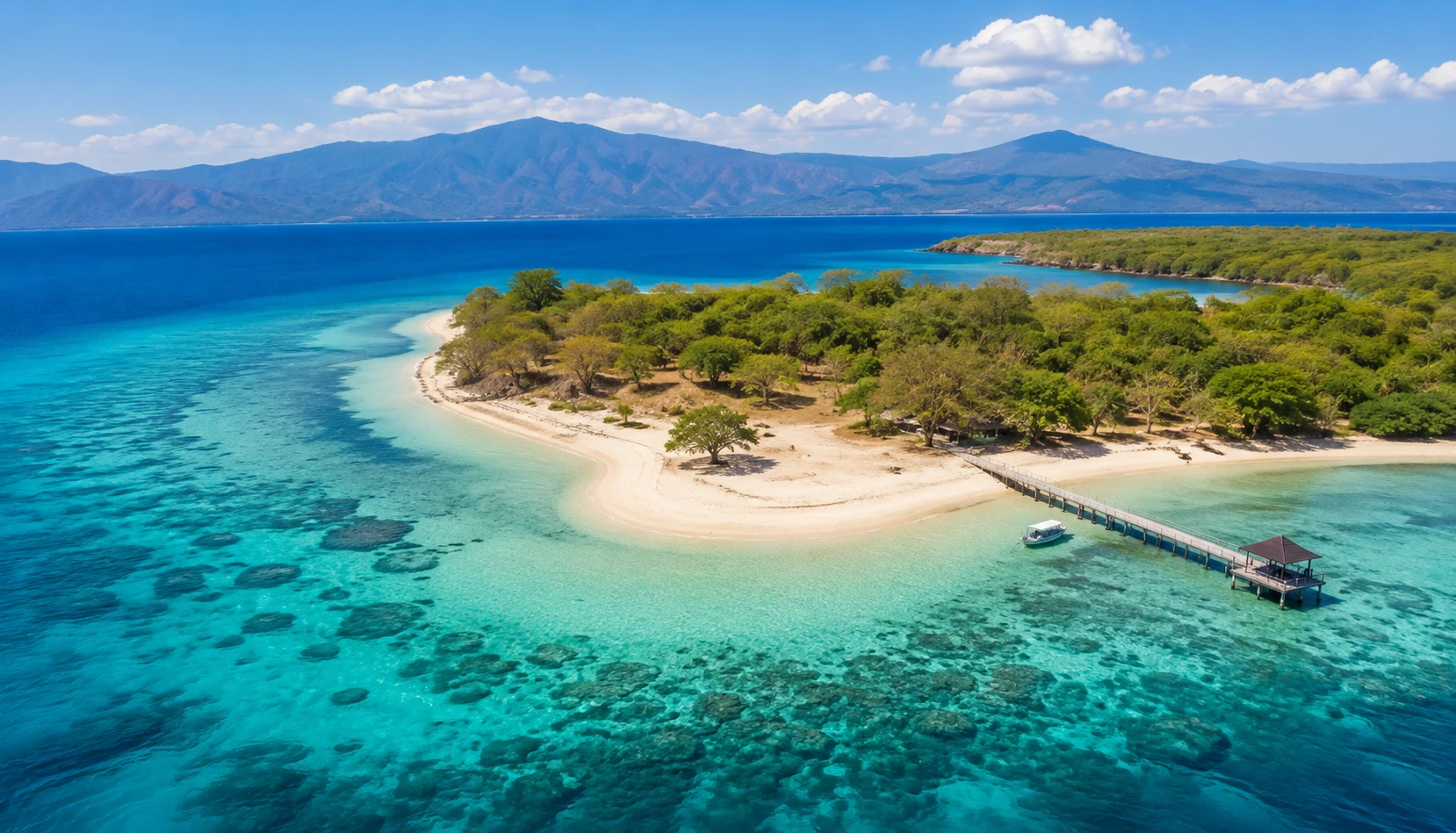
The island lies off Bali's northwestern tip and forms part of the national park that covers that end of the island. There is no accommodation on it, no village and no development, and there will not be: the protection is the point rather than an obstacle awaiting a permit.

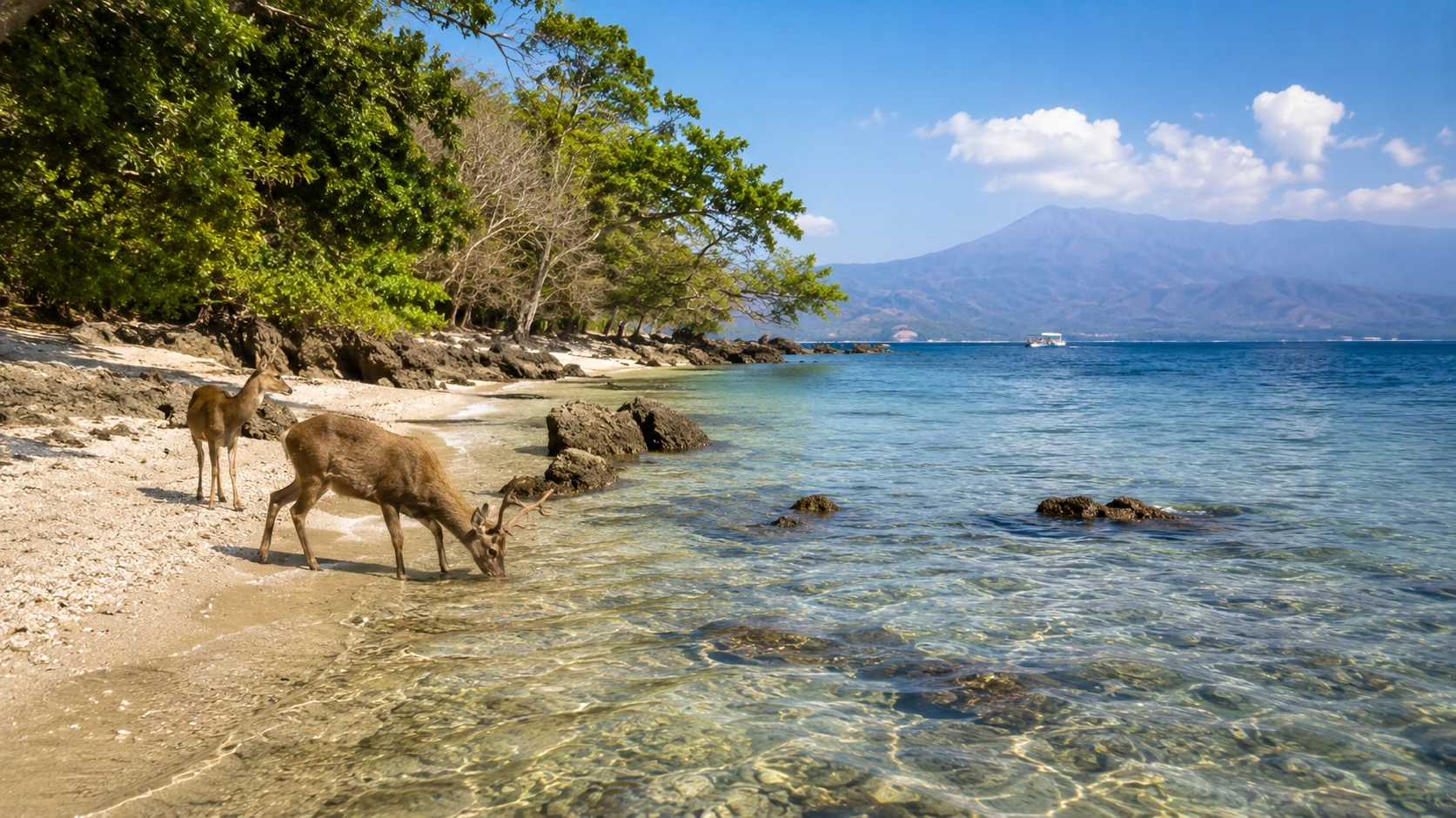
Its name refers to the deer that live there, and they are genuinely resident rather than a marketing detail. Everything a visitor does here is a day trip — you arrive by boat, you dive or snorkel or walk, and you leave the same day. What that means practically:

  • You need a mainland base, and the choice of base shapes the whole trip
  • Boat arrangements and park access run through licensed operators rather than being improvised
  • Numbers on the water vary by day and season, but this is not a crowded destination in the southern sense
  • There are no shops, no restaurants and limited shelter — you carry what you need
  • Timing is dictated by the boats rather than by you

Why the water is different

Two things combine. The island is surrounded by steep walls that drop away close to shore, so deep water and coral sit within metres of the surface rather than a long swim out. And the location is sheltered — the strait here is protected from the ocean swell that works the southern coast, so the water is calm and the visibility is often exceptional.

The result is a rare combination: wall diving at snorkelling depth. Someone floating on the surface with a mask sees much of what a diver sees, which is not true at most sites. The wider picture of where and how to dive on the island is set out in the guide to diving on Bali, and Menjangan appears in it for exactly these reasons.

The season runs backwards here

This is the fact most worth carrying away. Bali's tourist calendar is written for the south, where the dry months bring calm seas and the wet months bring swell. On the north and northwest the exposure is different, and conditions there do not follow the same rhythm.

So a trip that makes no sense on the southern coast can be ideal on the northern one, and visitors who write off the wet season for the whole island are applying a southern rule to a place it does not govern. Conditions still vary day to day, and local operators read them better than any calendar — but the underlying geography is stable and worth knowing.

Diving and snorkelling

The walls are the attraction: coral growing on near-vertical faces, overhangs and small caves, with the reef running around much of the island so there are several distinct entry points rather than one. Currents are generally mild by Indonesian standards, which makes it accessible to less experienced divers.

Snorkellers are unusually well served here, and families with mixed abilities can share a boat productively — one group deep, another on the surface, both seeing coral. Bring your own mask if you have one, because fit matters more than any other piece of equipment and rental fit is a lottery.

What else is on the island

Beyond the water there is less than people expect, and that is the character rather than a shortfall. A small temple stands near the shore, and a large statue nearby is a recognisable landmark from the boat. Paths lead a short way inland, and the deer are usually visible near the landing area.

This is a half-day of nature rather than a full itinerary, and trying to make it more produces disappointment. Anyone wanting the small-island experience with restaurants, bars and somewhere to stay is describing the Gili islands instead — the guide to the Gilis covers what that alternative actually offers, and the two trips are not substitutes for each other.

Getting there

The crossing itself is short — roughly half an hour from the mainland jetty on the northwest coast, in small boats. The drive to that jetty is the real journey: from the southern resort areas it takes most of a morning, across the island on mountain roads.

Doing it as a day trip from the south is possible and almost always a mistake — you spend six or seven hours in a vehicle for a few hours on the water, and you arrive tired. Staying on the north coast for a night or two turns the same trip into something restful. What to settle in advance:

  • Where you will sleep the night before, since the boats leave in the morning
  • Which operator you are going with and what the arrangement includes
  • Park entry formalities, which are handled through the operator rather than at a gate you drive to
  • What time you need to leave your accommodation, which is earlier than it sounds
  • Whether your plan includes a guide, which inside the park is generally expected

Rules inside a protected area

A national park is not a beach, and the difference shows in what is permitted. Access is organised rather than open, guides accompany visitors in most circumstances, and the ordinary rules of a marine protected area apply in full.

The list is short and unsurprising: nothing is taken from the water or the land, nothing is fed, nothing is touched, and nothing is left behind. Coral is fragile in a way that is easy to underestimate — standing on it to adjust a mask destroys growth that took decades. Sea and boat conditions deserve the same seriousness as anywhere, and the general safety basics for Bali apply on the water more than on land.

The mainland base

The village on the coast opposite is where most visitors stay, and it is a destination in its own right rather than a car park with rooms. It is quiet, low-rise and built around the sea, with a long-running community reef restoration effort that has become locally famous.

It also offers a preview of what the northwest coast is like generally: black volcanic sand, calm water, few crowds, and a pace that has more in common with a fishing village than with the southern strips. People who arrive expecting a scaled-down Seminyak are disappointed; people who arrive expecting quiet rarely are.

What protection does to a coast

Here is where the island becomes relevant to anyone thinking beyond a visit. The northwest is undeveloped for two reasons that reinforce each other: a national park occupies a substantial part of it, and the distance from the airport and the southern economy has kept demand thin.

The effect on property is exactly what you would expect. Land is far cheaper than in the south, the setting is genuinely unspoilt, and a protected area makes a permanent neighbour that cannot be built out. The same factors also cap the demand, the services and the resale — the contrast with a developed corridor is stark, and the picture of investment in the Canggu area describes the opposite end of that spectrum in nearly every respect.

Who the northwest suits

Being honest about this saves people a great deal. The coast rewards a specific kind of buyer and frustrates everyone else, and the dividing line is not budget:

  • Suits — people who want quiet as the primary quality and have transport, patience and a reason to be there
  • Suits — divers and people whose life is organised around the water rather than around a social scene
  • Does not suit — anyone needing schools, specialist medical care or an international airport within reach
  • Does not suit — buyers whose plan depends on short-let occupancy at southern rates
  • Worth testing first — spend a wet-season week there before committing, not a dry-season weekend

Planning the trip

The practical side is simple once the shape is right. Sleep on the north coast, go out early, treat it as a half-day on the water and give the rest of the day to the coast itself:

  • Two nights on the north coast rather than a day trip from the south
  • An early boat, both for conditions and for the light
  • Sun protection that works in the water, since there is little shade on a small boat
  • Cash, because the coast is less card-friendly than the south
  • A dry bag for anything that must not get wet on a small boat
  • Flexibility on the day, since conditions rather than schedules decide

Questions we hear most

Can I stay on the island?

No. It is uninhabited and inside a national park, with no accommodation and no development permitted. Everyone stays on the mainland coast opposite and crosses for the day.

Is it worth it if I only snorkel?

Unusually, yes. The walls begin close to the surface, so snorkellers see a great deal of what divers see. It is one of the few sites where a mixed group can share a boat and everyone gets a real experience.

Can it be done from Seminyak or Ubud in a day?

Physically yes, sensibly no. The drive is most of a morning each way and the water time is a few hours. Staying a night or two on the north coast changes it from an endurance exercise into a proper trip.

When is the best time to go?

The north does not follow the southern calendar, so the months that suit the famous beaches are not automatically the months that suit this coast. Conditions vary day to day; ask the operator you plan to use rather than relying on a general seasonal chart.

Is the northwest a sensible place to buy?

For a small number of buyers, genuinely yes. For most it is not, and the reasons are structural rather than fixable: thin demand, limited services and a long road to everything. Rent through a low season before deciding, which is advice worth taking anywhere but especially here.

Key takeaways

  • Protected and uninhabited — a day-trip destination with no accommodation, permanently
  • Walls at snorkelling depth — the reason it is rated so highly and why non-divers are well served
  • The season runs backwards — southern rules do not govern the northern coast
  • Stay on the north coast — a day trip from the south is mostly driving
  • Protection cuts both ways — it preserves the setting and caps demand, services and resale

The northwest is cheap for reasons that do not go away

That is not an argument against it, but it is the sentence buyers should hear before the one about the view. DDA Real Estate is a real estate agency working in Indonesia, and quiet coasts are among the enquiries where being direct matters most: distance from the airport, thin year-round demand, limited services and a narrow pool of future buyers are structural features of the place rather than problems awaiting a solution. For a buyer whose plan actually fits that, it is an unusually good deal. For a buyer who has priced it as an undervalued version of the south, it is not.

Look at our offers in Bali and leave a request: we will set out what a location gives and what it permanently withholds, compare the quiet coasts against the developed ones on the same criteria, and be straightforward about where the price difference is opportunity and where it is simply the market being right.

Popular
5 June 4206384 view
Dubai Rent Prices 2025: Average Apartment Rental Costs in Dubai Dubai's rental market continues its upward climb in 2025, driven by population growth and limited new supply, pushing average prices up by 10%
#Blog DDA
2 July 2409372 view
DLD Fees in Dubai: Everything You Need to Know Buying property in Dubai? Don't let hidden fees surprise you! Our essential guide breaks down ALL Dubai Land Department (DLD) fees
#Blog DDA
23 November 1783971 view
How to Buy a SIM Card in Turkey in 2026: Prices, IMEI Registration, eSIM Options, and Best Mobile Operators Overview of mobile operators, available types of SIM cards, and home Internet providers
#Blog DDA
5 July 1731996 views
How Much is the Real Estate Agent Commission in Dubai? Find out how much real estate agent commission costs when buying property in Dubai.
#Blog DDA
5 February 1415169 views
How Foreigners Can Own Property in Bali: Understanding PT PMA (2025) Foreigners can't own freehold land in Bali, but a PT PMA (foreign-owned company) allows secure property ownership under Hak Guna Bangunan (HGB) or Hak Pakai (HP) rights
#Blog DDA
28 August 1172241 view
Oqood vs Title Deed in Dubai: Key Differences You Must Know Buying property off-plan in Dubai? Oqood registration is mandatory to secure your ownership rights.
#Blog DDA