Off-plan properties
Start with the thing that shapes everything else. Bandung is a domestic property market, not an international one — the buyers are Indonesian families, the tenants are students and weekenders from Jakarta, and almost nothing here is built or priced with a foreign purchaser in mind.
That is not a warning. It is the single most useful fact about the city, because it explains the stock, the prices, the rental demand and the near-total absence of the leasehold villa market that defines Bali.
Below is what the city is, how its districts differ, what changed when the fast rail arrived, and what a foreigner can and cannot realistically do here. Market conditions and regulations change, so confirm anything specific locally before acting.
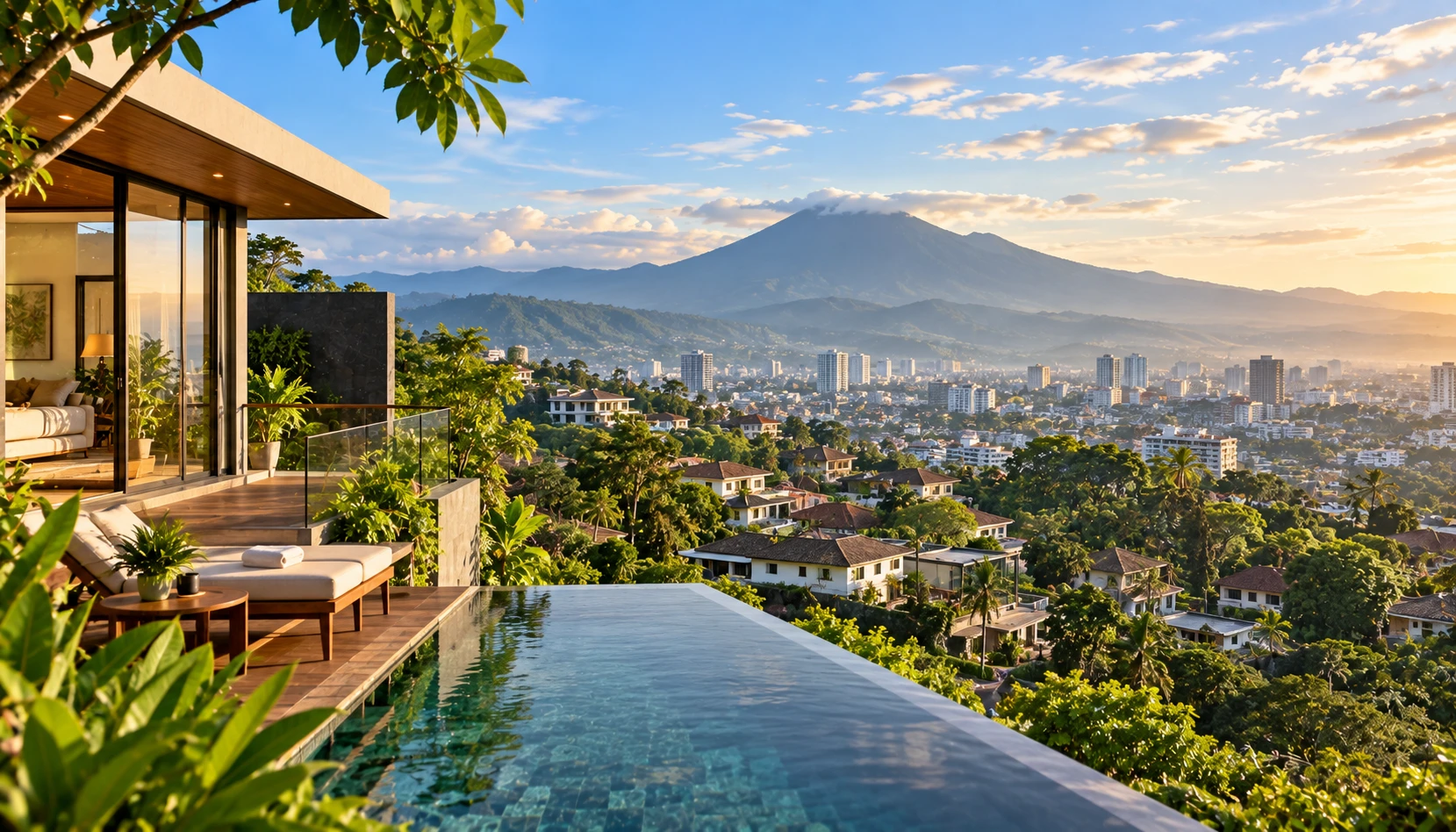
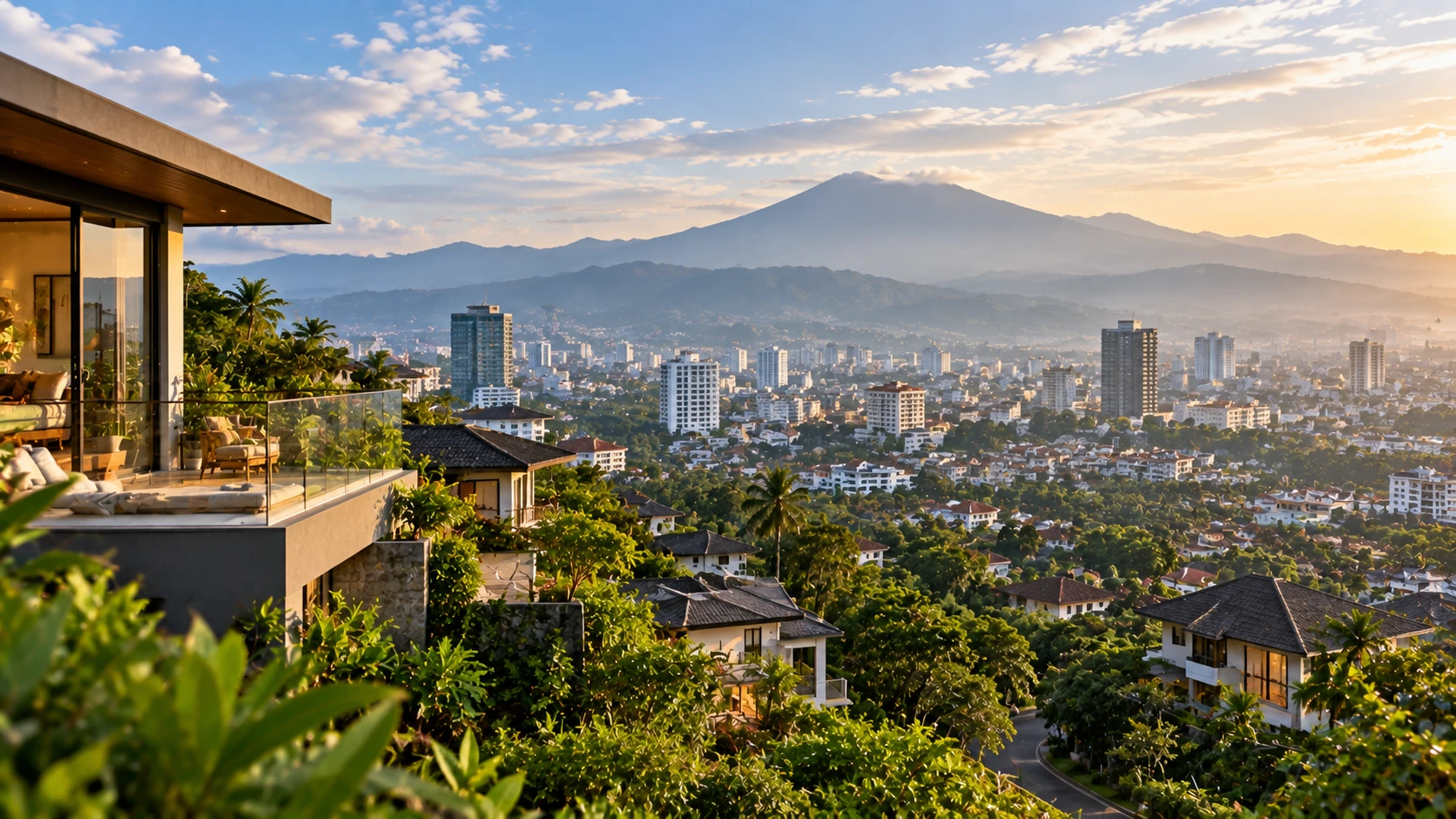
Bandung sits in the highlands of West Java, a couple of hours inland from Jakarta and several hundred metres above sea level. The altitude is the point: it is markedly cooler than the coast, which is why the Dutch built here and why Jakartans still come at weekends.
It is also a major university city, which sets the rental market more than tourism does. Students, academics and young professionals produce steady demand for small units near the campuses, and that demand does not fluctuate with a holiday season.
The high-speed line from Jakarta cut the journey from a long road trip to well under an hour, and that is the most significant thing to happen to Bandung property in years.
It made a second home here realistic for Jakarta households and pulled attention toward the districts near the station on the eastern edge, which were farmland and light industry not long ago. The station area is the one part of the city driven by speculation rather than by residents, and it should be read that way.
The city reads north to south, and altitude tracks with price almost exactly:
| Area | Character | Who it suits |
|---|---|---|
| Northern hills | Cool, green, villas and weekend houses, views | Second homes, families wanting space |
| North-central | Universities, cafes, apartments, walkable pockets | Students, academics, rental investors |
| Colonial centre | Heritage buildings, hotels, dense and busy | Short-let, city-centre living |
| Western approach | Toll road access, hotels, commercial | Convenience over charm |
| Southern districts | Ordinary residential, more affordable | Local families, long-term value |
| Eastern edge | Planned townships and the rail station | New build, longer horizon |
North is cooler, greener and dearer; south is warmer, flatter and cheaper. That single axis explains most of the price map.
This is where the money is and where the weekend-house market lives. Higher ground means cooler nights, mist in the mornings and views down over the basin.
It is also where the traffic problem is worst, because the same roads carry residents and the weekend influx from Jakarta. A house in the hills is bought for Saturday and paid for on Sunday afternoon, when getting back down takes far longer than the map suggests.
North-central Bandung is the most consistently rented part of the city. Small apartments and rooms near the campuses let steadily, and the tenant turnover follows the academic calendar rather than the tourist one.
Yields here are modest and reliable rather than exciting, which is the opposite of the Bali pattern. Demand is deep but the ceiling is low: student tenants have a budget, and no amount of finish moves the rent far above it.
The historic core has genuine architectural quality and is the reason the city was once called the Paris of Java. Some of it is beautifully kept and some of it is not.
Heritage buildings carry restrictions on alteration, and old structures carry the usual problems of old structures. A heritage address is a commitment rather than a bargain, and the renovation cost is rarely what the photographs suggest.
The rules are national, so the position is the same here as anywhere in Indonesia: freehold in the strongest form is not available to foreigners, and what remains is a use right over a unit or ownership through a company.
In practice apartments are the realistic route, and what you get depends on the certificate rather than on the building's marketing. That distinction is set out in the guide to apartments and condominiums in Indonesia. Landed houses in the hills are largely a domestic market and stay that way.
Bali has agencies, lawyers, notaries and developers who work with foreign buyers every week. Bandung does not, because almost nobody asks.
The consequences are practical. Fewer English-speaking professionals, fewer developers familiar with foreign ownership structures, and documentation processes that assume an Indonesian purchaser. Budget more time and more legal cost than the same purchase would take on Bali, and expect to explain your own requirements.
This decides whether an investment makes sense, and it is nothing like the coastal picture:
Short-let here means a domestic weekend, not an international holiday, which means lower rates, a two-night pattern and five quiet days.
They are not comparable propositions, and treating them as alternatives leads to disappointment on both sides.
Bali offers foreign-facing demand, established structures and high but volatile short-let income — the dynamics described in the picture of investment in the Canggu area. Bandung offers a deep domestic market, lower entry prices, steadier but smaller yields and far less liquidity for a foreign seller. The buyer pool at exit is the real difference: on Bali you sell to another foreigner, here you sell to an Indonesian family.
The city sits in a basin with limited road capacity and absorbs a large weekend influx. Congestion is not a rush-hour phenomenon here; it is a Friday-to-Sunday condition.
Test any address on a Saturday afternoon, not on a Tuesday morning. A location that is fifteen minutes from the centre midweek can be an hour at the weekend, and for a weekend house that is exactly the wrong way round.
Cooler and wetter than the coast, with real rainfall in the wet months and persistent damp in the hills. Air conditioning matters less here than almost anywhere else in the country.
Damp, drainage and mould matter more. Hillside plots raise the question of how water moves across the land and what happens to it in a heavy month. View a hillside property during rain, not in dry weather — the same instruction that applies anywhere in Indonesia and matters more on a slope.
The checks do not change because the city is different. Certificate type, whether it matches the building, the term of any right, unregistered alterations, boundaries and access.
What changes is that fewer people here will run those checks for you as a matter of routine. The recurring failure modes are set out in the overview of the main risks when buying property in Indonesia. Bring your own lawyer rather than relying on the seller's notary.
The climate suits children and the city is calmer than Jakarta. What is thinner is the international-school choice, which is narrow compared with the capital or with Bali.
Medical care is good by regional standards, with large hospitals and a medical faculty, though specialist cases still head to Jakarta. The sequencing questions for a family move are the same ones set out in the guide to moving to Indonesia with children. Settle the school before the district, as everywhere.
It is a real answer for some buyers and a poor one for others, and the dividing line is clear:
This applies everywhere and applies double in a city with no foreign-buyer infrastructure. Spend a few months here before committing money.
You will learn the traffic, the weekend rhythm, which hills are pleasant and which are cut off, and whether the cooler climate suits you as a daily condition rather than as a holiday. Include a wet month in that period. The hills in February are a different place from the hills in July.
Can a foreigner buy property in Bandung?
Under the same national rules as anywhere in Indonesia: a use right over a unit held personally, or ownership through a company. Apartments are the realistic route. Landed houses in the hills are effectively a domestic market and stay that way.
Is it cheaper than Bali?
Generally yes, often substantially, because prices are set by domestic buyers rather than by international demand. The trade-off is liquidity: your eventual buyer is an Indonesian family, not another foreigner, and that changes both the price and the time to sell.
What about rental income?
Steady and modest. The tenants are students, young professionals and domestic weekenders, so demand is deep but the ceiling is low. Anyone expecting Bali-style short-let yields will be disappointed, and anyone wanting predictability may not be.
Did the fast rail change things?
Substantially. Jakarta is now under an hour away, which made second homes here realistic for capital households and shifted attention to the districts near the station. That area is driven by speculation rather than by residents, so read it accordingly.
Which area should I look at first?
Depends entirely on the purpose. Cooler living and weekend houses point north into the hills; rental investment points to the university belt; new build and a longer horizon point east toward the station. Decide the purpose before the district.
Bandung answers some questions well and others badly, and the two are easy to tell apart once the purpose is stated. DDA Real Estate is a real estate agency working in Indonesia, and our work is concentrated on Bali, where the structures, the professionals and the foreign-facing demand already exist. We say that plainly rather than presenting every Indonesian city as an equivalent opportunity.
Look at our offers in Bali and leave a request: tell us what the property is for and over what horizon, and we will set out honestly where that is best answered — including when the answer is somewhere we do not sell.