Off-plan properties
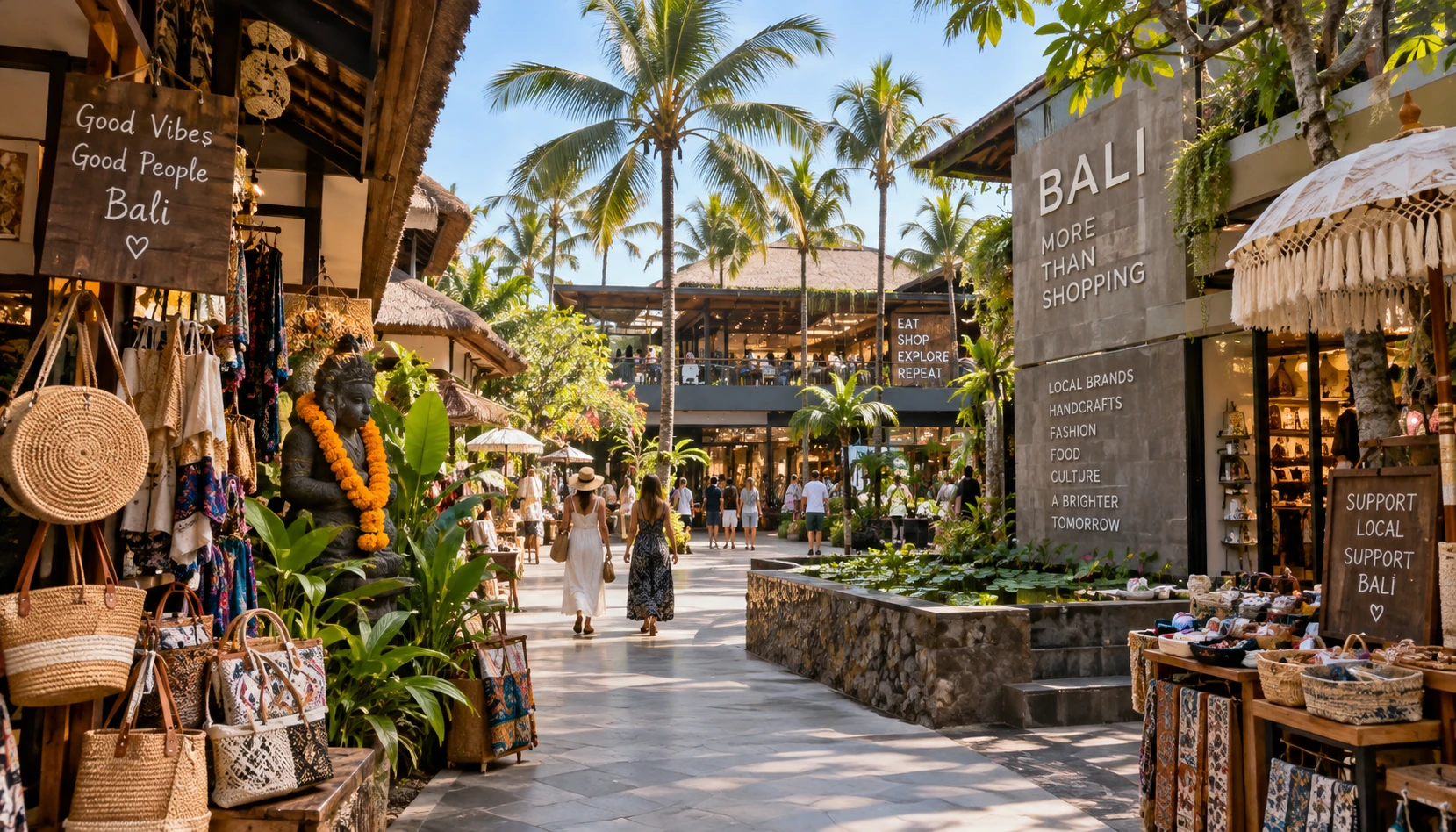
On Bali the shop you use is decided by the hour, not by the district. The real markets are a dawn event, largely finished before most visitors have had breakfast.
Arrive at the same building at ten and you are in a souvenir stall. The produce, the prices and the people who set them left hours ago, and what remains is the version arranged for you.
Below is what each kind of shop is actually for, when it works, and why shopping access is a housing question the listings never mention. Opening patterns vary and change, so treat this as the rhythm rather than a timetable.
The brief says malls and markets, but the island runs on five layers, and confusing them is what makes newcomers think everything is either overpriced or unavailable:
| Type | What it is for | When it works |
|---|---|---|
| Traditional market | Produce, fish, meat, flowers, offerings | Dawn to mid-morning |
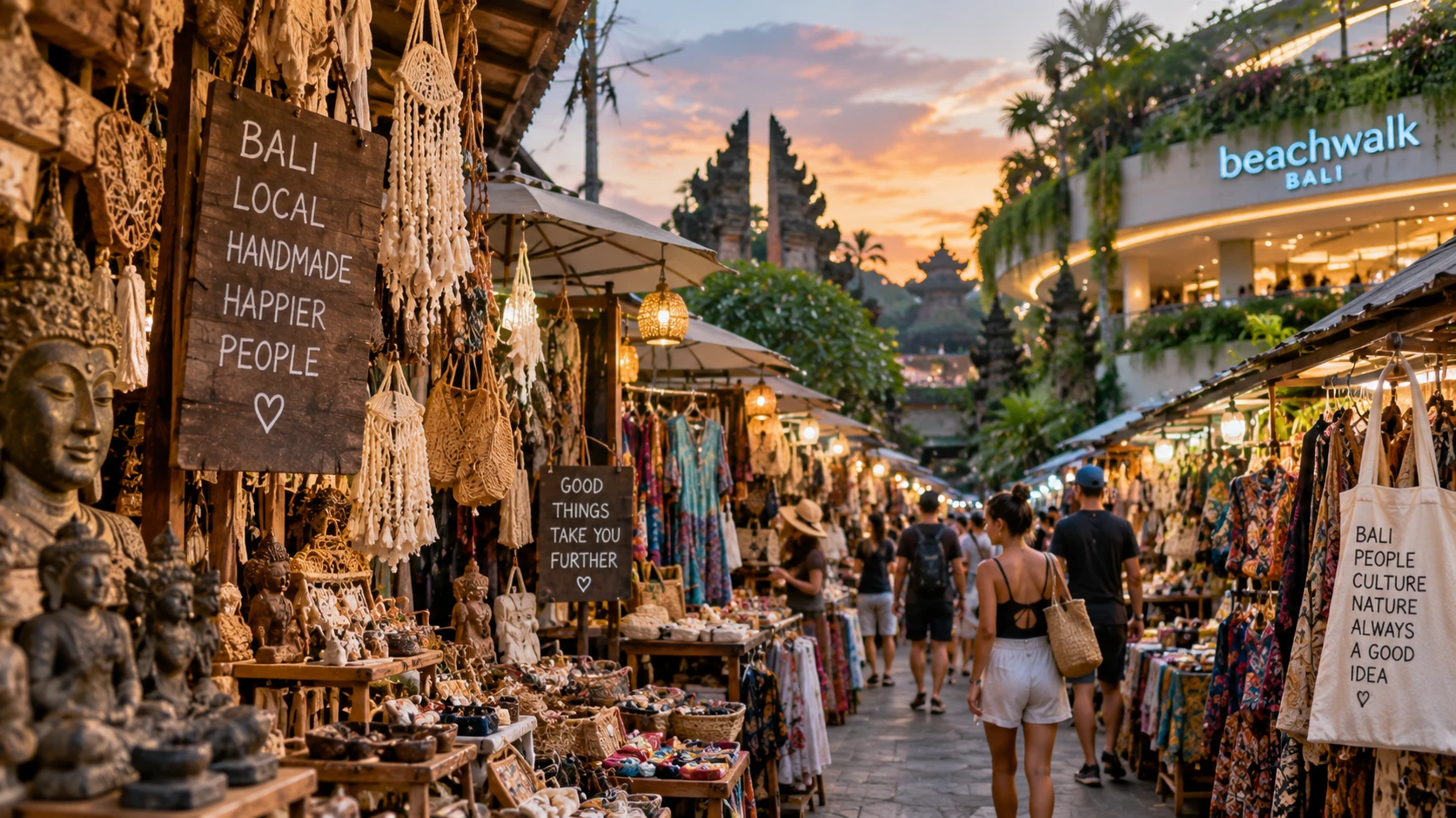
| Art and souvenir market | Crafts, textiles, gifts, bargaining | Late morning into evening |
| Minimarket chain | Everyday items, bills, top-ups, cash | Nearly always |
| Supermarket | Imported goods, western brands | Daytime, in the south mainly |
| Shopping mall | Clothing, electronics, cinema, air conditioning | Late morning to late evening |
Most daily life happens in the third row, which is the one visitors pay least attention to.
A traditional market opens in the dark and does its serious trade before the heat. Restaurants and households buy then, and by nine the best of it has gone.
Prices at that hour are the local ones, because the buyers are local. Go at six, not at ten, and the same market is a different place — cheaper, busier and far more interesting than the version photographed by tour groups.
The famous market in the island's cultural centre is the clearest example. Early in the morning it is a produce market for the town; by mid-morning the stalls have changed hands and it sells scarves and wooden carvings.
Visitors who go once at the wrong hour conclude that it is a tourist trap, which is half right and half a scheduling problem. That double life is part of what daily rhythm in Ubud looks like. If a market disappoints, try it again at first light before writing it off.
Two chains cover the island densely, and treating them as convenience stores understates what they do. They are where a great deal of ordinary administration happens.
Utility bills, mobile top-ups, transport cards, parcel pickup, cash withdrawal, and increasingly payment for online orders. For a resident the nearest minimarket matters more than the nearest mall, and its absence from a neighbourhood is a genuine inconvenience rather than a minor one.
Almost entirely in the south, around the airport, the capital and the beach strip. That is the whole map, and it has consequences for everyone living elsewhere.
The cultural centre inland has none. The north and east have none. Anyone living outside the southern belt treats a mall visit as a planned trip rather than an errand. Malls here are also cooling and parking as much as retail — in the wet season and at midday that matters more than the shops inside.
Setting expectations helps. The selection is narrower than in a large Asian city and prices for imported brands are higher, because they are imported.
What malls do well here is electronics, phone repair, banking, cinema, pharmacy chains and children on a rainy afternoon. They are a services building with shops attached rather than a shopping destination, and judged that way they are useful.
Larger supermarkets carry the western products expatriates look for, and the price difference against local equivalents is substantial rather than marginal.
Cheese, cured meat, breakfast cereal, wine and anything requiring a cold chain all carry it. Alcohol carries excise on top. The fastest way to cut a grocery bill here is to switch categories, not shops: local fruit, local coffee, local snacks are cheap, and no supermarket will make an imported one cheap.
A pattern forms within the first month and it is much the same for everyone:
Nobody does a single weekly shop in one place. The island does not work that way, and trying to make it costs money.
It applies at art and souvenir markets, with street vendors and for services agreed on the spot. It does not apply at produce markets, minimarkets, supermarkets or malls.
Confusing the two is the commonest visitor error and it goes wrong in both directions: haggling over vegetables is rude, paying the first price for a carving is unnecessary. Bargain cheerfully and stop when the seller stops smiling — the point is a price both sides accept, not a victory.
Before major religious dates the markets change entirely. Flowers, fruit, palm leaf and everything used for offerings surge in volume and in price, and ordinary shopping becomes slower.
Some shops close for a day or more. On the island's day of silence everything closes, including the airport. The calendar behind this is covered in the guide to festivals worth experiencing on the island. Shop the day before a major ceremony, not on it.
Two kilometres in the south can take half an hour at the wrong time, and a supermarket run turns into an afternoon. This shapes where people shop more than price does.
Most residents drive or ride to anything larger than a minimarket, and parking at the markets is limited and chaotic early in the day. What driving here involves is set out in the guide to car rental on the island. Measure the trip in minutes at the hour you would actually go.
Furnishing is a different exercise from grocery shopping, and it is cheaper here than most arrivals expect if you go to the right places.
Furniture workshops make to order at reasonable cost, and the craft villages specialise by trade — one for woodwork, another for stone, another for silver. Made-to-measure is often cheaper than imported ready-made, and the wait is a few weeks rather than a few days.
Worth knowing before you arrive, because these are the gaps people bring back in a suitcase:
Online ordering from elsewhere in the country covers much of this, though delivery to the island takes longer and customs applies to anything from abroad.
This is the part that belongs in a property decision and rarely appears in a listing. What is within ten minutes of an address changes daily life more than the size of the kitchen.
In the southern belt everything is close. Inland and north, a supermarket run is a scheduled trip and the minimarket becomes the daily shop. Add the nearest market, minimarket and supermarket to the viewing checklist — the same list as the other practical criteria for choosing property on the island.
Malls and supermarkets take cards. Markets, warungs and small shops do not, and a card machine in a craft stall usually comes with a surcharge.
Local transfer apps are widely accepted in shops but rarely at market stalls. Carry small notes for markets: a seller at six in the morning may genuinely have no change for a large one, and the transaction stops there.
When do the markets open?
The traditional ones start in the dark and do their serious trade before the heat, with the best of it gone by around nine. Art and souvenir markets run to a normal daytime schedule. Going at the wrong hour is why the same market gets both glowing and dismissive reviews.
Are the malls worth visiting?
For electronics, phone repair, banking, pharmacies, cinema and a cool afternoon in the wet season, yes. For fashion and imported goods the selection is narrower and dearer than in a large Asian city. Treat them as a services building with shops attached.
Should I bargain?
At art and souvenir markets and with street vendors, yes. At produce markets, minimarkets, supermarkets and malls, no. Haggling over vegetables reads as rude, and paying the first price for a carving is simply unnecessary.
Why is imported food so expensive?
Because it is imported, and alcohol carries excise on top. Changing supermarket will not fix it. Switching categories will: local fruit, coffee and snacks are inexpensive, and that is where a grocery bill actually falls.
Can I live somewhere without a supermarket nearby?
Many people do, using the local market and the minimarket for daily needs and making a larger trip occasionally. It works, but it is a real change of routine, so decide it deliberately rather than discovering it after signing a lease.
It is a smaller question than the price and it changes the day more often. DDA Real Estate is a real estate agency working in Indonesia, and the everyday surroundings of a property are part of what we set out: which market is the working one and at what hour, where the nearest minimarket is, and what a supermarket run from that address actually takes in traffic.
Look at our offers in Bali and leave a request: we will shortlist addresses that suit how you intend to live day to day, describe what is genuinely within reach rather than what a map suggests, and say plainly when a location means driving for everything.