

Indonesia KITAS and Visa Guide 2026: E-Series Explained
Bali
EN
$
ft²
Other articles

Temporary Stay Permit (KITAS) and visa regime in Indonesia in 2026

Natalia Gubareva The author of the article, the Broker
#Blog DDA
12 September 11403 view

Indonesia has overhauled its immigration framework, replacing the old C-series permit codes with a purpose-based E-series classification and linking the system to the Online Single Submission (OSS) platform. The result is a clearer, more digital process for foreign nationals. Anyone planning an extended stay, a job or an investment in Indonesia needs to understand how the current visa and KITAS rules work.

How the Indonesian visa system is organised

Indonesia divides its visas into two groups: visit visas for short trips and temporary stay visas – the E-series – for longer residence. The old C-series codes, including those for employment, investors, family reunification and retirees, have been retired. The restructuring was designed to simplify the system, improve compliance tracking and integrate immigration with other government services. Applicants now choose from a clearer set of purpose-based categories.

Short-term and visit visas

Travellers planning a short visit have several options depending on nationality and the purpose of the trip:

  • Visa-free entry. Citizens of certain countries can enter without a visa for up to 30 days.
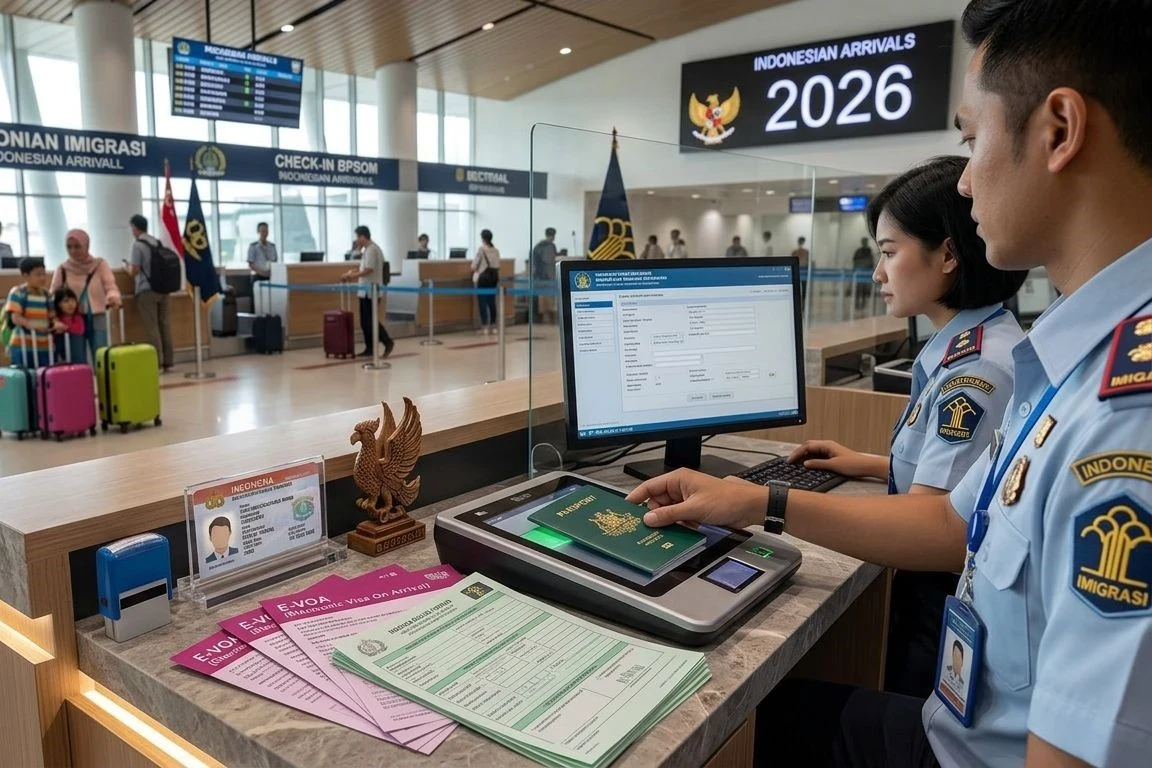
  • Electronic Visa on Arrival (e-VOA). Obtained online in advance or at designated entry points on arrival. It is valid for 30 days, with one extension of another 30 days.
  • Single-entry visit visa. Gives an initial stay of up to 60 days and can be extended, allowing a total stay of up to 180 days.

For most tourists the e-VOA is the easiest option, while the longer visit visa suits those planning several months on the island.

KITAS categories

For longer residence, the KITAS is Indonesia's main temporary stay permit. Each category is built around a specific purpose. The key types are:

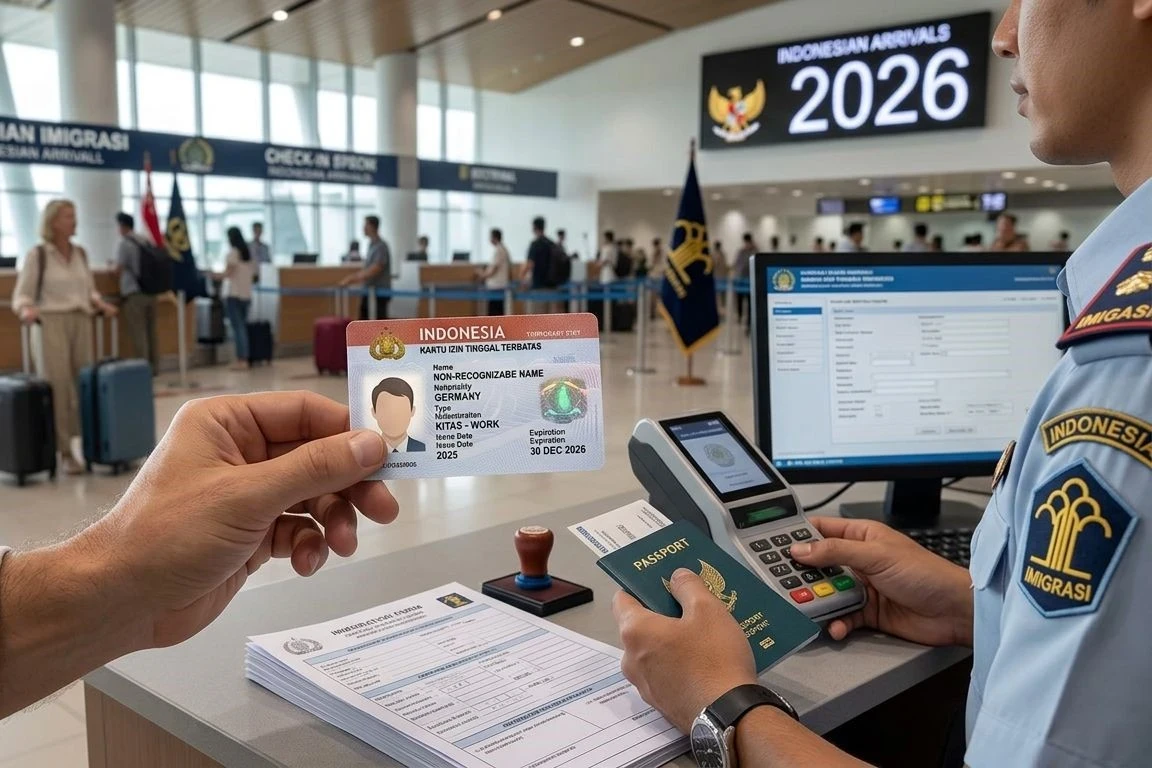
  • Work KITAS (E23). For foreign employees hired by a company registered in Indonesia – a PT, PT PMA or representative office. Issued for six months, one year or two years.
  • Investor KITAS (E28A). For shareholders or directors of a PT PMA who are not involved in day-to-day operations. Issued for two years and renewable.
  • Remote Worker KITAS (E33G). For people employed by companies outside Indonesia who work remotely from the country. Valid for one year.
  • Second Home Visa (E33). For those who want to live in Indonesia long-term without local employment – often retirees or investors.
  • Golden Visa (E28B/C/D). For high-net-worth individuals, senior executives and exceptional talent making significant investments. Available for five or ten years.
  • Retirement KITAS (E33F). For applicants aged 55 or over with a stable pension or income.
  • Family or Spouse KITAS. For foreigners married to Indonesian citizens or joining a family member who holds a KITAS.

Work KITAS (E23)

The Work KITAS is the most common permit for foreign employees. Before a company can sponsor a foreign worker, it must have its Foreign Manpower Utilisation Plan (RPTKA) approved. The plan confirms the position, the need for foreign expertise, the length of employment and compliance with labour rules.

RPTKA approval is a mandatory first step before the company can apply for the employee's limited stay visa (VITAS), which is converted into a KITAS once the employee arrives. Work KITAS are usually issued for six months to two years and can be renewed.

Investor KITAS (E28A)

The Investor KITAS is for foreign shareholders who want to live in Indonesia and oversee their investment. Applicants must be registered shareholders in a PT PMA, be sponsored by that company and hold a valid passport. The permit usually gives a one- to two-year stay, multiple entries, the ability to open a local bank account and the right to sponsor dependants.

After three to five years in this status, it can lead to permanent residence (KITAP). The Investor KITAS does not, however, give the right to work in an operational role: active management or salaried positions require authorisation through the company's RPTKA.

Remote Worker KITAS (E33G)

The E33G was introduced for the growing number of digital nomads and remote workers. Applicants must show an annual income of at least 60,000 USD, a contract with an employer outside Indonesia and a bank balance of at least 2,000 USD. The permit is valid for one year, and the standard government fee is 7 million rupiah – roughly 430 USD.

Second Home Visa (E33)

This category is for foreigners who want to live in Indonesia for five or ten years without a local employer or sponsor. Applicants must show funds of at least 2 billion rupiah – around 130,000 USD – typically held in an Indonesian state bank. The visa is aimed at retirees, investors and anyone who wants to settle in the country without working locally.

Golden Visa

The Golden Visa gives five or ten years of residence in return for a qualifying investment. Individuals can qualify by investing from around 5 billion rupiah – roughly 300,000 USD – in approved assets such as government bonds or company shares. Companies can apply by establishing a business in Indonesia.

Unlike a standard Work KITAS, which is tied to one employer, the Golden Visa lets the holder run several commercial projects at once.

Application process

Getting a KITAS involves several steps. The fastest route is to obtain a limited stay visa (VITAS) first. After arrival, the VITAS must be converted into a KITAS within 30 days.

The general requirements are:

  • a passport with at least 18 months of remaining validity;
  • a completed application form and passport photographs;
  • payment of the processing fee;
  • supporting documents for the chosen category – an employment contract, proof of investment, a marriage certificate and so on.

The path to permanent residence (KITAP)

After holding a KITAS for a number of consecutive years – usually three to five, depending on the category – foreign nationals can apply for a KITAP, Indonesia's permanent stay permit. It is valid for five years.

To qualify, applicants generally need:

  • continuous lawful residence for the required period;
  • a valid sponsor;
  • proof of an address in Indonesia;
  • evidence of financial stability;
  • a passport with enough remaining validity;
  • a clean immigration record, without deportation history.

Indonesia's visa and KITAS system now offers a route for most purposes – work, investment, remote work, retirement or long-term residence. The move to the E-series has made the process more transparent, but choosing the right category and meeting its specific conditions is still what determines whether the stay goes smoothly.

If a longer stay in Bali is part of your plan, DDA Real Estate can help you find a home that fits both your residence status and the way you intend to live on the island.

Popular
5 June 4329171 view
Dubai Rent Prices 2025: Average Apartment Rental Costs in Dubai Dubai's rental market continues its upward climb in 2025, driven by population growth and limited new supply, pushing average prices up by 10%

#Blog DDA
2 July 2491650 views
DLD Fees in Dubai: Everything You Need to Know Buying property in Dubai? Don't let hidden fees surprise you! Our essential guide breaks down ALL Dubai Land Department (DLD) fees
#Blog DDA
23 November 1956087 views
How to Buy a SIM Card in Turkey in 2026: Prices, IMEI Registration, eSIM Options, and Best Mobile Operators Overview of mobile operators, available types of SIM cards, and home Internet providers
#Blog DDA
5 July 1823913 views
How Much is the Real Estate Agent Commission in Dubai? Find out how much real estate agent commission costs when buying property in Dubai.
#Blog DDA
5 February 1478925 views
How Foreigners Can Own Property in Bali: Understanding PT PMA (2025) Foreigners can't own freehold land in Bali, but a PT PMA (foreign-owned company) allows secure property ownership under Hak Guna Bangunan (HGB) or Hak Pakai (HP) rights
#Blog DDA
28 August 1245321 view
Oqood vs Title Deed in Dubai: Key Differences You Must Know Buying property off-plan in Dubai? Oqood registration is mandatory to secure your ownership rights.
#Blog DDA