Best Sandy Beaches Antalya 2026: Complete Guide
971 56 596-5009
day and night
Dubai
EN
$
ft²
Other articles

Best Beaches of Antalya 2026: Where Are the Sandy Beaches?

Alexandr Khromchenko The author of the article, the Broker
#Blog DDA
24 July 14679 views

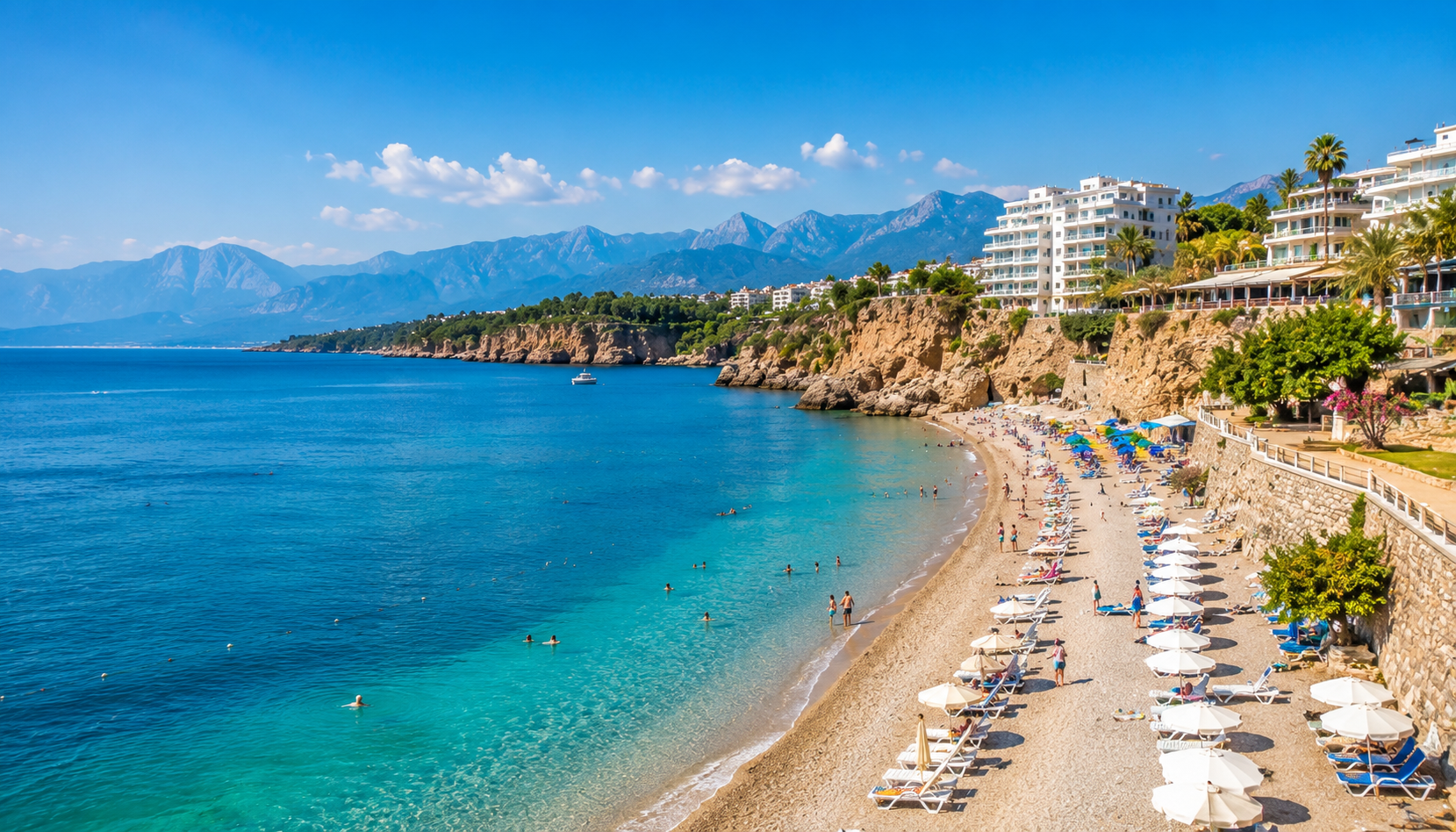
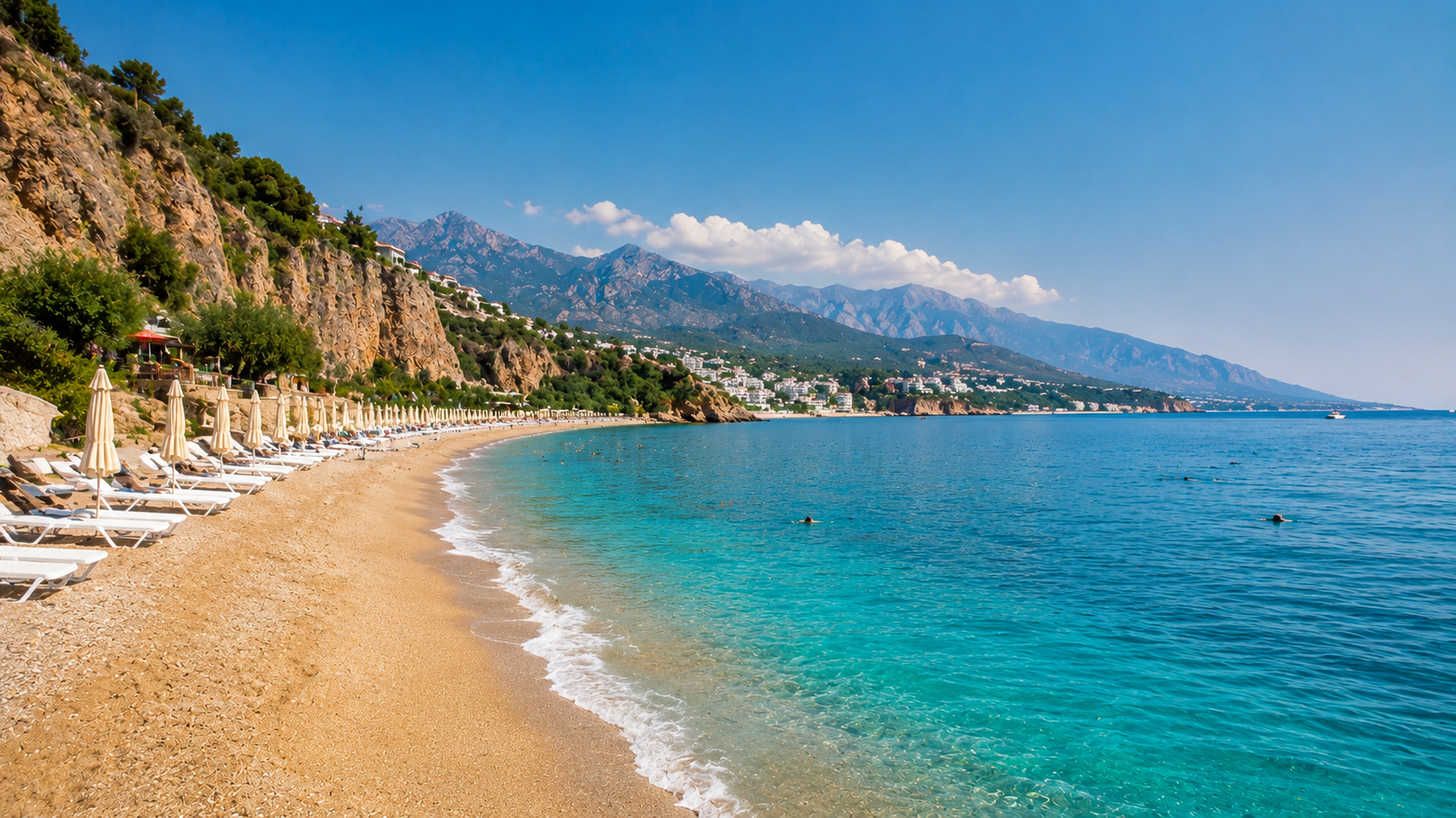
Konyaaltı — the beach on every Antalya postcard, the one with the mountains behind it — is not sand. It is pebble, ranging from pea-sized to fist-sized, and beach shoes are not optional.

This catches out most first-time visitors, and it is not a marketing trick. Antalya’s coast is split geologically: the western half is pebble, the eastern half is sand, and the dividing line runs almost through the middle of the city.

This guide maps which beaches are genuinely sandy, why the split exists, what certification actually tells you, and how the same divide shapes property values along the coast. Prices and fees reflect August 2026 and change seasonally.

Why the Coast Is Split

The explanation is geological rather than administrative, and once you know it the map makes sense.

Antalya sits between the Taurus mountains and the sea, and rivers descending from those mountains carry different loads to different stretches of coast. Fast-flowing rivers deposit heavier rock and gravel; slower deltas deposit fine sand.

That single mechanism explains the whole coastline. Konyaaltı is fed by the fast Düden system and is therefore pebble. Lara sits in a calmer delta area a few kilometres east and is therefore sand. Neither is an accident of development.

Broadly: west of the city — Konyaaltı, Kemer, out towards Olympos — is dramatic mountain-meets-sea geography with pebble and gravel, and notably clearer water because pebbles do not cloud when stirred. East — Lara, Belek, Side, Alanya — is flatter coast with the wide sandy beaches most people picture. Small sandy coves exist inside the pebble zone, and coarser sand appears near eastern river mouths, so local variation is real.

The Sandy Beaches Inside the City

Two, and they are quite different propositions.

Lara

Fourteen kilometres of fine golden sand running east from the airport peninsula, gently sloping, wide enough for umbrellas and games. Blue Flag certified, lifeguarded through the season.

This is the resort corridor — most of Antalya’s large all-inclusive hotels sit along it, so if you are booked into one of them, this is your beach whether you chose it or not. The annual sand sculpture festival runs here from spring through autumn and is worth an afternoon with children regardless of where you are staying.

Lara also has something the western beaches cannot offer: an eastern aspect, and therefore sunrise over the Mediterranean.

Belek

Thirty kilometres east of the airport, twenty kilometres of soft golden sand backed by pine forest. Wider than Lara, quieter, and distinctly more expensive.

The character comes from golf: more than fifteen championship courses sit between the resorts, and that ratio shapes the atmosphere into something more restrained than a typical resort strip. The hotels here are at the top of the Mediterranean range and priced accordingly.

One ecological note that affects visitors directly: these beaches are loggerhead turtle nesting sites, and sections are roped off at night through the summer nesting season. It is a constraint and also a genuine attraction.

Konyaaltı: Famous, and Not Sandy

Worth its own section because the gap between reputation and reality is the single most useful thing in this article.

Seven kilometres of pebble, Blue Flag certified, with a well-maintained promenade, restaurants, showers, changing rooms and tram access. The Bey mountains rise directly behind and the water is exceptionally clear precisely because there is no sand to cloud it.

Works well forWorks badly for
KonyaaltıAdult swimmers, photographers, day visits from the old townYoung children, long sunbathing, bare feet
LaraFamilies, resort holidays, sunriseAnyone wanting to walk in from the historic centre
BelekLuxury stays, golf, quietBudget travel, spontaneity

The honest verdict: Konyaaltı is a very good beach that happens not to be a sandy one. Bring shoes, appreciate the water clarity, and do not plan a day of lying on it — the pebbles get genuinely hot.

The Beaches Worth Travelling For

Four outside the city, each with a different reason to make the journey.

  • Kaputaş. A small cove of fine sand between limestone cliffs, about 200 kilometres west near Kaş, reached by 187 steep steps from the road or by boat. Only 150 metres wide, so it fills fast — before ten or after four, and ideally in May or October.
  • Patara. Eighteen kilometres of continuous sand, the longest in Turkey, bordering the ancient Lycian city of the same name. A protected turtle nesting site, so facilities are deliberately minimal and the beach closes at sunset. Entry around 100 lira covers the ruins too.
  • Olympos. Inside a coastal national park about 80 kilometres south-west, at a river mouth, with tree-house accommodation and Lycian ruins scattered through the forest. Mixed sand and pebble rather than purely sandy, and the natural flames on the hillside above are the real draw.
  • Cleopatra Beach. Two kilometres of pale, exceptionally soft sand in Alanya, 130 kilometres east, with the castle above it. Blue Flag certified, full amenities within walking distance, and consistently ranked among the best sandy beaches in the country.

Cleopatra is the one that justifies the drive if you only make one. What the town around it is like, and what it costs to live there, is covered in our guide to Alanya.

Matching Beach to Purpose

Sorted by what people actually come for rather than by geography.

If you wantGo toWhy
Sand for young childrenLara or CleopatraFine sand, gentle slope, calm entry
The clearest waterKonyaaltı or the western covesPebble does not cloud when stirred
Quiet and spaceBelek or PataraWide beaches, low density, pine or dunes behind
A photographKaputaşA cove between cliffs, turquoise, and 150 metres wide
Sunrise over the seaLaraThe only eastern-facing stretch in the city
History with the swimPatara or OlymposLycian ruins on the beach itself
Everything within walking distanceCleopatraSoft sand, castle above, a town around it

One pattern runs through that table. The beaches that photograph best are rarely the ones that suit a week with a family, and the ones with the clearest water are the least comfortable to lie on. Choosing by image is how people end up on the wrong stretch of an otherwise excellent coast.

What Blue Flag Does and Does Not Tell You

Antalya Province holds more than two hundred Blue Flag beaches, and Turkey has more than any Mediterranean country in Europe. The certification is meaningful — 33 criteria covering water quality, environmental management, safety and facilities, with lifeguards, first aid, clean facilities and accessibility all required.

What it says nothing about is whether there is sand. Konyaaltı is Blue Flag and pebble. The certification and the beach composition are separate questions, and conflating them is exactly how people end up on a pebble beach expecting golden sand.

Practical Planning

When you go changes the experience more than which beach you pick.

PeriodConditionsTrade-off
June – SeptemberWater 26 – 29°C, hottest airPeak crowds and prices; book months ahead
April – May, October – NovemberAir 22 – 26°C, water 20 – 24°CThe best balance — fewer people, better rates
December – MarchSwimming rarely comfortableMild light and empty beaches; suits walking and viewing trips
  • Konyaaltı and Lara. Free public access. Beach clubs charge 100 to 300 lira per person including sunbed and umbrella.
  • Belek. Largely through the resorts; public sections exist but are limited, and day passes start around 200 lira.
  • Patara. Around 100 lira including the ruins, with minimal facilities by design to protect the nesting sites.
  • Kaputaş. Free, and no facilities at all. Bring water.

What the Sand Divide Means for Property

The same geology that determines where you swim determines where the premium sits.

Beachfront property near the sandy corridors — Lara, Belek, and around Cleopatra in Alanya — runs roughly 2,500 to 5,000 euros per square metre. The sand is a substantial part of that, because it drives the tourist demand that underpins both resale and rental.

For rental income the divide matters more than for occupation. Short-term letting in premium sandy locations can produce 6 to 10 per cent annually across the season, with rates dropping sharply in winter and licensing requirements applying to short stays. A pebble-beach address at the same price per metre will not command the same nightly rate, whatever else it offers.

Two further considerations for foreign buyers. Property purchase is straightforward and open to foreigners — what the title deed establishes is set out in our guide to obtaining a tapu. And investment at 400,000 dollars held for three years opens the citizenship route, a threshold that beachfront apartments in these corridors frequently sit within. How rental income and ownership are taxed is covered in our guide to taxes in Turkey.

For those weighing the region as somewhere to live rather than let, the climate and the established communities are the draw, and the practical picture is set out in our analysis of Turkey as a retirement destination.

If You Want a Different Coast

One comparison worth making before settling on the Mediterranean, because the alternative is genuinely different rather than merely cheaper.

Turkey’s Black Sea coast trades the guaranteed sun for green mountains, cooler summers and far fewer people, with a shorter and less certain swimming season. It suits a different holiday and a different buyer, and the comparison is set out in our guide to the Black Sea resorts.

Frequently Asked Questions

Are all Antalya beaches sandy?

No, and this is the most common misconception about the city. The main urban beach is pebble. Sandy beaches sit east of the centre — Lara and Belek within reach, Alanya further along.

Which is the best sandy beach?

Within the city, Lara: fourteen kilometres of fine sand, Blue Flag, and the resort corridor. Across the province, Cleopatra Beach in Alanya is the strongest candidate, and Patara offers the longest continuous stretch at eighteen kilometres.

Can you swim comfortably at Konyaaltı?

Yes, with beach shoes. The water quality and clarity are excellent and the mountain backdrop is the best in the city. The pebbles are hard underfoot and get hot, so it suits swimming rather than sunbathing.

Are the beaches good for children?

The sandy ones are — calm water, gentle slopes, something to dig. Pebble beaches are harder work with small children, both underfoot and entering the water.

When should I go?

June to September for the warmest water and the fullest beaches. May and October for the best overall balance. Winter suits property viewing and coastal walking rather than swimming.

Does Blue Flag mean the beach is sandy?

No. It certifies water quality, safety and facilities, and says nothing about composition. Check the beach type separately from the certification.

Key Points to Remember

  • The postcard beach is pebble. Konyaaltı is Blue Flag, spectacular and not sandy. Bring shoes.
  • The split is geological. Fast rivers west deposit gravel, slow deltas east deposit sand — which is why the divide runs through the city.
  • East for sand, west for water clarity. Lara and Belek for the beach most people picture; Konyaaltı and beyond for the clearest water.
  • Certification and composition are separate questions. Blue Flag covers quality and facilities, never the surface underfoot.
  • Sand carries a rental premium. The same geology that decides where you swim decides which addresses command 6 to 10 per cent in season.

Buy the Beach You Would Actually Use

Beachfront is not one category. Fourteen kilometres of sand with resorts behind it, twenty kilometres of quiet golf coast, and seven kilometres of pebble with mountains above are three different products at overlapping prices — and they let, resell and live differently. DDA Real Estate is a real estate agency in Turkey. We work along the whole Antalya coast and beyond to Alanya and Mersin, and for beachfront purchases we start from which stretch of coast actually matches how you intend to use it.

Explore our listings in Turkey and get in touch: we will show you what the same budget buys on the sandy corridors against the pebble ones, give realistic seasonal rental figures rather than annualised headlines, and arrange viewings in the months when a beach shows its true character.

Popular
5 June 4307310 views
Dubai Rent Prices 2025: Average Apartment Rental Costs in Dubai Dubai's rental market continues its upward climb in 2025, driven by population growth and limited new supply, pushing average prices up by 10%
#Blog DDA
2 July 2473128 views
DLD Fees in Dubai: Everything You Need to Know Buying property in Dubai? Don't let hidden fees surprise you! Our essential guide breaks down ALL Dubai Land Department (DLD) fees
#Blog DDA
23 November 1929627 views
How to Buy a SIM Card in Turkey in 2026: Prices, IMEI Registration, eSIM Options, and Best Mobile Operators Overview of mobile operators, available types of SIM cards, and home Internet providers
#Blog DDA
5 July 1805454 view
How Much is the Real Estate Agent Commission in Dubai? Find out how much real estate agent commission costs when buying property in Dubai.
#Blog DDA
5 February 1464813 views
How Foreigners Can Own Property in Bali: Understanding PT PMA (2025) Foreigners can't own freehold land in Bali, but a PT PMA (foreign-owned company) allows secure property ownership under Hak Guna Bangunan (HGB) or Hak Pakai (HP) rights
#Blog DDA
28 August 1228689 views
Oqood vs Title Deed in Dubai: Key Differences You Must Know Buying property off-plan in Dubai? Oqood registration is mandatory to secure your ownership rights.
#Blog DDA