How to Live in Thailand Without Depending on a Car or Motorbike
971 56 596-5009
day and night
Dubai
EN
$
ft²
Other articles

How to Live in Thailand Without Depending on a Car or Motorbike

Nikita Sokolov The author of the article, the Broker
#Blog DDA
11 October 567 views

Living in Thailand without driving is possible, but the decision starts with your address rather than your transport app. A pleasant apartment can become inconvenient when the nearest supermarket sits across a highway or the last stretch home has no safe pavement. The most useful home is one that lets you complete ordinary errands on foot, with reliable transport for everything else.

Bangkok, Phuket, Chiang Mai and smaller coastal towns offer very different levels of independence from a car or motorbike. The goal is to build a routine around walking, rail, buses, taxis and deliveries without treating any one service as guaranteed. This guide compares realistic options for residents, remote workers and people spending several months in Thailand.

What Car-Free Living Really Means

Car-free living does not mean never riding in a vehicle. It means avoiding the need to own, park, maintain or personally drive one. A workable plan combines a walkable base with two or more transport alternatives. A rail station may cover the commute while a taxi handles medical appointments and a delivery service covers heavy groceries.

Before renting or buying, list the journeys you make every week. Include groceries, exercise, pharmacy visits, work, school and social activities. A location that handles five recurring trips easily is often more valuable than a scenic address that makes every trip a negotiation.

Compare Locations Before Choosing a Home

Thailand's transport networks are uneven. Bangkok has the strongest combination of urban rail and app-based rides, while many resort areas depend more heavily on road transport. A car-free lifestyle should be assessed neighborhood by neighborhood, not by the reputation of an entire city.

Location Car-free strength Main limitation
Bangkok Urban rail, shops and ride-hailing Station access varies by street
Phuket Walkable pockets and deliveries Longer trips need road transport
Chiang Mai Compact central neighborhoods Uneven pavements and limited transit
Beach towns Local shops in selected areas Fewer transport backups

Bangkok: Build Life Around Rail

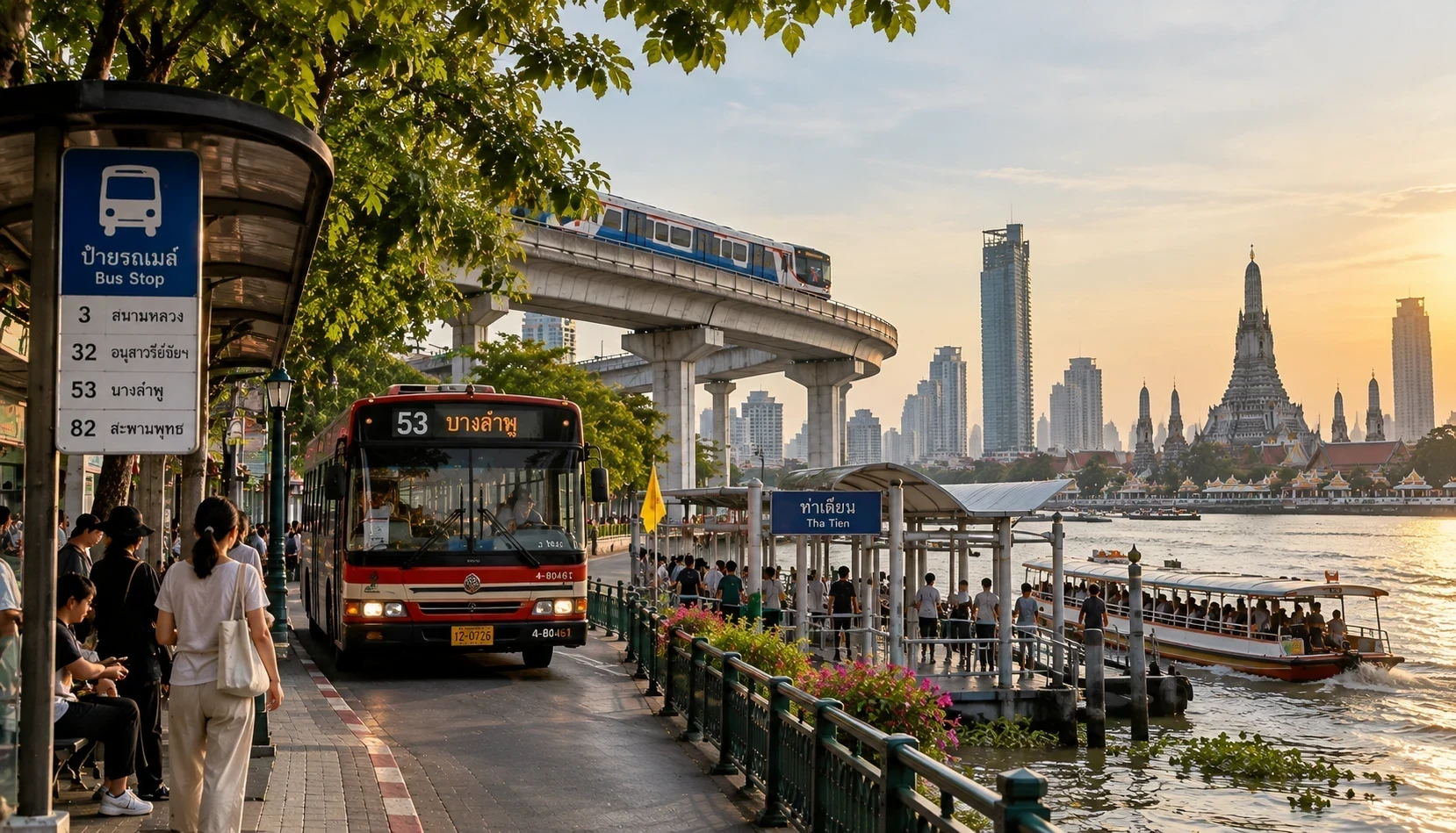
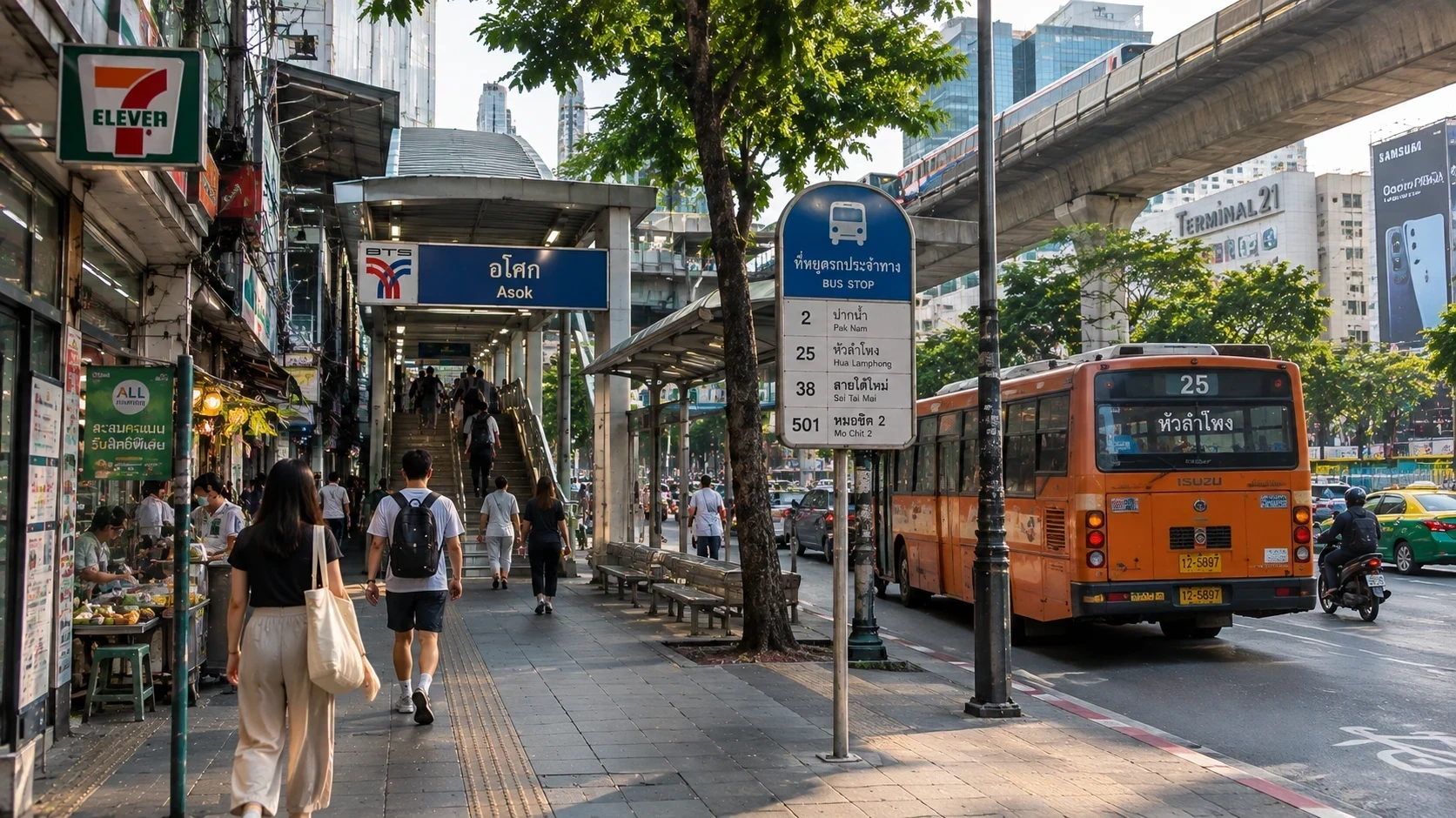
In Bangkok, the BTS Skytrain and MRT make it possible to organize work and errands without driving. However, a station shown as nearby on a map may require an unpleasant walk in heat, rain or traffic. Test the actual pedestrian route from the building entrance to the platform, including crossings, stairs and shade.

A home near a rail interchange can simplify appointments across the city, but changing lines may still take time. Choose a neighborhood with a supermarket, pharmacy and daily food options on the same side of major roads where possible.

Phuket: Choose a Compact Local Hub

Phuket has attractive areas for walking, but journeys between beaches and inland neighborhoods are often longer than they appear. Public transport does not serve every residential street frequently. Select a compact neighborhood where daily needs are already within walking distance, and budget for occasional hired rides.

A property close to cafes but far from a proper grocery store can create repeated transport costs. The guide to year-round living is useful when comparing the practical side of a Phuket address.

Chiang Mai: Think in Small Neighborhoods

Central Chiang Mai offers clusters of shops, markets, coworking spaces and cafes. The Old City and parts of Nimman can support many short trips on foot, although narrow pavements and traffic remain concerns. A compact routine matters more than proximity to a famous landmark.

Try a weekday walk to a supermarket and a nighttime return from dinner. If the route is uncomfortable at either time, a map-based estimate is not enough.

Coastal Towns: Walkability Changes by Street

In beach destinations, a hotel strip may look lively while residential streets behind it have little lighting or pedestrian space. Some quiet beach towns suit a slower lifestyle, but they may offer fewer transport backups. Choose a home with essential services nearby before prioritizing a sea view.

In low-density areas, ask how residents reach hospitals, banks and bus terminals. A calm location can still work well when these journeys are occasional and preplanned.

Walk the Route Before Signing

Map distances hide broken pavements, drainage channels, steep gradients and intersections without safe crossings. Walk each essential route in person, preferably during the hottest part of your normal day and after rain if possible.

Check the route to groceries, a pharmacy and your preferred work location. Note whether you can carry shopping comfortably and whether there is a sheltered place to wait for a ride.

Use Public Transport as the Main Network

Urban rail is the easiest backbone where it exists. In other places, local buses, songthaews and shared transport may fill part of the gap, but schedules, routes and payment practices vary. Verify current routes and operating hours locally instead of assuming a tourist map describes a daily commuter service.

Keep an alternative for the first and last kilometer. A station is less helpful if reaching it requires crossing a busy multi-lane road without a suitable pedestrian crossing.

Ride-Hailing Works Best as a Backup

App-based taxis and car rides are useful for rain, late evenings, heavy shopping and trips outside the rail network. Availability and pricing can vary with demand, weather and neighborhood. Do not base an entire household routine on instant ride availability.

Compare pickup points and test a few ordinary journeys before committing to a lease. Confirm the vehicle and driver details inside the app, and use an appropriate child seat when traveling with children.

Delivery Services Reduce Unnecessary Trips

Grocery, pharmacy and meal delivery can make a car-free routine easier, particularly during heavy rain or after a busy workday. Coverage, fees and product availability differ by address. Check your exact building and unit for delivery access before assuming a service covers the area.

Deliveries are best used to support an already practical location. They cannot replace access to urgent medical care or solve an unsafe route outside your building.

Plan Around Heat and Heavy Rain

Thailand's heat and humidity change what counts as a comfortable walk. A distance that feels short in mild weather may be tiring in direct sun. During the rainy season, flooded crossings or slippery pavement can disrupt routines. Choose shaded routes, flexible departure times and a wet-weather alternative.

Carry drinking water and allow time for breaks. During extreme heat, limit strenuous walking; if someone becomes confused, faints or shows signs of severe heat illness, seek urgent medical assistance.

Consider Safety After Dark

A daytime route can feel different at night. Lighting, traffic speeds, street activity and access to staffed entrances all matter. Inspect the approach to your home after sunset, not only during a scheduled daytime viewing.

Prefer clearly marked pickup points and avoid isolated shortcuts. For a long-term stay, reliable building access and a well-lit entrance can be more useful than decorative amenities.

Calculate the Full Transport Budget

Avoiding vehicle ownership removes fuel, maintenance, insurance and parking obligations, but it does not make travel free. Estimate recurring rail fares, occasional taxis, deliveries and airport transfers. Use your real weekly journey pattern rather than a single advertised fare.

Compare the total with a slightly more expensive home in a better-connected neighborhood. Higher rent may be worthwhile when it reduces daily travel time and unpredictable ride costs.

Choose a Building That Supports Daily Life

A useful building has easy street access, sensible pedestrian entrances and practical services nearby. Large developments can place the lobby far from the main road, increasing the real walking distance. Measure the journey from your front door, not from the edge of the property plot.

Look for covered pickup areas, secure parcel handling, reliable lifts and an entrance that remains accessible during rain. These details often matter more than a long list of leisure facilities.

Balance Condo and Villa Living

Condos in established urban areas may provide better access to rail, shops and services. Villas can offer privacy and space but are often located on roads designed for vehicles. Compare condo and villa choices through transport needs as well as floor area.

For families, a villa may still work if school transport, groceries and medical services are straightforward. Ask who will make each recurring trip and how the plan changes when one person is unavailable.

Working Remotely Without Driving

Remote workers can reduce commuting, but they still need dependable places to work, eat and exercise. Choose a neighborhood with several usable work settings, not only one cafe or coworking space.

Test internet connectivity at the property and walk the route to a backup workspace. If your working hours end late, check how you will return safely without relying on a motorbike taxi.

Families and Children Need More Planning

Families should map school journeys, after-school activities and healthcare before choosing a home. School buses may help, but their routes and pickup arrangements need confirmation. A child-friendly car-free plan requires dependable transport for emergencies and bad weather.

Consider stroller access, shaded crossings and whether a car with suitable restraints can be booked when needed. A neighborhood that suits one adult may be unsuitable for daily family logistics.

Test the Area With a Short Stay

A short trial stay can reveal transport problems before a long lease or purchase. Spend several ordinary weekdays in the area and repeat the trips you expect to make. Treat the trial as a rehearsal for normal life, including shopping, medical errands and evening returns.

Record actual travel times and costs. Ask residents about seasonal disruption and service reliability. The checklist for neighborhood walkability can help you focus on practical details.

Common Mistakes That Create Dependence

The biggest mistake is choosing a property for its appearance while assuming transport will somehow work later. Another is trusting a straight-line distance or expecting taxis to arrive instantly at all hours. Build a transport plan before committing to the address.

Avoid relying on one footbridge, one bus route or one app. If that option fails, you should still be able to reach groceries, medical care and your regular activities.

Frequently Asked Questions

Can you live in Bangkok without a car?

Yes. Many neighborhoods near BTS or MRT stations support daily life without driving, especially when groceries and services are walkable.

Is Phuket practical without a motorbike?

It can be in a compact area with nearby essentials, but inter-area journeys usually require more planning and paid rides.

Are taxis always available in Thailand?

No. Availability depends on the location, time and demand, so it is sensible to keep alternatives.

What matters most when choosing a home?

The real walking route to daily essentials and reliable transport matters more than a short map distance.

Is a condo better than a villa for car-free living?

Often in urban areas, but the neighborhood and street access matter more than the property label.

What to Remember

  • Choose the address first — a walkable neighborhood matters more than a promise of easy transport.
  • Test real walking routes — crossings, shade and rain can change a short journey.
  • Keep two transport options — rail, local services and hired rides should support one another.
  • Budget for occasional rides — living without a vehicle still involves transport expenses.
  • Rehearse everyday life — try groceries, work and evening trips before committing.

Find a Home That Fits Your Routine

DDA Real Estate helps compare properties in Thailand through the practical requirements of daily living, including neighborhood access, building features and the transport options around each address. The aim is to identify homes that fit the way you plan to spend your time.

Explore our properties in Thailand and leave a request: tell us which city you prefer, what you need within walking distance and how often you expect to use public transport. We can help narrow the search to suitable locations.

Popular
5 June 4374720 views
Dubai Rent Prices 2025: Average Apartment Rental Costs in Dubai Dubai's rental market continues its upward climb in 2025, driven by population growth and limited new supply, pushing average prices up by 10%
#Blog DDA
8 October 2526615 views
DLD Fees in Dubai: Everything You Need to Know Buying property in Dubai? Don't let hidden fees surprise you! Our essential guide breaks down ALL Dubai Land Department (DLD) fees
#Blog DDA
23 November 2007180 views
How to Buy a SIM Card in Turkey in 2026: Prices, IMEI Registration, eSIM Options, and Best Mobile Operators Overview of mobile operators, available types of SIM cards, and home Internet providers
#Blog DDA
5 July 1859130 views
How Much is the Real Estate Agent Commission in Dubai? Find out how much real estate agent commission costs when buying property in Dubai.
#Blog DDA
5 February 1503999 views
How Foreigners Can Own Property in Bali: Understanding PT PMA (2025) Foreigners can't own freehold land in Bali, but a PT PMA (foreign-owned company) allows secure property ownership under Hak Guna Bangunan (HGB) or Hak Pakai (HP) rights
#Blog DDA
28 August 1279719 views
Oqood vs Title Deed in Dubai: Key Differences You Must Know Buying property off-plan in Dubai? Oqood registration is mandatory to secure your ownership rights.
#Blog DDA