Off-plan properties
Newcomers expect Ramadan to mean that things close. That is not what happens. The day inverts.
Mornings run short and slow. The hour before sunset is the busiest and most difficult time on the roads. Then the city opens properly and stays open until two in the morning.
This guide covers the shorter working hours and the rules on eating in public. It also sets out what to expect at each part of the day and how business and property transactions are affected. Dates move about ten days earlier each year, so check the current year before planning around it.
Understanding the shape of the day explains everything else.
| Time | What happens |
|---|---|
| Before dawn | Suhoor, the pre-fast meal. Some people are up, most of the city is not |
| Morning | Shortened working hours, slower pace, offices thinly staffed |
| Afternoon | Quietest part of the day. Energy is low and meetings drift |
| The hour before sunset | Everyone is travelling home. Roads at their worst |
| Sunset | Iftar. The city stops for about an hour |
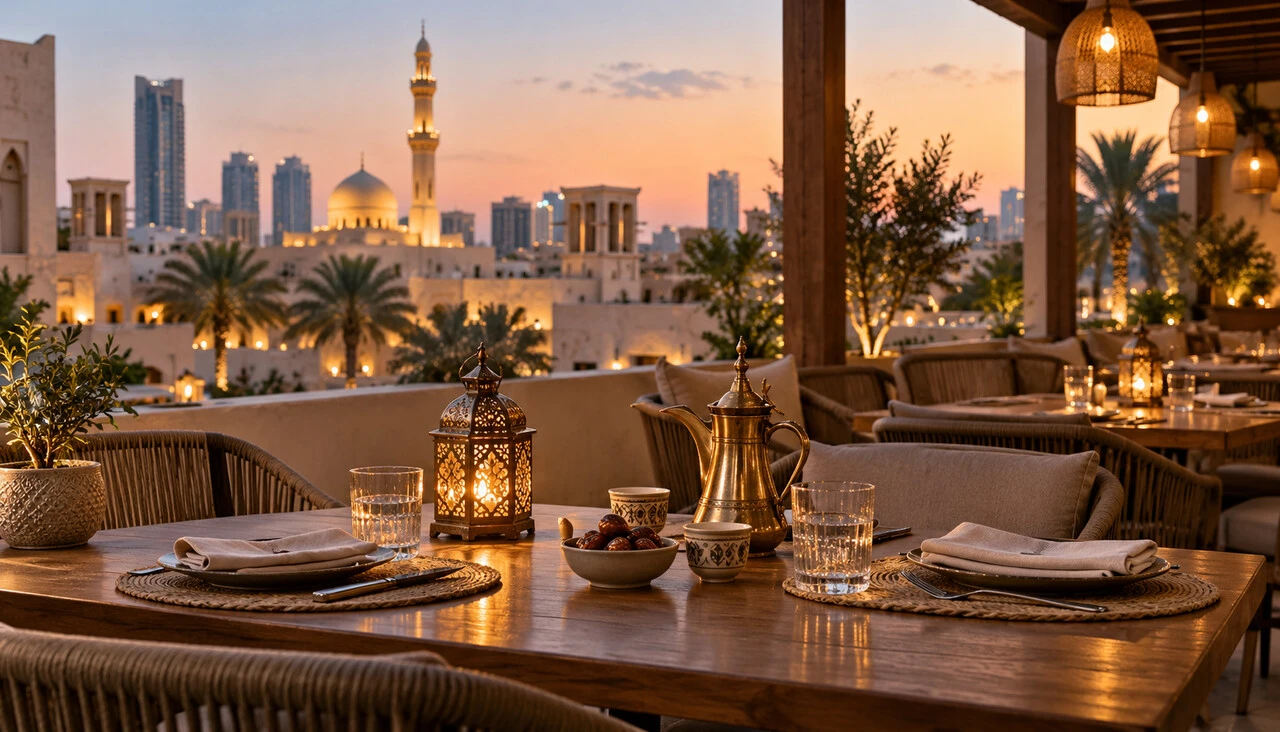
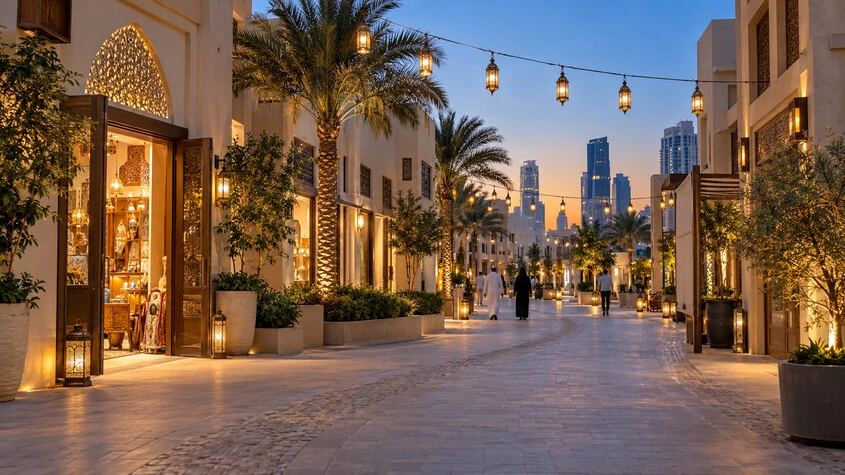
| Evening until late | Shops, restaurants and social life at full volume |
Plan your day around the inversion rather than around reduced hours. A meeting at eleven in the morning gets less attention than one at nine in the evening. Shopping is easier at ten at night than at four in the afternoon.
UAE law shortens the working day during Ramadan, and this is the part most often misunderstood.
The reduction applies to all employees, not only to those fasting. It is a statutory reduction in working hours, not a religious accommodation for individuals. Non-Muslim staff are entitled to it too.
Government offices operate on their own shortened schedule, usually finishing early. Schools shorten their days. Private companies apply the statutory reduction, and how they distribute it varies: some start later, some finish earlier, some shorten the lunch break.
Two practical consequences. Anything requiring a government office takes longer, because the window is smaller. And meetings compress into fewer hours, so calendars fill up faster than usual.
The rule that worries visitors most, and the one that has changed most in recent years.
Fasting Muslims take no food, drink or cigarettes between dawn and sunset. Non-Muslims are not expected to fast.
What is expected is discretion in public. Eating, drinking or smoking in daylight is inappropriate in the street, in a park, in a car in traffic or in an open office area. In some circumstances it is an offence.
The practical rule is simple: eat and drink where fasting people are not. Nobody expects you to go without. They expect you not to do it in front of them.
The single most practical thing to know, and it has nothing to do with religion.
In the hour before iftar the roads fill with people hurrying home to break the fast. Traffic is heavy, drivers are tired and hungry, and accident rates rise.
Do not schedule anything that requires driving in that window. If you must travel, leave much earlier or wait until after sunset, when the roads empty for about an hour and become the quietest they will be all day.
Public transport is a better option in that period than driving. It runs on adjusted timings during Ramadan, which are published in advance — how the transport card works is covered in our guide to the Nol card.
The part visitors enjoy most and plan for least.
Iftar is a social occasion as much as a meal. Restaurants, hotels and tents run iftar buffets, and invitations are common and worth accepting. If a colleague invites you, going matters more than anything you might say about respecting the season.
After the meal the city comes alive. Malls stay open late, shopping peaks between nine and midnight, and families are out with children well past normal bedtimes. Parks and beaches fill up in the cooler evening air — the options are covered in our guide to beaches and parks in Dubai.
If you are visiting rather than living here, this is the time to do everything. The evening atmosphere during Ramadan is one of the more distinctive experiences the region offers, and it is only available for a month a year.
Six adjustments. None are difficult, and they are noticed.
One thing is worth knowing about the mood. Ramadan is not a solemn period. It is social, generous and family-centred, closer in feeling to a festive season than to a period of restraint. Treating it as sombre misreads it.
Relevant for anyone with a transaction in progress.
| Area | What to expect |
|---|---|
| Government offices | Shorter hours, longer queues, slower processing |
| Banks | Reduced hours, slower approvals |
| Property transactions | Registrations and transfers take longer |
| Handovers and inspections | Often pushed to after Ramadan |
| Construction | Adjusted working hours, slower progress |
| Decision-making | Meetings shift, approvals wait |
Add two to three weeks to any deadline that runs through Ramadan and the Eid holiday afterwards. This is not pessimism. It is what experienced people here do automatically.
If you are buying or selling property, plan completion either before Ramadan starts or comfortably after Eid. Trying to complete during the month works, and it is slower than you expect.
It is a good month for this, for reasons that are not obvious.
Daytime viewings are quieter than usual. Agents have more time, and there is less competition from other buyers, because many people postpone decisions until after the month.
Schedule viewings for the evening. After iftar, agents are available, communities are lively and you see a neighbourhood at its most active. A daytime viewing in Ramadan shows you an unusually quiet version of a place.
One caution: what you see in the evenings during Ramadan is not the year-round normal either. Communities are busier than usual after dark for this month specifically.
An area where foreign employers often get it wrong without meaning to.
Domestic staff who are fasting are working the same hours in harder conditions. The statutory reduction in working hours applies to employees generally, and the considerate approach goes further than the minimum.
The employment framework for household staff is set out in our guide to hiring domestic staff in Dubai.
The holiday that ends Ramadan, and it changes the calendar again.
Eid al-Fitr is a public holiday lasting several days. The exact dates depend on the sighting of the moon and are usually confirmed only shortly beforehand.
Almost nothing administrative happens during Eid. Offices close, staff travel, and anything in a queue stays in the queue. Combined with Ramadan itself, this can put a four-week gap in an otherwise straightforward process.
It is also the busiest travel period of the year domestically. Flights and hotels fill up, and roads out of the cities are heavy. If you plan to travel, book well ahead. The etiquette and traditions around the Islamic holidays are set out in our guide to Eid in Dubai.
Five practical decisions, whether you live here or are visiting.
For anyone timing a visit or a move, the month sits differently each year against the weather — the seasonal picture is set out in our guide to UAE weather by month.
Practice also varies between emirates. Sharjah and the northern emirates observe more conservatively than Dubai, and the difference is noticeable during this month — the wider comparison is in our guide to the quieter emirates.
Do non-Muslims have to fast?
No. You are expected to be discreet in public during daylight, not to fast. Eating and drinking at home, in your office or in a restaurant is fine.
Are restaurants open during the day?
Many are, particularly in malls and hotels, and delivery operates normally. The screening that used to be standard is far less common now.
Do working hours really reduce for everyone?
Yes. The statutory reduction applies to employees regardless of religion. It is a reduction in working hours, not an individual accommodation.
Can I drink water in my car?
Better not to. A car in traffic is a public space and you are visible to everyone around you. Wait until you are home or somewhere private.
Is alcohol served?
Licensed venues generally continue to serve, usually with more discretion and often without live music. Practice varies by venue and by emirate.
When is the worst time to drive?
The hour before sunset. Roads are heavy, drivers are tired and hungry, and accident rates rise. The hour after sunset is the quietest of the day.
Should I postpone a property purchase?
Not necessarily, but add two to three weeks to your timeline. Government offices work shorter hours and the Eid holiday follows immediately.
What greeting should I use?
«Ramadan Kareem» is standard and always well received. It requires no religious affiliation to say.
Ramadan is an unusually good time to view property. Agents have time, competition is thinner, and evening viewings show communities at their liveliest. It is a poor month to try to complete anything, because the offices that register transactions are running short hours and Eid follows immediately. DDA Real Estate is a real estate agency in the UAE. We work across Dubai, Abu Dhabi, Sharjah and the northern emirates, and we plan client timelines around the calendar rather than against it.
Explore our listings in the UAE and get in touch: we will arrange evening viewings during Ramadan and tell you realistically what can be completed before Eid. Anything that should wait, we will hold rather than leave sitting in a queue over the holiday.