Which Costs Reduce Net Rental Income in Thailand
66 2 026-1660
day and night
Thailand
EN
$
ft²
Other articles

Which Costs Reduce Net Rental Income in Thailand

Alexandra Mitrofanova The author of the article, the Broker
#Blog DDA
6 September 10080 views

Gross rental yields in Thailand's prime locations usually sit between 6% and 9%, yet the amount that reaches an investor's account after deductions is noticeably lower. The gap comes from compulsory costs that apply whether the unit is occupied or not. Knowing these costs is essential before buying any rental property in Thailand.

Common Area Maintenance Fees

Every condominium in Thailand charges a monthly common area maintenance (CAM) fee, calculated per square metre of the unit. It covers security, pool upkeep, lifts, cleaning of common areas and shared utilities. Rates typically range from about 40 to 120 THB per square metre per month, depending on the building's grade, location and services. For a 35 sqm unit that means roughly 1,400 to 4,200 THB a month, and premium riverside or flagship Sukhumvit towers can charge 150 THB per square metre or more.

In long-term letting, CAM fees usually absorb 12–19% of gross rent, and they tend to rise by 3–7% a year.

Sinking Fund Contributions

Most condominiums also collect a one-off sinking fund contribution at purchase. This capital reserve usually ranges from 400 to 800 THB per square metre and can reach 1,200 THB in premium projects. It is a single payment, but it is a real upfront cost that lowers the initial return.

Some buildings also raise special assessments for major works, such as facade repairs or replacing old water pumps, which can cost owners 10,000 to 50,000 THB depending on the project.

Property Management Fees

For overseas investors, professional management is usually a necessity, and its cost is the biggest single variable in the net yield. Fees depend heavily on the rental model:

  • Short-term rental management through booking platforms typically takes 25–35% of gross income.
  • Long-term leases on annual contracts usually cost 8–15% of monthly rent.
  • Self-management through local contacts may look cheaper, but it often leads to lower occupancy and hidden costs that outweigh the saving.

A fully managed nightly rental in Phuket shows the effect clearly: gross income of 251,000 THB loses 62,750 THB to operator commission alone at 25%.

Vacancy and Seasonal Downtime

Vacancy is often underestimated. Even well-located buildings have gaps between tenants: in Bangkok's central rental districts, vacancy typically runs at 8–12%, and a single empty month cuts annual rent by more than 8%.

On Phuket and the islands the seasonal effect is stronger, with off-peak rates falling by 30–50%. A studio at 70% occupancy on a nightly model earns less than half of what it would at full occupancy. That is why a long-term lease at 90% occupancy often produces more net income than a nightly model in the same unit.

Taxes on Rental Income

Rental income in Thailand is taxed under the progressive personal income tax scale, from 0% to 35% depending on total income. The first 150,000 THB of taxable income falls in the zero-rate band. For non-resident individual landlords, the tenant or management company must withhold 15% of each rent payment at source.

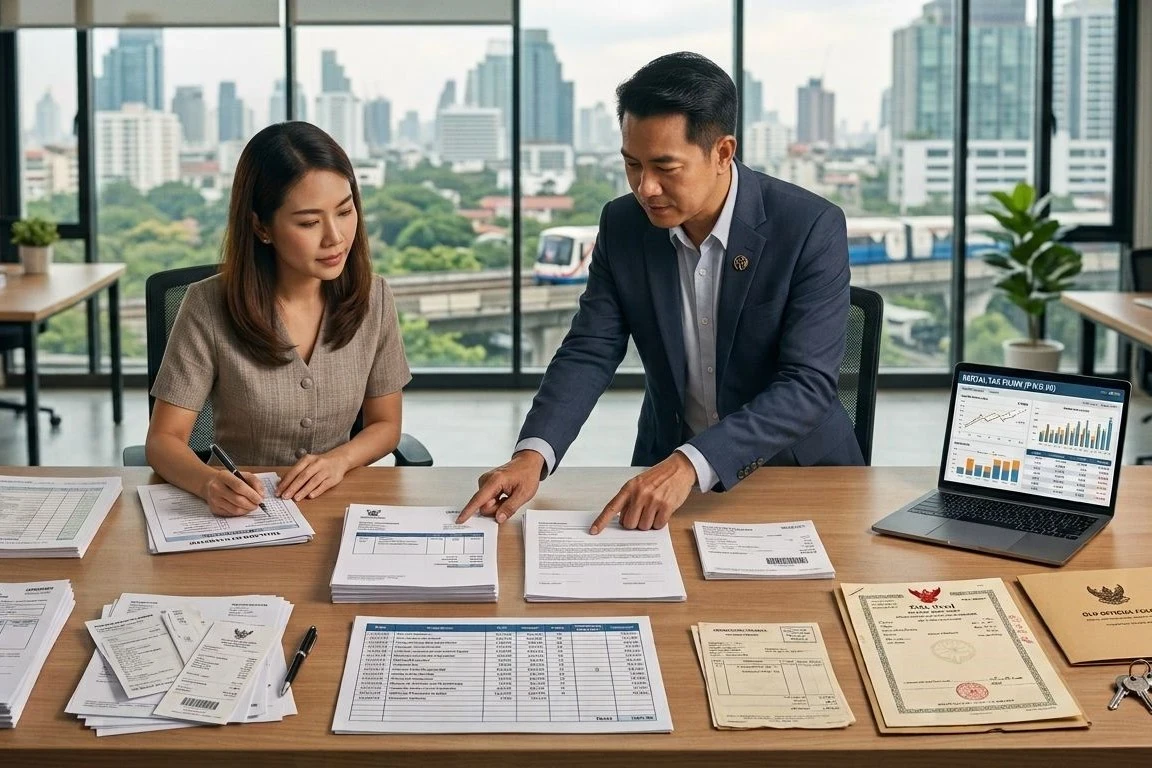
Landlords can reduce taxable income with a 30% standard deduction that needs no receipts. Take a Phuket condo earning 480,000 THB a year: the deduction removes 144,000 THB, and the 60,000 THB personal allowance brings the taxable base to 276,000 THB. The first 150,000 THB is taxed at 0% and the remaining 126,000 THB at 5%, so the actual tax is 6,300 THB. The 15% withheld during the year would have been 72,000 THB – which is why filing an annual return is essential for non-residents to reclaim the overpayment.

Maintenance, Repairs and Replacing Furniture

Running costs build up steadily and are easy to leave out of early calculations. The main ones are:

  • Air-conditioning servicing. A basic clean costs 400–600 THB per unit and should be done every three to four months. Replacing a wall unit costs 12,000–22,000 THB.
  • Water heaters. Replacement costs 3,000–6,000 THB plus installation.
  • Interior wear and tear. Budgeting 1–2% of the unit's value a year for furniture, appliances and refreshes is realistic.
  • Utilities during vacant periods. An empty unit still incurs electricity and water charges.

Land and Building Tax

Residential property that the owner does not live in is subject to the annual land and building tax, at 0.02–0.10% of appraised value. It applies whether the unit is let or empty. Owner-occupied homes benefit from higher exemption thresholds, so investors generally pay more.

One-Time Acquisition Costs

Although they are not recurring, purchase costs reduce the effective return. The buyer's main share is usually half of the 2% transfer fee, while stamp duty or specific business tax and withholding tax are normally the seller's. For new-build condominiums, the sinking fund contribution is also due at handover.

How Much Actually Remains

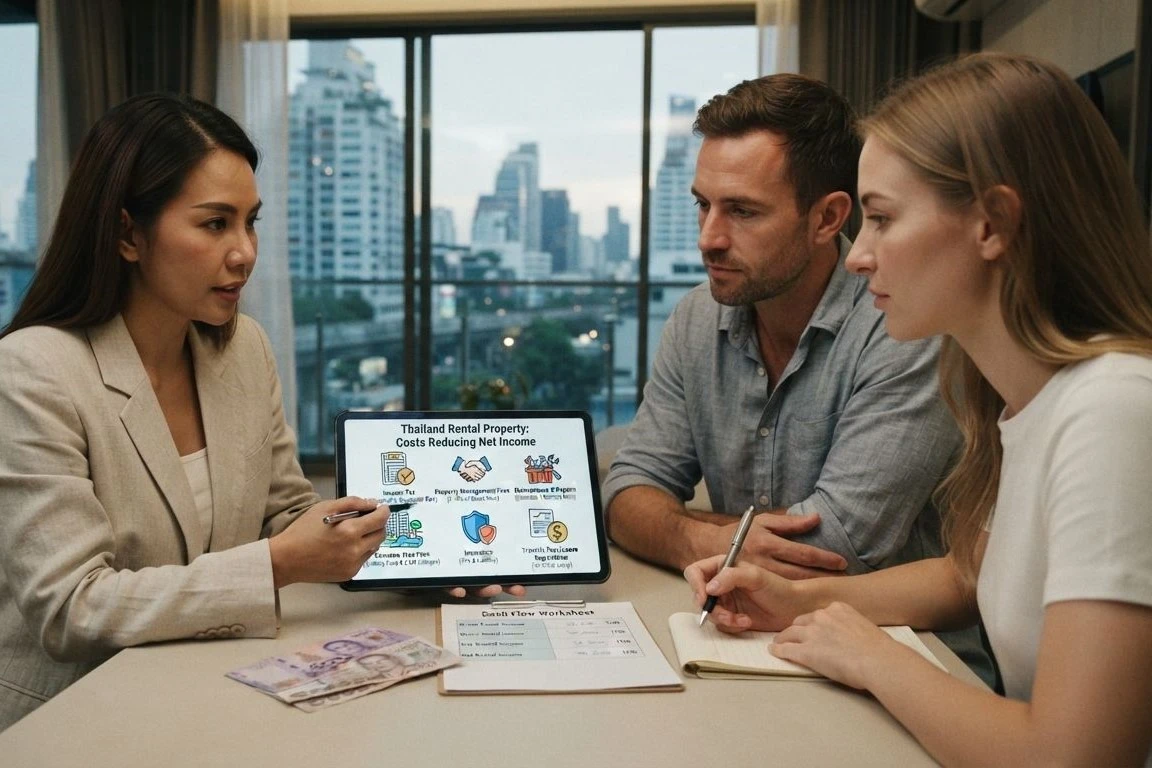
The combined effect is substantial. A Phuket studio with an 8.7% gross yield on a nightly model ends up at about 4.4% net after operator commission, CAM fees, utilities, repairs and tax. A mid-range Sukhumvit unit in Bangkok with a 5.25% gross yield delivers roughly 3.4% net after vacancy, CAM fees, management, repairs and tax.

Across property types, these deductions usually take 2–4 percentage points off the gross figure, leaving 3–5% net for most well-managed units. The headline yield in a developer brochure rarely reflects what reaches the investor – so understanding these costs before purchase matters more than the brochure number itself.

If you would like to see these numbers worked through for a specific unit, DDA Real Estate can build a net-yield model with you before you commit, comparing long-term and nightly scenarios on the same property.

Popular
5 June 4322241 view
Dubai Rent Prices 2025: Average Apartment Rental Costs in Dubai Dubai's rental market continues its upward climb in 2025, driven by population growth and limited new supply, pushing average prices up by 10%
#Blog DDA
2 July 2485098 views
DLD Fees in Dubai: Everything You Need to Know Buying property in Dubai? Don't let hidden fees surprise you! Our essential guide breaks down ALL Dubai Land Department (DLD) fees
#Blog DDA
23 November 1947141 view
How to Buy a SIM Card in Turkey in 2026: Prices, IMEI Registration, eSIM Options, and Best Mobile Operators Overview of mobile operators, available types of SIM cards, and home Internet providers
#Blog DDA
5 July 1816605 views
How Much is the Real Estate Agent Commission in Dubai? Find out how much real estate agent commission costs when buying property in Dubai.
#Blog DDA
5 February 1473822 view
How Foreigners Can Own Property in Bali: Understanding PT PMA (2025) Foreigners can't own freehold land in Bali, but a PT PMA (foreign-owned company) allows secure property ownership under Hak Guna Bangunan (HGB) or Hak Pakai (HP) rights
#Blog DDA
28 August 1239147 views
Oqood vs Title Deed in Dubai: Key Differences You Must Know Buying property off-plan in Dubai? Oqood registration is mandatory to secure your ownership rights.
#Blog DDA