
Off-plan properties
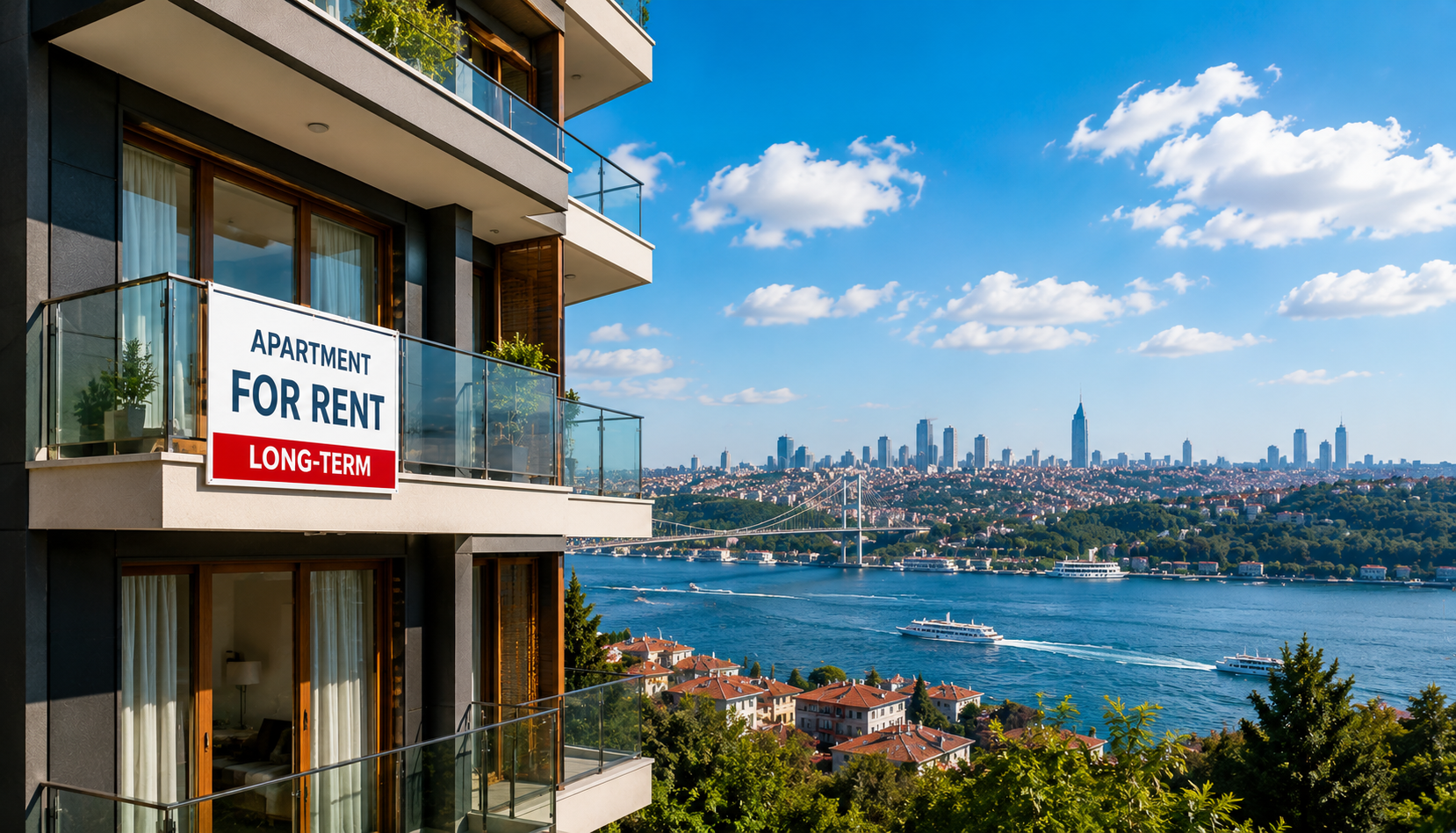
Long-term apartment rental in Turkey remains one of the most popular options for foreigners relocating for lifestyle, business, retirement, or remote work. In 2026, the rental market is still relatively accessible, but competition and regulation have increased — especially in Istanbul and coastal cities.
For most foreigners, renting property in Turkey is straightforward. However, understanding contracts, district restrictions, maintenance costs, and local rental practices is essential before signing a lease.
In Turkey, long-term rental usually means:
This differs from short-term holiday rentals or Airbnb-style accommodation.
Renting first allows foreigners to:
For many expats, renting becomes the first stage before purchasing property or applying for long-term residency.
| City | Main Advantages | Best For |
|---|---|---|
| Istanbul | Turkey’s largest rental market with developed infrastructure, business opportunities, and a wide apartment selection | Professionals, students, investors, remote workers |
| Antalya | Coastal lifestyle, international community, modern residential complexes | Families, retirees, long-term relocation |
| Alanya | Affordable rental prices, resort atmosphere, large foreign population | Budget-friendly relocation and seasonal living |
| Izmir | More relaxed and European-style environment with a balanced climate | Foreigners seeking long-term comfortable living |
Standard Apartments
Typical residential units in city districts, suitable for everyday long-term living.
Residential Complexes (Sites)
Modern compounds with:
Especially popular among foreign tenants.
Luxury Residences
Premium apartments with hotel-style amenities and professional management, mainly found in Istanbul and upscale coastal areas.
| City | Average Monthly Rent |
|---|---|
| Istanbul | €700–2,500+ |
| Antalya | €500–1,500 |
| Alanya | €450–1,200 |
| Izmir | €600–1,800 |
Luxury properties may cost significantly more.
Furnished
Better for relocation and shorter stays.
Advantages:
Unfurnished
Usually cheaper monthly, but require furnishing expenses.
Foreign tenants are commonly asked for:
Some landlords may also request advance payment or a Turkish bank account.
Written contracts are essential.
A proper agreement should clearly define:
Most residential contracts are signed for 12 months and are generally renewable.
The standard security deposit is usually 1–3 months’ rent.
Tenants are typically responsible for:
In modern residential complexes, aidat can significantly affect monthly living costs.
Rental agreements are commonly used for residence permit applications.
However, in 2026 Turkish authorities check contracts and addresses more carefully than before.
Some districts in Istanbul, Antalya, and Alanya are partially restricted for new residence permit registrations due to high foreign population density.
Before renting for residency purposes, it is important to verify whether the district is open for ikamet applications.
The most frequent problems include:
Renting is often better for:
Buying may be more suitable for:
Can foreigners rent apartments in Turkey?
Yes, the process is generally straightforward.
Is a residence permit required?
Not always, but it may help with certain procedures.
How much deposit is standard?
Usually 1–3 months’ rent.
Can landlords freely increase rent?
No, rent increases are regulated by law.
Long-term renting in Turkey is not only about finding an apartment — it is about choosing the right district, legal structure, and living environment.
At DDA Real Estate, we help clients:
We provide full professional support at every stage — helping clients relocate to Turkey safely, comfortably, and with a clear long-term strategy. Contact DDA Real Estate to find the right property and build a confident relocation plan in Turkey.