The Mersin Property Market in 2026: A Guide
Alanya
EN
$
ft²
Other articles

The Mersin Property Market: A Working City on the Coast

Ali Yaila The author of the article, the Broker
#Blog DDA
10 September 6804 view

Most Turkish coastal markets are resorts with an economy attached. Mersin is the other way round.

It is a port and industrial city of nearly two million people that happens to sit on the Mediterranean. That single fact explains almost everything about its property market: the prices, the tenants, the year-round demand and the thin tourist season.

This guide covers what drives the local economy, how the districts differ, who buys here and what to check before committing. Market conditions move, so verify current pricing and regulations before acting.

A City That Works

The distinction matters more than it sounds, because it inverts the usual coastal logic.

Resort coastMersin
Main economyTourism and constructionPort, logistics, agriculture, industry
Population patternSwells in summer, empties in winterStable all year
Tenant baseHolidaymakers and seasonal workersLocal families, employees, students
Buyer poolMostly foreignLocal and foreign
Price levelHigherSubstantially lower
WinterHalf the shops closedNormal working city

The fourth row is the most valuable line for an investor. A market with both local and foreign buyers has two independent sources of demand. When one weakens, the other does not necessarily follow, and that shortens both letting voids and selling times.

What the city is actually like day to day, beyond the market numbers, is set out in the guide to Mersin as a port city.

What Drives the Economy

Four pillars, and none of them is tourism.

  • The port. One of Turkey’s largest container ports, with the logistics, freight and services that cluster around it.
  • Agriculture. The Çukurova plain is among the country’s most productive farming regions, with citrus and greenhouse production at scale.
  • Industry. Processing, manufacturing and the supply chains attached to the port.
  • Education and services. A large university population and the healthcare and retail base of a provincial capital.

Add to that a major energy project on the provincial coast. Construction of that scale brings engineers, contractors and support staff who need housing for years, and it has been a visible factor in local demand.

Together these produce something unusual on the Turkish Mediterranean: an economy that employs people in January.

The Districts

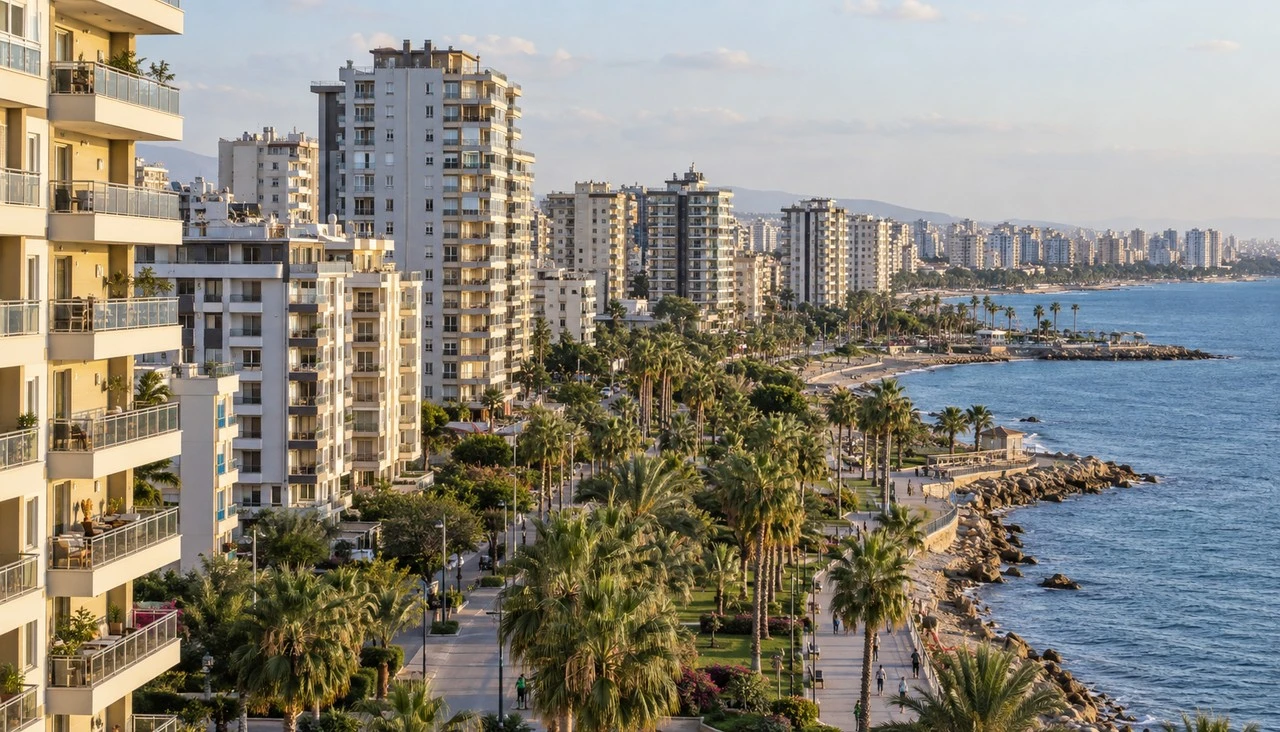
The city stretches along the coast, and the differences between its parts are substantial.

Yenişehir

The modern centre and the most established address for foreign buyers. Wide streets, newer buildings, full commercial infrastructure and the marina within reach.

This is where most international purchases happen. Prices are the highest in the city and still well below comparable areas in Antalya.

Mezitli

West of the centre, newer and growing fast. A long coastal strip, contemporary complexes with pools and security, and a substantial Russian-speaking community.

Popular with buyers who want a new building and sea proximity without central-city density. Development here has been rapid, which means choice and also competition when it comes to reselling.

Erdemli and the western coast

Further along the shore, quieter and more seasonal in character. Lower prices, smaller complexes, and a genuine holiday feel around the historic coastal sites.

This stretch behaves more like a resort market than the city does. Judge it by resort criteria: winter occupancy, seasonal services and a narrower tenant pool.

Toroslar and Akdeniz

The older districts, inland and around the port. Local housing stock, lowest prices, minimal foreign presence.

Worth knowing about for context rather than as a target for most international buyers.

Who Buys Here

The mix is different from the resort coast, and it explains the market’s behaviour.

Local buyers form the base. Families moving within the province, people relocating from smaller towns in the region, and buyers from Adana and the surrounding cities.

Foreign interest grew sharply in recent years and remains concentrated in two districts. The draw is straightforward: coastal living at prices that have not been bid up by international demand for two decades, in a city that works all year.

There is also a professional segment tied to the port, the energy project and the university, which rents rather than buys and provides the steady tenant base.

Prices and What They Reflect

Mersin is priced well below the established Turkish coastal markets, and the discount has causes worth understanding.

FactorEffect on price
Not a tourist destinationLess international demand pressure
Large land supply along the coastDevelopment can expand, capping scarcity
Local incomes set the basePrices anchored to what residents can pay
Strong year-round rental demandSupports values from below
Growing foreign interestUpward pressure in two districts

The second row deserves attention from anyone buying for capital preservation. There is a great deal of coastline here and room to build along it. Scarcity is what holds prices up in constrained markets, and Mersin is not constrained.

That cuts both ways. Entry is affordable and the downside is limited by real local demand, but the sharp appreciation seen in land-scarce resort towns is a different proposition.

The Rental Market

The strongest argument for the city, and it works the opposite way from the resort coast.

Demand comes from people who live here: families, port and industry employees, university staff and students, healthcare workers. That demand does not have a season.

  • Long-term letting works well. Tenants stay, voids are short and the market does not shut down in November.
  • Short-term letting is thin. Outside the western coastal strip in summer, there is limited holiday traffic to serve.
  • Student accommodation is a real segment. A large university population creates consistent demand for smaller units.
  • Corporate tenants exist. Companies housing staff on long assignments, which is the most stable tenant category available.

Anyone modelling short-let income here should reconsider. The city rewards the boring strategy: a standard apartment let long-term to a local tenant, with a short void and a predictable rent.

What ownership actually costs over a year, in charges and utilities, is set out in the overview of property maintenance costs in Turkey.

Seismic Position

A factor that moved up every Turkish buyer’s list after 2023, and one where this region compares favourably.

Turkey’s seismic risk is not uniform. Some regions sit on major fault systems and others do not, and Mersin province is generally regarded as lower risk than much of the country.

This has become a stated reason for buying here rather than a footnote. It does not remove the need to check the individual building. Construction date, compliance and structural condition still decide how a specific block performs. The regional picture is set out in the seismic map of Turkey.

For any building, ask the construction date and whether it was built or upgraded under the tightened standards. That question matters everywhere and is answered with a document rather than a reassurance.

The Residence Permit Question

A practical constraint that affects foreign buyers in this city specifically.

Turkey closes neighbourhoods to new foreigner residence registration once the foreign share of the population passes a threshold. Districts popular with international buyers reach that threshold first, and parts of Mersin have been affected.

Buying remains possible in a closed neighbourhood. Obtaining residence through that address does not. For a buyer who needs the permit, that changes the property from suitable to unsuitable.

It also narrows the resale pool, because a share of future foreign buyers will be in the same position. Check the current status of the specific neighbourhood with the migration authority before committing. It is one enquiry and it is the highest-value check available here.

What to Check Before Buying

Nine points, weighted toward what is specific to this market.

  • The registration status of the exact neighbourhood for foreign residence.
  • Construction date of the building and its compliance documentation.
  • The occupancy permit, confirmed as issued rather than pending.
  • How much similar stock is being built nearby.
  • Rental demand in that district, from local agents rather than averages.
  • Distance to the centre, the university and the coastal road.
  • The building charge and what it covers.
  • Whether the district is a year-round one or seasonal.
  • How long comparable units have been listed for sale.

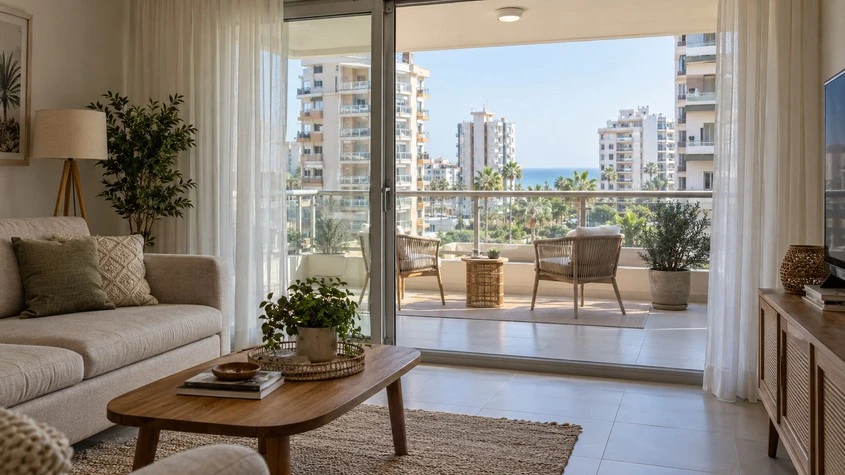
The fourth point matters more here than on the resort coast. Land is available and building is active, so today’s quiet outlook can become tomorrow’s neighbouring tower. Check what is planned on adjacent plots before paying for a view.

The standard verification process applies in full, and the due diligence checks for resale property are the same wherever in Turkey you buy.

Who the City Suits

Mersin answers some questions well and others poorly.

If you wantVerdict
Year-round living on the coastStrong fit
Lower entry price than AntalyaStrong fit
Stable long-term rental incomeStrong fit
A working city with real infrastructureStrong fit
Holiday letting incomePoor fit outside the western strip
A tourist-resort lifestylePoor fit in the city itself
Rapid capital appreciationUncertain, land is not scarce

The first four rows describe a specific and underserved buyer. Someone who wants to live on the Turkish Mediterranean rather than holiday there. Someone who would rather have a functioning city in February than a promenade in August.

What daily life in Turkey involves, across the practical and the cultural, is covered in the honest overview of living here.

Formats and Stock

What is actually available, and how it differs from the resort markets.

Apartments dominate, from older city blocks to new complexes with pools, gyms and security. Detached houses exist mainly outside the city and along the western coast.

New complexes cluster in Mezitli and the newer parts of Yenişehir. They offer the amenity package international buyers expect. They also compete with each other, which keeps pricing competitive and resale slower in the busiest developments.

Older city stock is considerably cheaper and comes with the questions that always attach to older buildings. The trade-off between an apartment and a house is set out in the comparison of the two formats.

Whichever you choose, the standard risks of a Turkish purchase apply, and the pitfalls that catch buyers are not specific to this city.

Frequently Asked Questions

Is Mersin a tourist city?

Not primarily. It is a port and industrial city of nearly two million people. The western coastal strip towards Erdemli has a holiday character, the city itself does not.

Why are prices lower than in Antalya?

Less international demand pressure over the years, a large supply of developable coastline and price levels anchored to local incomes. Real year-round rental demand supports values from below.

Which district should foreign buyers look at?

Yenişehir for the established central option and Mezitli for newer complexes near the sea. Both have existing international communities and full infrastructure.

Is short-term letting viable?

Weakly, outside the western coastal strip in summer. The city’s strength is long-term letting to local tenants, which runs all year without a season.

How does the seismic risk compare?

The province is generally regarded as lower risk than much of Turkey, and that has become a stated reason for buying here. The individual building still needs checking by construction date and documentation.

Can I get a residence permit with a property here?

It depends on the neighbourhood. Some have been closed to new foreigner registration. Buying remains possible; obtaining residence through that address may not be. Check the specific neighbourhood before committing.

Will prices rise?

Local demand and a functioning economy support values. Rapid appreciation is a different question, because there is a lot of developable coastline and scarcity is what drives sharp rises elsewhere.

Key Points to Remember

  • It is a working city, not a resort. That explains the prices, the tenants and the year-round demand.
  • Two buyer pools instead of one. Local and foreign demand together shorten voids and selling times.
  • Long-term letting is the strategy. Short lets have limited traffic to serve outside the western strip in summer.
  • Check the neighbourhood registration status. One enquiry, and it decides whether the property suits a buyer who needs residence.
  • Land is not scarce here. Entry is affordable and the sharp appreciation of constrained markets is a different proposition.

For Buyers Who Compared Antalya and Stopped at the Price

Mersin is usually the second city people look at, and often the one they should have looked at first. It offers coast, climate and space at a level that works for a household budget rather than a holiday budget, in a place that stays open through the winter. The trade is a quieter tourist scene, and for a lot of buyers that was never the point. DDA Real Estate is a real estate agency in Turkey. We work across Mersin, Antalya, Alanya, Istanbul, Izmir and Bodrum, so we can put the two coasts side by side honestly.

Explore our listings in Turkey and get in touch: tell us your budget and whether you plan to live here or let. We will show what it buys in Mersin against what the same money buys further west, with the registration status of each neighbourhood confirmed.

Popular
5 June 4322178 views
Dubai Rent Prices 2025: Average Apartment Rental Costs in Dubai Dubai's rental market continues its upward climb in 2025, driven by population growth and limited new supply, pushing average prices up by 10%
#Blog DDA
2 July 2484972 view
DLD Fees in Dubai: Everything You Need to Know Buying property in Dubai? Don't let hidden fees surprise you! Our essential guide breaks down ALL Dubai Land Department (DLD) fees
#Blog DDA
23 November 1947078 views
How to Buy a SIM Card in Turkey in 2026: Prices, IMEI Registration, eSIM Options, and Best Mobile Operators Overview of mobile operators, available types of SIM cards, and home Internet providers
#Blog DDA
5 July 1816605 views
How Much is the Real Estate Agent Commission in Dubai? Find out how much real estate agent commission costs when buying property in Dubai.
#Blog DDA
5 February 1473822 view
How Foreigners Can Own Property in Bali: Understanding PT PMA (2025) Foreigners can't own freehold land in Bali, but a PT PMA (foreign-owned company) allows secure property ownership under Hak Guna Bangunan (HGB) or Hak Pakai (HP) rights
#Blog DDA
28 August 1239084 view
Oqood vs Title Deed in Dubai: Key Differences You Must Know Buying property off-plan in Dubai? Oqood registration is mandatory to secure your ownership rights.
#Blog DDA