
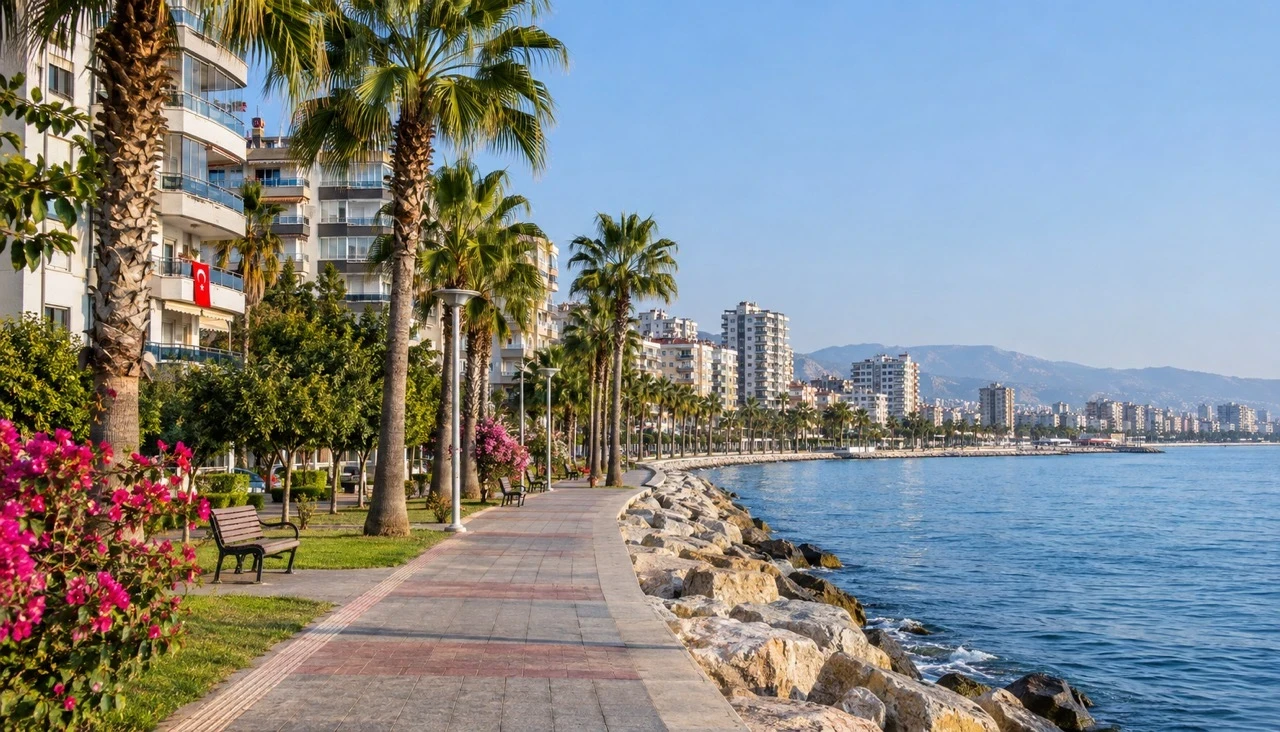
Mersin, or İçel Province, sits over the green-blue sea as one of Turkey's major port cities on the mainland. In 2024, the urban population exceeded 1.08 million, and the total population is around 1.95 million for the province as a whole. It is in a conurbation with other towns that are administratively separate due to their status as independent districts, forming part of the Adana–Mersin metropolitan area with over 3.3 million inhabitants.
The town has traditionally been known by the Greek name Μερσίνη, "Mersin" in Turkish or Latin. Named after the myrtle plant (Myrsine), due to abundant myrtle bushes in the region, it was also called "İçel" in historical Western sources.
History & Archaeology
Yumuktepe Hill in the centre of Mersin is at least 6,300 years old. Other civilizations lived in the region over the centuries, including the Hittites (around 2000 BC), Persians, Greeks (who mostly called it Zephyrion), Romans, and Byzantines. Excavations like those at Soli/Pompeiiopolis yield rich insights into the past.
Attractions & Culture
Museums: Mersin houses several, including the Archaeological Museum, Atatürk Museum, Naval Museum, Water Museum, Art & Sculpture Museum, and Urban History Museum.
Historic Sites:
- Atatürk Museum: A two-storey house in which Atatürk stayed in 1925, now converted into a museum (since 1992).
- Ulu Cami (Grand Mosque): A three-storey mosque rebuilt in 1979, able to hold up to 3,000 worshippers and centrally located next to Ulu Çarşı.
- Atatürk Park: A 16-hectare seafront park with statues, gardens, and a Congress & Exhibition Center.
Natural Wonders: The sinkholes – Chasms of Heaven and Hell – near Silifke reach depths of 128–135 m and feature monastic ruins and mythological lore.
Festivals:
- Mersin Citrus Festival (November) – celebrates citrus production with impressive citrus sculptures, folk dances, and performances by groups from other countries.
- Mersin International Music Festival (since 2002): Organised in several event spaces around Mersin, including Tayfur Sökmen Park, Tarsus, and Kanlıdivane.
Cuisine
Mersin is famous for its unique flavors, especially tantuni, a stir-fried minced meat dish served in lavaş, among the most popular local choices. Other specialties include ciğer kebap, bumbar, cezerye, kerebiç, and künefe. Other regional dishes include karsambaç and şalgam suyu.
Economy & Infrastructure
The city anchors Turkey's economy through its largest seaport, which accommodates up to 6,000 ships annually, and a free zone established in 1986. The fertile surroundings also produce citrus, cotton, bananas, and olives. It has seen major developments in recent years, including a metro line scheduled for completion by 2026.
Best Time to Visit
Mersin has a hot-summer Mediterranean climate under the Köppen climate classification and a dry-summer subtropical climate. April–June is the best time for sightseeing and outdoor activities, as well as September–November.