Off-plan properties
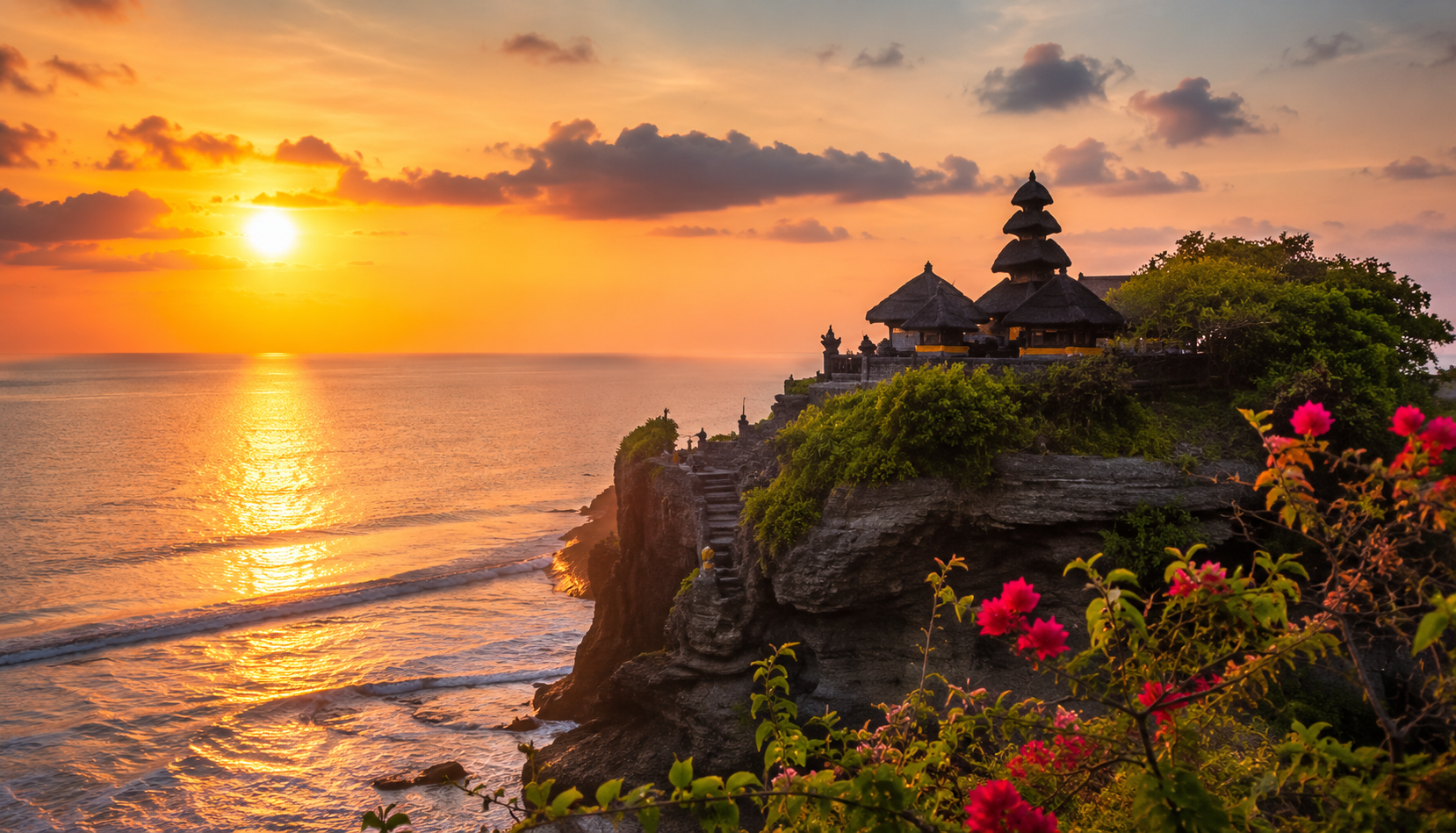
Most visitors never see a good sunrise on Bali, and the reason is geographical rather than personal. The famous beaches all face west — Seminyak, Canggu, Kuta, the Bukit cliffs — which makes them superb for sunset and useless for the morning.
Sunrise belongs to the other half of the island: the east coast, the offshore islands and the highlands. If you are staying in the southern resort belt, seeing it properly means a deliberate trip rather than stepping onto the beach outside your hotel.
Below is when it actually happens and how little that shifts across the year, where to go for it, what the season does to your chances, and why the direction a building faces matters to anyone living here rather than visiting. Exact times vary by date and by your position on the island, so check a sunrise table for the specific day.
This is the part that surprises visitors from northern latitudes most. Bali sits close to the equator, so day length is almost constant through the year and sunrise moves within a window of well under an hour between its earliest and latest dates. In practice the sun comes up in the six o'clock hour year-round, drifting a little later around the middle of the year and a little earlier toward its end.
There is no summer of long evenings and no winter of dark mornings here — the rhythm is the same in January and in July, which is one of the quieter adjustments people make when they move from a temperate country. What that means practically:
The single most common mistake is treating the published sunrise time as the appointment. The sky is often at its best before the sun clears the horizon, when colour spreads across the cloud without any direct light — and that window opens well before the official moment and closes quickly once the sun is up.
Aim to be in position at least half an hour early, which means leaving considerably earlier than that. At a viewpoint that involves a walk, add the walk. At a volcano, add the climb. The people who describe Balinese sunrises as overrated are usually the ones who arrived on time.
Sanur is the obvious choice and the easiest: a long east-facing shore with a paved promenade, calm shallow water and a view straight out to the horizon, all within reach of the southern hotels. Fishing boats drawn up on the sand give the foreground that photographs want, and there is coffee within a few minutes of the beach.
Further round, the coast opens into quieter territory with black sand, fewer people and a view toward the neighbouring island's volcano on clear mornings. The wider stretch of eastern Bali and its beach areas rewards an overnight rather than a pre-dawn drive from the south. This is the part of the island where sunrise is ordinary rather than an expedition — which is exactly why it is worth staying there for a night or two.
The islands off the southeast coast face the sunrise directly and have the additional advantage of an uninterrupted sea horizon. On a clear morning the volcano on the mainland stands against the colour, which is the image most people are actually chasing when they set an alarm.
The catch is logistics: boats do not run before dawn, so this only works if you sleep there. That turns a sunrise into a two-day plan rather than an early start, and it changes the character of the trip — for the better, in most people's accounts, because the islands are quiet at that hour in a way the mainland is not.
The best-known sunrise on Bali is the one seen from the volcano above the caldera lake, reached by a climb that starts in the small hours from villages nearby. It is genuinely spectacular and genuinely demanding, and it is sold far more casually than it should be — this is a mountain walk in the dark, not a viewpoint with a car park.
The highlands offer gentler versions of the same thing: ridges and terraces where the mist sits in the valleys until the sun burns it off, no climb required. The wider picture of that part of the island, including the caldera and its lake, is covered in the guide to Bali's highland lakes. Cool nights up there are real, and people who drive up in beachwear regret it within minutes of getting out of the car.
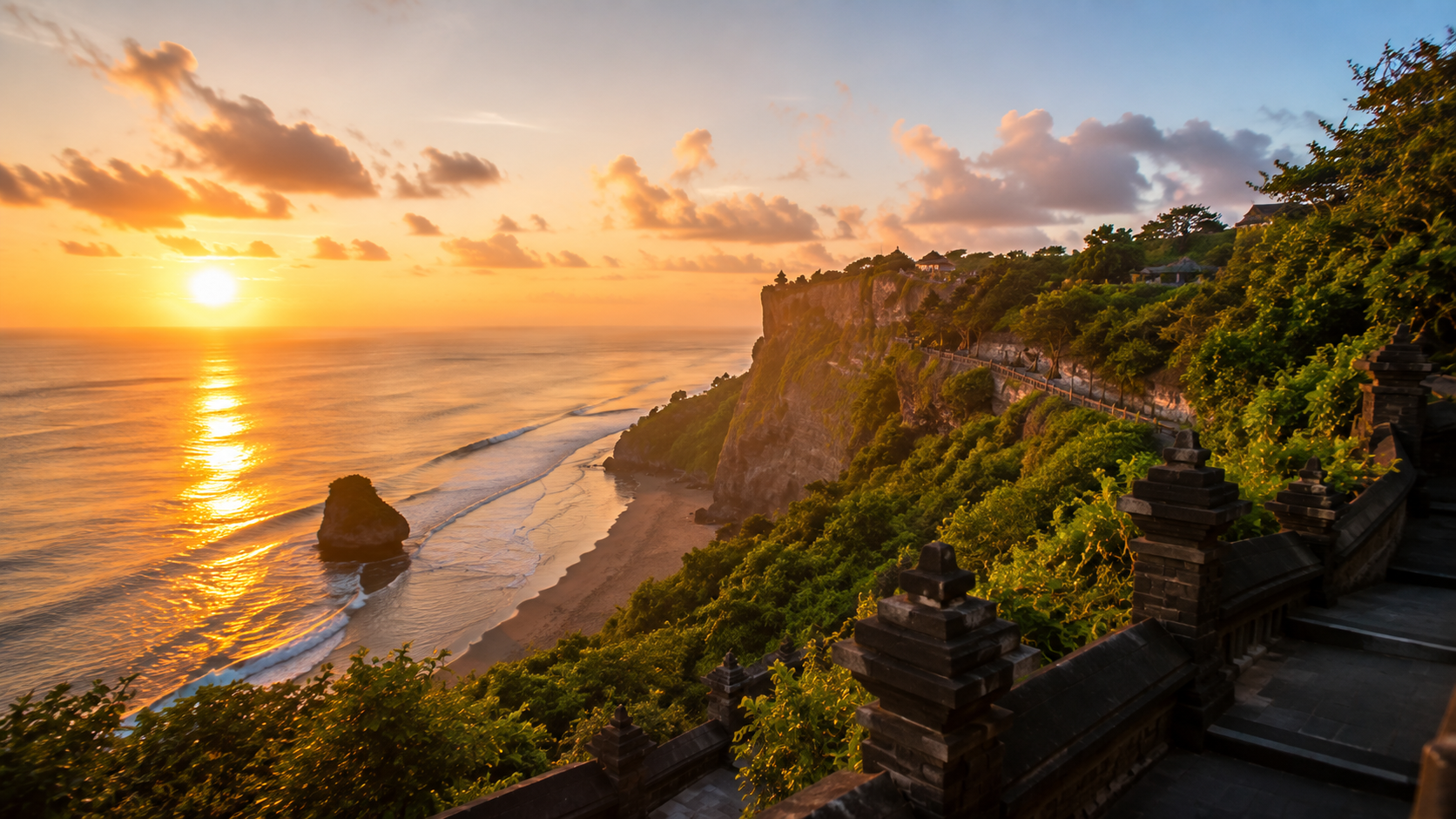
Several east-facing temples are extraordinary at dawn, and a few have become well known for it. Two things are worth remembering: they are places of worship first, and the hour that suits photographers often coincides with morning ritual.
That hour is also when the island itself is most itself — markets working, offerings being placed, the roads briefly quiet. Anyone curious about the everyday life of Balinese people will see more of it between five and seven in the morning than at any other time of day. Dress as you would for any temple and keep out of the way of anyone praying, regardless of how good the light is.
The time is predictable; the sky is not. The drier months bring clearer mornings and better odds of a clean horizon, while the wet season brings dramatic cloud that either makes the morning or hides it entirely. Neither is reliably better — cloud is what gives colour, and a completely clear sky can be flat.
The practical answer is repetition rather than forecasting. Residents see extraordinary mornings because they are out often, not because they predict them. What shifts the odds:
Pre-dawn travel on Bali is easier than the same trip at midday because the roads are empty, but it needs arranging in advance rather than improvising at five in the morning.
A driver booked the night before is the usual solution, and how taxis and ride services work on the island is worth understanding before you rely on hailing something at that hour. If you are riding yourself, the roads are unlit outside towns and the surface is unforgiving. Whatever the transport, tell someone where you are going — early mornings put people on unfamiliar roads and quiet trails alone.
For anyone living here rather than visiting, which way a building faces stops being about photographs. An east-facing terrace gets soft morning light and shade by afternoon; a west-facing one gets the celebrated sunset and hours of direct heat before it, which shows up on the electricity bill as well as in comfort.
Neither is wrong, but the choice deserves to be conscious rather than incidental. Orientation, prevailing wind and afternoon shade belong alongside the usual criteria for choosing property on the island — and unlike almost everything else about a house, the direction it faces is the one thing you can never change afterwards.
Can I see sunrise from Seminyak or Canggu?
You can watch the sky lighten, but the sun rises behind you over the land rather than out of the sea. Those coasts are west-facing and belong to the evening. For a sea sunrise you need the east coast, the offshore islands or high ground.
How much does the time change through the year?
Very little. Close to the equator the variation between the earliest and latest sunrise is well under an hour, so a plan that works in one month works in another. Check the exact time for your date, but do not expect a seasonal swing.
Is the volcano climb worth it?
For people who enjoy walking and are prepared for a cold, dark, steep couple of hours, yes. It is not a casual family outing despite being sold as one. If the appeal is the view rather than the effort, a highland ridge gives you most of the sky without the climb.
Which month has the best sunrises?
The drier months give the most reliably clear mornings, but the most dramatic skies often come with cloud, which the wet season supplies generously. Frequency beats timing here: go several times rather than trying to pick the perfect date.
Is it safe to travel before dawn?
Generally yes, and the roads are far quieter than by day. The risks are practical rather than dramatic: unlit roads, poor surfaces, tired driving and being alone somewhere unfamiliar. Book transport the night before and tell someone your plan.
The evening belongs to the beach clubs on the west coast; the early hours belong to whoever is up. DDA Real Estate is a real estate agency working in Indonesia, and the difference between those two halves of the day turns up constantly in what people ask us for after they have lived here a while: shade in the afternoon, light in the morning, a terrace that is usable at four o'clock rather than an oven, and a position where the walk before breakfast is worth taking. Buyers rarely raise orientation on a first viewing and almost always raise it a year later.
Look at our offers in Bali and leave a request: we will shortlist properties that suit how you actually spend a day here, tell you which way each one faces and what that means in practice, and be straightforward about the ones where a spectacular view comes with an unbearable afternoon.