Off-plan properties
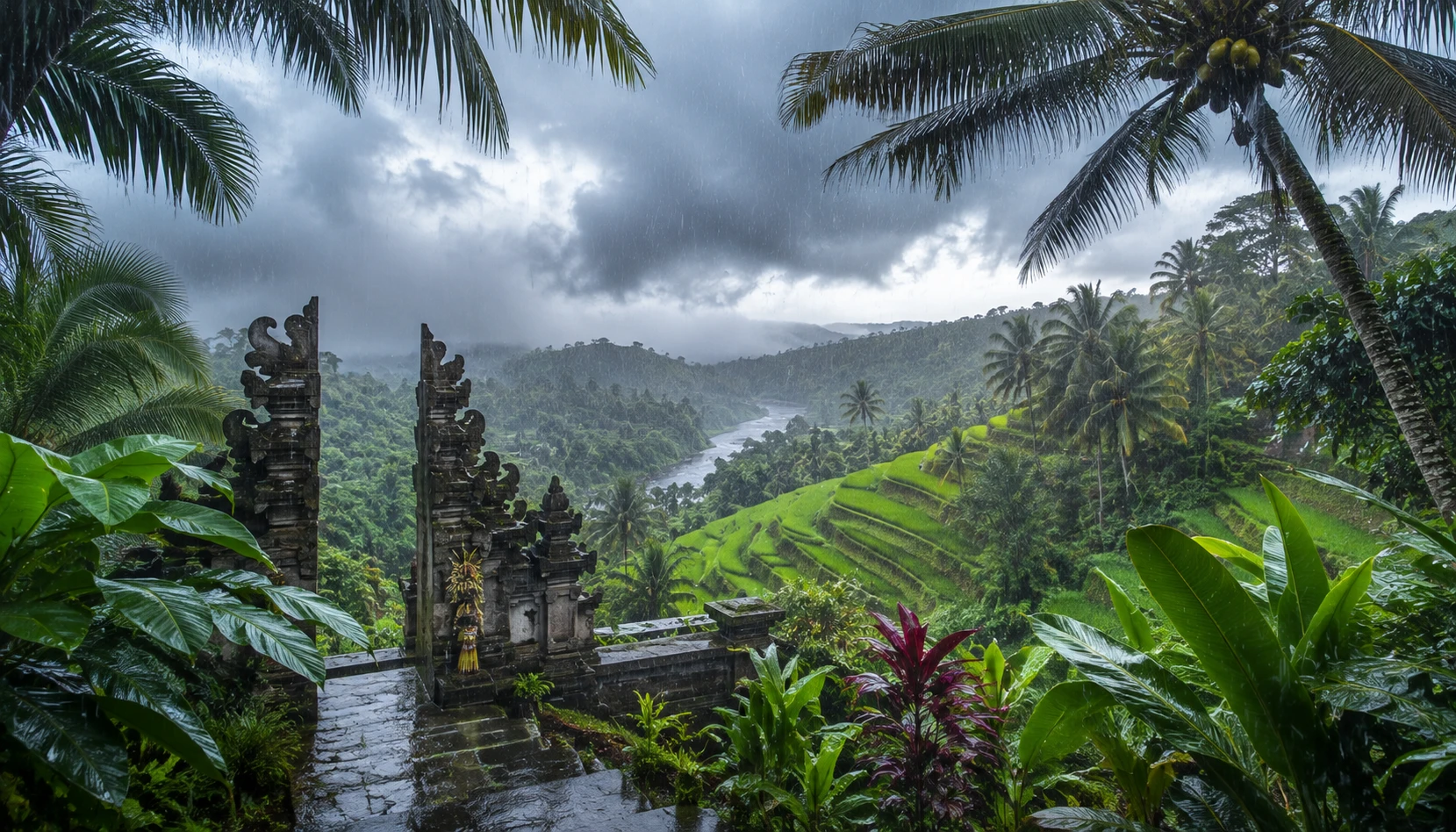
The name misleads people. The rainy season here is not months of continuous rain. It is short, heavy downpours with sunshine around them, most often in the afternoon.
What changes is everything around the rain. Humidity rises. The sea gets rougher on the western coasts. Some roads flood. Mosquitoes multiply. Things go mouldy indoors. Those effects matter more than the rainfall itself.
Below is what each month is like, why the coast you are on matters more than the date, what actually gets disrupted and what the season means if you own property here. Weather varies year to year, so treat this as the usual pattern rather than a forecast.
The pattern is fairly stable from year to year. Here is how the year usually runs:
| Months | What to expect | Who it suits |
|---|---|---|
| November to December | Rain builds. Afternoon storms become regular | Anyone who does not mind an afternoon indoors |
| January to February | The wettest stretch. Longer storms, high humidity | Surfers on the east, people who want low crowds |
| March | Rain eases through the month. Still green and humid | Good value, with ceremonies to plan around |
| April to May | Transition. Drying out, seas calming | The best value of the year |
| June to September | Dry season. Lower humidity, reliable sun | Everyone, which is why it costs most |
| October | Transition again. First storms return | Quiet before the crowds |
The shoulder months are the underrated ones. April, May and October give you most of the dry-season weather without the dry-season prices or crowds.
This surprises first-time visitors. The wettest weeks of the year fall inside the Christmas and New Year peak. Prices go up while the weather goes down.
The reason is simple. Demand follows the northern holiday calendar, not the Balinese climate. If your dates are flexible, moving a trip from January to April changes both halves of the equation. You pay less and you get better weather.
Bali is not one weather zone. The southern and western coasts face the open ocean and take the swell. The north and the east sit in the island's shelter and behave differently.
So a week that is unusable for swimming in the south can be flat and clear in the north. Divers know this and plan around it. Before writing off a month, check which coast you will be on. The highlands are a third case again, with more cloud and cooler air than either coast.
Rain itself rarely ruins a day here. The knock-on effects sometimes do. These are the ones that show up:
Waterfalls are the exception that runs the other way. They are at their best when everything else is at its wettest, and the guide to Bali's waterfalls is worth reading for exactly this season.
Rain falls and stops. Humidity stays. That is the difference most visitors underestimate and most residents complain about.
Clothes take days to dry. Leather goes mouldy in a wardrobe. Paper curls. Electronics in a closed room pick up damp. Air conditioning here is a dehumidifier as much as a cooler, and running it occasionally in an empty room is maintenance rather than luxury.
Drainage is the weak point in most areas. A heavy storm can put water across a road within minutes, and it usually drains just as fast. The problem is the twenty minutes in between.
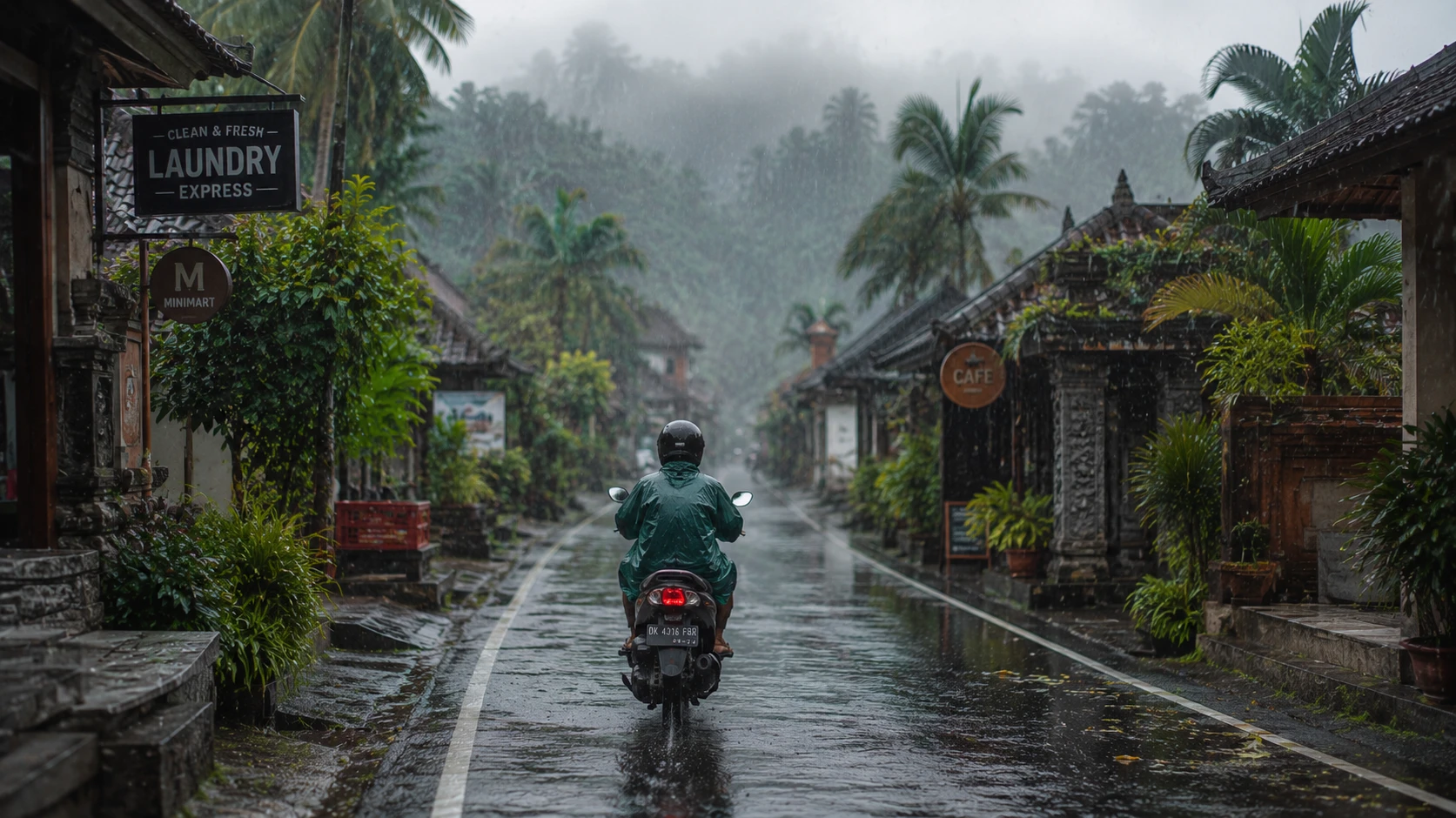
Scooters and standing water are a bad combination. Traffic slows and journey times stretch. Build slack into any plan with a fixed time, especially an airport run. A trip that takes an hour in April can take much longer in January.
Wet-season packing differs from dry-season packing in a few specific ways. Most of them are cheap to get right and annoying to get wrong:
Leave leather at home if you can. Bags, jackets and good shoes grow mould in a closed wardrobe within weeks. Residents keep leather in the driest room of the house or not at all.
For anyone working remotely, the season changes the day in small ways that add up. Storms cause brief power cuts, and a power cut takes the internet with it.
Cafes fill up when it rains, so the quiet workspace you rely on may not be quiet. Traffic slows, which lengthens any commute to a coworking space. Keep a backup connection and a charged battery for the router. A twenty-minute outage during a call is the commonest wet-season work problem, and it is easy to plan around.
Standing water breeds mosquitoes, and the wet months are when mosquito-borne illness is most common. This is the one part of the season worth treating seriously rather than as an inconvenience.
The precautions are ordinary. Repellent, screens, no standing water around the house, long sleeves at dusk. What is worth knowing about the local picture is set out in the overview of common illnesses on the island. Check your insurance covers you here before you need it.
The Balinese calendar runs on its own cycle and pays no attention to the rain. Major ceremonies fall through the wet months as often as the dry ones.
March usually carries the day of silence, when the whole island shuts down for twenty-four hours. Nothing moves, including the airport. Check the calendar of Balinese holidays and their dates before booking anything in that period. A wet-season trip that lands on a major ceremony is a good trip, not a spoiled one, provided you know it is coming.
If you own property here, the wet months are when problems appear. Roofs leak. Gutters block. Pools overflow. Damp shows up on walls that looked fine in August.
The work that prevents most of it is unglamorous and cheap compared with the repairs:
Running costs rise a little in these months, mostly through maintenance rather than utilities. What ownership costs across the year is set out in the breakdown of maintaining a property on Bali.
Outside the Christmas peak, the wet months are the cheapest time to be here. Accommodation drops, restaurants are quieter, and popular places are pleasant rather than crowded.
For anyone letting property, the same pattern works in reverse. Occupancy falls and rates soften from roughly February to May. Owners who budget on high-season rates all year end up disappointed. Model the year honestly and the numbers hold up.
This is the best time to look at a house, and almost nobody does it. A property viewed in August tells you very little about how it copes with water.
In the rain you can see where water pools, whether the access road holds up, how the roof behaves and whether the room smells damp. If you can only view once, view in the rain. It is the single most informative hour you will spend on a property here.
Does it rain all day?
Rarely. The usual pattern is a heavy downpour of an hour or two, often in the afternoon, with clear spells around it. Whole days of rain happen in the wettest weeks but they are not the norm.
Which month should I avoid?
January and February are the wettest, and January is also expensive because of the holiday peak. If you have a choice, April, May and October give you good weather at better prices.
Can I still surf and dive?
Yes, but you may need to change coast. The west takes the swell in the wet months while the east and north are calmer, which is why divers head that way. Ask an operator rather than reading a general seasonal chart.
Is the wet season dangerous?
Not in itself. The real risks are ordinary ones made worse by water: scooters on wet roads, strong currents, and mosquito-borne illness. All three are manageable with normal caution.
Is it a bad time to move here?
It is arguably the best time. Rentals are cheaper, you see properties at their worst, and you learn what the island is like for the harder half of the year rather than the easy one.
Then you have seen the easy half. The island is still good in the wet months, but it is a different place, and buyers who have only visited in the dry season regularly misjudge what they are buying. DDA Real Estate is a real estate agency working in Indonesia. We look at properties with this season in mind: where water runs on the plot, whether the access road holds up, how the building is ventilated and what the area is like when the crowds have gone.
Look at our offers in Bali and leave a request: we will shortlist properties that hold up in both halves of the year, tell you honestly how each one behaves in heavy rain, and point out the ones that only look good in August.