Off-plan properties
Booking a holiday in Bodrum without deciding which village you are staying in is the most common mistake visitors make. The peninsula holds a dozen distinct settlements, and the difference between two of them is larger than the difference between two countries.
Gümbet is loud until four in the morning. Gümüşlük closes at sunset and considers that the point. Yalıkavak berths superyachts. Bitez is where families go. All four are within twenty minutes of each other, and all four are sold as Bodrum.
This guide covers the town and its ancient sites, the villages and who each one suits, the beaches, what to do on and off the water, and when to come. Prices and timings reflect August 2026 and shift with the season — check locally before planning around them.
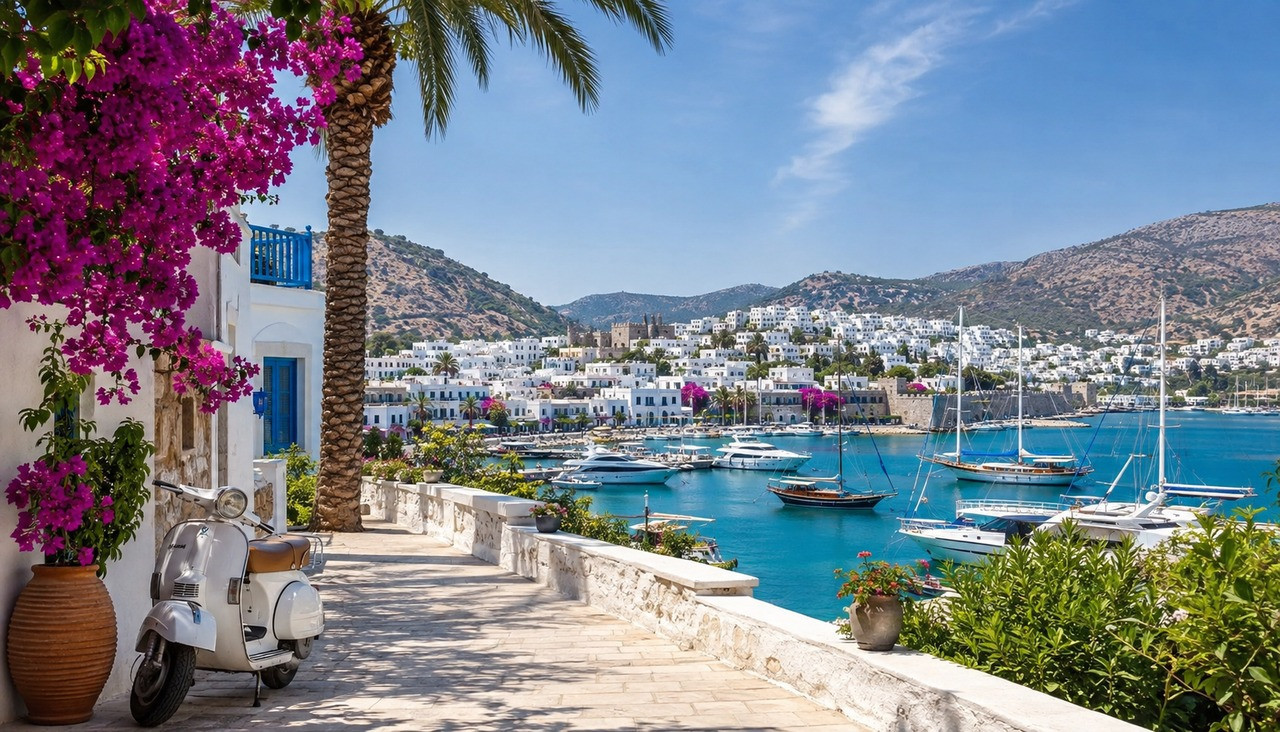
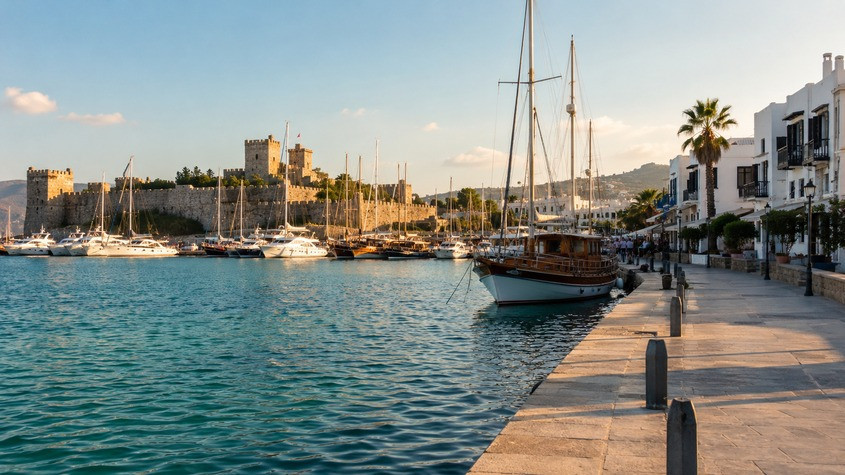
Bodrum town sits in an amphitheatre around a double bay, white cube houses climbing the slopes with bougainvillea over the walls. The look is protected by a building code that caps height and prescribes the whitewash, which is why the skyline has stayed low while the rest of the Aegean coast built upward.
Underneath it is Halicarnassus, and the classical layer is genuinely worth the time rather than a box to tick.
The castle and the theatre are best done early. Both are exposed, both are steep in places, and both are considerably more pleasant before ten in the morning than at two in the afternoon in July.
This is the decision that shapes the holiday. Everything else is adjustable; where you sleep is not.
| Village | Character | Suits | Avoid if |
|---|---|---|---|
| Bodrum town | Historic centre, marina, bar street, everything walkable | First visits, sightseeing, nightlife within reach | You want quiet after midnight |
| Gümbet | Package holidays, bars, watersports, young crowd | Nightlife as the main event | Travelling with children |
| Bitez | Shallow bay, tangerine groves, windsurfing, calm | Families, watersports | You want variety in the evenings |
| Gümüşlük | Ancient Myndos, sunken ruins, seafront fish restaurants | Slow evenings, sunsets, couples | You need nightlife or a big beach |
| Yalıkavak | Superyacht marina, designer retail, upscale dining | Luxury, boating, being seen | Budget travel |
| Türkbükü and Göltürkbükü | Wooden platforms over the water, club-restaurants, Istanbul crowd | Style-led stays | You want a traditional Aegean village |
| Turgutreis | Second largest town, Saturday market, long sunset front | Longer stays, self-catering | You want to walk to ancient sites |
| Torba | Closest to the airport, quiet bay, hotel-led | Short trips, early flights | You want village life |
| Akyarlar and Bağla | Wind-exposed, kitesurfing, sandy stretches | Watersports, space | You need everything within walking distance |
One pattern runs through that table and it is worth naming. The north coast of the peninsula — Türkbükü, Torba, Göltürkbükü — is calmer water and a more polished, more expensive scene. The south and west — Bitez, Gümbet, Akyarlar, Turgutreis — get the wind, the sunsets and the watersports. Choose the coast before you choose the village.
Bodrum is not a beach destination in the sense that Antalya is. The coastline is coves and bays rather than long sand, and the water is what people come for.
Most beaches operate as clubs with a daily rate for a sunbed and umbrella, and free public sections exist alongside them on the larger bays. The water clarity across the peninsula is high, which is part of why the sailing tradition here is what it is.
The peninsula’s defining activity, and the one thing nobody should skip.
The blue cruise is a Turkish institution rather than a tourist product. Wooden gulets, built in Bodrum boatyards for generations, run day trips around the bays and multi-day routes down the coast toward Göcek and Fethiye. Day trips leave from the town marina and typically take in three or four swimming stops with lunch aboard.
For a longer version, cabin charters put you on a gulet for three to seven nights, moving between anchorages and sleeping on deck. It is the single most Aegean thing available here and it books out well ahead for high season.
The Greek island of Kos sits close enough to be a day trip by ferry from Bodrum harbour, with the crossing measured in tens of minutes rather than hours. EU entry rules apply, so passports and visa status need checking before booking rather than at the pier.
Diving is well established, with wrecks, walls and reefs around the peninsula, and the season runs longer than the swimming season for anyone with a wetsuit.
Three excursions justify a full day each, and all are done from Bodrum without changing hotels.
Closer to home, the ruins at Pedasa above the town make a short archaeological walk, and the row of stone windmills on the ridge between Bodrum and Gümbet is the classic sunset position for anyone not on a boat.
The season shapes the peninsula more than any other variable, and the shoulder months are meaningfully better rather than merely cheaper.
| Period | Conditions | What it is like |
|---|---|---|
| May – June | Air 25–30°C, sea warming | The best combination — everything open, crowds still light |
| July – August | Air 33–40°C, sea warmest | Peak everything: prices, crowds, heat, nightlife |
| September – October | Air 25–30°C, sea at its warmest | The connoisseur’s season — warm water, thinning crowds |
| November – April | Air 12–18°C, rain in winter | Much of the peninsula closes; the town stays open |
September is the answer for most people. The sea holds its August temperature into October while the crowds and the prices fall away, and the light on the Aegean in late September is the reason photographers come then.
The winter caveat matters if you are considering more than a holiday: outside the town centre and Bitez, a large share of restaurants, bars and shops close from November to March. The peninsula in January is beautiful and largely empty, which is charming for a week and a different proposition for a season.
Bodrum-Milas airport sits about 35 kilometres from the town, with transfers of 40 to 60 minutes to most villages.
On the peninsula itself, minibuses connect the villages through the central bus station, running frequently in summer and considerably less so in winter. They are cheap, they are the local way to move, and they mean you can stay in one village and eat in another without driving.
A hire car changes what the peninsula offers rather than merely making it easier. The beaches worth finding are on the south and west coasts, the ancient sites are scattered, and the best fish restaurants are in villages that no minibus serves conveniently after dinner. If you intend to explore rather than settle into one bay, take the car.
Boats are the third option and often the best one: water taxis and scheduled boats link the town with several bays in season, and arriving at Gümüşlük by sea is a considerably better experience than arriving by road.
Aegean cooking rather than the heavy Anatolian repertoire: olive oil, wild greens, seafood, and a long list of cold mezze that is really the main event.
Gümüşlük is the fish village, with tables at the water’s edge and the day’s catch chosen at the counter. Yalıkavak and Türkbükü hold the polished end of the market. The town centre covers everything from street food to the marina restaurants, and Turgutreis is where self-caterers shop — its Saturday market is the biggest on the peninsula and worth an early morning.
Evenings divide as sharply as the villages do. Bar Street in the town centre and the clubs of Gümbet run until first light; Gümüşlük and Bitez are finished by midnight. Nothing in between exists in any meaningful quantity, which is why the choice of base is the whole decision.
Bodrum converts visitors into residents at a steady rate, and the questions that matter then are not the ones a holiday answers.
The peninsula runs a sharp seasonal economy: high summer demand, a long quiet winter, and a resident population concentrated in the town and a few villages. That pattern shapes everything downstream — which places have year-round shops and clinics, where a property lets and for how many months, and how long a sale takes when it comes to that.
The practical test is simple and almost nobody applies it: visit in February before deciding. A village that enchants in September and empties in November is a fine holiday home and a hard place to spend a winter, and the difference is invisible in high season.
For those weighing the Aegean as a base rather than a destination, the nearest large city with full year-round infrastructure is covered in our guide to living in Izmir as an expat, and the wider practicalities of settling in Turkey — healthcare, costs, residence — in our analysis of Turkey as a retirement destination.
And if the appeal is the coast rather than this coast specifically, Turkey’s northern shore offers a genuinely different proposition — greener, cooler, far fewer people, and a shorter swimming season — set out in our guide to the Black Sea resorts.
How many days does Bodrum need?
Five to seven for the peninsula itself — the town, two or three villages, a boat day and a beach or two. Add two more if you want Ephesus or Pamukkale without rushing.
Which village should I stay in?
The town for a first visit and sightseeing, Bitez for families, Gümüşlük for quiet evenings, Yalıkavak for luxury, Gümbet for nightlife, Turgutreis for a longer self-catering stay. The choice matters more here than the hotel.
Is Bodrum expensive?
It spans a wider range than most Turkish resorts. Turgutreis and Bitez sit at ordinary Turkish coastal prices; Yalıkavak and Türkbükü are among the most expensive places in the country. Both are on the same peninsula, twenty minutes apart.
Can I visit a Greek island from Bodrum?
Yes — Kos is a short ferry crossing from the town harbour and works as a day trip. EU entry requirements apply to your nationality, so check them before booking rather than at the port.
Do I need to hire a car?
Not if you are basing yourself in one village and using minibuses and boats. Yes, if you want the southern beaches, the scattered ancient sites and dinner in a village that is not yours.
When is the sea warmest?
Late August through September, which is why September is the strongest month overall — the water is at its peak while the crowds and prices have started to fall.
Is Bodrum worth visiting in winter?
For a quiet few days in the town, yes — the castle, the theatre and the harbour are all open and empty. For a beach holiday, no: much of the peninsula closes from November to March.
Bodrum is unusually good at making visitors want to stay — the light, the boats, the white houses climbing the hillside. What a week in September cannot show you is which of those villages still has a working supermarket in February, and that turns out to be the question that decides how the second year feels. DDA Real Estate is a real estate agency in Turkey. We work across Bodrum, Izmir, Antalya, Alanya, Istanbul and Mersin, and on this peninsula in particular that means being straight about the seasonal split between villages.
Explore our listings in Turkey and get in touch: we will tell you which parts of the peninsula function year-round and which are summer propositions, what a property here realistically lets for across a season rather than a week, and whether the village you fell for in September is one you would want in January.