

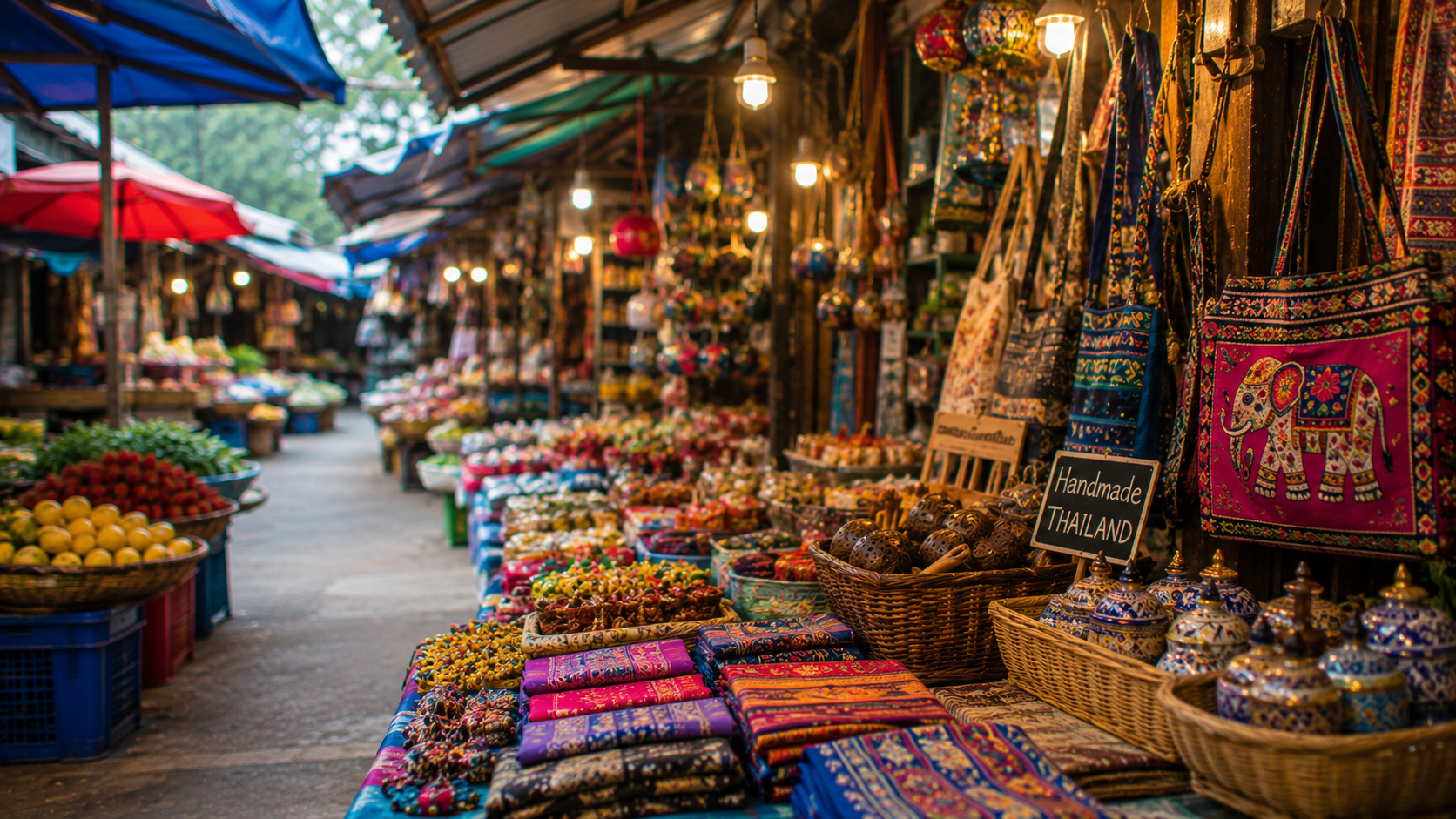

Bargaining at Thai Markets 2026: Dos and Don'ts
971 56 596-5009
day and night
Dubai
EN
$
ft²
Other articles

How to Bargain at Thai Markets Like a Local: Dos, Don’ts & Phrases

Alexandra Mitrofanova The author of the article, the Broker
#Blog DDA
4 August 819 views

Most advice on bargaining in Thailand is written as though it were a contest — open at half, hold firm, walk out twice. That approach is not just unpleasant, it works badly. Bargaining here runs on the same social currency as everything else: composure and face, and a buyer who raises the temperature reliably ends up paying more.

The other half of the problem is knowing where it applies at all. A great deal of what visitors try to haggle over is not negotiable in the first place, and attempting it marks you out faster than any accent does.

Below is where bargaining belongs and where it does not, how the exchange actually runs, the handful of phrases that do the work, and what quietly costs you the price. Customs vary by market, city and vendor, so treat this as the pattern rather than a script.

A relationship, not a contest

Thai social life places a high value on composure and on letting everyone keep their dignity. Visible irritation, raised voices and pressure tactics do not read as firm negotiating — they read as a loss of self-control, and the usual response is polite withdrawal rather than concession.

The practical translation is that warmth outperforms leverage. A smile, an unhurried pace and genuine interest in the item will move a price further than any tactic, because the vendor is deciding whether this is a pleasant transaction, not just a profitable one. What that looks like in practice:

  • Greet first and ask about the item before asking the price
  • Keep the tone light — bargaining here is closer to banter than to confrontation
  • Never let annoyance show, even if the opening price is absurd
  • Treat a refusal as an answer rather than a starting position to attack
  • Buy more than one thing if you can: volume is the most natural argument for a discount

Where bargaining belongs

This is the part that saves the most embarrassment. Roughly speaking, negotiation applies where the price is not displayed and the item is not food, and it does not apply where a price is printed or the transaction is metered:

SettingBargain?Notes
Tourist and night marketsYesClothing, souvenirs, bags, accessories — the classic ground
Local fresh marketsRarelyPrices are already low and largely fixed by custom
Food stalls and street foodNoPriced, not negotiated; asking marks you out immediately
Shops, malls, supermarketsNoFixed prices, same as anywhere
Tailors and custom workYesScope and materials as much as the number
Metered taxisNoAsk for the meter instead of negotiating a flat fare
Unmetered transport and toursYesAgree the figure before getting in, not after

The single most useful line in that table is the food one. Haggling over a bowl of noodles is the error foreigners make most often and understand least, and it costs goodwill out of all proportion to the sum involved.

Food is priced, not negotiated

Street food operates on thin margins, fast turnover and prices that are effectively standardised within a neighbourhood. There is no written bill, the total is calculated mentally, and change comes out of an apron pocket. Nothing in that system has room for negotiation, and nobody local attempts it.

The related question — whether to tip — has its own logic, and it is a tier system rather than a percentage: nothing at a stall, a rounding gesture in the middle, a service charge doing the work at the top. That and the rest of the table customs are covered in the guide to dining etiquette in Thailand. Bargaining and tipping are opposite ends of the same courtesy, and getting them the wrong way round is the commonest foreign mistake in a market.

How the exchange runs

There is a rhythm to it, and following the rhythm matters more than the numbers. The vendor names a figure, you react without insult, you offer something lower, and the two of you converge — usually quickly, because neither side enjoys a long negotiation over a small sum.

A realistic opening counter is somewhere near two-thirds of the asking price in a tourist market, less in places heavily geared to cruise passengers, and barely anything at all where prices are already close to local level. Opening at half is a habit imported from other countries and, applied here, mostly signals that you do not know the market. The exchange usually settles within two or three moves.

The phrases that do the work

You need very few, and using them badly is better than not using them. Romanisation of Thai varies between sources and the tones matter, so treat these as approximations to be checked against how people actually say them:

  • Tao rai? — how much? The opening question for everything
  • Lot noi dai mai? — could you reduce it a little? The standard, polite request
  • Phaeng pai — too expensive. Said lightly, with a smile, never as a complaint
  • Mai ao — I won't take it. Used when you have genuinely decided against it
  • Khop khun — thank you. Used at the end whether or not you bought anything

The polite particle at the end of the sentence matters more than the sentence — «khrap» if you are male, «kha» if you are female — and it transforms how the same words land. A broader set of survival vocabulary is covered in the basics of Thai for expats, and even a few words used clumsily buy noticeable goodwill.

What quietly costs you the price

Foreign buyers usually lose the negotiation before it starts, through signals they do not realise they are sending:

  • Visible enthusiasm — falling in love with an item in front of the person selling it
  • Being in a hurry — urgency is the one thing that genuinely weakens your position
  • Naming a price you would not pay — if it is accepted you are committed, and backing out is a real discourtesy
  • Arguing about the principle — telling a vendor their price is unfair changes the conversation from money to face
  • Shopping at the very start of the day — many vendors set store by the first sale and may hold firmer, not softer
  • Turning up with only large notes — no change is a quiet way to lose the discount you just agreed

Walking away, properly

Leaving is a legitimate move and often the effective one, but the manner decides whether it works. A cheerful departure with thanks leaves the door open and is frequently answered before you have taken ten steps. A theatrical exit closes it.

If you are called back, accept graciously and buy. Using a recall as leverage for one more round is where a pleasant exchange turns sour, and word travels within a market faster than most visitors imagine.

Knowing the baseline

No technique substitutes for knowing what something costs. The most reliable method is dull: walk the market once without buying, ask two or three vendors the same question, and notice where the answers cluster. The outlier is either a better product or an optimistic seller.

Prices also differ by city more than visitors expect, and a figure that is fair in one place is high in another — the cost-of-living comparison between Phuket, Chiang Mai and Pattaya gives a sense of that spread. Residents get good prices because they know the number, not because they negotiate harder.

Paying

Markets run on cash, and the practicalities affect the outcome. Small notes let you pay the agreed figure exactly; a large note invites rounding in the vendor's favour or an awkward wait while change is found somewhere down the row.

Payment by code is increasingly common even at modest stalls, which suits residents with a local account and rarely helps short-term visitors. Agree the price before producing any money — a wallet in hand shifts the balance of the conversation, and once notes are visible the room to move has already narrowed.

Where the same skill matters more

The habits that work in a market scale up. Knowing the going rate before you open, staying pleasant, never appearing rushed and being willing to leave are exactly the behaviours that produce a fair rent or a fair purchase price — with two or three more zeros attached.

The difference is that the stakes reward preparation even more. Understanding how to find a place without being caught out on a long-term rental is the same discipline applied to a bigger number: establish the baseline, keep the tone even, and be ready to walk. Nobody who negotiates well at a market negotiates badly on a lease — the skills are the same one.

Questions we hear most

How much discount should I expect?

In a tourist market, often something in the range of ten to thirty per cent off the opening figure, and less where prices already sit near local level. Expecting to halve every price is a recipe for frustration and for being quietly written off as a customer.

Is bargaining rude?

Not where it is expected — it is part of the transaction and often enjoyed by both sides. It becomes rude when it is aggressive, when it happens in the wrong setting, or when the sum being fought over is trivial to you and significant to the vendor.

Do I get a better price speaking Thai?

A little, and more than the words themselves justify. The effect comes from the effort rather than the fluency: a poorly pronounced polite phrase signals that you are treating the person as a person, and that changes the tone of what follows.

Should I bargain in a fresh market where locals shop?

Lightly if at all. Prices there are already thin, and the gap between what you would pay and what a local pays is small. Buying regularly from the same stall gets you better treatment than negotiating ever will.

What if the vendor accepts my first offer immediately?

Then you offered too much, and the correct response is to buy it anyway. Reopening a price you named yourself is the one move that genuinely offends, and it is not recoverable within that market.

Key takeaways

  • Composure beats leverage — pressure tactics produce polite withdrawal, not discounts
  • Know where it applies — tourist markets and unmetered transport yes, food and fixed prices no
  • Two-thirds, not half — an opening counter near half signals unfamiliarity in most Thai markets
  • The polite particle carries the sentence — a few words used clumsily still buy real goodwill
  • Never reopen your own offer — if it is accepted, you have bought it

Learn what things cost before you negotiate anything that matters

The market is a cheap place to practise a skill you will need on much larger numbers. DDA Real Estate is a real estate agency working in Thailand, and the pattern we see with newly arrived buyers is the same one that plays out over a handbag: the person who knows the going rate is calm, and the calm person gets the fair price. Our part of that is supplying the baseline — what comparable properties actually let and sell for in that building and that district, rather than what an asking price suggests.

Look at our offers in Thailand and leave a request: we will show you what similar objects are really transacting at, explain where a figure has room in it and where it does not, and be straightforward about the ones priced correctly enough that negotiating hard would only lose you the property.

Popular
5 June 4152078 views
Dubai Rent Prices 2025: Average Apartment Rental Costs in Dubai Dubai's rental market continues its upward climb in 2025, driven by population growth and limited new supply, pushing average prices up by 10%

#Blog DDA
2 July 2382282 view
DLD Fees in Dubai: Everything You Need to Know Buying property in Dubai? Don't let hidden fees surprise you! Our essential guide breaks down ALL Dubai Land Department (DLD) fees
#Blog DDA
23 November 1710135 views
How to Buy a SIM Card in Turkey in 2026: Prices, IMEI Registration, eSIM Options, and Best Mobile Operators Overview of mobile operators, available types of SIM cards, and home Internet providers
#Blog DDA
5 July 1702512 views
How Much is the Real Estate Agent Commission in Dubai? Find out how much real estate agent commission costs when buying property in Dubai.
#Blog DDA
5 February 1394505 views
How Foreigners Can Own Property in Bali: Understanding PT PMA (2025) Foreigners can't own freehold land in Bali, but a PT PMA (foreign-owned company) allows secure property ownership under Hak Guna Bangunan (HGB) or Hak Pakai (HP) rights
#Blog DDA
28 August 1145844 view
Oqood vs Title Deed in Dubai: Key Differences You Must Know Buying property off-plan in Dubai? Oqood registration is mandatory to secure your ownership rights.
#Blog DDA